Practice Operations: How to Turn AI Notes Into structured EHR Fields: Guide
Learn how to seamlessly integrate AI-generated medical notes into structured EHR fields to save time, reduce burnout, and improve clinical documentation quality.
What a medical scribe solves in modern practice
The modern clinical environment is increasingly defined by the weight of administrative tasks. For many practitioners, the real cost of documentation isn’t just measured in minutes; it is felt in cognitive load, delayed patient care, and the exhaustion of finishing charts long after the clinic doors have closed. When a clinician is forced to type while a patient speaks, eye contact is lost, and the vital human connection of medicine begins to fray.
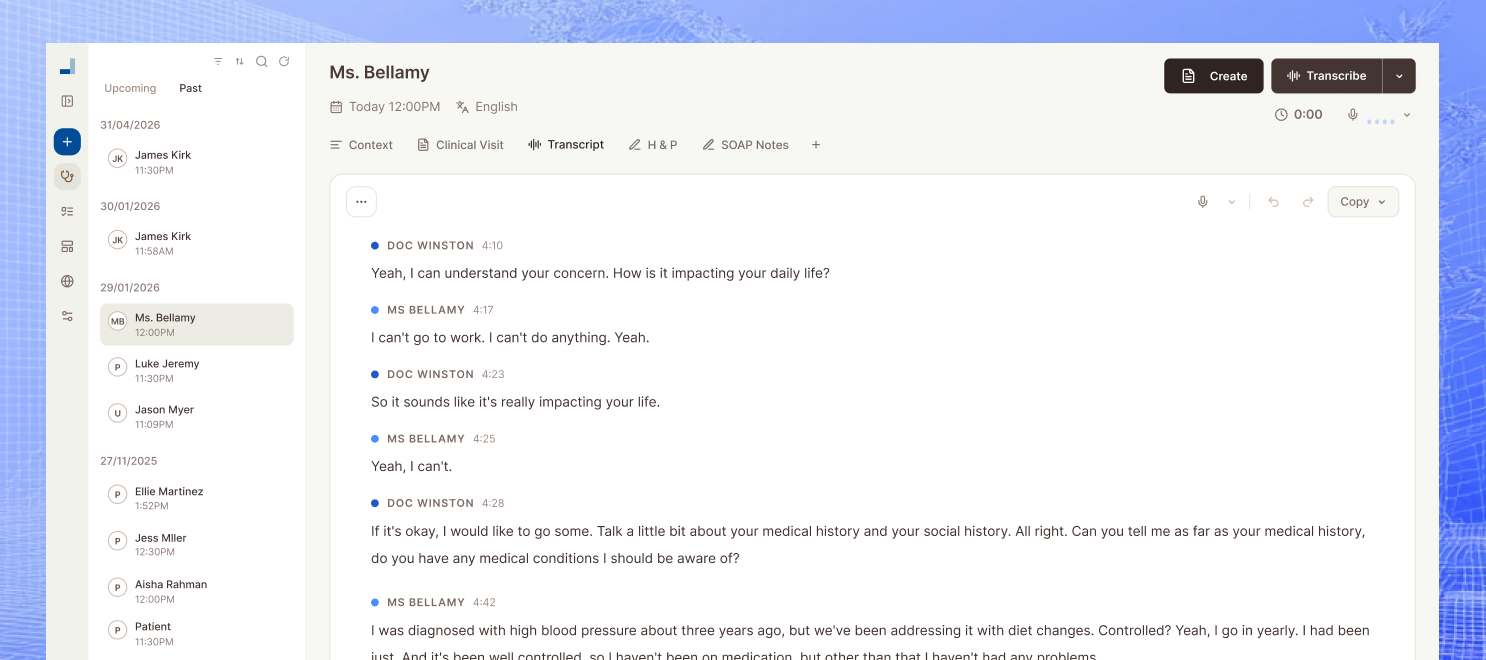
An AI medical scribe acts as an intelligent assistant that captures the nuance of the conversation without the doctor needing to touch a keyboard. It is important to remember that these tools are assistive, not curative. While they automate the heavy lifting of drafting, the clinician remains the final authority on the note, ensuring accuracy and clinical relevance before it enters the legal record.
- Eliminates late-night charting and administrative burnout.
- Restores the patient-provider relationship through better engagement.
- Captures granular details that might be forgotten in manual entries.
- Acts as an assistive draft-generator, keeping the clinician in control.
Note types you can generate beyond SOAP (H&P and more)
While the SOAP note is a staple of medical training, real-world practice requires a much broader spectrum of documentation. Relying solely on one format can lead to gaps in the patient history or unnecessary filler in specialized encounters. Moving beyond the basics allows for a more tailored approach to different visit types, such as initial consults or surgical follow-ups.
A versatile documentation system should easily produce History and Physicals (H&P), detailed progress notes, and specialized procedure notes. For those in specialty care or university clinics, high-quality consult notes and referral letters are non-negotiable for professional communication. Structured outputs like discharge summaries ensure that the chain of care remains unbroken when a patient transitions between facilities.
The importance of structure cannot be overstated for audit readiness and continuity of care. Using the right template for the right encounter ensures that benchmarks for quality care are consistently met without extra manual effort. This consistency makes it easier for other members of the care team to find the information they need at a glance.
- H&Ps and progress notes for comprehensive patient longitudinal tracking.
- Specialized procedure notes and discharge summaries for clear handovers.
- Referral letters generated instantly based on the actual consult.
- Template diversity ensures audit compliance and professional standards.
How to implement structured fields in your EHR step-by-step
To successfully integrate AI-generated content into your EHR, start small by choosing one specific visit type. This allows you to master the workflow without feeling overwhelmed by the entire scope of your practice. Most clinicians find that starting with a standard follow-up or a well-visit provides a clear path to understanding how the AI captures data versus how it needs to look in the final electronic record.
The next phase involves setting up your templates by specialty. In university clinics or multi-specialty groups, a cardiologist’s needs differ greatly from a dermatologist’s. By pre-selecting templates that match your specific clinical logic, you ensure the AI knows exactly which data points to prioritize. During the encounter, focus entirely on the patient, allowing the AI to record the interaction either in-person or via telehealth.
Once the encounter ends, the review and edit phase should be lightning-fast. Instead of writing from scratch, you are simply verifying the AI’s work. Finally, take those structured outputs and use them to populate your EHR. Many clinicians use the summarized AI data to quickly fill out referral forms or insurance documents, effectively reusing the same accurate information across multiple platforms.
- Begin with a pilot visit type to refine your documentation workflow.
- Customize templates by specialty to ensure high data relevance.
- Capture encounters seamlessly across in-person and digital settings.
- Review, edit, and repurpose AI outputs for letters and EHR forms.
How to keep note quality high and reduce mistakes
Ensuring the integrity of your clinical notes requires a proactive approach to quality control. Common failure points often include missing current medications, incorrect biometric values, or the inclusion of irrelevant “note bloat.” To mitigate these risks, it is essential to develop a lightweight review habit where the clinician scans the draft for key vital signs and medical logic before finalization.
Team standards also play a vital role. When everyone in a clinic agrees on what a high-quality note looks like, the AI can be better calibrated to meet those expectations. Consistency in how problem lists are updated and how medication changes are articulated prevents a disorganized medical record. Regular periodic checks can help identify if the AI is consistently missing specific nuances unique to your workflow.
- Implement a 60-second review habit for every generated draft.
- Standardize note formats across the clinic to prevent data fragmentation.
- Focus on eliminating note bloat by selecting relevant templates.
- Cross-check medications and vitals against the primary EHR data.
Privacy, consent, and patient trust (plain English)
Patient trust is the foundation of any successful medical practice. When introducing recording technology, it is best to explain the process in simple, transparent terms. Most patients are supportive once they realize the technology allows their doctor to focus on them rather than a screen. Always ensure your practice follows local and regional consent laws, as these vary significantly by jurisdiction.
A simple way to introduce this to a patient is to say: “To help me stay fully focused on our conversation today, I’m using a secure digital assistant that takes notes for us. It lets me look at you instead of my computer. Is that alright?” This approach emphasizes the benefit to the patient—the quality of care—while maintaining transparency about the recording.
General security principles should always be upheld, including data encryption and clear retention policies. Ensure that the tools you use meet the necessary compliance standards for your region, such as HIPAA or GDPR. Being able to confidently tell a patient that their data is protected and used only for their medical record is key to maintaining long-term rapport.
- Use clear, benefit-driven language to explain documentation tools.
- Adhere strictly to regional consent and privacy regulations.
- Prioritize encrypted, secure platforms to protect patient confidentiality.
- Maintain transparency about how recorded data is stored and used.
Rolling it out across a clinic without disruption
Scaling a new documentation workflow requires a structured timeline to avoid disrupting daily operations. A 14-day pilot plan is usually sufficient to identify any bottlenecks. During the first week, have one or two tech-savvy internal champions use the tool. In the second week, gather their feedback to refine the templates before inviting the rest of the staff to participate.
Tracking specific metrics is the only way to prove the value of the rollout. Monitor the reduction in after-hours charting time and the speed of note completion. In university settings, track how this impacts the training of residents and the completeness of their documentation. When the team sees the tangible time savings, resistance to change usually disappears.
- Start with a 2-week pilot involving internal champions.
- Track hours saved and note turnaround times as key success metrics.
- Align templates across the team for consistent clinical reporting.
- Focus on training that emphasizes the ease of use and time recovery.
Mcoy AI is an AI medical scribe that records and transcribes patient encounters, then generates multiple clinical note types including H&P, progress notes, consult notes, follow-up notes, procedure notes, discharge summaries, referral letters, and more. With over 200 customizable templates and an interactive AI chat available to create letters, forms, and documents, it streamlines the boring administrative side of medicine so clinicians can focus on their patients.
FAQ
The transition to automated documentation often brings up practical questions. Here are the most common inquiries from clinic owners and practitioners regarding the use of AI in clinical settings.
How accurate are AI medical scribes in real clinics?
AI medical scribes are remarkably accurate at capturing the dialogue between a doctor and a patient, often catching details a human might miss. However, accuracy also depends on the clarity of the audio and the complexity of the medical terminology used. While the AI is excellent at drafting, it is designed to assist the clinician, who must perform a final review. This ensures that any contextual nuances or specific clinical judgments are perfectly represented in the record.
Do I still need to review every note?
Yes, reviewing every note is a fundamental requirement for medical-legal and clinical safety reasons. The AI provides a highly accurate draft, but the clinician holds the ultimate responsibility for the data entered into the EHR. Most users find that reviewing an AI-generated note takes a fraction of the time it would take to write one from scratch. This review step is also the best time to ensure that structured fields are correctly populated.
What note types can an AI scribe generate besides SOAP?
Modern AI scribes are capable of generating a vast array of document types beyond the traditional SOAP format. This includes comprehensive History and Physical (H&P) reports, detailed procedure notes, and formal referral letters to other specialists. They also excel at creating discharge summaries and follow-up notes that are tailored to specific specialty requirements. By using diverse templates, the AI can structure information to fit almost any clinical scenario.
Will this work for telehealth and in-person consults?
Yes, the technology is designed to be versatile and works across both in-person and telehealth platforms. For in-person visits, the device’s microphone captures the room’s audio, while for telehealth, the AI can often integrate with the communication software or capture the system audio. This flexibility ensures that clinicians have a consistent documentation experience regardless of how they are seeing their patients. It allows for a single, unified workflow across the entire practice.
How do I explain recording/transcription to patients?
The best approach is transparency combined with a focus on patient benefits. Explain to the patient that the tool allows you to give them your full attention rather than typing on a computer. Most patients appreciate the increased eye contact and more engaged conversation. Providing a simple verbal or written consent process ensures that you are meeting ethical and legal standards while maintaining a strong therapeutic bond.
How do clinics prevent note bloat?
Note bloat is prevented by using highly specific templates that only extract the most relevant information for that visit type. Instead of a “catch-all” summary, practitioners can select templates that prioritize the chief complaint and relevant physical findings. Setting clinic-wide standards for what should be included in a final note also helps. By guiding the AI with structured parameters, the output remains concise, professional, and useful for other providers.
How long does template setup take?
Initial template setup is typically very fast, ranging from a few minutes to an hour depending on the level of customization required. Most systems come with pre-built templates for major specialties that can be used immediately. As you use the tool, you can tweak these templates to better fit your personal style or specific EHR fields. Over time, these templates become highly refined assets that drive significant efficiency in your daily workflow.
What’s the safest way to start if I’m skeptical?
The safest way to start is by running a small-scale pilot with just a few non-complex cases. Choose a handful of follow-up appointments and use the AI alongside your traditional charting method to compare the results. This “shadowing” phase allows you to gain confidence in the AI’s accuracy without any risk to your primary workflow. Once you see the quality of the structured notes and the time saved, you can gradually expand its use.
Conclusion
Mastering the transition from spoken dialogue to structured clinical data is the key to modernizing any medical practice. By following a clear implementation plan—from selecting the right templates to establishing a solid review process—clinicians can reclaim hours of their day. This guide has outlined how to turn AI notes into structured fields in your EHR effectively while maintaining the highest standards of privacy and quality. Embracing these tools is the most direct path to reducing burnout and returning the focus to patient care. Start your pilot today and see how structured AI notes can transform your workflow.
What a serious review table should cover
| Decision area | Common mistake | Better clinic-ready approach | Metric to watch |
|---|---|---|---|
| Workflow design | Treat how to turn ai notes into structured ehr fields: guide as a one-off documentation task | Build a repeatable process with clear ownership and review points | Time to complete documentation |
| Team adoption | Assume every clinician will naturally use the same process | Train for consistency and define exception handling early | Active user adoption |
| Quality review | Only check notes when a problem is reported | Audit a sample of notes weekly and review edge cases | Edit rate per note |
| Operational follow-through | Leave admin actions outside the documentation workflow | Use the same encounter data for referrals, letters, and follow-up tasks | Completion rate for next-step tasks |
Related reading
If you are working through how to turn ai notes into structured ehr fields: guide, it helps to read this alongside Practice Operations: How Clinics Can Streamline Daily Operations, Practice Operations: How Clinics Can Improve Workflow Without Changing Their EHR, and Specialty Guides: Record and Transcribe Patient Encounters: A Doctor’s Guide. Those guides cover adjacent workflow, implementation, and evaluation questions so the decision does not sit in isolation.
FAQ
How accurate are AI medical scribes in real clinics?
AI scribes are highly accurate at transcribing dialogue but require clinician oversight for final verification. Accuracy depends on audio quality and the specificity of the templates used.
Do I still need to review every note?
Yes, reviewing is mandatory for legal and clinical accuracy. The AI generates a draft, but the clinician remains the final authority for the medical record.
What note types can an AI scribe generate besides SOAP?
Beyond SOAP, AI can generate H&Ps, procedure notes, referral letters, consult notes, and discharge summaries using specialized clinical templates.
Will this work for telehealth and in-person consults?
Yes, AI documentation tools are designed to capture audio from both room environments and digital telehealth platforms effectively.
How do I explain recording/transcription to patients?
Explain that the tool allows for better eye contact and focused care. Most patients are comfortable when they understand it improves the quality of their visit.
How do clinics prevent note bloat?
Clinics prevent bloat by using concise templates and setting team-wide standards for what information is clinically necessary for the final note.
How long does template setup take?
Standard setup is immediate with pre-built templates, while custom clinical configurations usually take less than an hour to refine for your specific needs.
What’s the safest way to start if I’m skeptical?
The safest way is to run a small pilot with simple follow-up cases while maintaining your current notes to compare accuracy and reliability.