Practice Operations: How Clinics Can Streamline Daily Operations
How Clinics Can Streamline Daily Operations. A full guide for doctors and clinics to reduce admin, improve workflows, and run more efficient practices.
Running a clinic today is very different from a decade ago. Patient expectations are higher, administrative requirements are heavier, and staff are under constant pressure to do more with less. For many clinics, the challenge is no longer about attracting patients, but about keeping daily operations running smoothly without burning out doctors and staff.
Streamlining daily operations is not about cutting corners or rushing care. It is about removing friction from the system so clinicians can focus on what truly matters. When operations flow well, patients feel it, staff feel it, and doctors regain control of their time.
This guide walks through how clinics can streamline daily operations in a practical, sustainable way, without changing their EHR or disrupting care delivery.
Why clinic operations feel harder than they should
Most clinics grow operational complexity over time. New tools are added, regulations change, staff turnover happens, and workflows slowly become layered and inefficient. What once worked for a small practice starts to break at scale.
A common issue is fragmented workflows. Patient intake, documentation, billing, follow-ups, and communication often live in separate systems that do not talk to each other well. Staff spend time switching screens, re-entering information, and fixing small mistakes that compound throughout the day.
Another major issue is invisible work. After-hours charting, inbox management, referral letters, and compliance tasks often happen outside scheduled clinic hours. This work is rarely accounted for, yet it directly contributes to staff fatigue and doctor burnout.
Streamlining operations starts with acknowledging where time is actually being spent, not where it is supposed to be spent.
Standardise what should be predictable
One of the fastest ways to improve clinic efficiency is standardisation. Not everything in healthcare can be standardised, but many operational tasks can.
Patient intake is a strong example. When every patient fills forms differently, staff spend unnecessary time clarifying information. Standard digital intake forms reduce errors, save time, and prepare clinicians better before the appointment even starts.
Appointment workflows are another area. Clear processes for booking, confirmations, reminders, and follow-ups reduce no-shows and front-desk stress. When staff know exactly what happens at each stage of the patient journey, decisions become faster and smoother.
Standardisation does not remove flexibility. It creates a reliable baseline so the team can focus on exceptions instead of reinventing the process every time.
Reduce handoffs and interruptions
Every handoff in a clinic introduces delay and risk. When information moves from patient to receptionist, from receptionist to nurse, from nurse to doctor, and back again, small gaps appear. These gaps slow things down and increase frustration.
Interruptions are another major operational drain. Doctors are interrupted mid-consultation. Staff are interrupted while handling patients. Each interruption breaks focus and adds hidden time costs.
Streamlining operations means designing workflows that reduce unnecessary handoffs. Clear role definitions help each team member know exactly what they are responsible for. Shared visibility into patient status helps staff anticipate needs without constant verbal updates.
Fewer interruptions lead to calmer clinics and more consistent care delivery.
Simplify clinical documentation workflows
Documentation sits at the heart of daily clinic operations. When documentation is inefficient, everything else slows down. Appointments run late, staff wait on notes, and doctors finish their work after hours.
Many clinics struggle because documentation is treated as an individual doctor problem rather than an operational one. In reality, documentation impacts scheduling, billing, compliance, and communication across the entire clinic.
Simplifying documentation starts with aligning expectations. Notes should support care, not become a barrier to it. Clear documentation standards across the clinic help reduce variability and rework.
This is also where technology can play a significant role, not by replacing clinicians, but by removing manual effort from the process.
Use automation for repetitive admin tasks
Administrative work consumes a surprising amount of clinic time. Referral letters, medical certificates, insurance forms, follow-up summaries, and internal messages all add up.
Automation works best when applied to repetitive, predictable tasks. For example, generating routine letters from visit notes or creating follow-up summaries automatically saves staff from rewriting the same information repeatedly.
The goal is not to automate clinical decision-making, but to automate the formatting, drafting, and organisation of information. When staff no longer need to manually recreate documents, turnaround times improve and errors decrease.
This shift frees clinic teams to focus on patient-facing work rather than paperwork.
Improve internal communication clarity
Poor communication is one of the biggest hidden inefficiencies in clinics. Unclear instructions, missing context, and last-minute changes create confusion that ripples throughout the day.
Streamlining operations means making communication clearer and more structured. This can be as simple as consistent handover notes, shared task lists, or clearer messaging standards.
When everyone knows where to find information and what is expected of them, fewer questions need to be asked. Less back-and-forth means more time spent on actual work.
Clear communication also improves morale. Staff feel more confident and less reactive when information flows smoothly.
Align schedules with real workloads
Many clinics schedule based on ideal scenarios rather than reality. Appointments are packed tightly, leaving no buffer for complexity. When one visit runs long, the entire day falls behind.
Streamlining operations requires honest scheduling. Some appointment types need more time. Some patients require more support. Recognising this upfront prevents constant catch-up mode.
Building small buffers into schedules can dramatically reduce stress without reducing revenue. Clinics that run on time often see higher patient satisfaction and better staff retention.
Operational efficiency is not about squeezing more into the day. It is about making the day more predictable.
Support clinicians with the right tools
Technology should support clinic workflows, not add another layer of complexity. Unfortunately, many tools promise efficiency but deliver more clicks and more screens.
The most effective tools work quietly in the background and integrate naturally into existing systems. They reduce manual input, organise information, and surface what matters most.
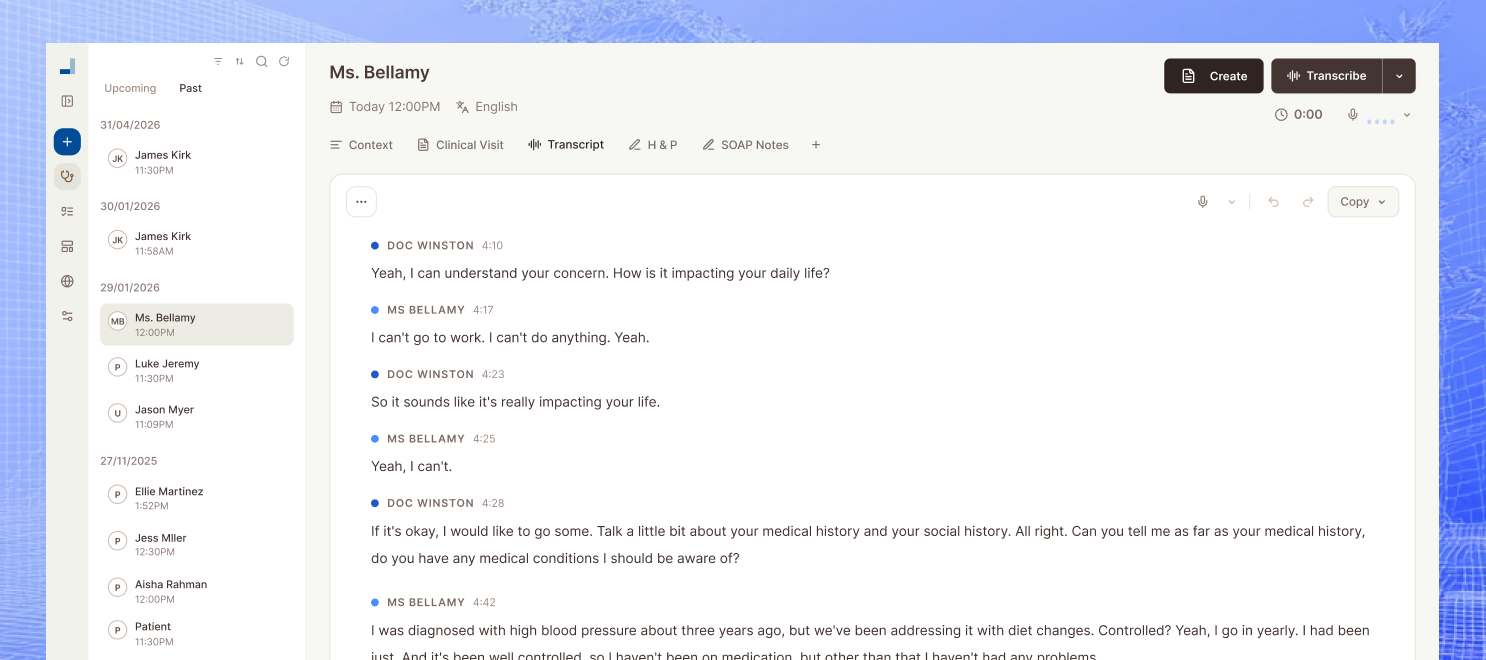
This is where Mcoy AI fits into clinic operations. Mcoy AI is an AI medical scribe designed to support, not replace, existing EHRs. It can record and transcribe patient encounters, then turn them into structured SOAP notes automatically. With over 200 customizable templates built for doctors and specialties, clinics can standardise documentation without forcing doctors into rigid workflows.
Beyond notes, Mcoy AI allows clinicians to chat with their encounters, extract key details, and generate documents such as referral letters and forms. This reduces administrative workload across the clinic and helps teams move faster without compromising accuracy or care quality. Used thoughtfully, Mcoy AI becomes an operational support layer rather than another system to manage.
Measure what actually slows you down
Many clinics try to streamline operations without measuring where time is lost. Assumptions often replace data, leading to changes that do not address the real problem.
Simple measurements can reveal a lot. How long does documentation take after appointments? Where do delays happen during the day? Which tasks regularly spill into after-hours work?
Once bottlenecks are visible, solutions become clearer. Sometimes the fix is process-related. Sometimes it is training-related. Sometimes it is tool-related.
Continuous improvement starts with awareness, not guesswork.
Build a culture of operational improvement
Streamlining operations is not a one-off project. It is an ongoing mindset. Clinics that improve continuously encourage feedback from staff and doctors. Small frustrations are treated as signals, not complaints.
When teams feel heard, they are more engaged in improving workflows. Over time, this creates a culture where inefficiencies are addressed early rather than tolerated.
Operational excellence is not about perfection. It is about steady progress and protecting the energy of the people delivering care.
The long-term impact of streamlined operations
Clinics with efficient operations experience more than just smoother days. Doctors report less burnout. Staff turnover decreases. Patients notice shorter waits and clearer communication.
Financial performance often improves as well. Fewer errors, better documentation, and more predictable schedules support healthier revenue cycles without increasing workload.
Most importantly, streamlined operations give clinics back their sense of control. Instead of constantly reacting, teams can plan, adapt, and grow with confidence.
What a serious review table should cover
| Decision area | Common mistake | Better clinic-ready approach | Metric to watch |
|---|---|---|---|
| Workflow design | Treat how clinics can streamline daily operations as a one-off documentation task | Build a repeatable process with clear ownership and review points | Time to complete documentation |
| Team adoption | Assume every clinician will naturally use the same process | Train for consistency and define exception handling early | Active user adoption |
| Quality review | Only check notes when a problem is reported | Audit a sample of notes weekly and review edge cases | Edit rate per note |
| Operational follow-through | Leave admin actions outside the documentation workflow | Use the same encounter data for referrals, letters, and follow-up tasks | Completion rate for next-step tasks |
Related reading
If you are working through how clinics can streamline daily operations, it helps to read this alongside Practice Operations: How Clinics Can Improve Workflow Without Changing Their EHR, Practice Operations: How to Set Up an AI Medical Scribe in Your Clinic [Guide], and Specialty Guides: What is Ambient Listening? A Full Guide for Doctors and Clinics. Those guides cover adjacent workflow, implementation, and evaluation questions so the decision does not sit in isolation.
FAQ
What does it mean to streamline clinic operations?
Streamlining clinic operations means reducing unnecessary steps, delays, and manual work in daily workflows so doctors and staff can focus more on patient care instead of administration.
Do clinics need to change their EHR to improve operations?
No. Most operational improvements can be made without changing your EHR. Streamlining usually involves better workflows, clearer roles, and support tools that sit alongside existing systems.
What areas of a clinic benefit most from operational improvements?
Documentation, patient intake, scheduling, internal communication, and follow-up tasks tend to deliver the biggest efficiency gains when optimised.
How can small clinics streamline operations with limited staff?
Small clinics benefit the most from standardised workflows and automation. Reducing duplication and simplifying documentation often creates immediate time savings without hiring more staff.
Can AI tools really help with clinic operations?
Yes, when used correctly. AI tools can reduce repetitive administrative work such as note creation, summaries, and document drafting, while clinicians retain full control and review.
How long does it take to see results after streamlining workflows?
Many clinics notice improvements within a few weeks. Small operational changes compound over time and lead to significant reductions in stress and after-hours work.
If you want, I can also merge this directly into the blog, tighten wording to match your house style, or add a clinic-owner focused FAQ specifically for private practices and uni clinics.