AI & Medicine: AI for Clinical Notes in Small Practices
A practical guide to using AI for clinical notes in small practices, with advice on structure, review habits, and rollout priorities.
Why small practices care about AI for clinical notes
Small practices usually do not have spare admin capacity to absorb bad documentation systems. If notes run long, spill into evenings, or require multiple rewrite passes, the cost is felt immediately by the clinician and the front desk. That is why interest in AI for clinical notes keeps growing.
The real goal is not to generate more text. It is to shorten the path from encounter to usable note while keeping documentation clear, structured, and easy to review.
What good AI note workflows look like
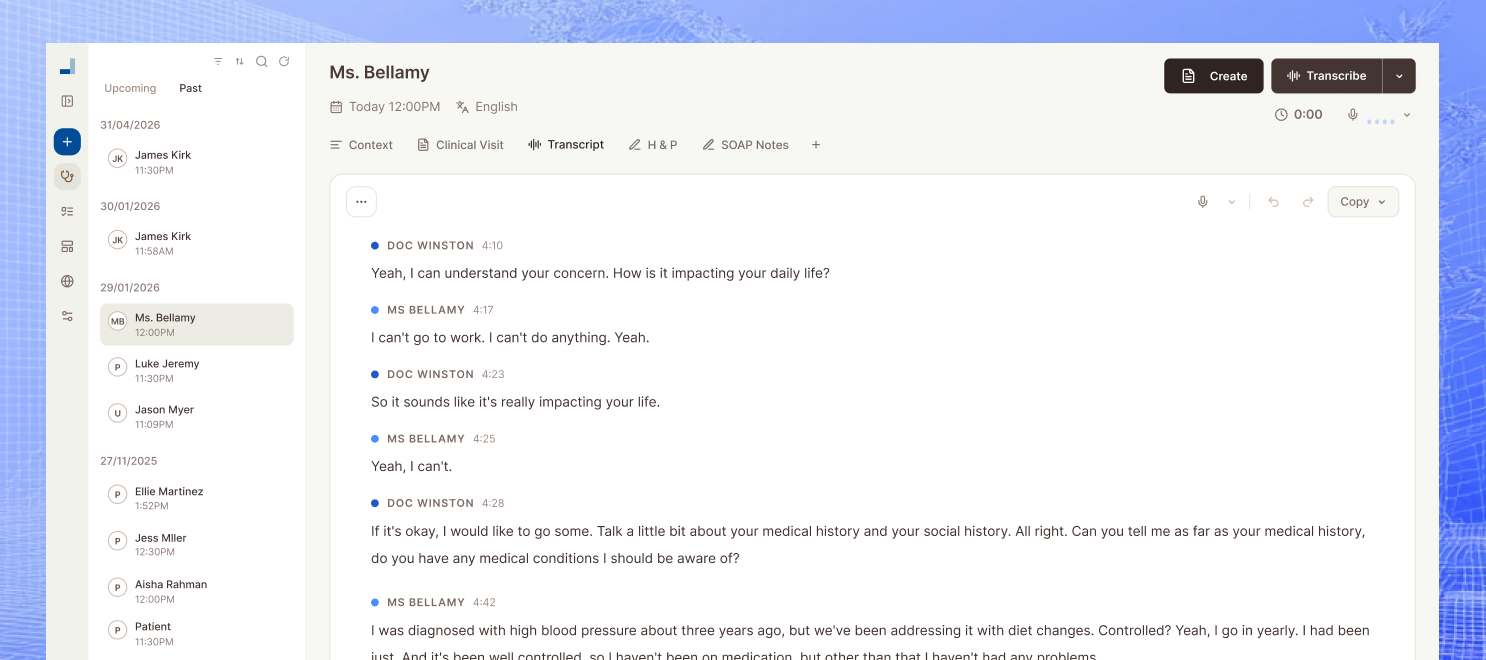
A useful workflow starts during or immediately after the encounter, creates a structured first draft, and gives the clinician a short review loop before sign-off. If the tool only produces a transcript or a block of text, the clinic still has to do too much of the organization manually.
Small practices should look for:
- A clear structure for SOAP notes, follow-ups, and routine reviews
- Templates that can be reused across common visit types
- A predictable review step that stays short under real clinic pressure
- The ability to reuse the same encounter for letters or summaries later
Where most clinics go wrong
The common mistake is evaluating AI only on how quickly it captures audio. Capture matters, but the bigger question is whether the result is easier to sign, easier to standardize, and easier to use in the rest of the workflow.
That is why many teams end up moving from broad note tools to systems that are more focused on clinical notes software and reusable documentation patterns.
How to set it up without disrupting the clinic
Start with one visit type that happens often enough to give you useful repetition. Follow-up reviews, chronic care visits, and standard primary care consults are good examples. Build one template first, run it for a few sessions, and track how long review takes.
The useful metrics are simple:
- Time from encounter end to note sign-off
- Number of edits per note
- Whether key sections are consistently present
- How often staff still need to ask the clinician for follow-up clarification
When AI for clinical notes actually saves time
Time savings usually come from three things happening together:
- The note starts in the right structure.
- The clinician can review quickly.
- The same encounter supports follow-up work afterward.
If your tool misses one of those, the time savings often flatten out. That is why teams comparing systems should look beyond capture alone and into the broader AI clinical documentation workflow.
Related reading
If you are evaluating AI for clinical notes, keep reading with AI Clinical Documentation for Clinics, How to Simplify Clinical Notes for Busy Doctors, and Reduce Missing Details in Clinical Notes with AI.