Compare & Choose: Medical Dictation Software vs AI Scribes
A practical comparison of medical dictation software vs AI scribes for clinics evaluating documentation workflow, review time, and note structure.
The difference is not just speech capture
When clinics compare medical dictation software against an AI medical scribe, the easy assumption is that both tools solve the same problem. They do not.
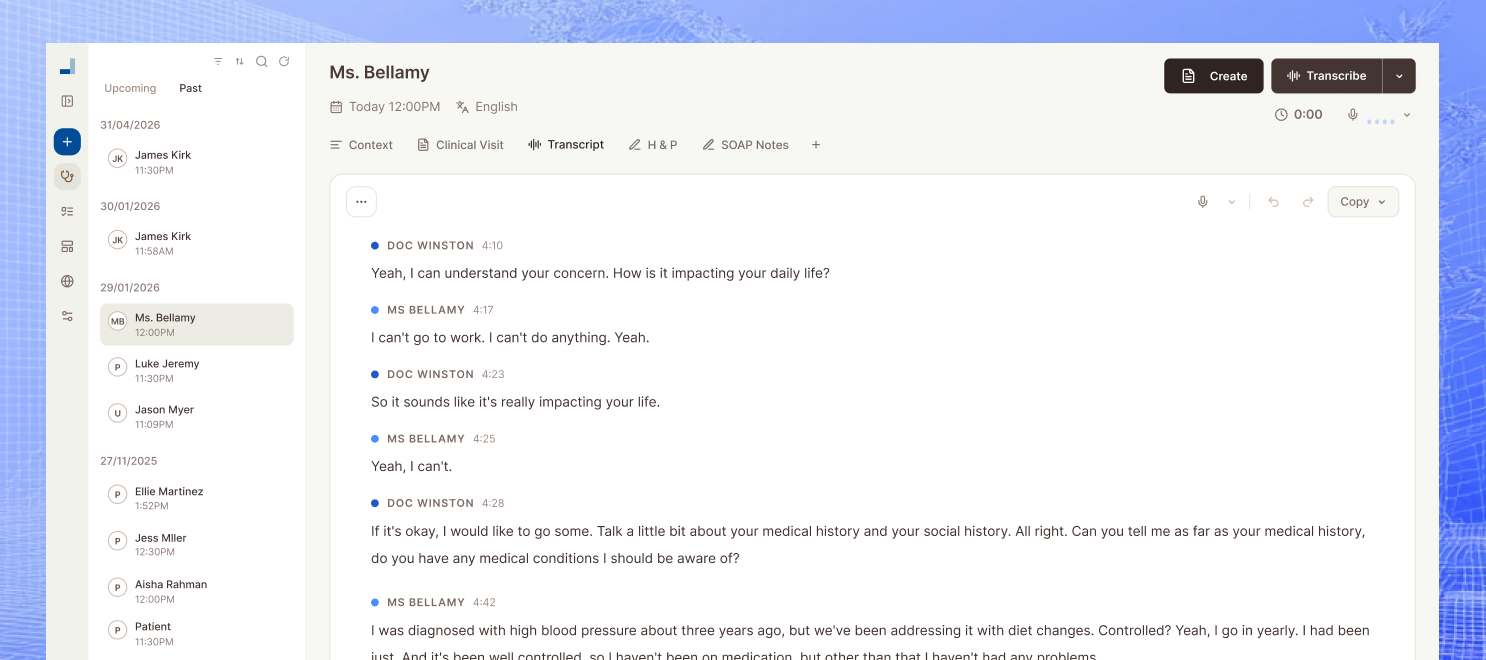
Traditional dictation tools mainly help convert spoken words into text. AI scribes aim to go further by turning the encounter into a structured draft note and often supporting downstream outputs such as summaries and letters.
Where dictation still works well
Medical dictation software can still be a good fit when:
- One clinician prefers direct control over every section
- The workflow is already well organized after transcription
- The clinic mainly needs faster speech-to-text rather than a larger documentation system
For some specialists, that is enough. But many clinics find the next bottleneck appears immediately after the transcription is done.
Where AI scribes create more leverage
AI scribes usually create more leverage when the clinic wants to reduce formatting work, standardize note structure, and reuse the encounter for more than one output. That becomes especially important when teams are trying to reduce after-hours charting or improve documentation consistency across clinicians.
The practical difference shows up in:
- How much reformatting happens after the spoken capture
- Whether templates can shape the note before review
- Whether the same encounter can support referral letters or patient summaries
The better buying question
The better question is not “Which tool types faster?” It is “Which workflow leaves the clinic with less unfinished work after the consult?”
For many small and growing teams, that points more toward tools that combine dictation, structure, and operational reuse. That is why buyers often compare dictation tools directly against broader AI clinical documentation systems instead of evaluating them in isolation.
A simple pilot checklist
During your pilot, track:
- Time to final note sign-off
- Number of edits required per note
- Whether templates improve consistency across visit types
- Whether follow-up letters still need a separate drafting process
Those metrics usually tell you more than a feature list.
Related reading
Keep reading with Best Physician Dictation Software for Modern Practices, How Dictation Works in Healthcare, and How to Compare AI Scribe Tools for Clinics.