AI & Medicine: Standardizing Problem Lists with AI Scribe Notes | Mcoy
Learn how to use an AI medical scribe to standardize problem lists, improve documentation accuracy, and reduce clinician burnout. Get the full guide now.
For many clinicians, the most draining part of the day isn’t the patient interaction—it’s the ‘pajama time’ spent cleaning up messy EHR data after hours. Inconsistent problem lists and fragmented documentation create more than just administrative bloat; they lead to significant medico-legal anxiety and a constant fear that a vital detail might slip through the cracks. Whether you are a solo practitioner or managing a busy university clinic, the struggle to maintain a clean, standardized list of diagnoses across a revolving door of patients is a primary driver of burnout.
This guide provides a comprehensive roadmap for transforming how you manage clinical data. We will explore how to move beyond basic SOAP notes into specialized formats, establish high-quality control standards, and navigate the intricacies of patient privacy. By the end of this article, you will have a clear rollout plan for integrating AI-assisted workflows that ensure your documentation is as precise as your clinical judgment.
What a medical scribe solves in modern practice
The financial and cognitive cost of traditional documentation is staggering. When a provider spends 15 minutes documenting for every 10 minutes spent with a patient, the quality of care inevitably suffers. Cognitive load increases when a doctor has to memorize complex history while simultaneously typing, leading to ‘note bloat’ and delayed completion. These delays often result in lost nuances that are critical for long-term patient outcomes and accurate billing.
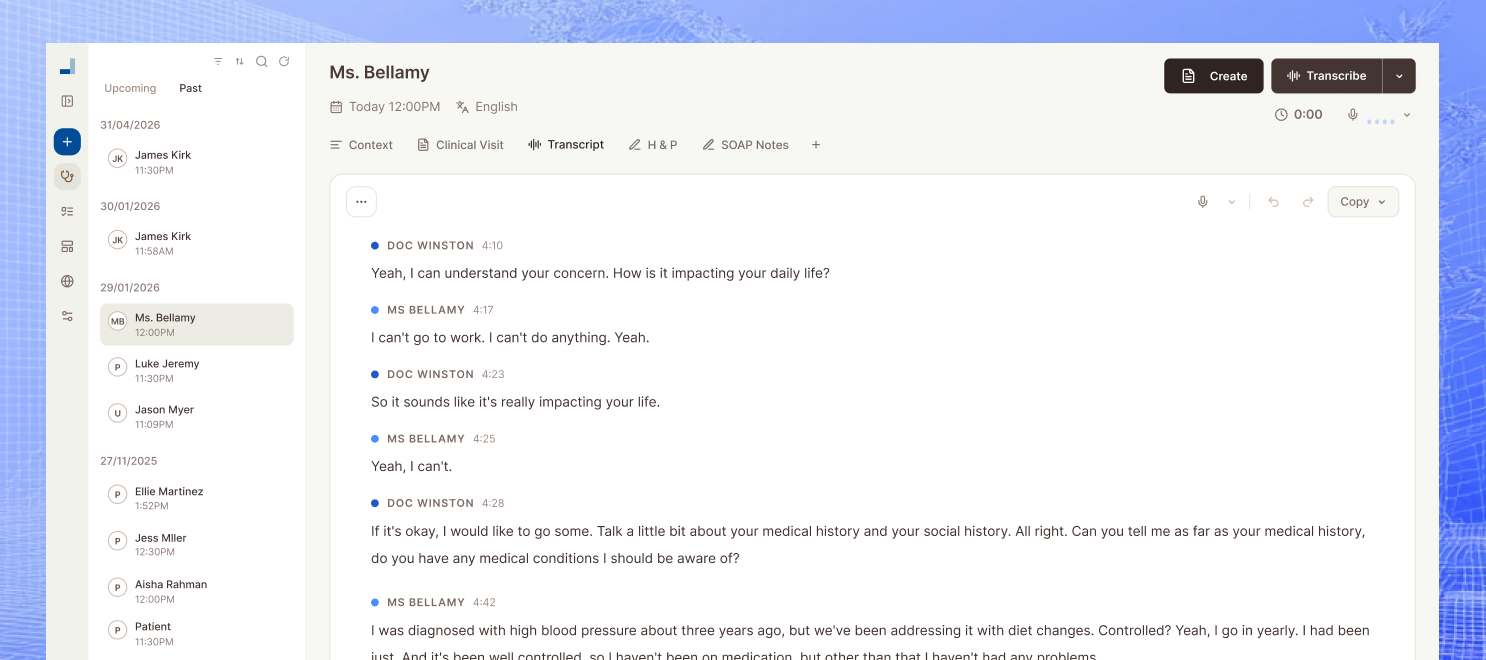
An AI medical scribe serves as a sophisticated digital assistant that captures the ambient conversation and distills it into organized data. It is important to remember that these tools are assistive, not autonomous. The clinician remains the final authority, reviewing and validating every entry. By offloading the mechanical task of writing, the provider can return to eye-to-eye contact with the patient, knowing the foundation of the clinical note is being built in the background.
- Reduces after-hours charting by automating data entry and organization.
- Minimizes cognitive load, allowing clinicians to focus on patient diagnosis.
- Eliminates the ‘recency effect’ where details are forgotten if notes are delayed.
- Functions as a collaborative assistant while keeping the clinician in full control.
Note types you can generate beyond SOAP (H&P and more)
While many practitioners are used to the standard SOAP format, modern healthcare demands a much wider variety of documentation types. A comprehensive History and Physical (H&P) is essential for new admissions or complex initial consultations, requiring a level of detail that a standard progress note might miss. Similarly, procedure notes and discharge summaries serve specific regulatory and clinical needs that require distinct structures to be effective.
Standardizing these notes ensures continuity of care during handovers and makes the practice audit-ready at any time. For example, a well-structured consult note or referral letter ensures that the next physician in the care chain has a clear, concise understanding of the problem list without having to dig through paragraphs of unstructured text. Using diverse templates helps keep the medical record lean and focused on the specific intent of the encounter.
- H&Ps and consult notes provide deep context for complex new patients.
- Procedure notes and discharge summaries streamline transitions of care.
- Standardized referral letters improve communication across the specialist network.
- Diverse formats ensure audit readiness and accurate insurance reimbursement.
How to implement AI scribe notes step-by-step in a real clinic
Starting the journey toward standardized problem lists begins with a narrow focus. Pick one specific visit type, such as routine follow-ups or initial wellness exams, and use a consistent template for these for at least one week. This allows the staff and the provider to get used to the workflow without the pressure of complex specialty cases. By establishing this baseline, you can observe how the system handles your specific terminology and preferred phrasing.
Next, move into specialty-specific templates. A cardiologist will need a different structure for an EHR problem list than a pediatrician. Once the templates are set, the focus shifts to the encounter itself. Whether the consultation is in-person or via telehealth, the key is to speak naturally while ensuring the main complaints and history elements are discussed out loud. This ‘active listening’ by the technology ensures that every relevant detail is captured for the draft note.
Finally, the clinician reviews the output, making quick edits to the problem list to ensure it matches the final assessment. This reviewed data can then be instantly reused to generate referral letters or patient instruction forms. This circular workflow—capture, review, and reuse—is what ultimately saves hours of repetitive typing and ensures the medical record stays clean and updated across every platform used by the clinic.
- Start with one common visit type to build a repeatable documentation habit.
- Configure templates by specialty to ensure all relevant clinical markers are hit.
- Leverage the AI output to instantly create secondary documents like referral letters.
- Standardize the review process to maintain the integrity of the problem list.
How to keep note quality high and reduce mistakes
Even the most advanced technology can fall victim to ‘note bloat’ or the inclusion of irrelevant information if not managed properly. Typical failure points in clinical documentation include missing medication dosages, incorrect laboratory values from the past, or an outdated problem list that carries forward resolved conditions. To prevent this, practitioners must cultivate a lightweight review habit where they scan the AI-generated draft specifically for clinical accuracy rather than just syntax.
Setting team standards is also vital for university clinics or multi-provider practices. When every provider uses the same logic for what constitutes an ‘active’ versus ‘resolved’ problem, the entire EHR becomes more searchable and useful. Regular brief audits—perhaps once a month—can help the team align on how they are utilizing the scribe to ensure the notes remain concise, high-utility, and free of redundant information that obscures the actual care plan.
- Develop a 30-second review ritual to verify medications and dosages.
- Define internal standards for active versus resolved problems in the EHR.
- Perform periodic ‘note audits’ to prevent excessive text and irrelevant data.
- Focus on high-utility content rather than just high-volume transcription.
Privacy, consent, and patient trust (plain English)
Patient trust is the bedrock of any successful clinical implementation. While consent requirements vary by state and region, the best practice is always transparency. Most patients are increasingly comfortable with technology in healthcare, provided they understand it is being used to help the doctor focus more on them and less on a computer screen. Following local regulatory policies and internal clinic guidelines is paramount for maintaining compliance.
A simple way to introduce this to a patient is naturally: ‘I’m using a secure AI assistant to help me take notes so I can spend more time looking at you and less time typing. It records our conversation and turns it into my clinical documentation. Is that okay with you?’ This plain English approach demystifies the process and usually results in high rates of patient acceptance, as they appreciate the undivided attention from their provider.
- Prioritize transparency and local compliance in all patient interactions.
- Use a simple script to explain the benefits of AI-assisted charting.
- Maintain a focus on how technology improves the face-to-face experience.
- Ensure data retention and security protocols meet institutional standards.
Rolling it out across a clinic without disruption
A successful rollout doesn’t happen overnight; it requires a structured pilot phase. Starting with a two-week pilot involving a small group of ‘early adopter’ clinicians allows the clinic to identify potential bottlenecks in the wireless network or template alignment before a full-scale launch. During this time, the administration should track specific metrics like time saved per patient and the reduction in ‘time to note completion’ to demonstrate value to the rest of the staff.
Training should focus not just on the software, but on the workflow. How does the clinician bridge the gap between the exam room and the EHR? By aligning templates across the organization, the clinic ensures that a patient seen in one department has a similarly structured record when they visit another. This consistency is the ultimate goal of standardizing problem lists, transforming the EHR from a digital filing cabinet into a dynamic tool for better patient care.
- Launch with a 14-day pilot to iron out workflow and technical kinks.
- Track measurable KPIs like ‘pajama time’ reduction and note accuracy.
- Align templates across departments for a consistent patient record experience.
- Provide ongoing training to ensure all staff are maximizing the tool’s potential.
Mcoy AI is an AI medical scribe that records and transcribes patient encounters, then generates multiple clinical note types including H&P, progress notes, consult notes, follow-up notes, procedure notes, discharge summaries, referral letters, and more. With over 200 customizable templates and an interactive AI chat, clinicians can easily create letters, forms, and complex documents tailored to their specific needs, significantly reducing the administrative burden while maintaining high standards of care.
FAQ
Implementing new documentation workflows often leads to questions about accuracy and efficiency. Here are the most common inquiries from clinical leads and practitioners.
How accurate are AI medical scribes in real clinics?
AI medical scribes are highly accurate at capturing the context and clinical facts of an encounter. However, they are designed to be assistive tools rather than autonomous reporters. While the transcription of spoken words is near-perfect, the clinician must always review the summarized note to ensure that the medical logic and final assessments are captured correctly according to their professional judgment.
Do I still need to review every note?
Yes, reviewing every note is a legal and professional requirement for clinicians. The AI serves to create a high-quality 90% draft, saving you the time of drafting from scratch. The final 10% involves a quick review and any necessary refinements to ensure the note accurately reflects the encounter and meets billing and compliance standards.
What note types can an AI scribe generate besides SOAP?
Modern AI scribes are capable of generating a wide array of documentation beyond the standard SOAP format. This includes comprehensive History and Physicals (H&P), detailed procedure notes, discharge summaries, and specialized consultation letters. By using various templates, the AI can organize the same conversation data into different formats depending on the required output.
Will this work for telehealth and in-person consults?
AI scribes are designed to be versatile and work effectively in both settings. For in-person visits, the device captures ambient audio in the room. For telehealth, the scribe can often be integrated into the audio stream of the platform or use a secondary capture device. The goal is to provide seamless documentation support regardless of where the patient-provider interaction occurs.
How do I explain recording/transcription to patients?
The best approach is to be direct and highlight the benefit to the patient. You might say, ‘I am using a digital scribe to help me capture our conversation so I can focus entirely on you instead of my keyboard.’ Most patients respond positively when they realize the technology allows for better eye contact and a more focused physician.
How do clinics prevent note bloat?
Clinics prevent note bloat by utilizing specific templates that prioritize concise data over raw transcription. By setting internal standards for what information is essential, clinicians can train the AI (and themselves) to focus on the key findings, assessments, and plans. Regularly reviewing and updating these templates helps keep the documentation lean and relevant.
How long does template setup take?
Initial template setup can take as little as a few minutes if using pre-built library templates. Customizing them to a specific specialty or clinician’s personal style might take an hour or two of refinement over the first week of use. Once established, these templates automate the format of every future note, providing massive long-term time savings.
What’s the safest way to start if I’m skeptical?
The safest way to start is with a ‘shadow’ pilot. Use the AI scribe during a few non-complex follow-up visits while still taking your usual brief notes. Compare the AI output to your manual notes at the end of the day. This low-risk comparison usually demonstrates the accuracy and time-saving potential of the technology quickly, building the confidence needed for a full rollout.
Conclusion
Standardizing your documentation process is the most effective way to reclaim your time and improve the quality of your clinical records. By moving toward specialized note types and a disciplined implementation plan, you can ensure that your problem lists are always accurate and your administrative burden is minimized. Using AI scribe notes allows you to transition from being a data entry clerk back to being a dedicated care provider. Start with a small pilot today and experience how AI scribe notes can transform your daily practice and your patient outcomes.
What a serious review table should cover
| Decision area | Common mistake | Better clinic-ready approach | Metric to watch |
|---|---|---|---|
| Workflow design | Treat standardizing problem lists with ai scribe notes | mcoy as a one-off documentation task | Build a repeatable process with clear ownership and review points |
| Team adoption | Assume every clinician will naturally use the same process | Train for consistency and define exception handling early | Active user adoption |
| Quality review | Only check notes when a problem is reported | Audit a sample of notes weekly and review edge cases | Edit rate per note |
| Operational follow-through | Leave admin actions outside the documentation workflow | Use the same encounter data for referrals, letters, and follow-up tasks | Completion rate for next-step tasks |
Related reading
If you are working through standardizing problem lists with ai scribe notes | mcoy, it helps to read this alongside AI & Medicine: How to Simplify Clinical Notes for Busy Doctors, AI & Medicine: How Doctors Can Improve SOAP Notes, and Admin Management: Generate Forms & Letters from Encounters | Mcoy AI Guide. Those guides cover adjacent workflow, implementation, and evaluation questions so the decision does not sit in isolation.
FAQ
How accurate are AI medical scribes in real clinics?;Do I still need to review every note?;What note types can an AI scribe generate besides SOAP?;Will this work for telehealth and in-person consults?;How do I explain recording/transcription to patients?;How do clinics prevent note bloat?;How long does template setup take?;What’s the safest way to start if I’m skeptical?