Admin Management: Generate Forms & Letters from Encounters | Mcoy AI Guide
Learn how to use an AI medical scribe to automate referral letters, forms, and clinical notes. Reduce burnout and streamline your medical documentation today.
The Administrative Crisis in Modern Healthcare
After-hours charting has become an unofficial and unpaid shift for the modern clinician. Whether you are a GP, a specialist, or managing a high-volume university clinic, the burden of documentation often leads to rushed notes, clerical errors, and a pervasive sense of burnout. The anxiety of potentially missing a critical detail for medico-legal reasons or long-term continuity of care creates a mental weight that lingers long after the last patient has left the building.
This guide provides a comprehensive roadmap for transforming how you handle clinical documentation and administrative output. We will explore how to integrate an AI medical scribe into your workflow, moving far beyond simple SOAP notes to generate complex forms, letters, and specialized clinical documents. From privacy considerations to clinic-wide rollout strategies, you will learn how to reclaim your time without sacrificing the quality of your medical records.
What a medical scribe solves in modern practice
The real cost of documentation isn’t just the time spent typing; it is the cognitive load it places on the provider. When a doctor is forced to multi-task between active listening and data entry, the patient-provider connection suffers. Delayed notes also lead to a degradation of data quality, as human memory naturally fades within hours of an encounter, leading to potential inaccuracies in the medical record.
An AI medical scribe acts as an assistive layer, capturing the nuances of the conversation while allowing the clinician to remain fully present. It is important to remember that these tools are not replacements for clinical judgment. The AI functions as a highly efficient draft-generator, while the clinician remains the final authority, ensuring that every note represents a true and accurate reflection of the encounter.
- Eliminates the “pajama time” spent on charting after clinic hours.
- Reduces cognitive load by allowing clinicians to focus on patients, not screens.
- Enhances note accuracy by capturing real-time details often forgotten later.
- Acts as a supportive assistant rather than a replacement for professional expertise.
Note types you can generate beyond SOAP (H&P and more)
While many practitioners are familiar with the standard SOAP format, modern clinical practice demands a much wider variety of documentation. For instance, a complex History and Physical (H&P) requires a level of detail that often takes significant time to structure correctly. Similarly, procedure notes and discharge summaries need to be precise and follow specific institutional or regulatory standards to ensure patient safety and reimbursement accuracy.
Specialists often find themselves bogged down by consult notes and referral letters, which act as the primary communication channel between care teams. Having a system that can take a single encounter and format it differently for a follow-up note versus a formal letter to a colleague is a game-changer for workflow efficiency. This structured approach not only aids in immediate continuity of care but also ensures that the practice is always audit-ready.
- Generate comprehensive H&P, consult notes, and complex procedure summaries quickly.
- Automate referral letters and transfer documents for better care coordination.
- Create standardized discharge summaries to prevent readmission errors.
- Maintain high-quality records that meet legal and institutional audit standards.
How to implement Mcoy AI step-by-step in a real clinic
The transition to using AI for medical documentation should be a phased process. Start by selecting one common visit type, such as routine follow-ups or standard physical exams. Use these lower-complexity encounters to get comfortable with how the AI captures your specific speaking style and how it structures information based on your verbal cues. This initial phase builds the necessary confidence and ensures you understand how to best direct the system.
Next, set up specific templates tailored to your specialty. If you are in a university clinic, your requirements for a resident-led encounter might differ from a private specialist’s needs. Once your templates are ready, you can begin capturing the encounter in real-time. Whether it is a face-to-face visit or a telehealth session via a speakerphone setup, the key is to ensure the audio is clear and the patient is aware of the assistive technology in use.
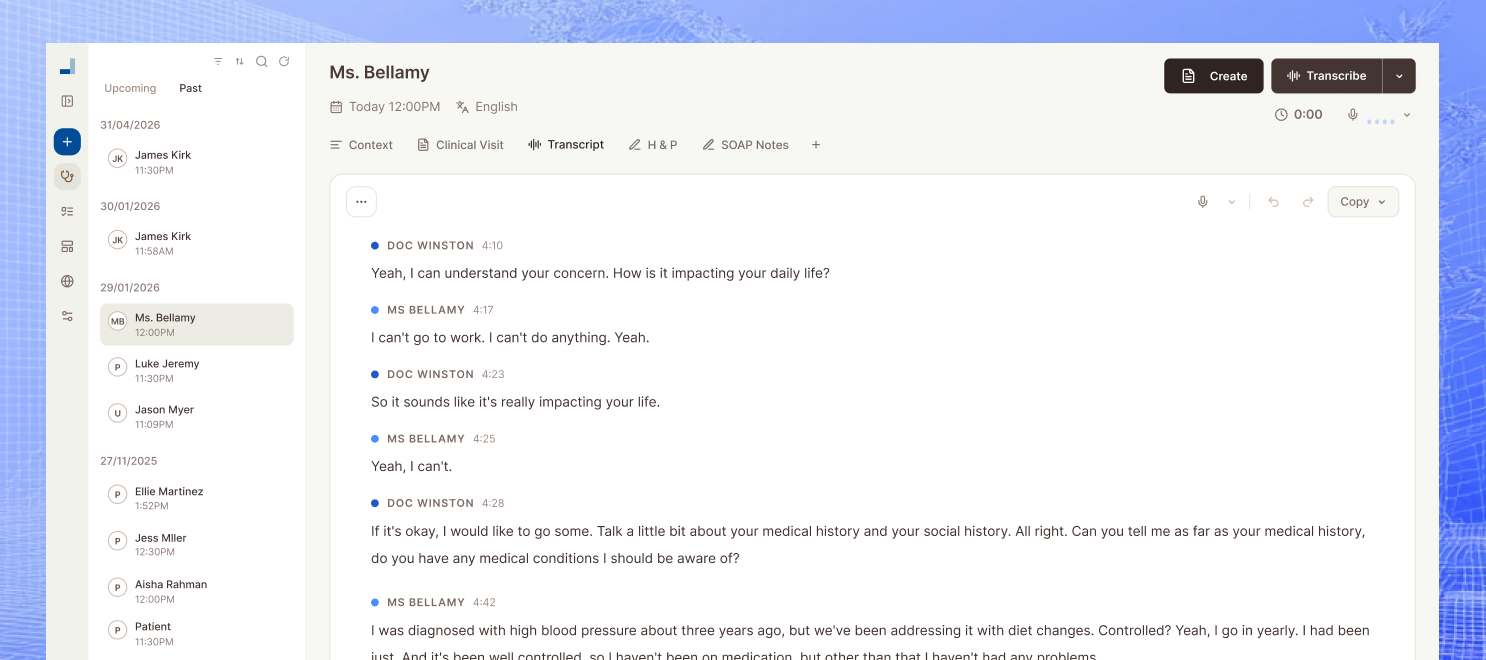
After the encounter, the AI will provide a structured draft. This is the moment for a rapid review and edit. Instead of starting from a blank page, you are simply verifying and refining the generated text. Once the clinical note is finalized, you can immediately use the output to generate ancillary documents, such as a specialized referral letter or a patient summary, by simply asking the AI to reformat the existing data.
- Start with low-complexity visits to master the workflow transition.
- Use specialty-specific templates to ensure all required data points are captured.
- Review and edit drafts immediately to maintain the highest clinical accuracy.
- Leverage the clinical encounter data to auto-fill letters, forms, and summaries.
How to keep note quality high and reduce mistakes
Even with advanced technology, clinical documentation can suffer from typical failure points such as incorrect dosages, missing lab values, or “note bloat.” To combat this, it is essential to develop a lightweight review habit. Clinicians should spend sixty seconds scanning the generated draft for high-risk data points—medications, allergies, and specific measurements—to ensure the AI hasn’t misinterpreted a verbal number or a technical term.
Establishing team standards for documentation also helps maintain quality across a clinic. When every practitioner follows a similar structure for reviewing and finalizing notes, the risk of inconsistency vanishes. Training staff to use specific keywords during an encounter can also act as “anchors” for the AI, helping it categorize information more accurately and reducing the time needed for posterior corrections.
- Scan for specific high-risk data points like dosages and vital signs.
- Standardize review protocols across the entire clinical team.
- Use specific verbal cues during consults to help the AI categorize data.
- Implement a habit of finishing notes immediately after the patient leaves.
Privacy, consent, and patient trust (plain English)
Patient privacy is the cornerstone of the medical relationship. While specific consent laws vary by state and country, the best practice is always transparency. Most patients are supportive of technologies that allow their doctor to focus on them rather than a keyboard, provided they understand that the data is handled securely and used only for their medical record. Always follow your local institutional policy and legal guidelines regarding recording.
You might tell a patient: “To make sure I give you my full attention and don’t miss any details, I’m using an AI assistant to help me take notes during our visit today. It records our conversation and turns it into a medical summary for your chart. Is that okay with you?” Most patients appreciate the honesty and the focus on their care. From a security standpoint, ensuring the system uses encryption and adheres to HIPAA or GDPR transit standards is non-negotiable for clinic owners.
- Prioritize transparency with patients regarding the use of assistive AI.
- Follow localized legal requirements and institutional privacy policies.
- Use a simple script to explain the benefits of AI to the patient.
- Verify that all documentation tools meet modern encryption and data standards.
Rolling it out across a clinic without disruption
A successful rollout involves a two-week pilot program where a few “super-users” test the system and refine templates. This proactive approach identifies potential workflow bottlenecks before the technology is introduced to the wider team. During this time, it is vital to track specific metrics, such as the reduction in after-hours charting time and the completeness of the clinical notes compared to the previous manual system.
Once the pilot is complete, offer hands-on training sessions for all staff members. Aligning on which templates to use for specific clinic workflows ensures that the documentation is uniform regardless of who sees the patient. This uniformity is particularly beneficial for university clinics where residents and attending physicians must regularly share and review patient files.
- Implement a 14-day pilot with selected staff to identify workflow hurdles.
- Measure time saved and note quality improvements during the testing phase.
- Conduct staff-wide training to ensure template alignment and consistency.
- Focus on metrics like reduced burnout and faster chart closure times.
Mcoy AI is an AI medical scribe that records and transcribes patient encounters, then generates multiple clinical note types (H&P, progress notes, consult notes, follow-up notes, procedure notes, discharge summaries, referral letters, and more). It features 200+ customizable templates and an AI chat function to create letters, forms, and common clinical documents effortlessly. By handling the heavy lifting of documentation, it allows healthcare providers to focus more on patient interaction and less on the administrative burden of the EHR.
Mastering the ability to generate forms and letters from encounters creates a more sustainable practice environment. By implementing a structured AI workflow, you can ensure that your documentation is not only compliant and thorough but also achieved in a fraction of the time. This shift allows you to focus on the heart of medicine: the patient. Start your pilot today and see how Mcoy AI can transform your daily clinical routine.
SEO description: Learn how to generate forms and letters from encounters using Mcoy AI to automate your medical documentation and save hours on admin every day.
What a serious review table should cover
| Decision area | Common mistake | Better clinic-ready approach | Metric to watch |
|---|---|---|---|
| Workflow design | Treat generate forms & letters from encounters | mcoy ai guide as a one-off documentation task | Build a repeatable process with clear ownership and review points |
| Team adoption | Assume every clinician will naturally use the same process | Train for consistency and define exception handling early | Active user adoption |
| Quality review | Only check notes when a problem is reported | Audit a sample of notes weekly and review edge cases | Edit rate per note |
| Operational follow-through | Leave admin actions outside the documentation workflow | Use the same encounter data for referrals, letters, and follow-up tasks | Completion rate for next-step tasks |
Related reading
If you are working through generate forms & letters from encounters | mcoy ai guide, it helps to read this alongside Admin Management: How to Reduce Admin Errors in Clinical Notes, Admin Management: Medication List Template with Examples, and Specialty Guides: Build a Weekly Documentation Review Process With AI. Those guides cover adjacent workflow, implementation, and evaluation questions so the decision does not sit in isolation.
FAQ
How accurate are AI medical scribes in real clinics?
Modern AI medical scribes are exceptionally accurate at capturing the core context and medical details of a conversation. However, factors like background noise or multiple people speaking at once can occasionally affect the transcript. In a real-world clinic setting, they typically capture about 95% of the relevant clinical data accurately, which is often higher than manual recall. The clinician remains responsible for the final review to ensure the nuances are perfectly captured.
Do I still need to review every note?
Yes, medical professionals are legally and ethically responsible for the accuracy of their medical records. While the AI does the heavy lifting by drafting the note, you should always perform a quick review to verify dosages, dates, and specific patient instructions. This review usually takes less than a minute, which is still a significant time saving compared to writing a note from scratch. Most systems allow for quick edits to be made directly within the interface.
What note types can an AI scribe generate besides SOAP?
Advanced AI scribes can generate a wide array of documentation including History and Physicals (H&P), procedure notes, consult notes, and discharge summaries. Beyond standard clinical notes, they can also draft referral letters and patient education summaries based on the encounter data. This flexibility allows the system to cater to the specific needs of both general practitioners and specialized medical professionals. Using diverse templates ensures the output matches the required professional standard for each document type.
Will this work for telehealth and in-person consults?
Yes, the technology is designed to be versatile and works effectively for both in-person and telehealth consultations. For telehealth, the AI typically captures the audio directly from the computer or through a speakerphone setup. For in-person visits, a smartphone or tablet in the room is usually sufficient to capture the conversation clearly. The system processes the audio similarly regardless of the encounter type, ensuring consistent documentation quality across your entire patient load.
How do I explain recording/transcription to patients?
Most clinicians find that being honest and focused on the benefit to the patient works best. You can explain that using an AI assistant allows you to look at them instead of a computer screen, ensuring they have your undivided attention. Mentioning that the recording is used only to create a medical summary often alleviates any privacy concerns. Most patients appreciate the modern approach and the better quality of care it facilitates.
How do clinics prevent note bloat?
Note bloat is prevented by using concise templates that focus on pertinent information rather than transcribing every single word spoken. The AI is trained to distinguish between relevant clinical findings and casual conversation. By setting specific length or detail parameters in your templates, you can ensure the final output is meaningful and professional. Regular audits of the generated notes can also help your team refine their verbal style to produce cleaner documentation.
How long does template setup take?
Setting up initial templates is a fast process, often taking only a few minutes per type if you are using pre-built industry standards. Customizing a template to fit your specific clinic’s terminology or workflow might take an additional 10 to 15 minutes. Once these templates are saved, they can be used indefinitely, saving hours of work over the following weeks. Most clinicians find that they only need to make minor adjustments as they get more comfortable with the system.
What’s the safest way to start if I’m skeptical?
The safest way to start is by running a small pilot with non-complex cases or routine follow-ups. You can continue taking your usual abbreviated notes as a backup while you see how the AI performs. This “dual-running” period allows you to compare the AI’s output with your manual records without any risk to your patient documentation quality. Once you see the consistency and time-savings firsthand, you can gradually expand its use to more complex encounters.