AI & Medicine: Safe Transcription of Sensitive Topics: A Clinician Guide
Learn how to manage sensitive medical data in transcribed notes. A complete guide for clinicians on privacy, consent, and secure AI documentation.
What a medical scribe solves in modern practice
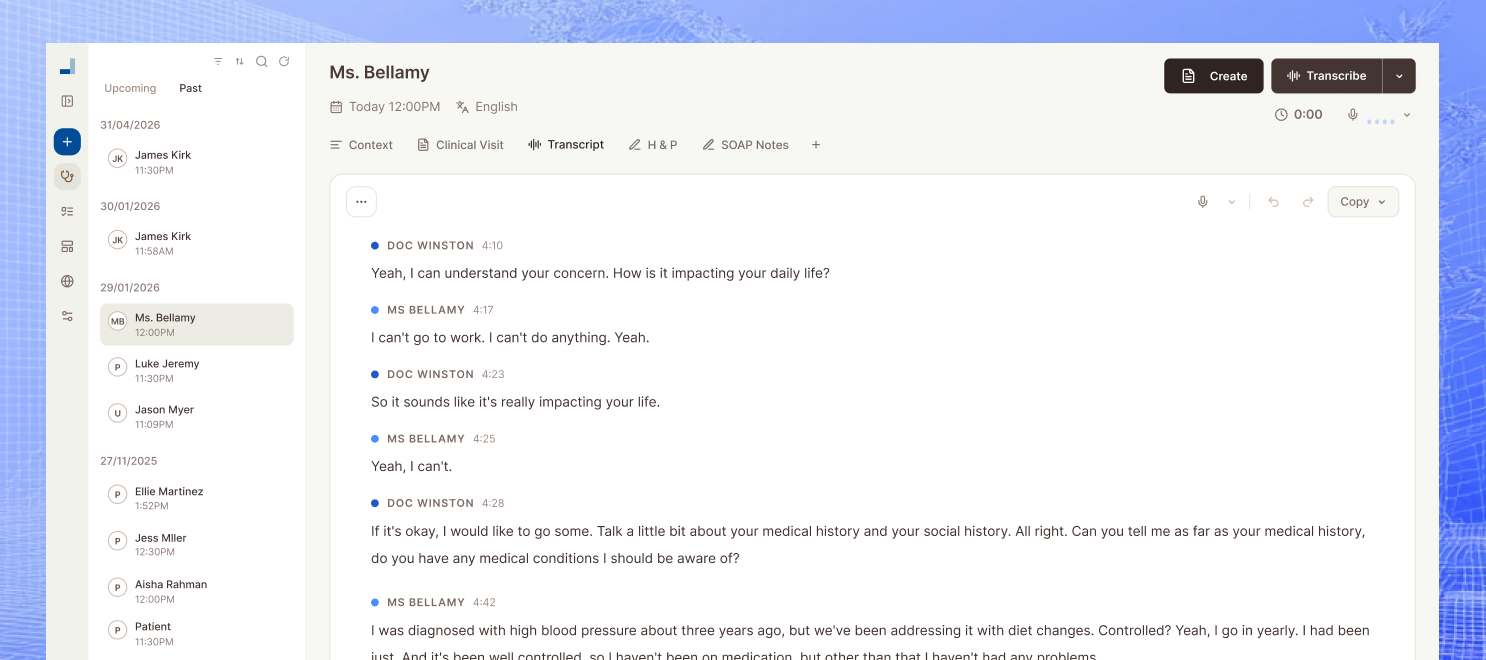
The modern healthcare landscape is often defined by the overwhelming weight of documentation. For many clinicians, the primary source of burnout isn’t the patient care itself, but the hours spent after a shift capturing the intricacies of a sensitive encounter. When doctors are forced to focus on a screen rather than the patient, the quality of both the clinical observation and the patient-provider relationship suffers significantly.
An AI medical scribe serves as a digital assistant that offloads the cognitive burden of transcription. By automating the capture of patient dialogues, it ensures that no detail is lost to memory fatigue. However, it is important to remember that these tools are strictly assistive. While the scribe captures the data, the clinician remains the ultimate authority, ensuring that the generated notes accurately reflect the nuances of the medical judgment and patient history.
- Reduces the ‘pajama time’ spent on after-hours charting and administrative tasks.
- Enhances patient engagement by allowing for uninterrupted eye contact during visits.
- Minimizes the risk of missing critical details in complex, multi-issue consultations.
- Provides a structured baseline for notes that the clinician can quickly review and sign.
Note types you can generate beyond SOAP (H&P and more)
While the SOAP format is a staple in medicine, it often lacks the versatility required for specialized care or long-term management. Effective documentation requires different structures depending on the context of the visit. High-quality clinical notes must serve multiple purposes: assisting in future clinical decisions, providing evidence for billing, and maintaining a clear record for any potential legal audits.
In a modern workflow, clinicians can generate comprehensive History and Physical (H&P) reports, consult notes for specialists, and detailed procedure notes without starting from scratch. These varied formats ensure that the right information is prioritized, whether you are preparing for a surgery or summarizing a routine follow-up. Using standardized but flexible templates prevents information silos and ensures continuity of care across different departments.
Properly structured notes are also vital for handover quality. When a patient transition occurs, having a detailed discharge summary or a referral letter that isn’t just a copy-pasted SOAP note makes a massive difference for the receiving physician. It transforms documentation from a chore into a high-value clinical asset that improves patient outcomes.
- Generates H&Ps, progress notes, and specialized consult summaries automatically.
- Ensures audit-ready documentation for complex procedures and discharge plans.
- Facilitates better communication between providers through clear referral letters.
- Improves continuity of care by capturing longitudinal data beyond the current visit.
How to implement safe transcription step-by-step in a real clinic
Starting with automated documentation doesn’t require a total practice overhaul overnight. The most successful clinics begin by selecting one specific visit type—perhaps routine follow-ups or standard wellness checks—to test the workflow. This allows the team to get comfortable with the technology in a low-stakes environment before moving on to more complex cases involving sensitive topics.
Once the initial pilot is successful, vous can begin setting up templates tailored to your specific specialty. This ensures that the AI knows exactly which data points are most important for your field, whether that’s mental health, oncology, or primary care. During the encounter, whether in-person or via telehealth, simply activate the capture tool and focus entirely on the patient conversation.
After the encounter ends, take two minutes to review the output. Editing should be a quick process of refinement rather than reconstruction. Finally, reuse these outputs to populate other required documents like school forms or insurance authorizations. This integrated approach ensures that the initial time investment in the patient encounter pays dividends throughout the entire administrative cycle.
- Begin with a pilot program for a single, low-complexity visit type.
- Customize templates to match your specialty’s specific documentation requirements.
- Capture the encounter naturally and review the generated draft immediately after.
- Repurpose note data for letters, forms, and patient summaries to save extra time.
How to keep note quality high and reduce mistakes
Maintaining high data integrity in documented notes requires a balance of technology and human oversight. AI tools are excellent at capturing words, but they may occasionally struggle with specific clinical nuances, such as complex medication dosages or the correct assignment of items to the problem list. Clinicians must stay vigilant against ‘note bloat,’ where unnecessary details clutter the legal record.
To maintain high standards, establish a lightweight review habit. Instead of reading every word, scan for critical values, medications, and the assessment plan. Setting team-wide standards for what constitutes a ‘good note’ helps ensure that every practitioner in the clinic is producing consistent, high-quality documentation that meets both clinical and legal requirements.
- Develop a consistent 60-second review process for every generated draft.
- Check specifically for medication names, dosages, and numerical lab values.
- Prevent note bloat by stripping out redundant social chatter from the final record.
- Align the clinical team on standardized documentation styles for continuity.
Privacy, consent, and patient trust (plain English)
Patient trust is the foundation of the clinical encounter, especially when discussing sensitive topics. When introducing technology into the exam room, transparency is the best policy. While consent requirements vary by region, it is best practice to inform the patient that you are using a digital assistant to ensure their record is as accurate as possible so you can focus on their care.
A simple way to explain this to a patient is: ‘I’m using an AI assistant today to capture our conversation so I can focus on you instead of my computer. It helps me make sure your chart is perfectly accurate. Is that okay with you?’ Most patients appreciate the extra attention they receive when the doctor isn’t typing away during the visit.
From a security perspective, ensure your tools follow general principles of encryption and data retention. By framing the technology as a tool for better care rather than a data collection mechanism, you maintain the therapeutic alliance while benefiting from modern efficiency.
- Always follow local regulations regarding patient consent for audio recording.
- Use a simple, patient-centered script to explain the benefits of the technology.
- Ensure data is handled with high-level encryption and secure storage protocols.
- Allow patients to opt-out easily if they feel uncomfortable with the process.
Rolling it out across a clinic without disruption
A smooth rollout requires a structured approach rather than a sudden switch. A 14-day pilot plan is usually sufficient to identify any bottlenecks. During the first week, focus on technical comfort; in the second week, focus on refining the templates. This phased approach reduces anxiety among staff and ensures the technology integrates seamlessly into existing workflows.
Track specific metrics to prove the value of the change, such as the number of hours saved per week on charting or the reduction in after-hours logins. When the administrative team see a decrease in the time they spend chasing doctors for unsigned notes, and clinicians feel less drained, the adoption will happen naturally across the entire university clinic or private practice.
- Execute a 2-week pilot focusing on comfort first, then template refinement.
- Monitor metrics like time saved and reduction in ‘pajama time’ to gauge success.
- Provide brief, practical training sessions for staff and fellow practitioners.
- Standardize templates across the clinic to ensure a uniform patient record.
Mcoy AI is an AI medical scribe that records and transcribes patient encounters, then generates multiple clinical note types (H&P, progress notes, consult notes, follow-up notes, procedure notes, discharge summaries, referral letters, and more). It features 200+ customizable templates and AI chat to create letters, forms, and documents, acting as a comprehensive clinical assistant that helps you spend more time on care and less on paperwork.
Conclusion
Implementing a modern documentation workflow is about more than just speed; it’s about restoring the human element to medicine. By understanding how to manage safe transcription effectively, clinicians can protect patient privacy while significantly reducing their administrative burden. Whether you are a solo practitioner or managing a large university clinic, the shift toward automated note-taking is a transformative step toward sustainable practice. Use this guide to start your pilot, refine your templates, and embrace the future of safe transcription today.
What a serious review table should cover
| Decision area | Common mistake | Better clinic-ready approach | Metric to watch |
|---|---|---|---|
| Workflow design | Treat safe transcription of sensitive topics: a clinician guide as a one-off documentation task | Build a repeatable process with clear ownership and review points | Time to complete documentation |
| Team adoption | Assume every clinician will naturally use the same process | Train for consistency and define exception handling early | Active user adoption |
| Quality review | Only check notes when a problem is reported | Audit a sample of notes weekly and review edge cases | Edit rate per note |
| Operational follow-through | Leave admin actions outside the documentation workflow | Use the same encounter data for referrals, letters, and follow-up tasks | Completion rate for next-step tasks |
Related reading
If you are working through safe transcription of sensitive topics: a clinician guide, it helps to read this alongside AI & Medicine: How to Simplify Clinical Notes for Busy Doctors, AI & Medicine: How Doctors Can Improve SOAP Notes, and Specialty Guides: Mastering AI Scribe for Urology Clinic Notes | Full Guide. Those guides cover adjacent workflow, implementation, and evaluation questions so the decision does not sit in isolation.
FAQ
How accurate are AI medical scribes in real clinics?
AI medical scribes have reached a high level of accuracy, often capturing nuances that manual typing might miss. However, they are not perfect and can occasionally misinterpret complex medical terminology or background noise. This is why the clinician’s role in reviewing and validating the note remains essential to ensure 100% accuracy in the medical record.
Do I still need to review every note?
Yes, professional responsibility dictates that the clinician must review and sign off on every note. While the AI does the heavy lifting of drafting the content, the physician must ensure that the assessment and plan are correct. Most clinicians find that a quick 30-to-60-second review is sufficient to verify the draft before finalization.
What note types can an AI scribe generate besides SOAP?
Modern AI scribes are incredibly versatile and can generate much more than just SOAP notes. They can produce History and Physicals (H&P), detailed procedure notes, discharge summaries, and speciality-specific consult notes. Furthermore, they can help draft referral letters and patient instructions based on the details of the encounter.
Will this work for telehealth and in-person consults?
Yes, most AI scribe solutions are designed to work seamlessly across both environments. For in-person visits, a mobile device or tablet can record the audio, while for telehealth, the system can often integrate with the video platform or record the audio from the computer. The quality of transcription remains high regardless of the medium.
How do I explain recording/transcription to patients?
The best approach is transparency and focusing on the benefits to the patient. You might say, ‘I am using a secure tool to take notes today so I can look at you instead of my screen.’ Framing it as a way to provide better, more focused care usually results in high patient acceptance rates.
How do clinics prevent note bloat?
Clinics prevent note bloat by using customizable templates that instruct the AI to focus only on clinically relevant information. By setting clear parameters on what should be included in sections like ‘History of Present Illness’ or ‘Physical Exam,’ clinicians can ensure the resulting notes are concise, focused, and free of unnecessary fluff.
How long does template setup take?
Initial template setup is surprisingly fast, often taking just a few minutes per type. Most systems come with pre-built library templates for various specialties that you can use immediately. Over the first week of use, you can further refine these templates to perfectly match your personal documentation style and specific clinic needs.
What’s the safest way to start if I’m skeptical?
The safest way to start is with a small pilot program involving non-sensitive, routine cases. Use the scribe for five or ten ‘standard’ visits to see how it handles your speech patterns and workflow. Once you see the time savings and accuracy for yourself, you can gradually expand its use to more complex consultations.