Specialty Guides: Mastering AI Scribe for Urology Clinic Notes | Full Guide
Learn how to optimize your urology practice with an AI scribe. Master H&Ps, procedure notes, and follow-ups while reducing charting time and burnout.
What a medical scribe solves in modern practice
For urologists, the documentation burden is often a primary driver of professional fatigue. Between high-volume clinics seeing dozens of patients with urinary tract symptoms and the complexity of surgical planning, the time spent on after-hours charting can easily exceed clinical hours. This administrative weight leads to rushed notes and cognitive overload, which significantly impacts the quality of patient interaction.
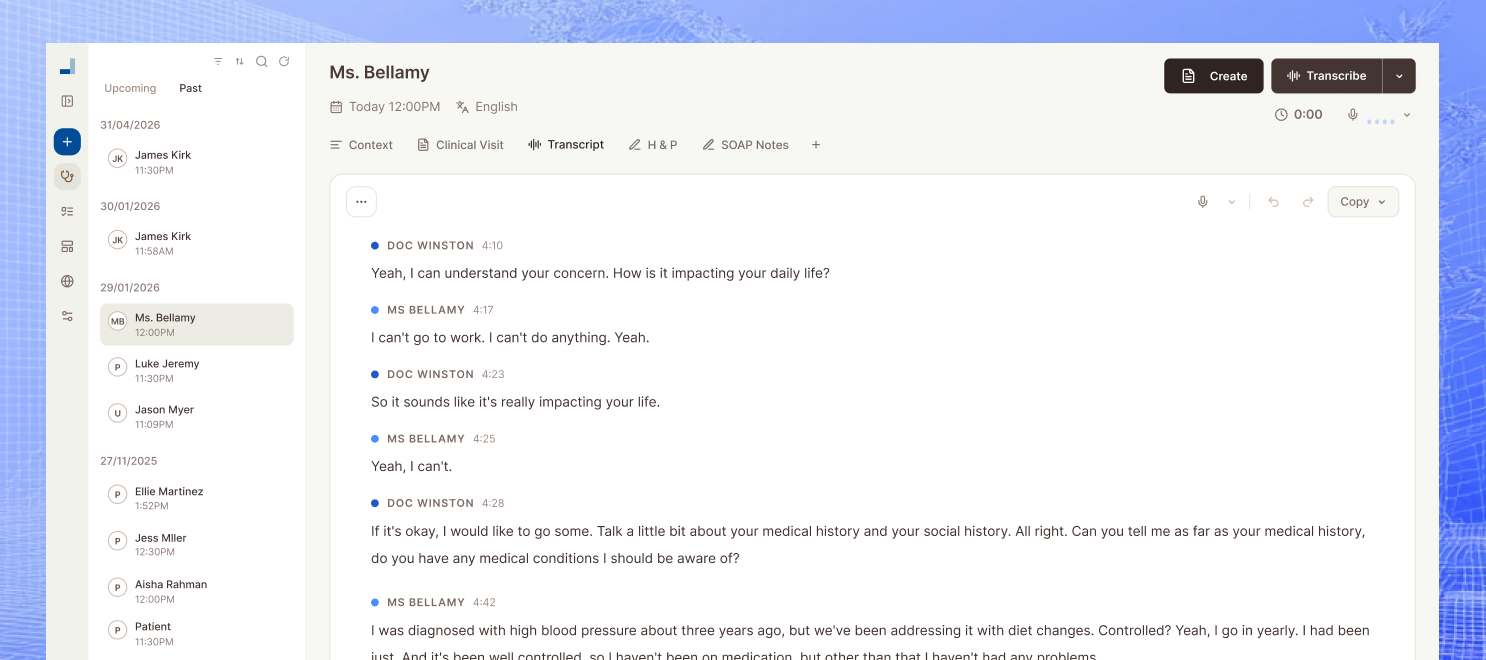
An AI scribe for urology clinic notes serves as an intelligent assistant that captures the nuances of a patient encounter in real-time. It is important to remember that these tools are assistive technologies rather than autonomous replacements for clinical judgment. The clinician remains the final authority on the accuracy of the record, but the AI removes the heavy lifting of manual data entry and drafting.
- Significantly reduces documentation time and after-hours work for busy specialists.
- Captures specific urological details like voiding patterns and surgical history accurately.
- Decreases cognitive load, allowing doctors to focus on physical exams and patient concerns.
- Acts as an assistive draft-generator while maintaining the clinician’s ultimate responsibility.
Note types you can generate beyond SOAP (H&P and more)
While the SOAP format is a staple in general medicine, urology practices often require more specialized documentation to ensure continuity of care. Using an AI scribe allows for the seamless creation of comprehensive History and Physical (H&P) reports, which are vital for preoperative clearance and complex new patient consultations. These notes provide a foundation for surgical decision-making and are essential for insurance authorizations.
Beyond basic progress notes, specialized outputs like procedure notes for cystoscopies or prostate biopsies can be generated almost instantly. Consult notes and referral letters are equally critical, as urology is a highly collaborative field. Having a tool that can transform a conversation into a structured referral letter ensures that primary care physicians receive timely, high-quality updates on their patients’ care.
The structure of these notes is not just about aesthetics; it is about audit readiness and medico-legal safety. Discharge summaries and follow-up notes for chronic conditions like BPH or kidney stones need to be detailed and consistent. An AI-driven approach ensures that no critical parameter, such as PSA levels or imaging findings, is omitted from the narrative.
- Generates specialized H&Ps, custom procedure notes, and detailed referral letters.
- Supports diverse urology workflows from routine screenings to surgical planning.
- Ensures high-quality handover documentation for better patient care continuity.
- Enhances audit readiness by following a consistent, structured documentation style.
How to implement an AI scribe for urology clinic notes step-by-step
The transition to using an AI scribe for urology clinic notes should begin with a focused approach rather than a total overhaul. Start by selecting one specific visit type, such as routine follow-ups for stable conditions. This allows the clinical team to become comfortable with the hardware interface and the transcription process without the pressure of a complex new patient consultation.
Next, take the time to set up and fine-tune templates specifically for urological care. Whether you are documenting a vasectomy consultation or a post-operative kidney stone follow-up, having the right placeholders ensures the output meets your specific standards. Once the templates are ready, you can begin capturing encounters across both in-person and telehealth platforms with confidence.
During the encounter, focus entirely on the patient while the AI works in the background. After the visit, the system provides a draft that you should review and edit immediately while the details are fresh. This rapid review cycle is the key to maintaining a high velocity of patient turnover without sacrificing note quality. Finally, leverage the AI to reuse these outputs for secondary documents like work excuse forms or patient instructions, creating a truly integrated administrative workflow.
- Begin with simple visit types like routine follow-ups to build team familiarity.
- Customize urology-specific templates for procedures and specialized consults.
- Review drafts immediately post-encounter to ensure clinical accuracy.
- Repurpose documented notes into patient letters and forms for maximum efficiency.
How to keep note quality high and reduce mistakes
While AI technology is incredibly advanced, it is not immune to errors, particularly with complex medical terminology or medication dosages. Typical failure points include the omission of specific medication strengths or the misinterpretation of lab values like creatinine or PSA. To prevent these errors, clinicians must adopt a lightweight review habit where they scan the AI’s output for numerical accuracy and clinical logic.
Establishing team standards for documentation is also vital. If multiple providers in a university or private clinic use the system, agreeing on how to phrase certain findings—such as pelvic exam results or bladder scan volumes—creates a unified patient record. This consistency reduces ‘note bloat’—the tendency for notes to become excessively long and redundant—ensuring that only the most relevant clinical data remains.
- Develop a habit of checking numbers, dosages, and lab values for precision.
- Set clinic-wide standards for phrasing and specific urological exam findings.
- Avoid note bloat by focusing templates on high-value clinical data.
- Maintain a feedback loop to improve AI template performance over time.
Privacy, consent, and patient trust (plain English)
Patient privacy is paramount when introducing recording technology into the exam room. While consent requirements vary by jurisdiction, it is best practice to always inform the patient and obtain documented or verbal consent according to local regulations. Most patients are supportive once they realize the technology allows the doctor to look at them instead of a computer screen.
A simple way to explain this is: “I’m using an AI assistant to help me take accurate notes so I can focus entirely on your care today. It records our conversation and turns it into a medical report, then the recording is deleted.” This transparency builds trust and positions the technology as a tool for better bedside manner.
- Always follow local laws regarding patient consent and data recording.
- Explain the technology as a benefit to the patient’s face-time with the doctor.
- Use a clear, concise script to introduce the tool during the visit.
- Ensure the scribe solution adheres to modern security and data retention standards.
Rolling it out across a clinic without disruption
A successful rollout involves a structured two-week pilot phase. Start with a single ‘champion’ doctor who can master the system and troubleshoot early challenges. During this time, the clinic should track specific metrics like time saved per day and the reduction in after-hours charting to quantify the return on investment. This data helps in gaining buy-in from skeptical staff members.
Training should not be a one-day event but a continuous process of alignment. As the pilot expands to the rest of the clinic or university department, share the best-performing templates and strategies. This collaborative approach ensures that the entire practice moves toward a more efficient, less stressful documentation environment without disrupting the daily patient flow.
- Execute a 14-day pilot with a lead clinician to identify workflow gaps.
- Monitor time-saving metrics and note completeness to measure success.
- Provide ongoing training and template sharing among all clinic staff.
- Phased expansion prevents overwhelming the team with too many changes at once.
Mcoy AI is an AI medical scribe that records and transcribes patient encounters, then generates multiple clinical note types including H&P, progress notes, consult notes, follow-up notes, procedure notes, discharge summaries, referral letters, and more. It features over 200 customizable templates and an AI chat function that allows doctors to create letters, forms, and documents instantly. This helps clinicians focus on the patient while the AI handles the administrative heavy lifting.
Conclusion
Implementing an AI scribe for urology clinic notes represents a significant step toward modernizing a practice and reclaiming surgical time. By following a structured workflow—from initial pilot to template customization—urologists can eliminate the burden of manual charting. The result is better documentation, improved patient trust, and a dramatic reduction in burnout. Start your pilot today and see how an AI scribe for urology clinic notes can transform your clinical experience.
What a serious review table should cover
| Decision area | Common mistake | Better clinic-ready approach | Metric to watch |
|---|---|---|---|
| Workflow design | Treat mastering ai scribe for urology clinic notes | full guide as a one-off documentation task | Build a repeatable process with clear ownership and review points |
| Team adoption | Assume every clinician will naturally use the same process | Train for consistency and define exception handling early | Active user adoption |
| Quality review | Only check notes when a problem is reported | Audit a sample of notes weekly and review edge cases | Edit rate per note |
| Operational follow-through | Leave admin actions outside the documentation workflow | Use the same encounter data for referrals, letters, and follow-up tasks | Completion rate for next-step tasks |
Related reading
If you are working through mastering ai scribe for urology clinic notes | full guide, it helps to read this alongside Specialty Guides: How to Run a More Efficient Medical Practice in 2026, Specialty Guides: How to Improve Patient Encounters, and Specialty Guides: Mastering the AI Medical Scribe for University Clinics. Those guides cover adjacent workflow, implementation, and evaluation questions so the decision does not sit in isolation.
FAQ
How accurate are AI medical scribes in real clinics?
Modern AI scribes are highly accurate, often reaching over 90% accuracy in transcribing medical terminology and conversational nuances. However, factors like background noise or multiple speakers can affect the result. The clinician must always review the draft to ensure specific clinical details, like surgical measurements or drug dosages, are perfectly captured before finalizing the note.
Do I still need to review every note?
Yes, reviewing every note is a mandatory clinical and legal requirement. The AI scribe functions as a highly efficient draft-generator, but the physician remains the ultimate authority on the medical record. A quick 1–2 minute review is usually sufficient to verify the AI’s output and make any necessary clinical adjustments before the note is signed.
What note types can an AI scribe generate besides SOAP?
Beyond the standard SOAP note, an AI scribe can generate complex History and Physicals, detailed procedure notes for things like biopsies, and comprehensive discharge summaries. It can also produce referral letters and follow-up notes that are tailored to the specific needs of urology specialists. This versatility ensures all parts of a patient’s journey are documented.
Will this work for telehealth and in-person consults?
Most AI scribes are designed to be flexible, working seamlessly across both in-person and telehealth platforms. For telehealth, the AI can often integrate with the audio output of your computer, while in-person consults rely on a mobile device or desktop microphone. This makes it an ideal solution for clinics that offer a hybrid model of care.
How do I explain recording/transcription to patients?
The best approach is to be brief and emphasize the benefit to the patient. Tell them that the tool allows you to look at them rather than a screen, ensuring you don’t miss any of their concerns. Most patients appreciate the increased eye contact and attention and are very comfortable with the technology once they understand its purpose.
How do clinics prevent note bloat?
Note bloat is prevented by using highly specific templates that prompt the AI to only extract relevant clinical information. Instead of transcribing every single word spoken, the AI focuses on key findings, assessments, and plans. Regularly updating these templates based on clinic feedback also helps keep the notes concise and professional.
How long does template setup take?
Initial setup for basic templates can take as little as 15–30 minutes. However, truly optimizing your workflow usually involves a few hours of refinement over the first week of use. As you see how the AI handles your specific speaking style and urology-specific terms, you can tweak the templates to get the output closer to your ideal note.
What’s the safest way to start if I’m skeptical?
The safest way to start is with a small pilot program focusing on just one or two types of low-stakes visits. Use the scribe on a handful of stable, follow-up patients to see how it performs without the pressure of a full schedule. This low-risk entry point allows you to judge the accuracy and time-savings for yourself before committing your entire practice.