AI & Medicine: Build a Safe Review Process for AI Notes | Guide for Doctors
Learn how to build a safe review process for AI notes in your clinic. Master note quality, HIPAA compliance, and efficient clinical documentation workflows.
What a medical scribe solves in modern practice
The burden of administrative documentation has become the leading cause of burnout among modern clinicians. Whether you are a private practitioner or working in a busy university clinic, the cognitive load required to recall patient details while navigating an EHR is immense. This process often leads to ‘pajama time’—hours spent charting after the clinic has closed—which degrades work-life balance and increases the risk of documentation errors.
An AI medical scribe serves as an assistive layer, capturing the nuance of the patient-physician dialogue so the doctor can focus on the person in front of them. It is important to remember that these tools are not autonomous practitioners; they are highly sophisticated assistants. The clinician remains the ultimate authority, ensuring that the final note accurately reflects the medical decision-making and the physical findings of the encounter.
- Reduces cognitive load and eliminates after-hours charting fatigue.
- Captures patient nuances that are often lost in manual shorthand.
- Acts as an assistive tool, keeping the clinician in full control.
- Significantly lowers the risk of ‘note bloat’ and repetitive copy-pasting.
Note types you can generate beyond SOAP (H&P and more)
While the SOAP format is the industry standard for daily progress, complex cases often require specialized documentation. Comprehensive History and Physical (H&P) notes are essential for new admissions or surgical clearances, requiring a deep dive into patient history that AI can organize efficiently. Consult notes and referral letters, on the other hand, must be concise yet detailed enough to inform another specialist of the specific clinical question at hand.
Using a structured review process allows clinics to branch out into follow-up notes, procedure notes, and discharge summaries with high consistency. When every note follows a standardized template, the continuity of care improves across the entire practice. This uniformity makes it easier for other team members to step in and provides a robust primary record for potential audits or legal inquiries.
- Generate specialized H&P, consult notes, and procedure summaries.
- Improve continuity of care through standardized documentation formats.
- Ensure audit readiness with high-quality, structured clinical records.
- Automate referral letters to streamline communication with specialists.
How to implement a safe review process for AI notes step-by-step
To begin implementing a safe review process for AI notes, start by selecting one specific visit type, such as routine follow-ups. This allows your team to get comfortable with the technology in a low-stakes environment before moving on to complex new patient evaluations. By focusing on one area, you can identify where the AI excels and where it might need more specific guidance based on your specialty’s unique language.
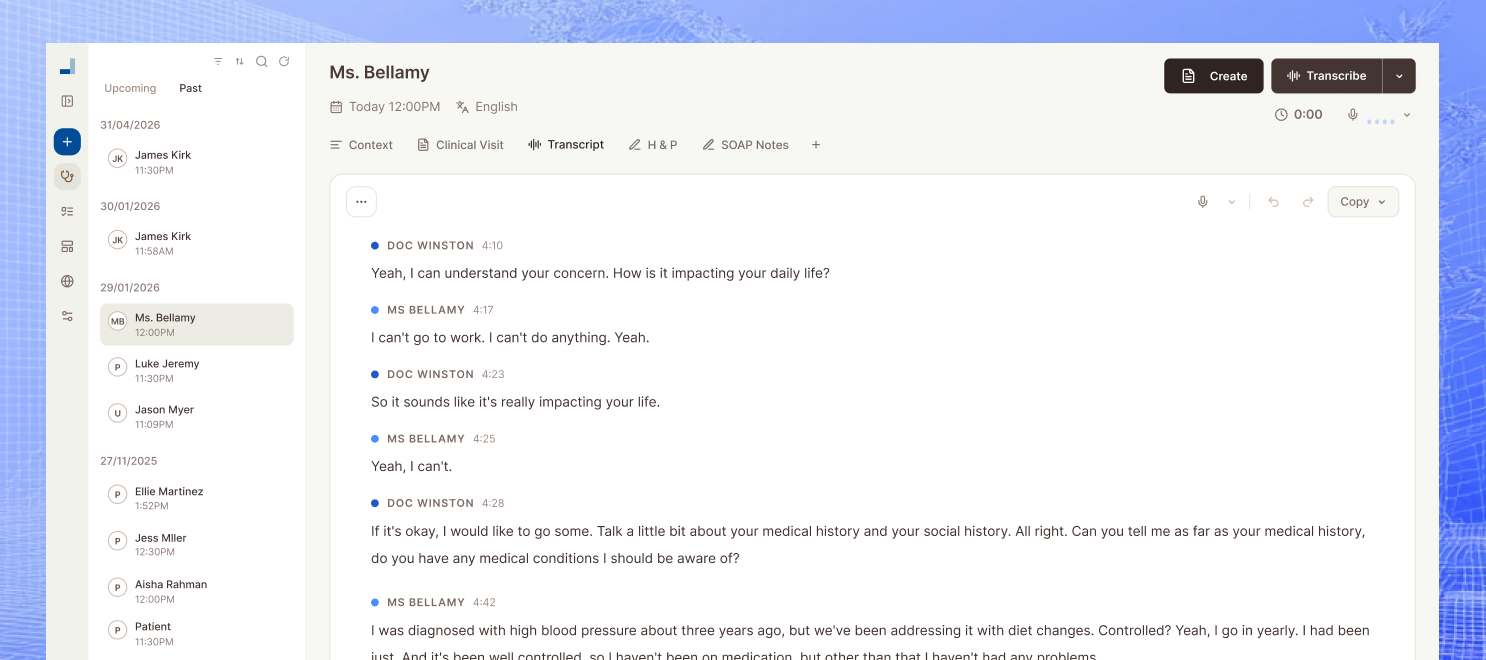
Next, you should configure your specific templates to match your clinical workflow. Most clinicians find success by setting up templates for common complaints or procedure types. During the encounter, whether in-person or via telehealth, ensure the audio capture is clear to minimize transcription errors. Once the encounter ends, the AI generates a draft that serves as your starting point, rather than a blank screen.
The review phase is the most critical step for safety. You should develop a habit of scanning for key data points like dosages, dates, and lateralities (left vs. right). Once the draft is polished, you can instantly reuse that data to generate secondary documents like work excuses or referral letters. This systematic approach ensures that the time saved on typing is redirected toward ensuring the accuracy of the medical record.
- Start with one visit type to build trust and technical familiarity.
- Pre-set templates to align with specialty-specific documentation needs.
- Always verify dosages, lateralities, and specific clinical measurements.
- Leverage the AI output to quickly generate and review referral letters.
How to keep note quality high and reduce mistakes
Maintaining high note quality requires a proactive rather than reactive approach. The most common failure points in documentation—manual or automated—include missing medications, incorrect lab values, and excessive note bloat. To mitigate these risks, clinicians should adopt a ‘lightweight review habit’ where they verify high-risk sections immediately after the encounter while the details are still fresh in their minds.
Establishing team-wide standards for what a ‘gold standard’ note looks like is also essential. This means defining how much history is necessary and what constitutes an appropriate plan of care. By auditing a random sample of notes once a month, clinic owners can ensure the AI is being used correctly and that clinicians are not becoming overly reliant on the initial drafts without proper oversight.
- Perform real-time reviews while patient details are fresh.
- Audit random note samples monthly to maintain peak quality.
- Focus specifically on verifying medications and physical exam findings.
- Avoid note bloat by keeping AI-generated narratives concise and relevant.
Privacy, consent, and patient trust (plain English)
Transparency is the cornerstone of patient trust when using AI in a clinical setting. While privacy laws like HIPAA or GDPR vary by region, the principle of informed consent remains universal. Patients generally appreciate the technology when they realize it leads to better eye contact and less time the doctor spends staring at a computer screen during their visit.
A simple way to explain this to patients is: ‘I’m using an AI assistant today to help me capture our conversation so I can focus entirely on you instead of my computer. It transcribes our talk into a medical note, and I review every word for accuracy afterward.’ This approach frames the technology as a benefit to the patient’s experience rather than a data collection tool.
- Always follow local legal guidelines regarding recording and consent.
- Explain the AI as a tool that allows for better eye contact and engagement.
- Reassure patients that the clinician reviews every single note produced.
- Maintain strict data retention and security protocols in line with HIPAA.
Rolling it out across a clinic without disruption
Rolling out a safe review process for AI notes should not happen overnight. A two-week pilot program involving one or two ‘tech-champion’ doctors is usually the best approach. During this time, the goal isn’t just to save time, but to refine the templates and establish the specific review flow that works for the clinic’s unique pace and volume.
Track specific metrics during the pilot, such as the reduction in time spent on notes after 5:00 PM and the completeness of the documentation compared to previous manual methods. Once the pilot proves successful, you can align the rest of the staff through brief training sessions. This ensures that every practitioner is following the same safety protocols, leading to a more resilient and efficient healthcare environment.
- Execute a two-week pilot with power users to iron out the workflow.
- Measure success via time saved and the reduction in after-hours charting.
- Standardize templates across the clinic to ensure uniform note quality.
- Provide brief, targeted training to move the whole team toward adoption.
Mcoy AI is an AI medical scribe that records and transcribes patient encounters, then generates multiple clinical note types (H&P, progress notes, consult notes, follow-up notes, procedure notes, discharge summaries, referral letters, and more). With over 200 customizable templates and an interactive AI chat, clinicians can easily create letters, forms, and complex documents based on the captured encounter. It is designed to integrate seamlessly into daily workflows, allowing providers to focus on care rather than administration.
Conclusion
Building a safe review process for AI notes is the bridge between innovative technology and sound clinical practice. By following a structured implementation plan—starting with a pilot, using diverse note types, and maintaining a strict review habit—clinics can significantly reduce burnout while actually improving the quality of their records. The key is to view the AI as a powerful assistant that requires the steady hand of a clinician to be truly effective. As you move forward, remember that the goal of a safe review process for AI notes is to give you back your time without ever compromising the integrity of patient care. Start your pilot today and reclaim your clinical focus.
What a serious review table should cover
| Decision area | Common mistake | Better clinic-ready approach | Metric to watch |
|---|---|---|---|
| Workflow design | Treat build a safe review process for ai notes | guide for doctors as a one-off documentation task | Build a repeatable process with clear ownership and review points |
| Team adoption | Assume every clinician will naturally use the same process | Train for consistency and define exception handling early | Active user adoption |
| Quality review | Only check notes when a problem is reported | Audit a sample of notes weekly and review edge cases | Edit rate per note |
| Operational follow-through | Leave admin actions outside the documentation workflow | Use the same encounter data for referrals, letters, and follow-up tasks | Completion rate for next-step tasks |
Related reading
If you are working through build a safe review process for ai notes | guide for doctors, it helps to read this alongside AI & Medicine: How to Simplify Clinical Notes for Busy Doctors, AI & Medicine: How Doctors Can Improve SOAP Notes, and Physician Wellbeing: Keep Consultations On Time With AI Scribing | Full Guide. Those guides cover adjacent workflow, implementation, and evaluation questions so the decision does not sit in isolation.
FAQ
How accurate are AI medical scribes in real clinics?
AI medical scribes currently offer very high accuracy, often capturing more detail than a clinician could manually. However, accuracy can be affected by background noise, multiple people speaking at once, or heavy accents. Because they are assistive tools, they should always be used with the understanding that the final note is the clinician’s responsibility.
Do I still need to review every note?
Yes, reviewing every note is essential for medical safety and legal compliance. While the AI does the heavy lifting of drafting the narrative, the clinician must verify that the clinical facts, medications, and plans are 100% accurate. A quick 30-second to 1-minute review is usually all that is needed to ensure high-quality documentation.
What note types can an AI scribe generate besides SOAP?
Beyond standard SOAP notes, advanced AI scribes can generate History and Physicals (H&P), procedure notes, consult letters, discharge summaries, and referral letters. They can also be used to create patient education materials or work certificates based on the session’s context. This versatility helps cover almost every documentation need in a multidisciplinary clinic.
Will this work for telehealth and in-person consults?
Most AI scribing tools are designed to work seamlessly in both environments. For telehealth, the AI typically captures audio directly from the computer, while for in-person visits, it uses a smartphone or tablet microphone. The resulting transcription quality remains high regardless of the encounter format, provided the audio is clear.
How do I explain recording/transcription to patients?
The best approach is transparency and focusing on the benefit to the patient. Tell them that the tool allows you to stop typing and listen to them more closely. Most patients are very supportive when they realize the technology leads to better communication and more focused care from their doctor.
How do clinics prevent note bloat?
Clinics can prevent note bloat by using concise templates and setting specific instructions for the AI on which sections to prioritize. Reviewing the notes to remove redundant information or boilerplate text that doesn’t add value to the specific encounter is also key. Keeping notes succinct ensures they remain useful for other providers.
How long does template setup take?
Initial template setup usually takes only a few minutes per type if using pre-built libraries. Customizing a template to fit a specific specialty’s nuances might take 10–15 minutes of tweaking. Once saved, these templates can be used indefinitely, providing massive long-term time savings across the entire practice.
What’s the safest way to start if I’m skeptical?
The safest way to start is to use the tool for a few non-complex follow-up visits. This allows you to see how the AI handles your specific speaking style and clinical workflow without the pressure of a high-acuity case. Gradually increasing usage as you gain confidence ensures a safe and controlled rollout.