AI & Medicine: Create a Safe AI Scribe Review Checklist [Free Resources]
Learn how to build a safe AI scribe review checklist to eliminate errors and boost clinical efficiency. Expert tips for doctors and clinic owners.
What a medical scribe solves in modern practice
For many practitioners, the workday doesn’t end when the last patient leaves; it ends hours later after a mountain of digital paperwork. Clinical burnout is often rooted in the cognitive load of documenting complex encounters while trying to maintain a human connection with the patient. This administrative burden leads to rushed notes, clerical errors, and a significant decrease in job satisfaction across university clinics and private practices alike.
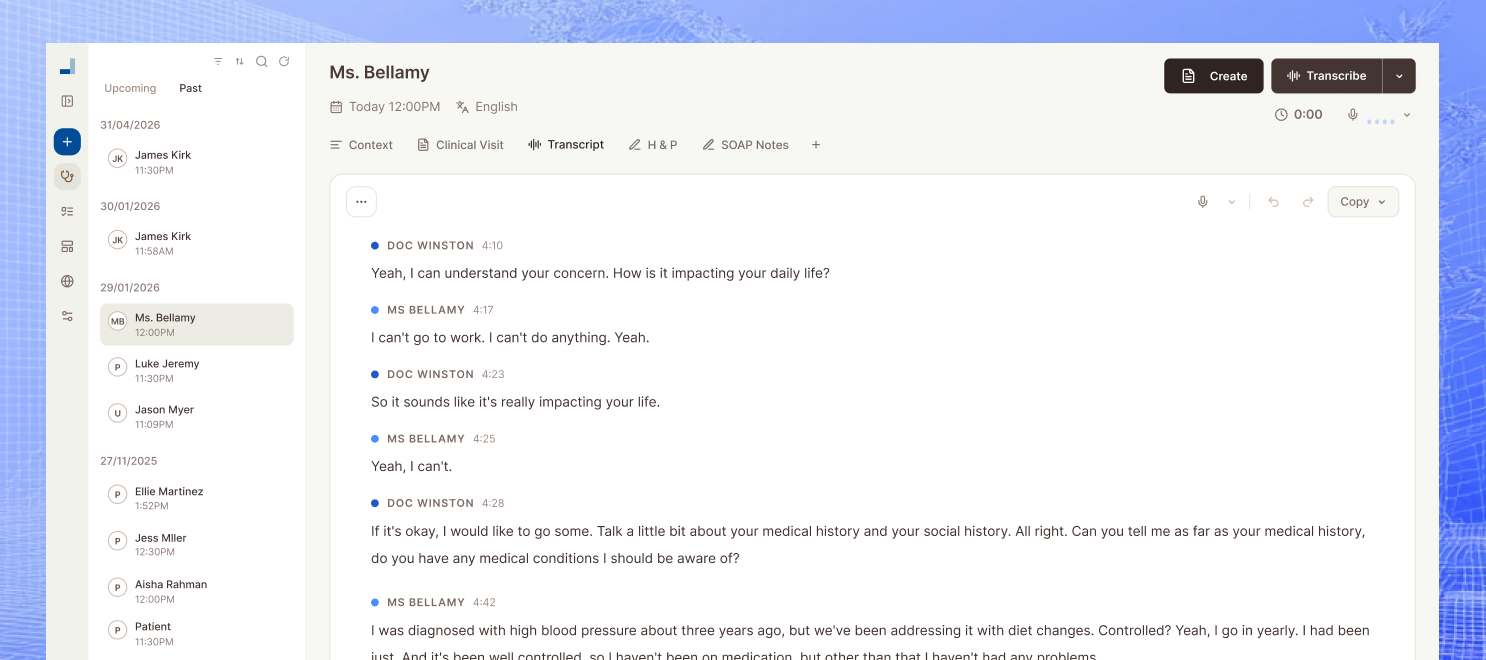
An AI medical scribe acts as an intelligent assistant that captures the nuances of a conversation, allowing the doctor to focus entirely on the patient. It is important to remember that these tools are assistive, not autonomous. The clinician remains the ultimate authority, ensuring that the final record reflects the medical truth of the encounter while the AI handles the heavy lifting of formatting and transcription.
- Reduces after-hours charting and administrative burnout.
- Captures granular details that might be forgotten in manual entries.
- Shifts focus from the computer screen back to the patient.
- Acts as a supportive drafting tool while leaving clinical judgment to the doctor.
Note types you can generate beyond SOAP (H&P and more)
While the SOAP format is a staple in medicine, high-functioning clinics require a much broader range of documentation. Comprehensive care involves everything from the initial History and Physical (H&P) to intricate procedure notes and discharge summaries. Relying solely on a single format can lead to gaps in the patient story, especially during transitions of care or complex specialist consultations.
Quality documentation is the backbone of audit readiness and continuity of care. Using specialized formats like referral letters and follow-up notes ensures that the next provider in the care chain has a clear, concise, and structured understanding of the patient’s status. Advanced AI tools can now distinguish between these needs, providing tailored structures that fit the specific clinical context without requiring manual reformatting.
- H&Ps and progress notes for comprehensive inpatient and outpatient tracking.
- Consultation and referral letters to streamline inter-specialty communication.
- Procedure notes and discharge summaries for clear surgical and transition records.
- Standardized formatting that enhances audit readiness and medicolegal safety.
How to implement a safe AI scribe review checklist step-by-step in a real clinic
To successfully integrate a safe AI scribe review checklist, start small by choosing one specific visit type, such as routine follow-ups or standard physicals. This allows the clinical team to get used to the AI’s drafting style without the pressure of a high-acuity case. Establish a baseline for what a ‘perfect’ note looks like for that specialty so the AI has a clear standard to emulate.
Configure your environment by selecting templates that align with your specialty’s unique requirements. During the encounter, whether in-person or via telehealth, ensure the device is positioned to capture clear audio while you engage naturally with the patient. Once the session ends, the AI generates a draft that serves as your starting point, significantly cutting down the initial typing time.
The review phase is where your checklist becomes vital. Quickly scan the draft for key data points like dosages, right/left orientations, and specific patient statements. After a few minutes of refining, the note is ready for your electronic health record (EHR). Finally, leverage the captured data to generate secondary documents like work excuses or referral letters, maximizing the utility of a single recording sessions.
- Start with one common visit type to build team confidence.
- Select and customize templates to match specific specialty needs.
- Review the AI draft immediately after the encounter for maximum accuracy.
- Reuse the transcribed data to automate letters, forms, and summaries.
How to keep note quality high and reduce mistakes
Even the most advanced AI can occasionally miss a nuanced medication change or misinterpret a complex lab value. Common failure points often involve ‘note bloat,’ where the AI includes irrelevant conversational filler, or errors in numerical values. High quality is maintained when the clinician treats the AI output as a highly competent draft that requires a final signature of intent.
Implementing a lightweight review habit is the most effective way to reduce mistakes. Spend sixty seconds verifying the ‘Plan’ and ‘Assessment’ sections, as these carry the most medicolegal weight. Setting internal team standards for note length and detail ensures that every practitioner in the clinic produces consistent, high-standard documentation that is easy for others to read.
- Verify high-risk data like medication dosages and allergy lists.
- Edit out conversational filler to prevent ‘note bloat’ in the final record.
- Establish clinic-wide standards for note structure and detail levels.
- Perform periodic peer reviews of AI-generated notes to ensure consistency.
Privacy, consent, and patient trust (plain English)
Privacy is the cornerstone of the patient-provider relationship. When introducing an AI scribe, transparency is your best tool. Most patients are supportive of technology that allows their doctor to listen better and type less. It is essential to follow local regulations and institutional policies regarding recording and data retention, ensuring all workflows remain compliant.
A simple way to present this to a patient is by saying: ‘I’m using a digital assistant today to help me take accurate notes so I can focus entirely on our conversation. It records our talk and then deletes the audio once my note is finished. Is that okay with you?’ This clear, jargon-free explanation builds trust and ensures the patient feels in control of their information.
- Always obtain verbal or written consent based on local requirements.
- Explain the technology as a tool for better clinical focus and accuracy.
- Ensure the AI solution adheres to modern encryption and security standards.
- Maintain a clear policy on how long data is stored and when it is purged.
Rolling it out across a clinic without disruption
A successful rollout starts with a two-week pilot program involving a small group of ‘digitally native’ clinicians. This group can identify potential friction points in the workflow and help refine templates before the technology is introduced to the entire staff. During this phase, focus on measuring time saved and the reduction in ‘pajama time’ spent on charting at home.
Once the pilot is complete, use the findings to train the rest of the clinic. Consistency is key, so align everyone on which templates to use for specific scenarios. By showing the tangible benefits—such as finishing notes before the end of the day—you’ll find that even the most skeptical staff members will likely embrace the change.
- Run a 14-day pilot with a small team to iron out workflow kinks.
- Track metrics like time-to-completion and provider satisfaction levels.
- Standardize templates across the clinic for uniform documentation quality.
- Provide brief, hands-on training sessions to ensure all staff feel confident.
Mcoy AI is an AI medical scribe that records and transcribes patient encounters, then generates multiple clinical note types including H&P, progress notes, consult notes, follow-up notes, procedure notes, discharge summaries, referral letters, and more. It features over 200+ customizable templates and an interactive AI chat to help clinicians quickly create letters, forms, and complex medical documents. By automating the heavy lifting of documentation, it allows healthcare providers to dedicate more time to patient care and less to the computer screen.
Conclusion
Transitioning to an automated documentation workflow requires more than just software; it requires a disciplined approach to quality control. By implementing a safe AI scribe review checklist, clinics can capture the massive time-saving benefits of AI while maintaining the high clinical standards patients deserve. Start your pilot today and see how a structured workflow can transform your practice. Using a safe AI scribe review checklist ensures that your clinic stays efficient, compliant, and focused on what matters most: the patient.
What a serious review table should cover
| Decision area | Common mistake | Better clinic-ready approach | Metric to watch |
|---|---|---|---|
| Workflow design | Treat create a safe ai scribe review checklist [free resources] as a one-off documentation task | Build a repeatable process with clear ownership and review points | Time to complete documentation |
| Team adoption | Assume every clinician will naturally use the same process | Train for consistency and define exception handling early | Active user adoption |
| Quality review | Only check notes when a problem is reported | Audit a sample of notes weekly and review edge cases | Edit rate per note |
| Operational follow-through | Leave admin actions outside the documentation workflow | Use the same encounter data for referrals, letters, and follow-up tasks | Completion rate for next-step tasks |
Related reading
If you are working through create a safe ai scribe review checklist [free resources], it helps to read this alongside AI & Medicine: How to Simplify Clinical Notes for Busy Doctors, AI & Medicine: How Doctors Can Improve SOAP Notes, and Physician Wellbeing: Why Documentation Is the Biggest Time Drain for Doctors. Those guides cover adjacent workflow, implementation, and evaluation questions so the decision does not sit in isolation.
FAQ
How accurate are AI medical scribes in real clinics?
AI medical scribes currently offer very high accuracy, often capturing over 95% of clinical details correctly. However, they can still struggle with heavy accents or very technical jargon. This is why a human review is always necessary to ensure the clinical nuances are perfectly captured. The goal of the AI is to provide a 90% finished draft that you simply verify.
Do I still need to review every note?
Yes, as a licensed clinician, you are legally and ethically responsible for the accuracy of the medical record. While the AI does the heavy lifting, you must verify that all facts, dosages, and plans are correct. The review process usually takes less than a minute once you become familiar with the software. Think of it as supervising a very efficient medical student.
What note types can an AI scribe generate besides SOAP?
Modern AI scribes are highly versatile and can generate specialized documents like History & Physical (H&P) reports, consultation letters, and procedure notes. They can also create discharge summaries and referral letters tailored to specific specialties. If your tool provides customizable templates, you can format the output to match exactly how you prefer to document.
Will this work for telehealth and in-person consults?
The technology is designed to work across various clinical settings, including traditional in-person visits and remote telehealth sessions. For telehealth, the AI can often capture audio directly from the computer’s sound output, ensuring high-quality transcription. In-person consults simply require a smartphone or tablet with a clear microphone placed between the doctor and patient.
How do I explain recording/transcription to patients?
Transparency is the best approach when discussing recording with patients. Simply explain that the tool allows you to look at them instead of a computer screen, ensuring a better quality of care. Most patients appreciate the extra attention and are happy to consent when they understand the audio is used only to generate an accurate note. Always respect a patient’s choice if they prefer not to be recorded.
How do clinics prevent note bloat?
Note bloat is prevented by using smart templates that filter out conversational filler like small talk or repetitions. By setting specific parameters in your AI settings, you can instruct the system to only include medically relevant information. Regular review of the output allows you to tweak templates to ensure only concise, high-value data makes it into the EHR.
How long does template setup take?
Most clinicians find that basic template setup takes less than thirty minutes. Many AI tools come with pre-built libraries for hundreds of specialties, so you are rarely starting from scratch. You can usually take a template that is close to your style and make minor adjustments to fit your specific workflow and terminology preferences.
What’s the safest way to start if I’m skeptical?
The safest approach is to start with a small pilot program using non-complex cases, such as routine follow-ups. This allows you to test the accuracy and reliability of the AI without significant risk. As you gain confidence in the tool’s ability to capture clinical data accurately, you can gradually expand its use to more complex consultations and varied note types.