AI & Medicine: Reduce Note Bloat With AI Scribe: A Strategy Guide
Learn how to reduce note bloat using an AI scribe. Improve clinical documentation quality and save time with our comprehensive workflow guide for doctors.
What a medical scribe solves in modern practice
The burden of modern medical documentation is a leading driver of physician burnout, often forcing clinicians into ‘pajama time’—hours spent completing charts after the clinic has closed. This administrative weight doesn’t just eat into personal time; it creates a cognitive load that can distract from the patient sitting right in front of you. When you are focused on typing every word spoken, you lose the nuances of the encounter that define high-quality care.
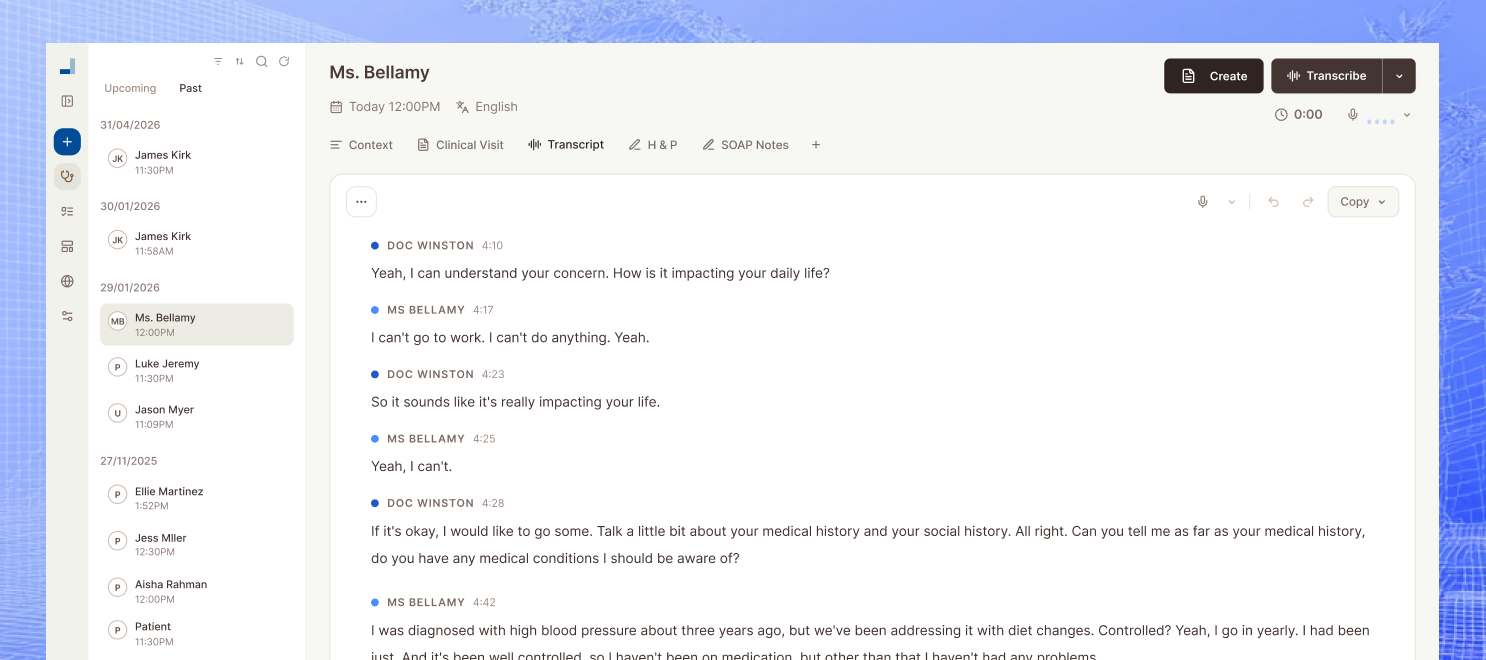
An AI medical scribe acts as an intelligent assistant designed to alleviate this pressure by capturing the conversation in real-time and organizing it into a structured clinical note. It is important to understand that these tools are strictly assistive; they provide a draft based on the encounter, but the clinician remains the final authority and must review and sign off on every entry. By handing off the heavy lifting of transcription and formatting, doctors can return to active listening.
- Significantly reduces after-hours charting and administrative burnout.
- Improves patient-provider eye contact and rapport during visits.
- Flags clinical details that might be missed during manual note-taking.
- Acts as a supportive co-pilot, not a replacement for clinical judgment.
Note types you can generate beyond SOAP (H&P and more)
While the SOAP format is a staple in many practices, modern medicine requires a diverse range of documentation styles to ensure continuity of care. Using an AI scribe allows you to move beyond basic notes and generate comprehensive History and Physical (H&P) reports, detailed consult notes, and precise procedure notes. Each format serves a specific purpose in the medical record, facilitating better handovers between specialties and departments.
Standardized structure also plays a critical role in audit readiness and medico-legal protection. Whether it’s a discharge summary that needs to be clear for a primary care physician or a referral letter that must summarize months of complex treatment, the AI can reorganize the same encounter data into different templates. This versatility ensures that regardless of the patient’s journey, the documentation is professional and consistent.
Moreover, structured notes improve billing accuracy and compliance. When a system can automatically differentiate between a follow-up note and a new patient consult, it reduces the risk of down-coding or missing essential elements required for specific insurance reimbursements. High-quality documentation becomes a byproduct of the visit rather than a separate, grueling chore.
- Generate H&P, progress notes, and complex discharge summaries effortlessly.
- Automatically format referral letters based on specific encounter data.
- Ensure audit readiness with consistent and professional documentation styles.
- Adapt note structure to meet the needs of different medical specialties.
How to implement medical scribe step-by-step in a real clinic
The transition to using an AI medical scribe should be handled with a phased approach to ensure staff buy-in and minimal disruption. Start by selecting one common visit type, such as routine follow-ups or wellness checks, to test the workflow. This allows you to get used to the voice recognition and the way the AI parses your specific speech patterns without the pressure of a complex multi-system case.
Next, you should customize your templates to match your specialty’s unique requirements. Most systems allow you to pre-define what a ‘normal’ exam looks like or how you prefer your assessment and plan to be phrased. Once your templates are ready, you can begin capturing encounters by simply placing your device in a central location during the patient visit, whether it is an in-person session or a telehealth call.
After the encounter ends, the AI will provide a draft note almost instantly. Spend a minute or two reviewing the draft for accuracy, focusing on dosages, dates, and specific patient instructions. The goal is to edit, not rewrite. Once you are satisfied, the output can be used to populate your EMR and even generate secondary documents like patient summaries or specialist referral letters using the same captured data.
- Begin with a pilot phase focusing on one simple visit type.
- Create specialty-specific templates to align with your personal style.
- Review AI-generated drafts immediately while the encounter is fresh.
- Leverage captured data to quickly generate referral letters and forms.
How to keep note quality high and reduce mistakes
The primary critique of AI documentation is often ‘note bloat’—the inclusion of unnecessary fluff that obscures critical information. To prevent this, it is essential to establish a lightweight review habit. Clinicians should glance through the output specifically looking for ‘hallucinations’ or misheard medications. While AI is highly accurate, it is not infallible, and maintaining a high standard of quality control is a legal and professional necessity.
Team standards also play a role in note quality. If multiple practitioners in a clinic are using the same tool, aligning on which sections are mandatory versus optional can keep the medical record concise. Encourage the use of specific keywords or ‘verbal cues’ during the exam that help the AI identify key findings, such as clearly stating ‘Lungs are clear to auscultation’ rather than leaving it to inference.
- Perform a focused review of medications, dosages, and plan details.
- Establish clinic-wide standards for note length and essential sections.
- Use clear verbal cues during exams to guide the AI’s data capture.
- Regularly audit a subset of notes to ensure ongoing clinical accuracy.
Privacy, consent, and patient trust (plain English)
Patient privacy is the cornerstone of the medical profession, and introducing an AI scribe requires transparent communication. Most patients are receptive to the technology when they understand it helps their doctor focus more on their health. While legal requirements for consent vary by region, it is best practice to always inform the patient that you are using a digital assistant to help with your notes.
You might say to a patient: ‘To give you my full attention today, I am using a secure AI assistant to record our conversation and help me draft your medical chart. It’s encrypted and won’t be shared with anyone outside your care team. Are you comfortable with me turning it on?’ This simple script builds trust and demonstrates that you value both their privacy and the quality of their care.
- Always follow local regulations regarding audio recording and data storage.
- Use a simple, transparent script to ask for patient consent at the start.
- Ensure your chosen platform uses high-level encryption and HIPAA-compliant practices.
- Address patient concerns by highlighting improved focus on their health.
Rolling it out across a clinic without disruption
Rolling out an AI scribe across a multi-provider clinic or a university health center requires a structured two-week pilot plan. Week one should focus on training and template setup, while week two moves into live patient encounters. It is helpful to appoint a ‘super-user’—a tech-savvy clinician who can troubleshoot minor issues and share tips with colleagues to speed up adoption.
During the rollout, track specific metrics to measure success. Look at the total time saved on documentation, the reduction in ‘open charts’ at the end of the day, and the subjective feedback from staff regarding their stress levels. When other doctors see the tangible benefits—like leaving the office at 5:00 PM instead of 7:00 PM—resistance to the new technology usually evaporates quickly.
- Appoint a champion to lead the two-week pilot and provide peer support.
- Track time-savings and chart completion rates to demonstrate value.
- Hold a brief feedback session after the first week to refine templates.
- Align team workflows to ensure consistent use across all practitioners.
Mcoy AI is an AI medical scribe that records and transcribes patient encounters, then generates multiple clinical note types (H&P, progress notes, consult notes, follow-up notes, procedure notes, discharge summaries, referral letters, and more). It features over 200 customizable templates and an interactive AI chat to help clinicians create letters, clinical forms, and other necessary documentation with ease and professional precision.
FAQ
Transitioning to an AI-assisted workflow raises many practical questions for busy clinicians. Here are the most common inquiries regarding the implementation and use of medical scribes.
How accurate are AI medical scribes in real clinics?
AI medical scribes are exceptionally accurate at capturing the dialogue and medical terminology used during an encounter. However, they rely on clear audio and may occasionally misinterpret background noise or heavy accents. Most clinicians find the drafts are 90-95% accurate, requiring only minor stylistic edits or factual corrections before being finalized.
Do I still need to review every note?
Yes, reviewing every note is a strict requirement for clinical safety and legal compliance. The AI is a tool to generate a draft, but the physician is the one who validates the information and signs the medical record. A quick 60-second review is usually all that is needed to ensure the note is perfect.
What note types can an AI scribe generate besides SOAP?
AI scribes are highly versatile and can generate specialized documents such as History and Physical (H&P) reports, discharge summaries, and procedure notes. They can also assist with referral letters and follow-up instructions by pulling pertinent data from the transcribed encounter. This flexibility allows the technology to support almost every aspect of clinical documentation.
Will this work for telehealth and in-person consults?
Most modern AI scribes are designed to work seamlessly in both environments. For in-person visits, the software runs on a mobile device or laptop in the room, while for telehealth, it can capture the audio directly from the computer audio or via a browser extension. The quality of the transcription remains high regardless of the medium.
How do I explain recording/transcription to patients?
It is best to be direct and highlight the benefit to the patient. You can explain that the tool allows you to listen more closely to them rather than staring at a computer screen. Most patients appreciate the extra attention and are happy to consent once they know their data is secure and handled professionally.
How do clinics prevent note bloat?
Clinics prevent note bloat by using concise templates and training the AI to focus on ‘pertinent positives and negatives’ rather than transcribing every single word of small talk. By setting clear parameters for what should be included in the final note, the AI produces a focused and readable document that avoids unnecessary length.
How long does template setup take?
Initial template setup usually takes between 30 and 60 minutes. Most platforms offer pre-built templates for various specialties that you can simply tweak to your liking. As you use the system, you can refine these templates in seconds to better reflect your evolving clinical style or practice requirements.
What’s the safest way to start if I’m skeptical?
The safest way to start is by using the scribe for one specific, low-stakes visit type for a few days. This allows you to see the results without feeling overwhelmed. Once you see the accuracy and the time saved, you can gradually expand its use to more complex patients and different types of clinical documents.
Conclusion
Reducing note bloat and administrative burden is no longer a luxury—it is a necessity for the modern medical practitioner. By implementing a medical scribe workflow, you can reclaim your time, improve your documentation quality, and focus on what truly matters: your patients. Starting with a clear plan, utilizing diverse templates, and maintaining a solid review process will ensure your transition is smooth and effective. Don’t let paperwork define your career; explore how a medical scribe can transform your practice today. Taking the step to pilot an AI solution like Mcoy AI is often the catalyst for a more sustainable and rewarding medical practice.
What a serious review table should cover
| Decision area | Common mistake | Better clinic-ready approach | Metric to watch |
|---|---|---|---|
| Workflow design | Treat reduce note bloat with ai scribe: a strategy guide as a one-off documentation task | Build a repeatable process with clear ownership and review points | Time to complete documentation |
| Team adoption | Assume every clinician will naturally use the same process | Train for consistency and define exception handling early | Active user adoption |
| Quality review | Only check notes when a problem is reported | Audit a sample of notes weekly and review edge cases | Edit rate per note |
| Operational follow-through | Leave admin actions outside the documentation workflow | Use the same encounter data for referrals, letters, and follow-up tasks | Completion rate for next-step tasks |
Related reading
If you are working through reduce note bloat with ai scribe: a strategy guide, it helps to read this alongside AI & Medicine: How to Simplify Clinical Notes for Busy Doctors, AI & Medicine: How Doctors Can Improve SOAP Notes, and Specialty Guides: Review AI Notes Efficiently: Ultimate Clinician Guide. Those guides cover adjacent workflow, implementation, and evaluation questions so the decision does not sit in isolation.
FAQ
How accurate are AI medical scribes in real clinics?
AI medical scribes are exceptionally accurate at capturing dialogue and medical terminology. However, they rely on clear audio and may occasionally misinterpret background noise. Most clinicians find the drafts are 90-95% accurate, requiring only minor stylistic edits before being finalized.
Do I still need to review every note?
Yes, reviewing every note is a strict requirement for clinical safety and legal compliance. The AI is a tool to generate a draft, but the physician is the one who validates the information and signs the medical record. A quick 60-second review is usually all that is needed.
What note types can an AI scribe generate besides SOAP?
AI scribes are highly versatile and can generate specialized documents such as History and Physical (H&P) reports, discharge summaries, and procedure notes. They can also assist with referral letters and follow-up instructions by pulling pertinent data from the transcribed encounter.
Will this work for telehealth and in-person consults?
Most modern AI scribes are designed to work seamlessly in both environments. For in-person visits, the software runs on a mobile device, while for telehealth, it can capture audio directly from the computer. The quality of the transcription remains high regardless of the medium.
How do I explain recording/transcription to patients?
It is best to be direct and highlight the benefit to the patient. You can explain that the tool allows you to listen more closely to them rather than staring at a screen. Most patients appreciate the extra attention and are happy to consent.
How do clinics prevent note bloat?
Clinics prevent note bloat by using concise templates and training the AI to focus on pertinent positives and negatives. By setting clear parameters for what should be included, the AI produces a focused and readable document that avoids unnecessary fluff.
How long does template setup take?
Initial template setup usually takes between 30 and 60 minutes. Most platforms offer pre-built templates for various specialties that you can simply tweak to your liking. As you use the system, you can refine these templates in seconds.
What’s the safest way to start if I’m skeptical?
The safest way to start is by using the scribe for one specific, low-stakes visit type for a few days. This allows you to see the results without feeling overwhelmed before gradually expanding its use to more complex patients.