Specialty Guides: Problem-Oriented Notes With AI Scribe: Complete Guide
Learn how to master problem-oriented clinical notes using an AI scribe. Boost accuracy and save hours on documentation with our step-by-step implementation guide.
What a medical scribe solves in modern practice
The modern clinical environment is increasingly defined by the administrative burden of documentation. For many practitioners, the real cost of clinical notes isn’t just the time spent typing; it is the cognitive load required to recall specific details while managing a busy patient queue. This often leads to ‘pajama time’—the hours clinicians spend finishing charts at home—which is a primary driver of burnout in university clinics and private practices alike.
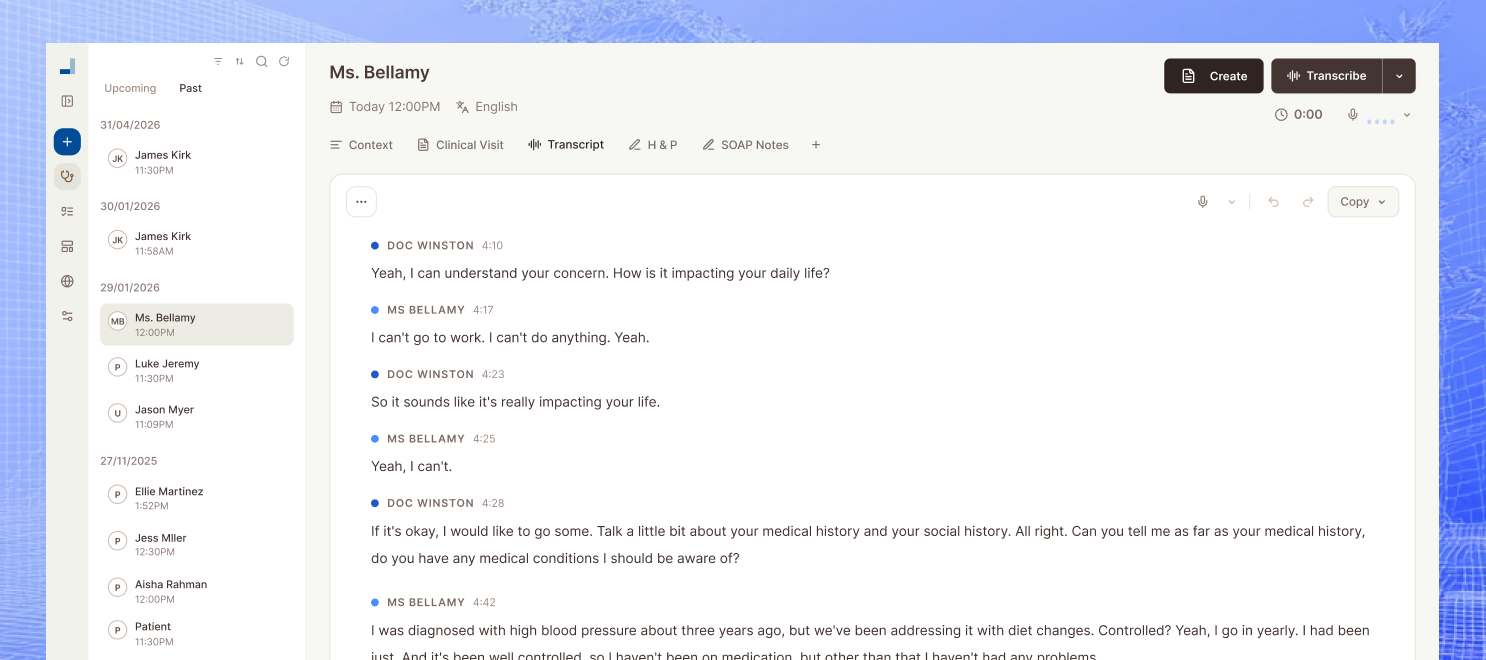
An AI medical scribe acts as a digital assistant that captures the nuance of a conversation in real-time. It is important to understand that these tools are assistive rather than autonomous. While they remarkably reduce the manual effort of drafting a note, the clinician remains the final authority, ensuring that the generated document accurately reflects the medical decision-making and patient history. By offloading the mechanical task of recording, doctors can return their focus to the human element of care.
- Reduces administrative burnout and ‘pajama time’ for practitioners.
- Captures granular patient details that might be forgotten hours later.
- Allows for improved eye contact and engagement during the consultation.
- Serves as an assistive drafting tool, maintaining clinician oversight.
Note types you can generate beyond SOAP (H&P and more)
While the SOAP format is a staple in medical education, complex cases often require a more robust structure. Problem-oriented medical records benefit from diverse templates like the History and Physical (H&P), which provides a comprehensive overview for new admissions or complex initial consultations. Similarly, consult notes and referral letters require a specific tone and level of detail to ensure seamless transitions of care between specialists and general practitioners.
The structure of your documentation directly impacts the continuity of care. Procedure notes and discharge summaries need to be concise yet technically accurate to meet audit requirements and legal standards. By utilizing varied note types, a clinic ensures that the medical record is not just a collection of observations, but a high-quality narrative that supports clinical reasoning and long-term patient management. Using an AI scribe allows clinicians to toggle between these formats instantly, ensuring the right structure for the right encounter.
- Expands documentation beyond SOAP to include H&P, consult, and procedure notes.
- Enhances handover quality through professional referral and discharge summaries.
- Ensures audit readiness by maintaining standardized, structured data.
- Improves continuity of care across multi-disciplinary teams.
How to implement problem-oriented medical notes step-by-step in a real clinic
Implementing problem-oriented medical notes into your daily workflow starts with a focused approach. Rather than overhauling your entire schedule at once, begin with a single visit type, such as routine follow-ups or standard physicals. This allows you to calibrate the AI’s output to your specific voice and clinical style without the pressure of a full patient load. You should select a few primary templates that align with your specialty to serve as your foundation.
Once your templates are ready, you can start capturing the encounter. Whether you are conducting an in-person physical or a telehealth session, the AI works in the background to transcribe the dialogue. As the conversation flows, the system organizes the data into the problem-oriented format you’ve selected. After the patient leaves, your task is to review and edit the draft quickly. Most clinicians find that they only need to make minor adjustments to specific clinical findings or the final assessment.
The final step in this workflow is maximizing the utility of the captured data. Because the AI has already structured the encounter, you can easily repurpose the information to generate supplemental documents like patient instructions, work excuses, or referral letters. This systematic approach ensures that the primary clinical note serves as the single source of truth for all subsequent paperwork, significantly reducing redundant data entry across the clinic.
- Start small by targeting one specific visit type for initial implementation.
- Select and customize templates that match your specialty’s unique requirements.
- Review drafts immediately post-encounter for maximum accuracy and speed.
- Leverage the structured data to auto-generate letters and administrative forms.
How to keep note quality high and reduce mistakes
Even with advanced technology, documentation quality requires intentionality. Common failure points in clinical notes often include missing medications, incorrect numerical values, or ‘note bloat’ where unnecessary details obscure the relevant clinical picture. To prevent these issues, clinics should establish a lightweight review habit. A quick scan of the assessment and plan section ensures that the most critical medical logic is preserved and accurate.
Setting team standards for documentation is also vital for consistency, especially in university clinics or group practices. By agreeing on how problem lists should be formatted and which details are essential for specific procedures, the team can ensure that every note meets a high baseline of quality. Regularly auditing a small sample of notes can help identify if any systemic errors are occurring within the AI’s transcription or the clinician’s review process.
- Focus on reviewing high-stakes data like dosages and problem lists.
- Implement a ‘sweep’ technique to remove redundant or non-clinical text.
- Standardize documentation expectations across the entire clinical team.
- Perform periodic spot checks to maintain long-term accuracy and compliance.
Privacy, consent, and patient trust (plain English)
Maintaining patient trust is the cornerstone of integrating AI into the exam room. While consent requirements vary by region, it is best practice to always follow your local health authority’s policy. Generally, patients are receptive to new technology when they understand how it improves their care. Transparency about how the data is handled and stored is essential to maintaining the integrity of the patient-provider relationship.
A simple way to introduce the technology is by saying: ‘I’m using an AI assistant today to capture our conversation so I can focus entirely on you instead of my computer screen. It helps me create more accurate records for your care.’ This framing positions the tool as a benefit to the patient, emphasizing that their health remains the priority. This simple explanation often alleviates curiosity or concern about the recording process.
- Follow local and regional guidelines regarding clinical recordings and consent.
- Use a transparent, patient-centered script to introduce the AI scribe.
- Ensure that the AI solution adheres to high standards of data security and retention.
- Focus on how the technology improves the quality of the face-to-face encounter.
Rolling it out across a clinic without disruption
A successful rollout requires a phased approach to prevent operational friction. We recommend a two-week pilot plan where one or two ‘super-users’ test the system in different clinical scenarios. During this time, the focus should be on identifying any workflow bottlenecks and refining templates. Gathering feedback early allows you to address technical hurdles before the rest of the staff begins their transition.
During the rollout, it is helpful to track specific metrics to measure success. Common KPIs include the reduction in after-hours documentation time, the speed of note completion, and the overall subjective stress levels of the providers. By demonstrating the tangible time savings to the wider team, you build internal buy-in. Training sessions should focus on template alignment to ensure that everyone is using the tool efficiently and consistently from day one.
- Execute a two-week pilot with a small group of clinicians to iron out workflows.
- Track time-savings metrics to demonstrate the value to the entire organization.
- Conduct brief training sessions focused on template customization and review.
- Align clinic-wide standards to ensure documentation consistency across providers.
Mcoy AI is an AI medical scribe that records and transcribes patient encounters, then generates multiple clinical note types (H&P, progress notes, consult notes, follow-up notes, procedure notes, discharge summaries, referral letters, and more). It features over 200 customizable templates and an AI chat function to help clinicians create letters, forms, and other essential documents directly from the encounter data, streamlining the administrative side of healthcare.
Frequently Asked Questions
Thinking about moving to a more modern documentation workflow? Here are the most common questions we hear from practitioners looking to improve their clinical notes with technology.
How accurate are AI medical scribes in real clinics?
AI scribes are remarkably accurate in capturing the clinical dialogue, often picking up nuances that a busy clinician might overlook. However, accuracy can be influenced by background noise or multiple people speaking at once. It is designed to be a highly intelligent drafting tool, meaning it gets the bulk of the work done, but the clinician’s final review is what ensures 100% accuracy. Most users find the transcription to be reliable enough to require only minimal adjustments.
Do I still need to review every note?
Yes, the clinician is always the person of record and is legally responsible for the documentation in the patient’s chart. While the AI does the heavy lifting of organizing and formatting, you must verify that the medical findings and the plan are correct. This review typically takes a fraction of the time it would take to write the note from scratch. Think of it as being the editor of an expert draft rather than the author of a blank page.
What note types can an AI scribe generate besides SOAP?
An AI scribe is versatile and can generate specialized documents such as History and Physical (H&P) reports, consult notes, and complex procedure notes. It can also produce discharge summaries and referral letters tailored to specific specialties. By selecting different templates, you can transform the same encounter data into various formats depending on the clinical need. This flexibility makes it much more powerful than a simple transcription service.
Will this work for telehealth and in-person consults?
Yes, AI scribes are designed to work seamlessly across different consultation environments. For in-person visits, it can be used via a mobile device or tablet in the room. For telehealth, it can record the digital audio stream from your computer. In both cases, the core functionality remain the same: capturing the conversation and turning it into structured problem-oriented medical notes.
How do I explain recording/transcription to patients?
The best approach is to be direct and highlight the benefit to the patient. You can explain that the tool allows you to spend more time looking at them and listening rather than typing on a keyboard. Most patients appreciate the increased attention and understand that better records lead to better care. Providing a simple verbal explanation or having a small sign in the waiting room is usually sufficient for most practices.
How do clinics prevent note bloat?
Note bloat is prevented by using smart templates that prioritize relevant clinical information over raw transcription. You can configure the AI to focus on specific headers and ignore ‘small talk’ or irrelevant side conversations. By setting clear standards for what should be included in the assessment and plan, clinics can ensure that notes remain concise and useful for other providers. Training staff on how to use ‘summarization’ features effectively is also key.
How long does template setup take?
Initial template setup is quite fast, often taking just a few minutes per specialty. Most providers start with pre-built clinical templates and then make small tweaks as they use the system. Within the first week of use, most clinicians have their preferred templates dialed in to match their specific documentation style. It is an iterative process that gets faster as the AI learns your preferences.
What’s the safest way to start if I’m skeptical?
The best way to start is by trialing the tool with non-complex cases or routine follow-up appointments. This allows you to see how the AI handles your voice and clinical flow without the pressure of a high-acuity patient. Once you feel comfortable with the accuracy and the interface, you can gradually expand its use to more complex consultations. Starting slow ensures you build confidence in the system at your own pace.
Conclusion
Transitioning to a modern documentation workflow doesn’t have to be a burden. By implementing a system that prioritizes problem-oriented medical notes, clinics can significantly reduce the time spent on administrative tasks while actually improving the quality and depth of their records. The key is to start small, utilize specialized templates beyond the standard SOAP note, and maintain a consistent review process. Embracing this technology allows you to reclaim your time and focus on what truly matters: providing exceptional patient care. If you are ready to eliminate after-hours charting, consider starting a pilot in your clinic today.
What a serious review table should cover
| Decision area | Common mistake | Better clinic-ready approach | Metric to watch |
|---|---|---|---|
| Workflow design | Treat problem-oriented notes with ai scribe: complete guide as a one-off documentation task | Build a repeatable process with clear ownership and review points | Time to complete documentation |
| Team adoption | Assume every clinician will naturally use the same process | Train for consistency and define exception handling early | Active user adoption |
| Quality review | Only check notes when a problem is reported | Audit a sample of notes weekly and review edge cases | Edit rate per note |
| Operational follow-through | Leave admin actions outside the documentation workflow | Use the same encounter data for referrals, letters, and follow-up tasks | Completion rate for next-step tasks |
Related reading
If you are working through problem-oriented notes with ai scribe: complete guide, it helps to read this alongside Specialty Guides: How to Run a More Efficient Medical Practice in 2026, Specialty Guides: How to Improve Patient Encounters, and AI & Medicine: How to Reduce Copy-Paste AI Note Structure | Mcoy Health. Those guides cover adjacent workflow, implementation, and evaluation questions so the decision does not sit in isolation.
FAQ
{
“How accurate are AI medical scribes in real clinics?”: “AI scribes are remarkably accurate in capturing the clinical dialogue, often picking up nuances that a busy clinician might overlook. However, accuracy can be influenced by background noise or multiple people speaking at once. It is designed to be a highly intelligent drafting tool, meaning it gets the bulk of the work done, but the clinician’s final review is what ensures 100% accuracy.”,
“Do I still need to review every note?”: “Yes, the clinician is always the person of record and is legally responsible for the documentation in the patient’s chart. While the AI does the heavy lifting of organizing and formatting, you must verify that the medical findings and the plan are correct. This review typically takes a fraction of the time it would take to write the note from scratch.”,
“What note types can an AI scribe generate besides SOAP?”: “An AI scribe is versatile and can generate specialized documents such as History and Physical (H&P) reports, consult notes, and complex procedure notes. It can also produce discharge summaries and referral letters tailored to specific specialties. Use templates to transform encounter data into various formats depending on the clinical need.”,
“Will this work for telehealth and in-person consults?”: “Yes, AI scribes are designed to work seamlessly across different consultation environments. For in-person visits, it can be used via a mobile device or tablet in the room. For telehealth, it can record the digital audio stream from your computer. In both cases, the core functionality of capturing and structuring data remains the same.”,
“How do I explain recording/transcription to patients?”: “The best approach is to be direct and highlight the benefit to the patient. You can explain that the tool allows you to spend more time looking at them and listening rather than typing on a keyboard. Most patients appreciate the increased attention and understand that better records lead to better care.”,
“How do clinics prevent note bloat?”: “Note bloat is prevented by using smart templates that prioritize relevant clinical information over raw transcription. You can configure the AI to focus on specific headers and ignore ‘small talk’. By setting clear standards for what should be included, clinics can ensure that notes remain concise and useful for other providers.”,
“How long does template setup take?”: “Initial template setup is quite fast, often taking just a few minutes per specialty. Most providers start with pre-built clinical templates and then make small tweaks as they use the system. Within the first week, most clinicians have their preferred templates dialed in to match their specific documentation style.”,
“What’s the safest way to start if I’m skeptical?”: “The best way to start is by trialing the tool with non-complex cases or routine follow-up appointments. This allows you to see how the AI handles your voice and clinical flow without pressure. Once you feel comfortable with the accuracy, you can gradually expand its use to more complex consultations.”
}