Specialty Guides: How to Run a More Efficient Medical Practice in 2026
Full guide on how to run a more efficient medical practice in 2026 using smarter workflows, reduced admin, and AI documentation tools.
How to Run a More Efficient Medical Practice in 2026Running a medical practice in 2026 looks very different from even a few years ago. Patient expectations are higher, administrative requirements are heavier, and clinicians are under more pressure to deliver quality care with limited time and resources. At the same time, technology has matured to a point where efficiency gains are no longer theoretical. They are practical, measurable, and increasingly necessary for sustainability.
Efficiency in modern healthcare is not about seeing more patients at all costs. It is about reducing friction, eliminating low-value work, and designing systems that allow doctors and staff to focus on care. Practices that fail to adapt often struggle with burnout, rising costs, and staff turnover. Practices that do adapt tend to deliver better care, retain clinicians, and operate with greater financial stability.
This guide explores how medical practices can run more efficiently in 2026 by focusing on workflows, documentation, patient experience, and the intelligent use of technology.
Efficiency starts with clarity, not speed
One of the biggest misconceptions about efficiency is that it means working faster. In reality, the most efficient practices are not rushed. They are clear.
Clarity in roles, processes, and expectations reduces hesitation and rework. When everyone in the practice understands how work flows from patient intake to follow-up, fewer tasks fall through the cracks and fewer decisions need to be revisited.
In 2026, efficient practices prioritise clarity over complexity. They simplify processes before attempting to optimise them. This foundation allows technology and automation to actually deliver value instead of amplifying confusion.
Redesign workflows before adding tools
Many practices attempt to improve efficiency by adding new software or systems on top of existing workflows. This often backfires. Tools layered onto broken processes usually create more work, not less.
Efficient practices start by mapping how work actually happens. From booking to consultation to documentation to billing and follow-up, each step is examined for duplication, delay, and unnecessary handoffs.
Once inefficiencies are identified, workflows are redesigned to reduce steps and interruptions. Only then are tools introduced to support the new flow. This sequence is critical. Technology should support workflow, not define it.
Documentation remains the biggest bottleneck
In 2026, documentation is still one of the largest drains on clinical time. Despite digital records, many doctors spend hours each day on notes, letters, and forms.
The problem is not documentation itself. It is how documentation is created. Many practices still rely on manual entry, delayed note writing, and repetitive documentation across multiple formats.
Efficient practices treat documentation as a system problem, not an individual burden. They focus on capturing information once, structuring it intelligently, and reusing it wherever possible. When documentation becomes a by-product of care rather than a separate task, efficiency improves dramatically.
Move documentation closer to the point of care
Delayed documentation is inefficient documentation. Writing notes hours after a consultation takes longer and increases mental load.
In 2026, efficient practices capture information during or immediately after the encounter without disrupting patient interaction. This reduces reconstruction from memory and shortens documentation time overall.
Importantly, this does not mean constant typing during consultations. It means using systems that capture conversations passively and organise information automatically, allowing doctors to remain present with patients.
Reduce duplication across the practice
Duplication is one of the most expensive inefficiencies in healthcare. Information is often entered multiple times by different people for different purposes.
Efficient practices in 2026 aggressively eliminate duplication. Patient history, consultation details, and care plans are captured once and reused across notes, referrals, letters, and follow-up instructions.
This reduces administrative time and improves consistency. Fewer errors occur when information does not need to be retyped or reformatted repeatedly.
Standardisation improves efficiency and quality
Standardisation is often misunderstood as rigid or impersonal. In reality, good standardisation creates flexibility by reducing unnecessary decisions.
Efficient practices use standardised templates for common visit types, documentation formats, and communication. This ensures that essential elements are consistently captured while allowing clinicians to focus on what is unique about each patient.
Standardisation reduces cognitive load, speeds up work, and improves readability of notes for other providers. In 2026, standardisation is a cornerstone of efficient practice management.
Technology should remove work, not add it
One of the defining characteristics of efficient medical practices in 2026 is how they use technology.
Inefficient practices use technology that adds clicks, alerts, and interruptions. Efficient practices use technology that quietly removes work in the background.
The key question for every tool is simple. Does this reduce steps, or does it introduce new ones. Tools that require constant attention or manual work quickly erode efficiency.
This principle applies especially to documentation, communication, and task management.
The role of AI in modern practice efficiency
AI has moved beyond experimentation and into everyday clinical operations. In 2026, efficient practices use AI to handle repetitive, administrative tasks that do not require human judgment.
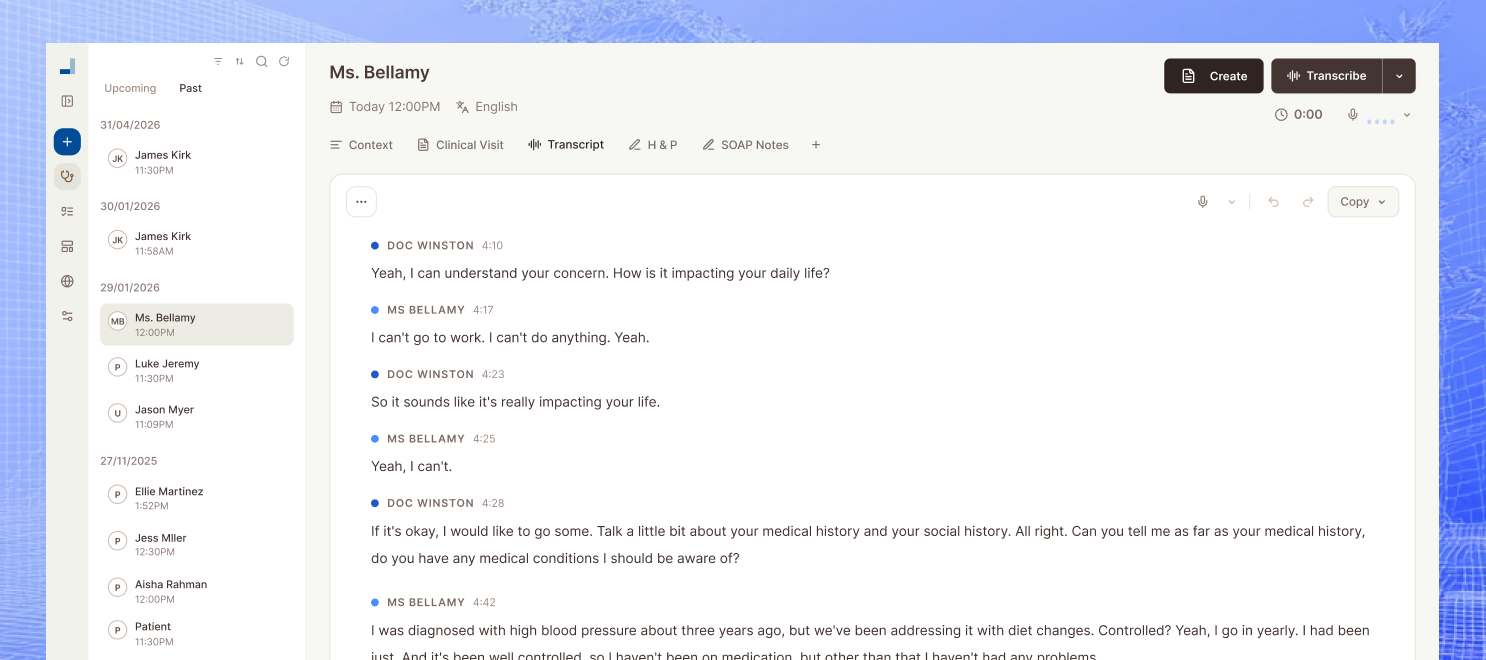
AI-assisted documentation is one of the most impactful examples. By transcribing consultations and generating structured notes automatically, AI turns documentation into a review task rather than a writing task.
This shift saves time, reduces cognitive fatigue, and allows doctors to focus on patients instead of screens.
This is where Mcoy AI fits naturally into modern medical practices.
Mcoy AI is an AI medical scribe designed to help practices run more efficiently without disrupting care. It records and transcribes patient encounters, converts conversations into structured SOAP notes, and generates clinical documents using over 200 customisable templates built for different specialties. Doctors can chat with their encounters, create referral letters, forms, and reports from the same consultation data. By reducing documentation time and administrative workload, Mcoy AI allows clinicians to finish work during the day and focus more energy on patient care.
Importantly, tools like this work alongside existing systems rather than replacing them, making efficiency gains achievable without major disruption.
Improve patient flow to reduce pressure
Efficiency is not just about what happens inside the consultation. Patient flow before and after visits has a major impact on daily operations.
Efficient practices streamline intake, minimise waiting times, and ensure follow-ups are clear and timely. When patients know what to expect and what happens next, fewer interruptions and callbacks occur.
Clear communication reduces downstream work. It also improves patient satisfaction, which increasingly influences practice reputation and retention.
Focus on finishing work during work hours
One of the clearest indicators of inefficiency is after-hours work. When doctors and staff regularly work evenings and weekends to catch up, systems are failing.
Efficient practices design workflows so that most work is completed during scheduled hours. This does not mean seeing fewer patients. It means reducing unnecessary tasks, interruptions, and rework.
Finishing on time improves morale, reduces burnout, and increases long-term sustainability. In 2026, practices that ignore this reality struggle to retain clinicians.
Measure what actually matters
Efficiency improves when it is measured. However, many practices track the wrong metrics.
Instead of focusing only on throughput or billing volume, efficient practices measure documentation time, after-hours work, patient wait times, and follow-up turnaround.
These metrics provide insight into where friction exists. Small improvements in these areas often produce large gains in overall efficiency.
Train systems, not just people
Training staff to work harder or faster rarely produces lasting efficiency gains. Sustainable improvement comes from better systems.
Efficient practices invest time in refining workflows, templates, and tools so that the right actions are the easiest ones. When systems are intuitive, people naturally work more efficiently without additional pressure.
This approach reduces reliance on heroics and makes efficiency resilient to staff changes.
Efficiency supports better care, not worse
There is a lingering fear that efficiency undermines care quality. In reality, inefficiency is often the real threat to quality.
When clinicians are rushed, distracted, or exhausted, errors increase and empathy decreases. Efficient practices create space for better thinking, listening, and decision-making.
In 2026, the most respected practices are not those that push clinicians to the limit. They are those that design systems that protect attention and energy.
Preparing for the future of medical practice
Healthcare will continue to evolve. Administrative requirements may increase. Patient expectations will rise. Staffing pressures are unlikely to ease.
Practices that invest in efficiency now are better positioned to adapt. By reducing low-value work and leveraging technology intelligently, they build resilience into their operations.
Efficiency is not a one-time project. It is an ongoing commitment to improving how care is delivered.
The path to a more efficient practice in 2026
Running a more efficient medical practice in 2026 does not require radical change. It requires thoughtful change.
By redesigning workflows, reducing documentation burden, eliminating duplication, and using AI where it genuinely removes work, practices can achieve meaningful improvements without sacrificing care.
Efficiency is not about doing more with less. It is about doing the right work, in the right way, at the right time.
When efficiency improves, clinicians feel better, patients receive better care, and practices become more sustainable for the long term.
What a serious review table should cover
| Decision area | Common mistake | Better clinic-ready approach | Metric to watch |
|---|---|---|---|
| Workflow design | Treat how to run a more efficient medical practice in 2026 as a one-off documentation task | Build a repeatable process with clear ownership and review points | Time to complete documentation |
| Team adoption | Assume every clinician will naturally use the same process | Train for consistency and define exception handling early | Active user adoption |
| Quality review | Only check notes when a problem is reported | Audit a sample of notes weekly and review edge cases | Edit rate per note |
| Operational follow-through | Leave admin actions outside the documentation workflow | Use the same encounter data for referrals, letters, and follow-up tasks | Completion rate for next-step tasks |
Related reading
If you are working through how to run a more efficient medical practice in 2026, it helps to read this alongside Specialty Guides: How to Improve Patient Encounters, Specialty Guides: A Practical Guide to Smarter Clinical Documentation, and Compare & Choose: What is Medical Charting? Definition & Best Practices. Those guides cover adjacent workflow, implementation, and evaluation questions so the decision does not sit in isolation.
FAQ
Does improving efficiency mean seeing more patients
Not necessarily. Many practices use efficiency gains to improve care quality and reduce burnout rather than increase volume.
Can small practices benefit from these changes
Yes. Smaller practices often see faster improvements because workflows are simpler to adjust.
Is AI necessary for efficiency in 2026
AI is not mandatory, but it is becoming one of the most effective tools for reducing administrative workload.
Will staff need extensive retraining
Most efficiency improvements reduce complexity, which usually requires minimal retraining.
How quickly can practices see results
Many practices notice improvements within weeks, especially in documentation time and after-hours work.