Specialty Guides: How to Improve Patient Encounters
Full guide on how doctors can improve patient encounters through better communication, smarter workflows, and reduced documentation burden.
Patient encounters are the heart of medicine. They are where trust is built, diagnoses are shaped, and care plans come to life. Yet for many doctors today, patient encounters feel rushed, fragmented, or overshadowed by screens and paperwork. Time pressure, documentation requirements, and administrative distractions often interfere with what should be a focused human interaction.
Improving patient encounters does not require longer appointment slots, dramatic practice changes, or sacrificing efficiency. In fact, the most effective improvements often come from small, intentional shifts in how clinicians prepare for, conduct, and follow up on consultations.
This guide explores practical ways doctors and clinics can improve patient encounters in everyday practice, while maintaining efficiency, quality, and sustainability.
Why patient encounters feel harder than they used to
Modern healthcare is more complex than ever. Patients present with multiple conditions, longer histories, and higher expectations. At the same time, clinicians are expected to document thoroughly, manage digital systems, and stay on schedule.
This creates a tension during encounters. Doctors must listen, think clinically, type notes, and plan next steps all at once. The result is divided attention. Even when care is clinically sound, patients may feel unheard or rushed.
Improving patient encounters starts with recognising that most problems are not about intent or skill. They are about systems that compete with attention.
Presence matters more than perfection
One of the most powerful factors in a successful patient encounter is presence. Patients want to feel heard, understood, and taken seriously. They notice eye contact, tone, and whether a clinician seems engaged.
Perfect wording or exhaustive documentation does not replace genuine attention. In fact, patients often value clarity and empathy more than technical detail.
Improving encounters often means removing distractions rather than adding new techniques. When doctors are mentally present, communication improves naturally.
Prepare before the patient enters the room
Preparation sets the tone for the encounter. Even a brief review of the patient’s history, recent notes, and key concerns can make a significant difference.
When doctors enter the room already oriented, they ask better questions and avoid unnecessary repetition. Patients feel that their time and story are respected.
Preparation does not need to be lengthy. A focused pre-visit review of key points is often enough to improve flow and confidence during the consultation.
Start with the patient’s agenda
Many encounters become inefficient because the patient’s main concern is not addressed early. Doctors may begin with clinical questions, while patients wait to raise what matters most to them.
A simple opening question such as “What would you like to focus on today?” can reshape the entire encounter. It aligns expectations and reduces last-minute surprises.
When patients feel their priorities are acknowledged, they are more cooperative, clearer in their explanations, and more satisfied with the visit.
Reduce screen dominance during consultations
Screens are one of the biggest barriers to good patient encounters. When doctors type continuously, eye contact drops and conversation becomes fragmented.
This does not mean abandoning digital records. It means changing how and when they are used.
Many clinicians find that separating listening from documentation improves encounters. By focusing fully on the conversation and handling notes later, doctors create space for better communication.
This shift requires systems that support it, rather than forcing constant typing.
Listen for understanding, not just information
Clinical listening is often goal-driven. Doctors listen for symptoms, timelines, and red flags. While this is essential, patients also communicate emotions, concerns, and expectations.
Improving patient encounters means listening beyond facts. Understanding what worries the patient, what they believe is happening, and what outcome they hope for helps shape better care plans.
When patients feel understood, they are more likely to trust recommendations and follow through.
Explain thinking, not just decisions
Patients often leave encounters confused, even when a clear plan is given. This happens when decisions are presented without context.
Explaining clinical reasoning in simple terms improves understanding and trust. Patients do not need medical jargon, but they do benefit from knowing why a particular approach was chosen.
This does not significantly lengthen visits. A brief explanation often prevents follow-up questions, callbacks, and dissatisfaction later.
Use structure to improve clarity
Well-structured encounters feel calmer and more purposeful. Patients benefit from knowing what to expect during the visit.
Simple structure might include reviewing concerns, discussing findings, outlining options, and confirming next steps. When encounters follow a clear flow, patients are less anxious and more engaged.
Structure also helps doctors stay focused and manage time without feeling rushed.
End encounters with clear next steps
Many encounters break down at the end. Patients leave unsure about what happens next, leading to confusion and additional administrative work.
Clear summaries improve encounters significantly. Restating the plan, next steps, and follow-up expectations helps patients feel confident and supported.
This clarity reduces repeat calls, missed instructions, and frustration for both patients and staff.
What a serious review table should cover
| Decision area | Common mistake | Better clinic-ready approach | Metric to watch |
|---|---|---|---|
| Workflow design | Treat how to improve patient encounters as a one-off documentation task | Build a repeatable process with clear ownership and review points | Time to complete documentation |
| Team adoption | Assume every clinician will naturally use the same process | Train for consistency and define exception handling early | Active user adoption |
| Quality review | Only check notes when a problem is reported | Audit a sample of notes weekly and review edge cases | Edit rate per note |
| Operational follow-through | Leave admin actions outside the documentation workflow | Use the same encounter data for referrals, letters, and follow-up tasks | Completion rate for next-step tasks |
Related reading
If you are working through how to improve patient encounters, it helps to read this alongside Specialty Guides: How to Run a More Efficient Medical Practice in 2026, Specialty Guides: A Practical Guide to Smarter Clinical Documentation, and AI & Medicine: Do clinicians need special hardware to use dictation software?. Those guides cover adjacent workflow, implementation, and evaluation questions so the decision does not sit in isolation.
FAQ
Documentation should support, not interrupt, encounters
One of the biggest barriers to better patient encounters is documentation burden. When doctors worry about notes during the visit, presence suffers.
Smarter documentation workflows allow clinicians to focus on patients first and paperwork second. When documentation is captured automatically or drafted intelligently, encounters become more natural.
This is where tools like Mcoy AI play an important role.
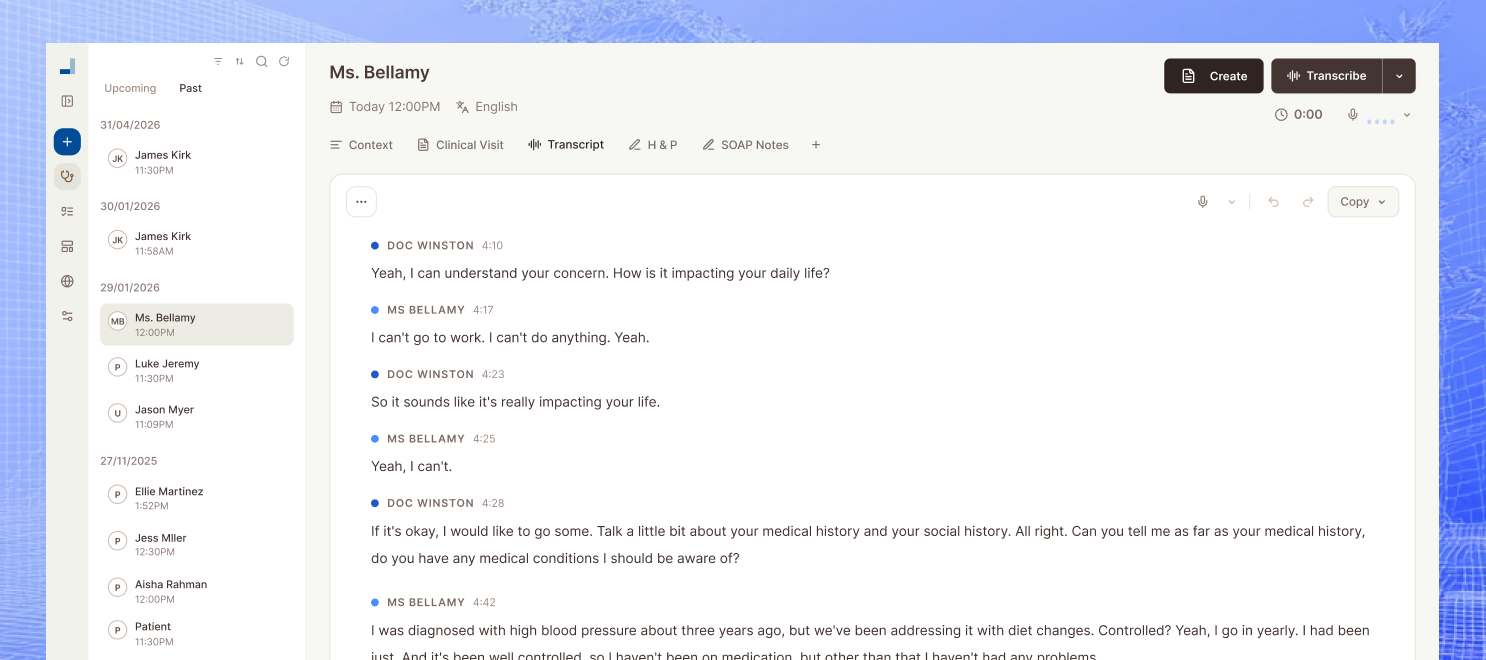
Mcoy AI is an AI medical scribe designed to improve patient encounters by removing documentation distractions. It records and transcribes patient conversations, turns them into structured SOAP notes, and generates clinical documents using over 200 customisable templates built for different specialties. Doctors can chat with their encounters, create referral letters, forms, and reports from the same consultation. By handling documentation in the background, Mcoy AI allows clinicians to stay present, maintain eye contact, and engage fully with patients while still producing high-quality clinical notes.
When documentation stops competing for attention, patient encounters improve immediately.
Reduce time pressure by improving workflow
Rushed encounters are often a symptom of poor workflow rather than poor time management.
When documentation, follow-ups, and administrative tasks spill into the day unpredictably, clinicians feel pressured to move faster during consultations.
Improving workflow outside the encounter improves encounters themselves. When doctors trust that notes and tasks will be manageable later, they relax during visits.
This leads to better listening, clearer communication, and fewer mistakes.
Continuity strengthens encounters over time
Patient encounters improve when care is continuous. Familiarity builds trust, shortens explanations, and deepens understanding.
While continuity is not always possible, even small efforts to reference previous conversations or acknowledge ongoing issues strengthen the relationship.
Patients feel seen as individuals rather than cases, which improves satisfaction and adherence.
Small changes make a noticeable difference
Improving patient encounters does not require a complete overhaul. Small changes compound quickly.
Maintaining eye contact, clarifying agendas, reducing screen time, and summarising plans can transform how patients experience care.
Doctors often report that these changes make encounters more rewarding as well. When interactions feel meaningful, professional satisfaction increases.
Better encounters reduce downstream work
Improved patient encounters do more than increase satisfaction. They reduce administrative burden.
When patients understand plans, they call less. When communication is clear, staff handle fewer follow-ups. When trust is strong, compliance improves.
This creates a positive feedback loop. Better encounters lead to smoother operations, which further improve encounters.
Measuring what matters in patient encounters
Clinics often measure productivity, throughput, and documentation metrics, but overlook encounter quality.
Simple indicators such as patient feedback, complaint rates, and follow-up call volume provide insight into encounter effectiveness.
Improving encounters is not just a soft goal. It has measurable operational and clinical benefits.
Reframing patient encounters as the core work
In busy healthcare settings, patient encounters can feel like just one part of a long task list. This mindset diminishes their importance.
Reframing encounters as the core work of medicine helps guide better decisions about workflows, tools, and priorities.
When systems are designed around supporting encounters, everything else becomes easier to align.
Sustainable care depends on better encounters
Doctors who experience meaningful patient encounters are more resilient. Patients who feel heard are more satisfied and engaged.
Improving patient encounters is not an optional enhancement. It is essential for sustainable, high-quality care.
By reducing distractions, improving communication, and using smarter documentation tools, clinics can restore the encounter to its rightful place at the centre of medicine.
When patient encounters improve, care improves, clinicians feel more fulfilled, and healthcare works the way it should.
Can patient encounters improve without longer appointments
Yes. Presence, clarity, and better workflows often matter more than appointment length.
Do patients notice when doctors are less focused on screens
Yes. Patients consistently report better experiences when clinicians maintain eye contact and listen attentively.
Does improving encounters reduce workload
Often yes. Clear communication reduces follow-up calls, errors, and repeat visits.
Can technology really help patient encounters
When technology removes distractions instead of adding them, it significantly improves engagement.
Is this relevant for busy clinics
Especially. Busy clinics benefit most from improvements that enhance efficiency and interaction at the same time.