Specialty Guides: Patient Consent Script for AI Scribing: Guide & Templates
Learn how to build a patient consent script for AI scribing. Improve trust and legal compliance in your clinic with our expert guide and resources.
What a medical scribe solves in modern practice
The modern healthcare landscape is defined by a data-entry crisis. Doctors often spend more time facing a computer screen than facing their patients, leading to excessive cognitive load and the dreaded ‘pajama time’—hours spent charting after the clinic has closed. This documentation burden isn’t just a nuisance; it leads to burnout, missed clinical details, and a significant decrease in the quality of the doctor-patient relationship.
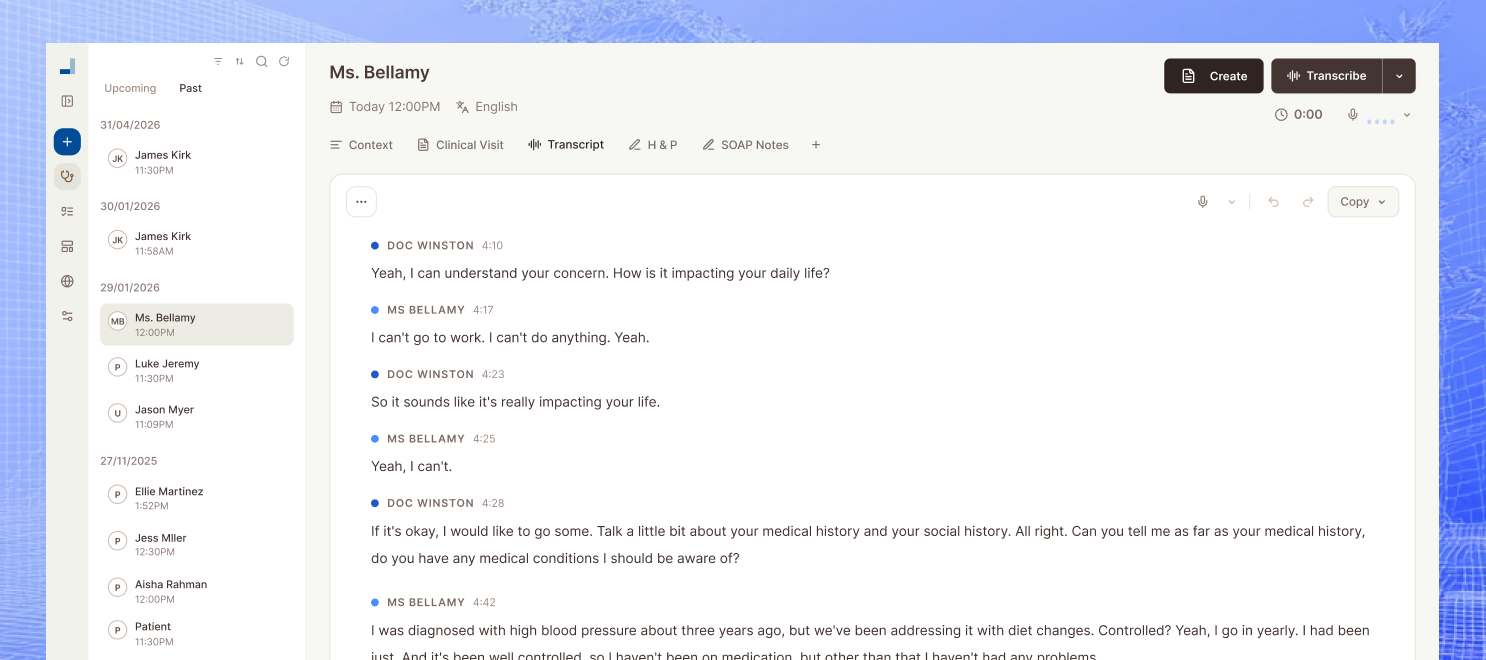
An AI medical scribe acts as an intelligent assistant that handles the heavy lifting of documentation in real-time. By capturing the natural conversation of an encounter, it converts a chaotic dialogue into a structured clinical note. It is important to remember that these tools are assistive; the clinician remains the ultimate authority, responsible for reviewing, editing, and finalizing every entry to ensure absolute accuracy.
- Eliminates after-hours charting and reduces administrative burnout.
- Increases eye contact and active listening during patient consultations.
- Captures granular details that might be forgotten in post-visit dictation.
- Serves as a drafting tool while leaving clinical judgment to the provider.
Note types you can generate beyond SOAP (H&P and more)
While the SOAP note is the industry standard, medical practice requires a much broader range of documentation to support continuity of care. Specialty-specific encounters often demand unique structures that a standard SOAP note cannot accommodate effectively. For instance, a detailed History and Physical (H&P) is essential for new admissions, while brief progress notes suffice for routine check-ins.
Using advanced AI, clinics can now automate the generation of consult notes, procedure notes, and even complex discharge summaries. Beyond the internal record, generating referral letters and follow-up instructions directly from the encounter transcript ensures that communication between providers is seamless and audit-ready. This variety in documentation types ensures that every stakeholder in a patient’s care journey receives the specific information they need.
- Broadens documentation to include H&P, consult notes, and procedure reports.
- Improves referral quality by generating letters directly from visit data.
- Ensures audit readiness through consistent, structured formatting.
- Reduces the time spent on repetitive discharge and follow-up admin.
How to implement Patient Consent Script for AI Scribing step-by-step in a real clinic
Integrating a Patient Consent Script for AI Scribing into your workflow begins with selecting a single, common visit type—such as a routine follow-up—to test your messaging. This allows the staff to become comfortable with the language before rolling it out to more complex cases. Consistency is key, so ensure the front desk and nursing staff are using the same terminology as the physician.
Next, finalize your specialty-specific templates. Whether you are in orthopedics or psychiatry, your AI tool should be tuned to the specific terminology you use daily. Once the templates are ready, you can start capturing encounters. In a real-world setting, this simply involves notifying the patient and starting the recording, allowing the AI to listen while you focus entirely on the physical examination and dialogue.
After the encounter, the review process should be lightning-fast. Because the AI has done the drafting, you are now an editor rather than a writer. Review the note for accuracy, make any 10-second adjustments, and then push the data to your EMR. Finally, leverage the output to automatically create any required referral letters or patient education forms, maximizing the utility of a single recording.
- Start with low-stakes follow-up visits to refine your verbal consent script.
- Customize templates for your specific specialty to ensure high-quality drafting.
- Use the AI outputs to populate secondary documents like referral letters.
- Standardize the workflow from front-desk notification to final signature.
How to keep note quality high and reduce mistakes
AI tools are powerful, but they are not infallible. High-quality documentation requires a lightweight review habit to catch common failure points, such as incorrect doses or transposed values. Clinicians should establish a ‘scan and sign’ protocol where they specifically verify the problem list and any medication changes before finalizing the note.
To prevent ‘note bloat,’ it is helpful to set team standards for how much detail is required in different sections. Avoiding the inclusion of every filler word from a transcript is vital; the goal is a concise clinical synthesis, not a verbatim court record. Regular peer reviews of a small sample of notes can help maintain these standards across a multi-provider clinic.
- Adopt a ‘scan and sign’ habit specifically for meds and doses.
- Define internal standards to prevent unnecessary note bloat.
- Regularly update templates to reflect evolving clinical guidelines.
- Ensure the problem list accurately reflects the current assessment.
Privacy, consent, and patient trust (plain English)
Transparency is the foundation of patient trust. While regional laws vary regarding recording, the best practice is always to obtain explicit verbal consent. Explain to the patient that the tool is being used to ensure you can look them in the eye rather than at a computer screen. Most patients are supportive of technologies that lead to better care and more focused attention from their doctor.
A simple script might sound like this: ‘To help me focus on our conversation today and ensure I don’t miss any details, I’m using a secure AI assistant to help me with my notes. It records our talk and deletes the audio after the note is finished. Is that okay with you?’ This framing focuses on the benefit to the patient rather than the convenience for the doctor.
From a security standpoint, practitioners should be aware of how data is encrypted and stored. Using tools that comply with HIPAA or GDPR standards is non-negotiable. Patients should be assured that their data is handled with the same level of confidentiality as their traditional paper or digital records.
- Use plain language that emphasizes the benefit to the patient experience.
- Always follow local legal requirements for recording and data storage.
- Clarify that the audio is transient and the final note is part of their private record.
- Train all staff to handle questions about data privacy confidently.
Rolling it out across a clinic without disruption
A successful rollout starts with a two-week pilot involving one or two ‘tech-forward’ providers. During this period, track metrics such as time saved per day and the reduction in after-hours work. This data becomes the social proof needed to convince more skeptical colleagues. Training sessions should focus on practical use: how to start the app, how to select a template, and how to verify the AI’s work.
To avoid disruption, align the new workflow with existing EMR processes. The transition should feel like an upgrade to the current system, not a completely new burden. By the end of the pilot, you should have a library of shared templates that the entire clinic can use, ensuring a unified standard of documentation across all departments.
- Run a 14-day pilot to gather time-saving data and feedback.
- Designate a ‘super-user’ to troubleshoot minor issues for other staff.
- Link AI outputs directly to your specific EMR workflow steps.
- Regularly review time-saving metrics to celebrate the rollout’s success.
Mcoy AI is an AI medical scribe that records and transcribes patient encounters, then generates multiple clinical note types including H&P, progress notes, consult notes, follow-up notes, procedure notes, discharge summaries, referral letters, and more. With over 200+ customizable templates and an interactive AI chat, it allows clinicians to quickly create letters, forms, and documents from a single encounter. It is designed to be a helpful assistant that integrates into your existing routine, ensuring you spend less time on administration and more time with your patients.
Conclusion
The transition to automated documentation is one of the most significant shifts in modern medicine. By establishing a clear workflow and using a professional Patient Consent Script for AI Scribing, clinics can protect themselves legally while significantly improving the patient experience. The key is to start small, stay transparent with your patients, and treat the AI as a high-level assistant. As you move forward, the time reclaimed from documentation can be reinvested into what matters most: high-quality patient care. Take the first step today by piloting a consent script in your next session and see how it transforms your clinical day.
What a serious review table should cover
| Decision area | Common mistake | Better clinic-ready approach | Metric to watch |
|---|---|---|---|
| Workflow design | Treat patient consent script for ai scribing: guide & templates as a one-off documentation task | Build a repeatable process with clear ownership and review points | Time to complete documentation |
| Team adoption | Assume every clinician will naturally use the same process | Train for consistency and define exception handling early | Active user adoption |
| Quality review | Only check notes when a problem is reported | Audit a sample of notes weekly and review edge cases | Edit rate per note |
| Operational follow-through | Leave admin actions outside the documentation workflow | Use the same encounter data for referrals, letters, and follow-up tasks | Completion rate for next-step tasks |
Related reading
If you are working through patient consent script for ai scribing: guide & templates, it helps to read this alongside Specialty Guides: How to Run a More Efficient Medical Practice in 2026, Specialty Guides: How to Improve Patient Encounters, and Specialty Guides: How to Use an AI Scribe for Neurology Notes: Full Guide. Those guides cover adjacent workflow, implementation, and evaluation questions so the decision does not sit in isolation.
FAQ
How accurate are AI medical scribes in real clinics?
AI scribes are remarkably accurate at capturing the dialogue of a clinical encounter, often reaching 95% or higher precision in transcribing medical terminology. However, they are sensitive to background noise and multiple people speaking at once. The clinician must always perform a final review to ensure that context and medical nuances are correctly captured in the final document before it is signed.
Do I still need to review every note?
Yes, reviewing every note is a fundamental requirement for both clinical safety and legal compliance. While the AI can do 90% of the writing, the physician is the one licensed to practice medicine and is ultimately responsible for the record. A quick 30-to-60-second review is usually enough to verify the essential facts and finalize the note for the EMR.
What note types can an AI scribe generate besides SOAP?
Modern AI scribes are highly versatile and can generate a wide range of documents including History and Physicals (H&Ps), procedure notes, consult letters, and discharge summaries. They can also take the data from a visit and format it into referral letters or specific insurance forms. This flexibility allows the technology to support almost every specialty within a university clinic or private practice.
Will this work for telehealth and in-person consults?
Yes, AI scribes are designed to work across various platforms. For in-person visits, they typically record through a mobile app or a desktop microphone. For telehealth, they can capture the audio directly from the computer’s system sounds. This ensures a consistent documentation experience regardless of how the patient is being seen.
How do I explain recording/transcription to patients?
The best approach is to be direct and highlight the benefit to the patient. You can explain that using an AI assistant allows you to focus 100% of your attention on them rather than typing on a computer. Most patients appreciate the increased eye contact and feel that the technology leads to a more personalized and attentive healthcare experience.
How do clinics prevent note bloat?
Clinics prevent note bloat by using concise templates and setting clear internal standards for what the AI should prioritize. Instead of allowing a verbatim transcript, providers use ‘synthesis’ settings that instruct the AI to only include clinically relevant information. Regular training and auditing help ensure that everyone is producing high-value, brief notes.
How long does template setup take?
Initial template setup usually takes between 15 and 30 minutes, especially if you already have existing paper or digital templates to reference. Many AI scribe tools come with hundreds of pre-built templates for different specialties, which you can then tweak to match your personal writing style and clinical requirements over the first few days of use.
What’s the safest way to start if I’m skeptical?
The safest way to start is by selecting five to ten patients with simple, routine follow-up issues and using the AI scribe for their notes only. This ‘micro-pilot’ allows you to see the quality of the output without the pressure of a full clinic day. Once you see the time savings and accuracy for simple cases, you can gradually expand to more complex encounters at your own pace.