Specialty Guides: How to Use an AI Scribe for Neurology Notes: Full Guide
Learn how to optimize neurology documentation with an AI scribe. Master workflow, templates, and HIPAA compliance for better patient care.
What a medical scribe solves in modern practice
Documentation is the silent thief of time in a neurology practice. Whether it is a complex seizure history or a detailed neuromuscular assessment, the cognitive load required to treat the patient while simultaneously capturing every nuance in the EHR is exhausting. Many neurologists find themselves finishing charts late into the evening, leading to significant burnout and a decreased quality of life.
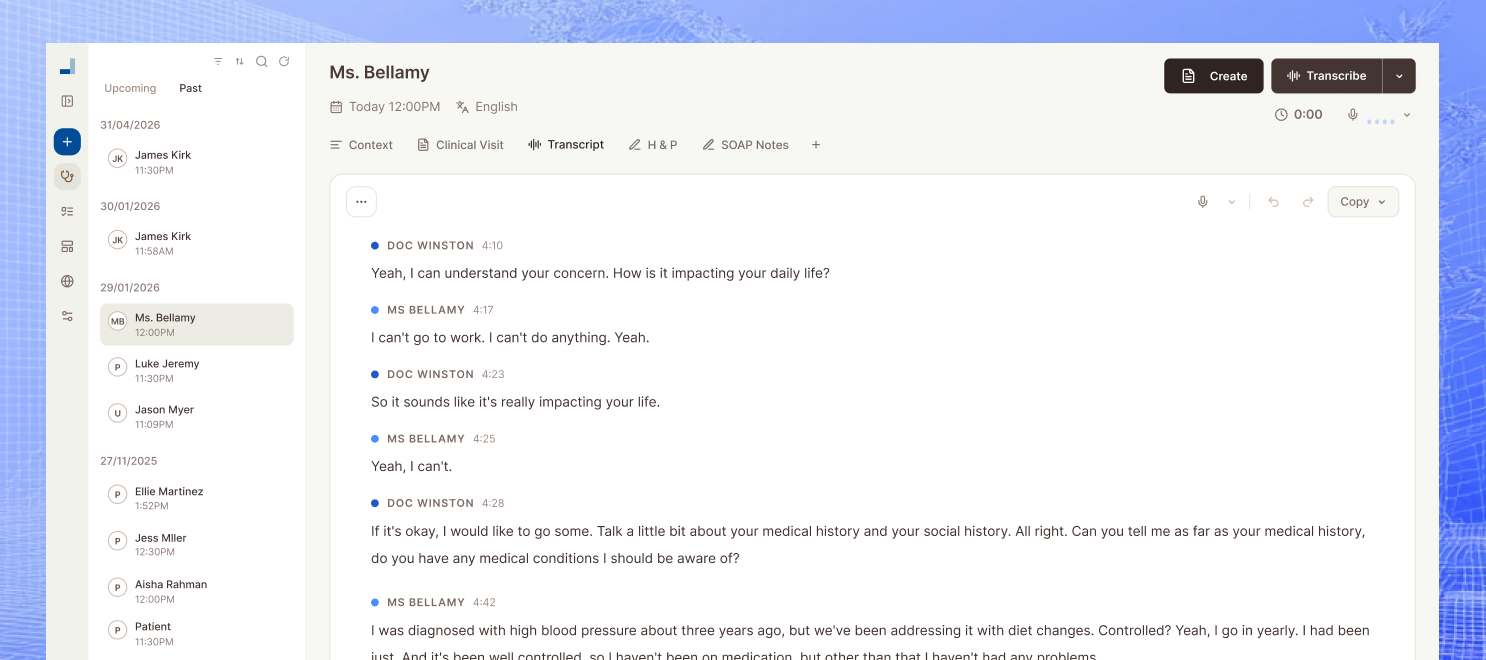
An AI medical scribe acts as an intelligent assistant that captures the dialogue of the encounter in real-time. It is important to remember that these tools are assistive; they do not replace the clinician’s judgment or responsibility. Instead, they handle the heavy lifting of transcription and structural organization, allowing the doctor to maintain eye contact and focus deeply on the patient’s physical signs and symptoms.
- Reduces the burden of after-hours charting and administrative fatigue.
- Captures granular patient details that might be forgotten in delayed entries.
- Allows for improved patient engagement by removing the screen barrier.
- Provides a structured draft that only requires a quick final review.
Note types you can generate beyond SOAP (H&P and more)
Neurology often requires more than a simple SOAP note to capture the complexity of a patient’s condition. A comprehensive History and Physical (H&P) is vital for new admissions or complex consultations, requiring detailed sections on cranial nerves, motor strength, and sensory perception. Without a structured approach, these notes can become disorganized and difficult for other members of the care team to parse.
Beyond the basics, specialized notes like procedure notes for EMGs or Botox injections, progress notes for chronic condition management, and detailed referral letters are essential for continuity of care. Using an AI-driven approach ensures that every note, regardless of the format, remains consistent and thorough. This high level of organization is crucial for audit readiness and medicolegal protection, as it provides a clear timeline of the patient’s neurological status.
- H&P and Consult Notes for complex initial assessments.
- Procedure Notes for specialized interventions like lumbar punctures.
- Discharge summaries and referral letters for seamless care transitions.
- Follow-up and progress notes focused on interval changes in symptoms.
How to implement an AI scribe for neurology notes step-by-step in a real clinic
Starting with an AI scribe for neurology notes requires a strategic rollout. Begin by selecting one specific visit type to pilot the technology, such as routine follow-ups for migraine or epilepsy. This allows you to get a feel for the tool’s accuracy and how it handles the specific terminology of your specialty without feeling overwhelmed by your entire patient load.
Next, set up specialized templates that reflect the way you practice neurology. You can configure the system to prioritize the physical exam or the neurological history depending on the encounter. Once your templates are ready, simply begin capturing the encounter, whether it is an in-person visit or a telehealth session. The AI will listen to the conversation and begin the transcription process immediately.
Review and edit the generated draft quickly between appointments. Because the software captures the conversation accurately, you will likely only need to make minor adjustments or add specific clinical interpretations. Finally, reuse these outputs to quickly generate necessary documents, such as letters to referring primary care physicians or insurance authorizations.
- Start with one common visit type to build confidence in the tool.
- Customize templates to match your specific neurological exam flow.
- Capture both in-person and telehealth encounters seamlessly.
- Edit and finalize notes immediately to avoid a backlog of work.
How to keep note quality high and reduce mistakes
Ensuring high-quality documentation involves recognizing potential failure points, such as missing medication dosages or an incorrect problem list. AI is highly capable, but it can occasionally miss specific numerical values or nuances in a patient’s subjective report. Developing a lightweight review habit is the most effective way to maintain a high clinical standard.
Establish team standards for what needs to be included in every note to avoid ‘note bloat’—the inclusion of unnecessary information that makes it hard to find key clinical facts. By routinely checking the AI’s output against your clinical observations, you ensure that the final document is both accurate and concise. This practice not only protects the patient but also safeguards your professional liability.
- Always verify medication names and dosages for accuracy.
- Implement a standard review process for every generated note.
- Avoid note bloat by focusing on relevant clinical changes.
- Ensure the neurological physical exam findings align with the text.
Privacy, consent, and patient trust (plain English)
Patient privacy is a cornerstone of medical trust, and introducing recording technology requires clear communication. Consent requirements vary by region, so it is essential to follow your local healthcare regulations and hospital policies. Most patients are receptive to the technology when they understand it helps their doctor focus more on them and less on the computer.
A simple way to explain this to a patient is: ‘I’m using an AI assistant today to record our conversation so I can give you my full attention instead of typing. It helps me create more accurate medical records. Is that okay with you?’ This transparent approach fosters a collaborative environment and respects the patient’s autonomy.
- Follow local and regional guidelines for patient consent.
- Use a clear, simple script to explain the technology to patients.
- Ensure the platform adheres to strict data security and HIPAA standards.
- Maintain a focus on patient trust throughout the digital transition.
Rolling it out across a clinic without disruption
A successful rollout starts with a two-week pilot program involving one or two ‘champion’ clinicians. During this phase, the goal is to identify workflow bottlenecks and refine templates. By starting small, you can troubleshoot issues before scaling the technology across the entire university clinic or private practice.
Track specific metrics to measure success, such as the number of hours saved per week on documentation and the reduction in ‘pajama time’—work done late at night. Once the initial pilot proves successful, you can align training for the rest of the staff, ensuring everyone understands how to use the AI scribe for neurology notes effectively to maximize the benefit for both staff and patients.
- Initiate a two-week pilot to refine the documentation workflow.
- Monitor time-savings and note completeness as key KPIs.
- Standardize templates across the clinic for consistent reporting.
- Provide focused training to help all clinicians adapt to the tool.
Mcoy AI is an AI medical scribe that records and transcribes patient encounters, then generates multiple clinical note types (H&P, progress notes, consult notes, follow-up notes, procedure notes, discharge summaries, referral letters, and more). It offers 200+ customizable templates and an AI chat feature to create letters, forms, and other documents effortlessly. This allows neurologists to spend less time typing and more time performing intensive clinical evaluations.
Conclusion
Adopting an AI-driven workflow is the most effective way to combat documentation burnout in neurology. By automating the capture of complex patient histories and physical exams, clinicians can reclaim their time and focus on what matters most: patient care. Implementing an AI scribe for neurology notes is not just about efficiency; it is about restoring the joy of practicing medicine. Start your pilot today and experience how a streamlined documentation process can transform your clinic’s environment.
What a serious review table should cover
| Decision area | Common mistake | Better clinic-ready approach | Metric to watch |
|---|---|---|---|
| Workflow design | Treat how to use an ai scribe for neurology notes: full guide as a one-off documentation task | Build a repeatable process with clear ownership and review points | Time to complete documentation |
| Team adoption | Assume every clinician will naturally use the same process | Train for consistency and define exception handling early | Active user adoption |
| Quality review | Only check notes when a problem is reported | Audit a sample of notes weekly and review edge cases | Edit rate per note |
| Operational follow-through | Leave admin actions outside the documentation workflow | Use the same encounter data for referrals, letters, and follow-up tasks | Completion rate for next-step tasks |
Related reading
If you are working through how to use an ai scribe for neurology notes: full guide, it helps to read this alongside Specialty Guides: How to Run a More Efficient Medical Practice in 2026, Specialty Guides: How to Improve Patient Encounters, and Specialty Guides: How to Document Skin Checks With an AI Scribe | Mcoy AI. Those guides cover adjacent workflow, implementation, and evaluation questions so the decision does not sit in isolation.
FAQ
How accurate are AI medical scribes in real clinics?
In real-world clinical settings, AI scribes are highly accurate in capturing the dialogue and medical terminology used during an encounter. However, the accuracy often depends on the audio quality and the clarity of the conversation. While the transcription is usually near-perfect, the clinician must always review the summarized note for clinical accuracy and nuance.
Do I still need to review every note?
Yes, reviewing every note is a mandatory clinical and legal requirement. The AI scribe acts as a first-draft generator, but the final medical record is the responsibility of the licensed provider. Most clinicians find that reviewing and editing a generated note takes only a fraction of the time it would take to write it from scratch.
What note types can an AI scribe generate besides SOAP?
Beyond standard SOAP notes, advanced AI scribes can generate comprehensive History and Physicals (H&P), detailed procedure notes, consult letters, discharge summaries, and referral documents. This versatility is particularly helpful in neurology, where multiple documentation formats are frequently required for different patient scenarios.
Will this work for telehealth and in-person consults?
Yes, AI scribes are designed to work across various platforms. For in-person consults, they typically use a smartphone or tablet microphone to capture audio. For telehealth, they can often integrate with or record the audio from your computer, ensuring that your documentation remains consistent regardless of how the patient is seen.
How do I explain recording/transcription to patients?
The best approach is to be brief and transparent. Tell the patient that you are using a tool to help you document the visit more accurately so that you can focus on them rather than your computer screen. Most patients appreciate the extra attention and are comfortable with the technology once they understand its purpose.
How do clinics prevent note bloat?
Clinics prevent note bloat by using concise templates and setting clear standards for what the AI should prioritize. By instructing the AI to focus on relevant clinical changes and active problems rather than transcribing every filler word, the resulting notes remain sharp, professional, and easy to read for other providers.
How long does template setup take?
Initial template setup is usually very quick, often taking only a few minutes per template. Most platforms provide pre-built templates for common specialties, which you can then tweak to match your specific wording or exam style. Once saved, these templates can be applied instantly to future encounters.
What’s the safest way to start if I’m skeptical?
The safest way to start is with a ‘shadow’ pilot. Record a few encounters that you were already planning to document manually. Compare the AI-generated note to your own manual note to see how it performs. This low-risk approach allows you to verify accuracy and build trust in the tool before relying on it for your daily workflow.