Specialty Guides: Mental Health Notes Templates: Build Your Clinic's Pack
Learn how to build a mental health notes template pack. Optimize progress notes, intake forms, and H&P for psychiatric and counseling workflows.
What a medical scribe solves in modern practice
In the world of mental health, the documentation burden is often more intensive than in general medicine. Clinicians frequently deal with after-hours charting and significant burnout because therapy sessions require capturing nuanced emotional cues, risk assessments, and complex patient histories. When notes are rushed, key clinical details can be missed, creating a sense of medico-legal anxiety that haunts practitioners long after the clinic doors have closed.
This guide will teach you how to build a comprehensive workflow for mental health notes, exploring formats far beyond the standard SOAP note to include specialized intake and progress styles. Whether you are a solo counselor, a psychiatrist in a busy private practice, or a director at a university clinic, establishing a standardized template pack is the most effective way to ensure quality control and privacy compliance while reclaiming your personal time.
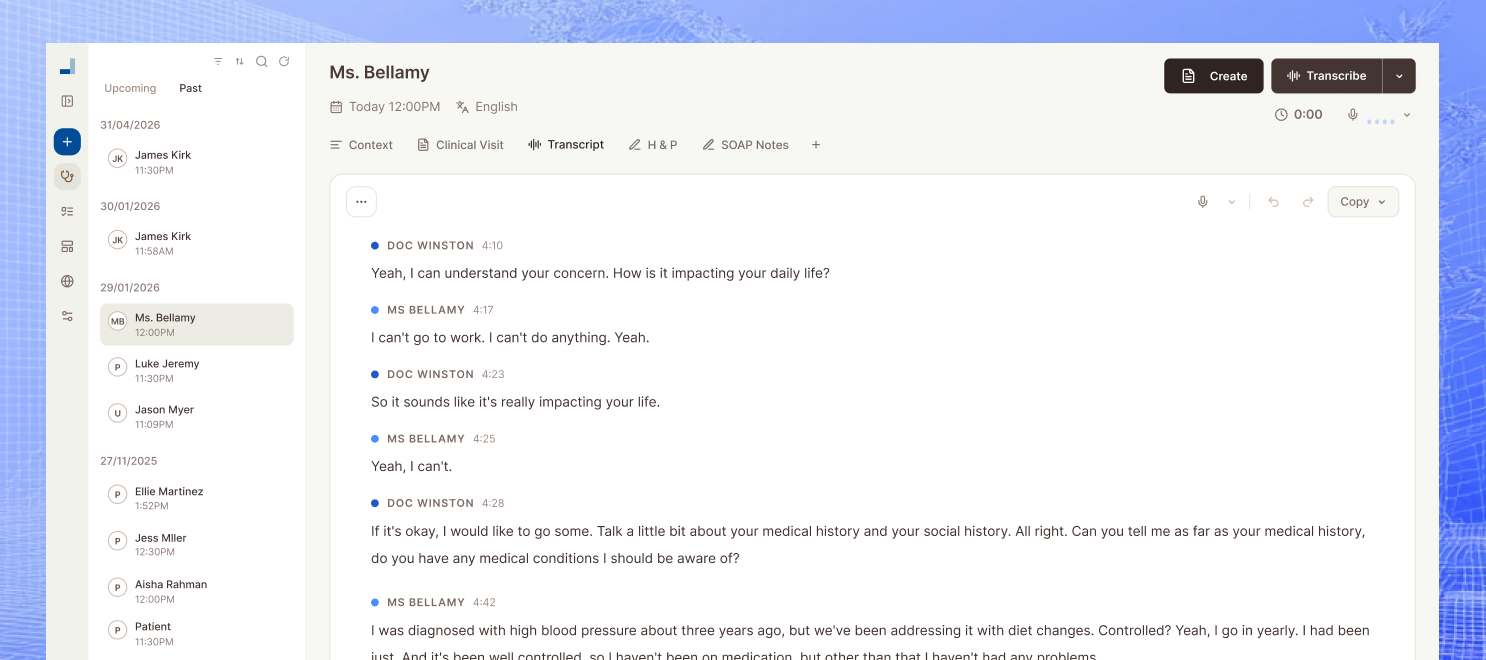
The real cost of documentation isn’t just the minutes spent typing; it is the cognitive load of trying to remember specific patient breakthroughs while managing a back-to-back schedule. An AI medical scribe acts as an assistive partner that captures the dialogue in real-time. It is important to remember that while the technology handles the heavy lifting of transcription and formatting, the clinician remains the final authority, ensuring every note reflects professional judgment and clinical accuracy.
- Reduces the ‘pajama time’ spent on administrative tasks after clinic hours.
- Ensures consistency across different clinicians in a group or university setting.
- Captures nuanced patient interactions that might be forgotten in manual charting.
- Allows the clinician to focus entirely on the patient rather than a computer screen.
Note types you can generate beyond SOAP (H&P and more)
While the SOAP format is a staple, mental health requires a broader range of documentation to provide a full picture of patient care. A robust template pack should include Initial Psychiatric Evaluations (H&P), detailed progress notes, and specialized consult notes. These formats allow for a structured look at the mental status exam, history of present illness, and longitudinal tracking of therapeutic goals.
Beyond the daily encounter, clinicians often need to generate procedure notes for interventions like TMS or ketamine therapy, as well as discharge summaries when a patient completes a course of treatment. Referral letters and follow-up notes are also critical for care coordination with primary care physicians or other specialists. Having these specific templates ready ensures that no matter the context, the documentation is professional and thorough.
Structure is not just about saving time; it is about audit readiness and continuity of care. When a note follows a logical, pre-defined structure, it becomes much easier for another provider to step in or for an auditor to verify the necessity of services. High-quality documentation facilitates better handovers and ensures that the patient’s narrative is preserved accurately over months or years of treatment.
- H&Ps and Initial Intake forms for comprehensive diagnostic assessment.
- Progress notes tailored for CBT, DBT, or psychopharmacology follow-ups.
- Formal referral letters to transition care between providers.
- Discharge summaries that highlight treatment outcomes and future recommendations.
How to implement mental health notes step-by-step in a real clinic
Starting a new documentation workflow should begin with a single visit type to avoid overwhelming your staff. Choose your most common appointment, such as a standard 45-minute psychotherapy session or a 15-minute med management check-in. By mastering one template first, you create a blueprint that can be replicated across more complex cases later.
Once you have identified the visit type, set up your templates based on your specific mental health specialty. For example, a child psychologist will need different sections for parental involvement compared to an addiction specialist focusing on recovery milestones. Having these templates pre-configured ensures that the AI captures exactly what you need for each specific patient population.
During the encounter, whether it is an in-person session or a telehealth call, focus entirely on the patient. The system works in the background to capture the narrative flow. After the session wraps up, you can immediately review the generated output. This immediate review allows you to edit nuances while the conversation is still fresh in your mind, ensuring the highest level of accuracy.
Finally, the power of a digital workflow lies in the ability to reuse outputs. A well-written progress note can be instantly converted into a referral letter or a summary for insurance authorization. This eliminates the need to rewrite the same clinical information across multiple forms, drastically reducing the total time spent on paperwork per patient.
- Pilot the system with one specific encounter type before a full rollout.
- Customize templates to match the specific coding and clinical needs of your specialty.
- Review and edit notes immediately after the session for maximum accuracy.
- Leverage recorded data to automatically populate letters and administrative forms.
How to keep note quality high and reduce mistakes
Common failure points in mental health documentation often involve missing medication changes, incorrect symptom values, or the dreaded ‘note bloat’ where irrelevant information obscures the clinical picture. To combat this, clinicians should adopt a lightweight review habit. Taking sixty seconds to verify the problem list and the specific plan ensures that the documentation serves as a reliable record.
Establishing team standards for documentation is also vital for larger clinics. When everyone agrees on what constitutes a ‘high-quality’ note, the AI can be better calibrated to meet those expectations. This shared standard prevents inconsistency and makes the transition to automated documentation seamless for the entire medical group.
- Verify medication dosages and frequency against the patient’s verbal report.
- Remove redundant phrases to prevent note bloat and improve readability.
- Set clear internal standards for how mental status exams are recorded.
Privacy, consent, and patient trust (plain English)
Patient trust is the foundation of any therapeutic relationship. When introducing new documentation technology, it is essential to follow local regulations and your clinic’s specific privacy policies. While the technical side of security is handled by the platform, the human side involves clear communication with the patient about how their data is being used to improve their care.
You might explain it to a patient by saying: ‘To ensure I give you my full attention today and don’t miss any important details, I use a secure clinical tool to help me draft my notes. It assists me in being more present with you rather than typing on my laptop. Is that okay with you?’ Most patients appreciate the increased eye contact and better engagement that comes with this shift.
- Always follow local healthcare privacy laws and obtain proper consent.
- Use a simple, transparent script to explain the process to the patient.
- Ensure that the patient feels in control of their data and the recording process.
Rolling it out across a clinic without disruption
A successful rollout starts with a two-week pilot phase involving one or two ‘tech-forward’ clinicians. During this time, they can refine the mental health notes template pack and identify any workflow bottlenecks. This small-scale testing prevents widespread frustration and allows for the creation of a ‘best practices’ guide tailored to your specific clinic environment.
Track metrics such as the reduction in after-hours charting time and the speed of note completion. Seeing a tangible decrease in administrative time is often the best motivator for the rest of the staff to adopt the new system. Once the pilot is successful, align the entire team on the core templates so that every note coming out of the clinic has a professional, unified voice.
- Launch with a small pilot group to iron out any workflow issues.
- Measure time saved and note completeness to demonstrate value to the team.
- Standardize templates across the clinic for a unified professional image.
Mcoy AI is an AI medical scribe that records and transcribes patient encounters, then generates multiple clinical note types (H&P, progress notes, consult notes, follow-up notes, procedure notes, discharge summaries, referral letters, and more). It features 200+ customizable templates and an AI chat to create letters, forms, and complex documents, helping mental health professionals spend more time with patients and less on administrative tasks.
FAQ
The following questions address common concerns clinicians have when transitioning to automated mental health documentation and building their own template packs.
How accurate are AI medical scribes in real clinics?
In real-world settings, AI scribes are highly accurate at capturing the core dialogue and clinical facts of a session. They excel at organizing complex conversations into structured formats like mental health notes. However, accuracy also depends on clear communication during the session. Clinicians should always perform a quick review to ensure specific medical terminology or unique patient nuances were captured exactly as intended.
Do I still need to review every note?
Yes, the clinician is always the person responsible for the final medical record. The AI provides a comprehensive first draft that is 90-95% complete, but your professional sign-off is required. This review ensures that the professional judgment, interventions, and assessments reflect your actual clinical findings. Most doctors find that reviewing a pre-written note takes a fraction of the time it takes to write one from scratch.
What note types can an AI scribe generate besides SOAP?
An AI scribe can generate a wide array of documents including Intake Assessments (H&P), Psychotherapy Notes, Med Management Progress Notes, and Discharge Summaries. It can also create referral letters to other specialists and detailed Mental Status Exam reports. Because it is powered by customizable templates, you can create a note format for almost any specific diagnostic or therapeutic need.
Will this work for telehealth and in-person consults?
Yes, modern AI scribes are designed to work seamlessly across both platforms. For in-person visits, the device stays on the desk and captures the room’s audio. For telehealth, the system can capture the audio from your computer. This flexibility is particularly useful for mental health practices that operate on a hybrid model, ensuring a consistent note format regardless of how the patient is seen.
How do I explain recording/transcription to patients?
The most effective way is to be direct and highlight the benefit to the patient. Explain that using the tool allows you to focus 100% on them rather than your screen. Most patients in a mental health setting value the extra empathy and eye contact. Frame it as a way to ensure their record is as accurate and helpful as possible for their long-term treatment journey.
How do clinics prevent note bloat?
Clinics prevent note bloat by using concise templates and setting specific AI instructions to focus on clinical ‘pearls’ rather than every single word spoken. By selecting templates that emphasize brevity and relevance, the AI learns to filter out small talk and focus on symptoms, interventions, and plans. Regularly updating your template pack also helps keep notes lean and functional.
How long does template setup take?
Basic template setup can take as little as 10 to 15 minutes if you are using pre-existing library templates. Customizing a specialized mental health notes template pack to fit your unique clinic style might take an hour or two of adjustment during the first week. Once these are set, they work automatically for every future encounter, saving hundreds of hours over the course of a year.
What’s the safest way to start if I’m skeptical?
The safest way is to start with a ‘shadowing’ approach during non-complex follow-up visits. Record the session, let the AI generate the note, and then compare it to the note you would have written manually. This allows you to build trust in the system’s accuracy and formatting capabilities without the pressure of a high-stakes intake session. Most skeptics become advocates after seeing the time saved on just three or four notes.
Conclusion
Building a custom template pack is the most proactive step a mental health professional can take to combat clerical burnout. By standardizing your workflow and leveraging modern tools, you can ensure that your documentation is both high-quality and legally sound. The goal is to spend your energy on the patient’s recovery, not on the keyboard. Implementing a mental health notes template pack using an assistive tool like Mcoy AI will streamline your administrative burden and allow you to return to the heart of clinical care. Start your pilot today and see how much time you can reclaim.
What a serious review table should cover
| Decision area | Common mistake | Better clinic-ready approach | Metric to watch |
|---|---|---|---|
| Workflow design | Treat mental health notes templates: build your clinic’s pack as a one-off documentation task | Build a repeatable process with clear ownership and review points | Time to complete documentation |
| Team adoption | Assume every clinician will naturally use the same process | Train for consistency and define exception handling early | Active user adoption |
| Quality review | Only check notes when a problem is reported | Audit a sample of notes weekly and review edge cases | Edit rate per note |
| Operational follow-through | Leave admin actions outside the documentation workflow | Use the same encounter data for referrals, letters, and follow-up tasks | Completion rate for next-step tasks |
Related reading
If you are working through mental health notes templates: build your clinic’s pack, it helps to read this alongside Specialty Guides: How to Run a More Efficient Medical Practice in 2026, Specialty Guides: How to Improve Patient Encounters, and AI & Medicine: How to Improve Note Quality Without Writing More | Guide. Those guides cover adjacent workflow, implementation, and evaluation questions so the decision does not sit in isolation.
FAQ
How accurate are AI medical scribes in real clinics?
Do I still need to review every note?
What note types can an AI scribe generate besides SOAP?
Will this work for telehealth and in-person consults?
How do I explain recording/transcription to patients?
How do clinics prevent note bloat?
How long does template setup take?
What’s the safest way to start if I’m skeptical?