AI & Medicine: How to Improve Note Quality Without Writing More | Guide
Discover how medical scribes and AI workflow can improve note quality and save hours of documentation time. Perfect for busy private practitioners.
What a medical scribe solves in modern practice
The burden of clinical documentation has become one of the primary drivers of burnout among doctors and clinic owners. Every hour spent with a patient often necessitates an additional thirty minutes of data entry, leading to ‘pajama time’ where practitioners catch up on charts late into the night. This cognitive load doesn’t just exhaust the clinician; it creates a fragmented care experience where the computer screen often acts as a barrier between the doctor and the patient.
An AI medical scribe serves as an assistive partner rather than a replacement for clinical judgment. It captures the nuance of a conversation that manual typing often misses, ensuring that the patient’s narrative is preserved accurately. However, it is important to remember that the clinician remains the final authority on every note, responsible for verifying the accuracy of the generated content before it enters the legal medical record.
- Reduces administrative burnout and eliminates after-hours charting sessions.
- Optimizes the doctor-patient relationship by allowing for better eye contact.
- Ensures more comprehensive notes by capturing verbal details in real-time.
- Functions as a high-level assistant while keeping the clinician in full control.
Note types you can generate beyond SOAP (H&P and more)
While the SOAP note is the industry standard, modern medicine requires a diverse array of documentation formats to effectively manage various patient encounters. Limiting a practice to standard progress notes can lead to missing vital context in complex cases. Specialized formats such as History and Physical (H&P) reports or comprehensive consult notes allow for a deeper dive into a patient’s medical history and the rationale behind specific treatment plans.
Structure is essential for maintaining continuity of care across different providers and departments. When a patient is referred or transferred, the quality of the discharge summary or referral letter determines how easily the next clinician can pick up the case. High-quality documentation also ensures audit readiness, providing a clear and defensible trail of the clinical reasoning applied during the encounter.
Beyond standard follow-ups, practitioners often need to document specific procedure notes or complex discharge summaries. Each of these formats serves a specific legal and clinical purpose, requiring a layout that emphasizes different data points, such as time-outs during procedures or medication reconciliation during discharge. By utilizing varied note types, clinics can ensure that every aspect of the patient journey is captured with professional precision.
- H&P and Consult Notes provide detailed context for new or complex patients.
- Procedure Notes and Discharge Summaries ensure surgical and transition accuracy.
- Referral Letters facilitate seamless communication between different specialists.
- Standardized structures improve audit compliance and long-term care continuity.
How to implement medical scribe step-by-step in a real clinic
The transition to a recording-assisted workflow should be gradual to ensure team buy-in and clinical accuracy. Start by selecting one specific visit type, such as routine follow-ups or a particular specialty consult, to test the workflow. This allows you to identify any bottlenecks in the process without overwhelming the entire clinic schedule on day one.
Once a visit type is chosen, you should select or customize templates that align with your specialty’s requirements. For example, a pediatrician will need different prompts than an orthopedic surgeon. Preparing these templates in advance ensures that the AI knows exactly which headings and sections to prioritize during the transcription and generation process.
During the encounter, whether it is in-person or via telehealth, simply capture the audio as you speak naturally with the patient. You do not need to change your conversational style; in fact, the more natural the conversation, the better the context captured. Once the visit concludes, review the generated draft immediately while the details are still fresh in your mind, then finalize the note with any necessary edits.
The final step is to leverage the primary note to create secondary documents. If the encounter requires a referral letter or a work excuse note, you can use the data already captured to generate these documents instantly. This ‘create once, use many’ approach significantly reduces the time spent on repetitive clerical tasks and streamlines the entire patient exit process.
- Start with one visit type to master the workflow before scaling clinic-wide.
- Set up specialty-specific templates to ensure the output meets clinical needs.
- Capturing natural dialogue leads to more detailed and accurate records.
- Reuse data from the primary note to generate letters and forms instantly.
How to keep note quality high and reduce mistakes
High-quality documentation isn’t just about quantity; it’s about precision and relevance. A common failure point in documentation is ‘note bloat,’ where irrelevant information obscures the actual clinical plan. Inaccuracies in medication dosages or misidentifying the ‘chief complaint’ can also occur if the clinician does not have a standard review process in place.
To maintain high standards, establish a lightweight review habit for every note. Check for ‘wrong values’ or missing medications that might have been discussed but not clearly articulated. Setting internal team standards for what constitutes a ‘complete’ note helps ensure that every practitioner in the clinic is producing documentation that is both concise and legally sound.
- Actively prune notes to prevent ‘note bloat’ and keep the plan clear.
- Verify all medications and dosages against the actual patient record.
- Implement a checklist to ensure consistent quality across all providers.
- Review notes immediately post-encounter for the highest possible accuracy.
Privacy, consent, and patient trust (plain English)
Patient privacy is the cornerstone of any medical practice. While laws vary by region, the principle of informed consent remains universal. Patients generally appreciate transparency regarding how their information is being documented, especially if they understand that it allows the doctor to pay more attention to their needs rather than a computer screen.
A simple script for patient consent can be very effective: ‘To ensure I give you my full attention today, I use a secure tool that records our conversation and helps me write my medical notes. It doesn’t store your voice long-term, and it keeps your data private. Is that okay with you?’ Most patients are happy to agree when they realize it leads to a more focused and better-documented visit.
Clinics should always adhere to local data security and retention principles. Ensure that any tool used for documentation is compliant with relevant healthcare privacy regulations (like HIPAA or GDPR). Modern platforms prioritize encryption and data minimization to protect both the clinic and the patient from unauthorized access.
- Always obtain verbal or written consent based on local regulatory requirements.
- Explain the benefits to the patient, focusing on ‘better attention’ and ‘accuracy.’
- Verify that all documentation tools meet stringent healthcare privacy standards.
- Maintain clear internal policies regarding data storage and deletions.
Rolling it out across a clinic without disruption
A successful rollout starts with a two-week pilot program involving one or two ‘champion’ clinicians. This small-scale start allows the clinic to refine its template alignment and troubleshooting processes without disrupting the entire patient flow. During this phase, focus on measuring time saved and the reduction in after-hours charting.
Education is key to adoption. Provide short training sessions for staff on how to introduce the process to patients and how to use the outputs to generate referral letters or follow-up instructions. By the end of the pilot, you can compare the completeness of the AI-assisted notes against previous manual entries to demonstrate the quality improvement to the rest of the team.
- Use a 14-day pilot to test templates and refine the daily operational flow.
- Track time savings and note completeness as key performance metrics.
- Align templates across the clinic to ensure a uniform standard of care.
- Phase the rollout to prevent overwhelming administrative staff or IT systems.
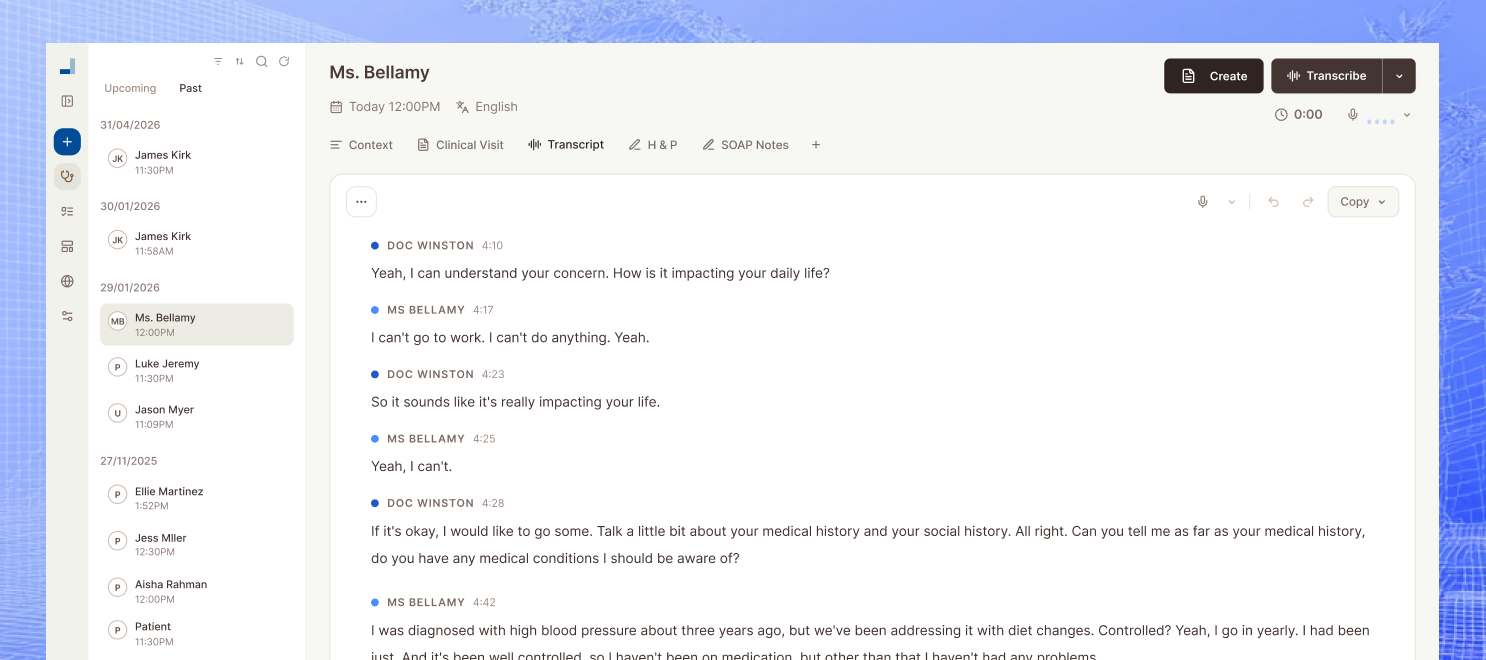
Mcoy AI is an AI medical scribe that records and transcribes patient encounters, then generates multiple clinical note types (H&P, progress notes, consult notes, follow-up notes, procedure notes, discharge summaries, referral letters, and more). With over 200+ customizable templates and an integrated AI chat to create letters, forms, and other essential documents, it helps clinicians focus more on the patient and less on the keyboard.
Improving note quality doesn’t require spending more time at the desk. By integrating a medical scribe into your workflow, you can capture more detail in less time, ensuring that your records are both comprehensive and compliant. Start small, use the right templates, and reclaim your time. Adopting an AI-driven workflow is the most effective way to optimize your practice while keeping your focus where it belongs: on patient outcomes. Taking the step to pilot a medical scribe today could be the key to a more sustainable and efficient clinical future.
What a serious review table should cover
| Decision area | Common mistake | Better clinic-ready approach | Metric to watch |
|---|---|---|---|
| Workflow design | Treat how to improve note quality without writing more | guide as a one-off documentation task | Build a repeatable process with clear ownership and review points |
| Team adoption | Assume every clinician will naturally use the same process | Train for consistency and define exception handling early | Active user adoption |
| Quality review | Only check notes when a problem is reported | Audit a sample of notes weekly and review edge cases | Edit rate per note |
| Operational follow-through | Leave admin actions outside the documentation workflow | Use the same encounter data for referrals, letters, and follow-up tasks | Completion rate for next-step tasks |
Related reading
If you are working through how to improve note quality without writing more | guide, it helps to read this alongside AI & Medicine: How to Simplify Clinical Notes for Busy Doctors, AI & Medicine: How Doctors Can Improve SOAP Notes, and Specialty Guides: Build QA Checks for AI Scribe Documentation: Full Guide. Those guides cover adjacent workflow, implementation, and evaluation questions so the decision does not sit in isolation.
FAQ
How accurate are AI medical scribes in real clinics?
AI medical scribes are remarkably accurate in capturing the nuances of clinical dialogue, often picking up details that a busy clinician might forget to type. However, they are designed to be assistive tools rather than autonomous reporters. While the transcription quality is high, the software is meant to provide a draft that the clinician then reviews and validates for medical accuracy.
Do I still need to review every note?
Yes, reviewing every note is essential for clinical safety and medicolegal responsibility. As the licensed practitioner, you are the person responsible for the final medical record. The AI significantly speeds up the process by providing a 90-95% complete draft, but you should always verify the clinical assessment, medication dosages, and the final plan before signing off.
What note types can an AI scribe generate besides SOAP?
AI scribes are highly versatile and can generate a wide range of documents including History and Physicals (H&P), detailed Consult Notes, and Procedure Notes. They can also create Discharge Summaries, Follow-up Notes, and professional Referral Letters. This variety ensures that every type of patient interaction is documented in the most appropriate and professional format possible.
Will this work for telehealth and in-person consults?
Most modern AI scribing tools are designed to work seamlessly in both environments. For in-person visits, the device captures the room’s audio, while for telehealth, it can often integrate with the communication platform or capture the system audio directly. This flexibility allows for a consistent documentation workflow regardless of how the patient is being seen.
How do I explain recording/transcription to patients?
The best approach is to be honest and focus on the benefits for the patient. You can explain that using the tool allows you to look at them instead of a computer screen, ensuring a better personal connection and more accurate medical records. Most patients are very supportive when they understand it improves the quality of their care and your attention to them.
How do clinics prevent note bloat?
Clinics can prevent note bloat by using concise templates and training the AI on specific preferences for brevity. By setting the AI to focus only on relevant clinical facts and the ‘Assessment and Plan,’ you can avoid the excessive ‘copy-pasting’ of old history that often makes modern charts difficult to read. Regularly reviewing and refining your templates is key.
How long does template setup take?
Initial template setup is usually very quick, often taking just a few minutes of customization to align with your specific specialty. Most platforms come with pre-built templates for common fields like General Practice, Pediatrics, or Orthopedics. You can then refine these over your first few days of use to match your personal documentation style and clinic requirements.
What’s the safest way to start if I’m skeptical?
The safest way to start is to run a small pilot with non-complex cases, such as routine follow-ups. Start by using the tool in parallel with your traditional note-taking method for a few sessions to build trust in its accuracy. Once you see the consistency and time savings, you can gradually transition more of your workload to the AI-assisted process.