Specialty Guides: Increase Patient Capacity with Advanced Medical Scribes
Learn how to increase patient capacity and improve documentation quality using an AI medical scribe. A complete guide for modern clinical workflows.
What a medical scribe solves in modern practice
The modern healthcare landscape is characterized by an overwhelming administrative burden that often leads to after-hours charting and clinician burnout. For private practitioners and university clinic directors, the true cost of documentation isn’t just the time spent typing; it is the cognitive load that distracts from the patient sitting right in front of them. When notes are rushed to save time, details are missed, and the risk of medico-legal complications increases.
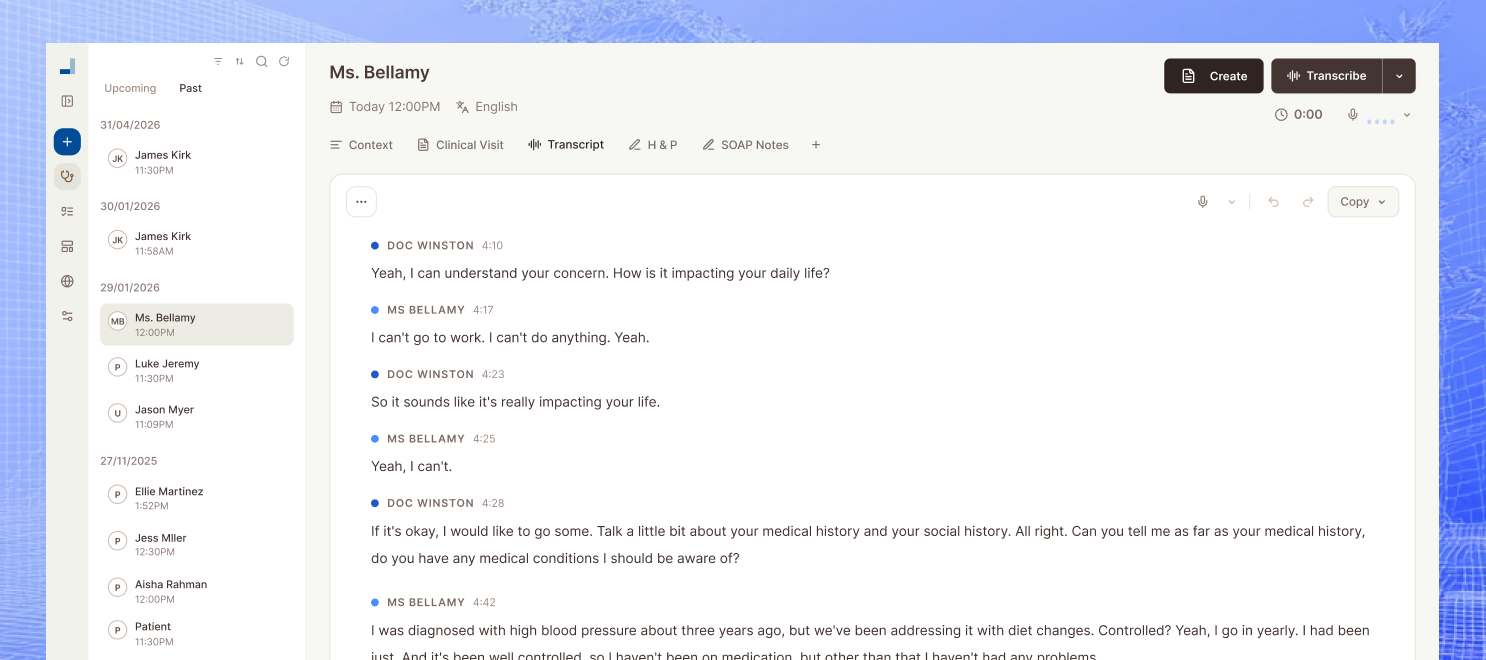
An AI medical scribe serves as a sophisticated digital assistant designed to capture the essence of a clinical encounter in real-time. It doesn’t replace the clinician’s judgment but rather acts as a highly efficient transcription and formatting engine. By offloading the manual task of documentation, doctors can regain focus, ensuring that every patient receives undivided attention while the technical recording handles the heavy lifting of data entry.
- Reduces the cognitive load and mental fatigue associated with multitasking during exams.
- Eliminates ‘pajama time’ by allowing notes to be finalized immediately after the encounter.
- Provides a consistent structure to every note, regardless of how busy the clinic becomes.
- Ensures clinicians remain the final authority, reviewing and signing off on all generated text.
Note types you can generate beyond SOAP (H&P and more)
While the SOAP note is a staple of clinical practice, modern medicine requires a much broader spectrum of documentation. Relying solely on a one-size-fits-all format can lead to gaps in the patient record, especially during complex specialty consultations or surgical procedures. Comprehensive documentation requires various formats such as History and Physical (H&P) reports, progress notes, and detailed discharge summaries that clearly communicate the next steps for care.
Structure matters significantly for continuity of care and audit readiness. A well-formatted referral letter or a succinct procedure note ensures that other members of the care team—and insurance auditors—can quickly grasp the clinical reasoning and the interventions performed. Moving beyond basic templates allows a clinic to maintain high-quality handovers and professional communication that reflects the actual complexity of the patient’s health status.
- H&P and Consult Notes provide a detailed baseline for new or referred patients.
- Procedure and Follow-up notes track specific interventions and long-term recovery.
- Discharge summaries and Referral letters ensure seamless communication between providers.
- Diverse templates improve audit compliance and ensure more accurate billing markers.
How to implement medical scribe step-by-step in a real clinic
Integrating a medical scribe into your daily workflow begins with a focused strategy rather than a wholesale change. Start by selecting one common visit type—perhaps routine follow-ups or standard physicals—to test the system. This allows the clinical team to get comfortable with the recording process without the pressure of a complex multi-system case.
Next, move into setting up templates tailored to your specific specialty. Whether you are in pediatrics, orthopedics, or a university health center, your documentation needs are unique. By aligning the AI’s output with your preferred headings and data points, you ensure that the generated draft looks and feels like your own professional work from the very first day.
During the encounter, whether it is in-person or via a telehealth platform, simply capture the conversation naturally. There is no need to dictate shorthand or change your bedside manner. Once the session concludes, the technology processes the audio into a structured draft within seconds, allowing you to review it while the details are still fresh in your mind.
The final step involves a quick review and edit cycle. Instead of writing from scratch, you are now an editor, correcting minor nuances and confirming the plan. Use the streamlined output to quickly populate referral letters or patient instruction forms, essentially reusing the same data points to fulfill multiple administrative requirements in one go.
- Begin with a pilot using a single, high-volume visit type to build confidence.
- Customize templates early to match your specialty’s specific documentation standards.
- Review drafts immediately while the patient’s details are still fresh in your memory.
- Leverage the generated outputs to automatically create referral letters and patient summaries.
How to keep note quality high and reduce mistakes
Quality control is the cornerstone of any successful clinical documentation strategy. A common failure point in manual charting is “note bloat,” where irrelevant data is copied forward, cluttering the record and obscuring critical information. By utilizing a structured capture system, clinicians can ensure that the problem list and medication changes are updated accurately based on the actual conversation held during the visit.
Implementing a lightweight review habit is essential for maintaining standards across a clinic. Even the most advanced systems require a human eye to catch subtle context clues or specific clinical nuances. Setting a team standard—such as a three-minute review window after each patient—ensures that documentation is not only fast but also clinically precise and legally defensible.
- Establish a consistent review protocol to verify medication dosages and specific values.
- Avoid note bloat by focusing templates on pertinent clinical findings and active plans.
- Create a peer-review culture where lead clinicians periodically audit note quality.
- Use structured data fields to prevent errors in chronic disease management tracking.
Privacy, consent, and patient trust (plain English)
Patient trust is built on transparency, especially when introducing new technology into the exam room. While consent requirements vary by region, the goal is always to ensure the patient feels safe and informed. It is important to follow your local healthcare regulations and clinic policy regarding the recording and storage of medical data.
A simple, patient-friendly explanation can go a long way: “To ensure I can focus entirely on our conversation today, I’m using a secure digital assistant to help me draft your medical notes. It records what we talk about so I don’t have to type while we speak, and I review everything it writes afterward. Is that okay with you?” Most patients appreciate the increased eye contact and personalized attention this allows.
- Always follow local laws and institutional protocols regarding patient data recording.
- Use a clear, conversational script to explain the benefits of the technology to patients.
- Ensure that all data captured is encrypted and stored according to industry security standards.
- Highlight that the recording is used solely for documentation accuracy and quality of care.
Rolling it out across a clinic without disruption
The successful adoption of a medical scribe across a larger clinic or university setting requires a phased approach. A 14-day pilot program is usually sufficient to identify any friction points in the workflow. During this time, the focus should be on user adoption and technical comfort rather than maximizing speed immediately.
To measure success, track metrics such as the reduction in after-hours charting time and the speed of note completion. When other clinicians see the tangible benefit—such as leaving the office at 5:00 PM for the first time in months—the resistance to change evaporates. Training should focus on template alignment so that every practitioner’s notes remain consistent with the clinic’s brand and standards.
- Launch a two-week pilot to iron out workflow kinks with a small group of users.
- Monitor time-saved and note-completion metrics to prove the value to stakeholders.
- Align templates across the clinic to ensure a professional, uniform standard of care.
- Phase the rollout to prevent overwhelming the IT support staff and clinical teams.
Mcoy AI is an AI medical scribe that records and transcribes patient encounters, then generates multiple clinical note types (H&P, progress notes, consult notes, follow-up notes, procedure notes, discharge summaries, referral letters, and more). It features 200+ customizable templates and an AI chat function to create letters, forms, and other documents, helping clinicians spend less time on administration and more on direct patient care.
Conclusion
Increasing your patient capacity doesn’t have to mean sacrificing the quality of your clinical records or your personal well-being. By adopting a modern workflow centered around a medical scribe, you can streamline the entire documentation lifecycle from the first visit to the final discharge summary. This transition allows you to reclaim your time, reduce the risk of burnout, and provide a higher level of care to a larger number of patients. If you are ready to transform your practice, the first step is to pilot a system that understands the complexity of your work. Start today and see how a medical scribe can redefine your clinical efficiency.
What a serious review table should cover
| Decision area | Common mistake | Better clinic-ready approach | Metric to watch |
|---|---|---|---|
| Workflow design | Treat increase patient capacity with advanced medical scribes as a one-off documentation task | Build a repeatable process with clear ownership and review points | Time to complete documentation |
| Team adoption | Assume every clinician will naturally use the same process | Train for consistency and define exception handling early | Active user adoption |
| Quality review | Only check notes when a problem is reported | Audit a sample of notes weekly and review edge cases | Edit rate per note |
| Operational follow-through | Leave admin actions outside the documentation workflow | Use the same encounter data for referrals, letters, and follow-up tasks | Completion rate for next-step tasks |
Related reading
If you are working through increase patient capacity with advanced medical scribes, it helps to read this alongside Specialty Guides: How to Run a More Efficient Medical Practice in 2026, Specialty Guides: How to Improve Patient Encounters, and Admin Management: Referral Letter Template Pack: Free Resources for Doctors. Those guides cover adjacent workflow, implementation, and evaluation questions so the decision does not sit in isolation.
FAQ
How accurate are AI medical scribes in real clinics?
AI medical scribes have reached a high level of accuracy, often capturing nuances that manual note-taking might miss. However, the quality of the output depends on the clarity of the audio and the specific templates used. Clinicians usually find that the drafts require only minimal editing to reflect the encounter perfectly.
Do I still need to review every note?
Yes, the clinician remains the legally responsible party for every note in the patient’s record. The AI is a powerful assistant that does the heavy lifting, but a final human review is essential to ensure medical accuracy, correct any context, and sign off on the treatment plan. This process usually takes only a couple of minutes per note.
What note types can an AI scribe generate besides SOAP?
A high-quality AI scribe can generate a wide array of documentation beyond the standard SOAP format. This includes History and Physical (H&P) reports, consultation notes, follow-up summaries, procedure descriptions, and even discharge letters. Because it is template-based, it can adapt to almost any clinical documentation need.
Will this work for telehealth and in-person consults?
Yes, most modern AI scribing solutions are designed to work seamlessly in both settings. For in-person visits, it captures local audio via a mobile device or computer, and for telehealth, it can integrate with the audio stream of the virtual meeting. Both methods produce a high-quality, structured transcript and note.
How do I explain recording/transcription to patients?
The best approach is to be direct and highlight the benefit to the patient. Tell them that the tool allows you to listen more closely to their concerns instead of staring at a computer screen. Most patients are very supportive when they realize it leads to a more focused and personal consultation.
How do clinics prevent note bloat?
Clinics can prevent note bloat by using concise, specialized templates that only pull in relevant information from the transcript. By setting clear standards for what should be included in each section, the AI can be trained to avoid redundant or unnecessary descriptions that clutter the medical record.
How long does template setup take?
Initial template setup is surprisingly fast, often taking just a few minutes per type. Most users start with pre-built specialty templates and then make small adjustments as they use them. Over the first few days of practice, you can fine-tune them further to match your specific clinical voice.
What’s the safest way to start if I’m skeptical?
The safest way to start is with a small pilot program. Choose a few non-complex follow-up appointments and use the scribe alongside your traditional method. Once you see the accuracy of the drafts and the time saved, you can gradually transition more of your caseload over to the new workflow.