Admin Management: Referral Letter Template Pack: Free Resources for Doctors
Learn how to build a high-quality referral letter template pack to streamline clinic workflows and improve patient care continuity efficiently.
The Hidden Burden of Clinical Correspondence
For many clinicians, the end of a patient encounter doesn’t mark the end of the work. Instead, it signals the beginning of a tedious administrative cycle characterized by after-hours charting and the frantic drafting of referral letters. This administrative burden is a leading cause of physician burnout, often resulting in rushed notes that may lack the critical nuance required for complex cases. Whether you are a solo private practitioner or managing a busy university clinic, the anxiety of potential medico-legal gaps or inconsistent documentation can be overwhelming.
This guide is designed to help you reclaim your time by building a professional referral letter template pack. We will explore efficient documentation workflows, look at note formats that go far beyond the standard SOAP method, and discuss quality control measures that ensure patient safety. From GPs and specialists to telehealth providers, these strategies provide a clear rollout plan to modernize your clinic’s communication and improve the quality of every specialist handover.
What a medical scribe solves in modern practice
The real cost of medical documentation isn’t just measured in minutes; it is measured in cognitive load and the erosion of the patient-doctor relationship. When a clinician is forced to type while a patient speaks, eye contact is lost, and subtle diagnostic cues might be missed. Delayed notes often lead to ‘recall bias,’ where the specific details of a complex physical exam or a patient’s specific concerns become blurred by the time the letter is finally drafted at 8:00 PM.
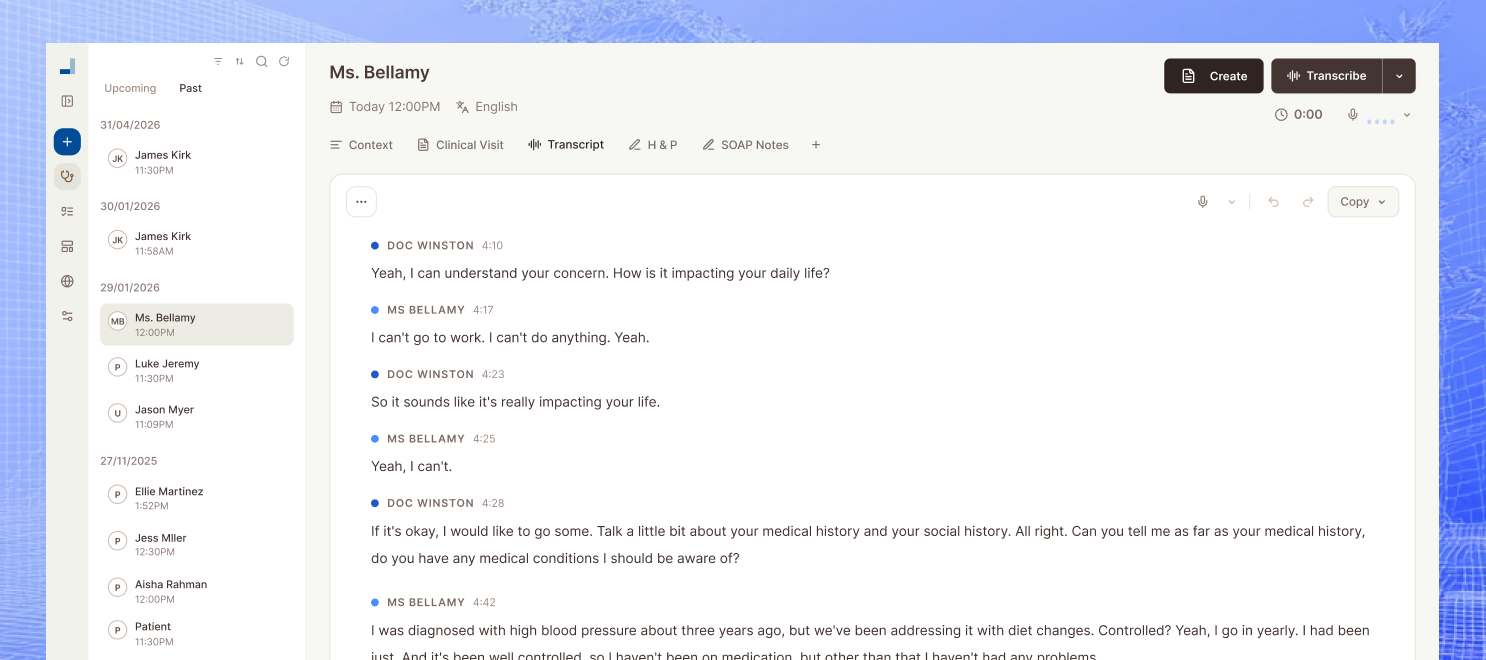
An AI medical scribe acts as an assistive intelligence, capturing the nuance of the conversation in real-time. It is important to distinguish that these tools are not replacements for clinical judgment; the clinician remains the final authority and is always responsible for the accuracy of the record. By acting as a digital assistant, the scribe allows the doctor to focus entirely on the person sitting across from them, knowing the foundational data is being structured in the background.
- Reduces the ‘pajama time’ spent on administrative tasks after clinic hours.
- Captures specific patient terminology and symptoms that might be forgotten.
- Enhances the patient experience by allowing the doctor to remain present.
- Provides a reliable draft that acts as a starting point for specialized letters.
Note types you can generate beyond SOAP (H&P and more)
While the SOAP note is a staple of medical education, it often falls short when communicating with sub-specialists or documenting complex procedures. A comprehensive referral letter template pack should include varied formats such as History and Physical (H&P) reports, consult notes, and detailed procedure summaries. Each format serves a specific purpose in the continuum of care, ensuring that the receiving physician has exactly the information they need without digging through irrelevant data.
Structure is the backbone of audit readiness and clinical safety. For instance, a discharge summary requires a focus on medication changes and follow-up instructions, whereas a referral letter needs to highlight the specific clinical question being asked. By diversifying your documentation formats, you ensure that handovers are seamless, reducing the risk of medical errors during transitions of care.
- H&P and Consult Notes for comprehensive new patient evaluations.
- Follow-up and Progress Notes for chronic disease management tracking.
- Procedure Notes and Discharge Summaries for surgical or acute interventions.
- Referral Letters designed to get specialists the right data at the first glance.
How to implement a referral letter template pack step-by-step
To begin implementing your referral letter template pack, start by selecting one specific visit type—such as a common musculoskeletal referral or a routine cardiology consult. Attempting to overhaul every letter type at once often leads to frustration. By focusing on a high-volume, low-complexity encounter first, you can refine your capture process before moving to more nuanced cases.
Next, organize your templates by specialty. A referral to a neurologist requires different data points than one to an orthopedic surgeon. Configure your workflow to capture the encounter naturally, whether it is an in-person physical exam or a telehealth session. During the visit, speak your findings aloud; this serves the dual purpose of informing the patient and ensuring the recording picks up the essential clinical data.
Once the encounter is finished, review the generated draft immediately. Quick editing while the patient is still fresh in your mind takes significantly less time than traditional dictation or manual typing. Finally, reuse these outputs to populate multiple forms; a single well-captured encounter can generate a progress note, a patient summary, and a referral letter simultaneously, maximizing your efficiency.
- Pilot the system with one specific referral type to build confidence.
- Create specialty-specific triggers for relevant clinical data points.
- Review drafts immediately to maintain high accuracy and ‘flow.’
- Leverage the same data for multiple document outputs to save time.
How to keep note quality high and reduce mistakes
The most common failure points in medical documentation include ‘note bloat,’ where irrelevant information obscures the clinical narrative, and the omission of critical medication changes. To prevent these errors, clinicians should adopt a lightweight review habit. This involves scanning the generated text for ‘hallucinations’ or misheard dosage values, ensuring that the problem list is updated and accurate before the letter is finalized.
Establishing team standards also helps maintain high quality. If everyone in the clinic uses the same referral letter template pack structure, it becomes easier for support staff to assist with processing and for receiving clinics to find the information they need. Regular peer reviews of a small sample of notes can help identify common errors and ensure the entire practice is adhering to the highest standards of documentation.
- Focus on concise data presentation to prevent ‘note bloat.’
- Always verify medication dosages and specific numeric values.
- Implement a ‘final check’ protocol before signing off on any document.
- Standardize templates across the clinic for cross-specialty consistency.
Privacy, consent, and patient trust
Patient privacy is the cornerstone of the modern medical practice. When using any assistive technology for documentation, it is vital to follow local regulations, such as HIPAA or GDPR. Consent basics vary by region, so always ensure your clinic’s written policies reflect the current legal requirements in your jurisdiction. Transparency with patients builds trust rather than eroding it.
You can explain the process to patients simply: ‘To ensure I give you my full attention and keep our records accurate, I use a clinical assistant tool that help me record our discussion and turn it into your medical note and referral letter. Is that alright with you?’ Most patients appreciate the increased eye contact and the fact that their doctor is focused on their health rather than a screen. Always ensure that the security and retention principles of any software you use align with your professional obligations.
- Always obtain verbal or written consent based on local policy.
- Explain the technology as a tool for better patient-doctor engagement.
- Ensure the data is encrypted and stored according to medical standards.
- Maintain a clear policy on data retention and patient access to records.
Rolling it out across a clinic without disruption
A successful rollout starts with a two-week pilot program involving one or two ‘champion’ clinicians. During this phase, track metrics such as time saved on documentation, the reduction in after-hours work, and the perceived completeness of the notes. This data is invaluable for convincing more skeptical colleagues of the transition’s benefits.
Following the pilot, align your templates across the department. Training should focus not just on the software but on the ‘art’ of the encounter—teaching clinicians how to verbalize physical findings so the template can capture them accurately. By aligning the templates with the existing clinic workflow, you minimize disruption and maximize the speed of adoption.
- Phase the introduction starting with a small group of tech-comfortable staff.
- Measure ‘before and after’ metrics to demonstrate clear ROI.
- Provide template-specific training to ensure high-quality outputs.
- Regularly solicit feedback to refine templates for better clinical fit.
Mcoy AI is an AI medical scribe that records and transcribes patient encounters, then generates multiple clinical note types including H&P, progress notes, consult notes, follow-up notes, procedure notes, discharge summaries, referral letters, and more. With over 200 customizable templates and an interactive AI chat, doctors can effortlessly create specialized letters, forms, and clinical documents, allowing them to focus on patient care while the tool handles the administrative heavy lifting.
Conclusion
Mastering a modern clinical workflow requires more than just clinical skill; it requires the right tools to manage the administrative load. By implementing a referral letter template pack, you can ensure that your communication is professional, accurate, and timely. This structured approach reduces stress, prevents burnout, and ensures that your patients receive the best possible continuity of care across the medical landscape. Start your pilot today and see how the right system can transform your daily practice.
What a serious review table should cover
| Decision area | Common mistake | Better clinic-ready approach | Metric to watch |
|---|---|---|---|
| Workflow design | Treat referral letter template pack: free resources for doctors as a one-off documentation task | Build a repeatable process with clear ownership and review points | Time to complete documentation |
| Team adoption | Assume every clinician will naturally use the same process | Train for consistency and define exception handling early | Active user adoption |
| Quality review | Only check notes when a problem is reported | Audit a sample of notes weekly and review edge cases | Edit rate per note |
| Operational follow-through | Leave admin actions outside the documentation workflow | Use the same encounter data for referrals, letters, and follow-up tasks | Completion rate for next-step tasks |
Related reading
If you are working through referral letter template pack: free resources for doctors, it helps to read this alongside Admin Management: How to Reduce Admin Errors in Clinical Notes, Admin Management: Medication List Template with Examples, and Admin Management: Master AI Medical Scribes for Clinical Handovers. Those guides cover adjacent workflow, implementation, and evaluation questions so the decision does not sit in isolation.
FAQ
How accurate are AI medical scribes in real clinics?
AI medical scribes have reached a high level of accuracy, often capturing over 95% of clinical details correctly. However, they are trained to assist, not replace, the clinician’s eye. While they excel at transcribing dialogue and structuring it into segments, the physician must always verify clinical findings and dosages. Most practitioners find the drafts are 90% ready, needing only minor adjustments.
Do I still need to review every note?
Yes, reviewing every note is a professional and legal requirement. The AI provides a highly accurate draft, but the clinician is ultimately responsible for the medical record’s contents. This review process usually takes less than sixty seconds if done immediately after the encounter. It is a vital step for ensuring that the specific nuances of a patient’s case are perfectly reflected.
What note types can an AI scribe generate besides SOAP?
Modern AI scribes are incredibly versatile and can generate far more than just SOAP notes. They can produce full History and Physical (H&P) reports, consult notes for specialists, and detailed procedure notes documenting surgical interventions. Additionally, they can create discharge summaries and formal referral letters that are ready to be sent to colleagues. This variety ensures that all communication is tailored to its specific purpose.
Will this work for telehealth and in-person consults?
Yes, AI medical scribes are designed to be platform-agnostic, meaning they work equally well for in-person visits and virtual consultations. For telehealth, the system captures the audio directly from the call, while in-person visits use a smartphone or tablet microphone. The result is a seamless documentation experience regardless of how the care is being delivered to the patient.
How do I explain recording/transcription to patients?
The best approach is to be completely transparent and focus on the benefits for the patient. You might say that the tool allows you to focus 100% on them instead of a computer screen. Most patients are very supportive when they realize it leads to more accurate records and a more attentive doctor. Honesty about data security also helps in reassuring them that their information is safe.
How do clinics prevent note bloat?
Clinics prevent note bloat by using specific templates that prioritize concise and relevant data over exhaustive transcription. By setting parameters for each note type, the AI can be instructed to only include pertinent positives and negatives. Regular review of template outputs helps clinicians refine what information is truly necessary for a high-quality medical record. This keeps the letters readable and helpful for specialists.
How long does template setup take?
Setting up a basic referral letter template pack can take as little as 30 minutes if you use pre-built resources. Most clinicians spend an additional hour over the first week fine-tuning the templates to match their personal ‘voice’ and specific specialty needs. Once these templates are set, they function automatically, saving hours of work every single week. It is a small time investment for a huge long-term return.
What’s the safest way to start if I’m skeptical?
The safest way to start is by running a ‘shadow’ pilot where you continue your normal charting while testing the AI on three to five patients a day. This allows you to compare the AI-generated notes against your manual entries without any risk to your workflow. Once you see the accuracy and time savings firsthand, you can gradually increase the volume as your confidence in the system grows.