Specialty Guides: How to Use an AI Scribe for Patient Instructions Guide
Learn how to use an AI scribe to generate clear patient instructions and clinical notes. Improve workflow, save time, and reduce clinician burnout today.
What a medical scribe solves in modern practice
Administrative burden remains the leading cause of clinician burnout across the globe. For many private practitioners and university clinic doctors, the workday doesn’t end when the last patient leaves; instead, it continues into the late hours of the night during what many call ‘pajama time.’ This documentation lag often leads to rushed notes, potential errors, and a significant increase in cognitive load that detracts from the quality of patient care.
Implementing an AI scribe targets these specific pain points by automating the heavy lifting of data entry and synthesis. Rather than focusing on a screen or a notepad, providers can maintain eye contact and build rapport with their patients. It is important to remember that these tools are assistive; while they capture the nuances of the conversation with incredible precision, the clinician remains the final authority and must review the output for accuracy.
- Reduces after-hours charting and administrative burnout.
- Enhances patient-provider interaction through active listening.
- Captures granular clinical details that are often forgotten.
- Acts as a high-speed drafting assistant for all clinical documentation.
Note types you can generate beyond SOAP (H&P and more)
While the SOAP note is the traditional standard, modern medicine requires a diverse range of documentation formats to ensure continuity of care. An AI scribe is not limited to just one structure. For university clinics and specialized practices, the ability to generate a comprehensive History and Physical (H&P) or a detailed Procedure Note is invaluable for maintaining a high standard of medical records.
Effective documentation also includes Consult Notes and Referral Letters, which are critical for inter-professional communication. When a patient moves from one care setting to another, a well-structured Discharge Summary or a Follow-up Note can prevent medical errors and clarify the next steps in the treatment plan. Using standardized templates for these various outputs ensures that the clinic remains audit-ready and that handovers are seamless.
- Supports H&P, progress notes, and complex consult notes.
- Generates detailed procedure notes and follow-up summaries.
- Streamlines referral letters and discharge documentation.
- Ensures consistent structure for better audit readiness.
How to implement AI scribe patient instructions step-by-step in a real clinic
To begin using an AI scribe to create patient instructions effectively, start by selecting one specific visit type to pilot, such as routine follow-ups or wellness exams. This allows the team to get comfortable with the technology without overwhelming the entire workflow. Ensure you have selected a range of templates within the tool that match your specialty’s common complaints and treatment plans.
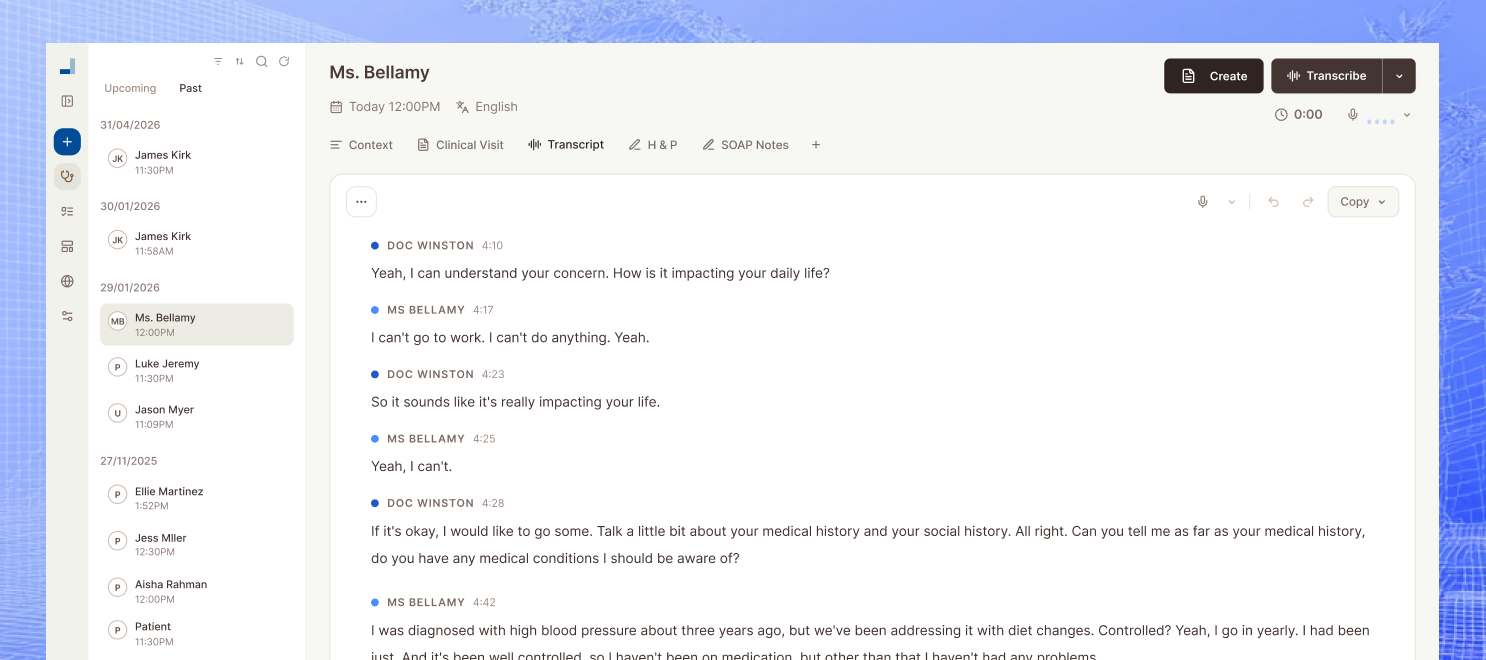
During the encounter, whether it is in-person or via telehealth, simply let the AI record the natural conversation. You don’t need to change the way you speak; in fact, the more natural the interaction, the better the context the AI has to work with. Once the visit is over, the system will process the audio and generate the draft notes and patient-facing instructions based on the clinical dialogue.
Review the generated outputs immediately while the encounter is fresh in your mind. You can quickly edit any specific instructions or add personalized advice before finalizing the document. The final step is to reuse these clinical outputs to populate patient portals or print out clear, jargon-free instructions for the patient to take home.
- Pilot the technology with a single visit type first.
- Utilize specialty-specific templates for higher accuracy.
- Capture natural dialogue without changing your bedside manner.
- Review and edit outputs immediately for maximum efficiency.
How to keep note quality high and reduce mistakes
Maintaining high-quality documentation requires more than just good technology; it requires a lightweight review habit. Even the most advanced AI can occasionally miss a specific medication dosage or misinterpret a complex value if the audio is muffled. By doing a quick sixty-second scan of the drafted note, clinicians can catch these ‘hallucinations’ or omissions before they become part of the permanent record.
Standardizing what ‘quality’ looks like within your clinic is also essential. This means deciding as a team which elements are mandatory in every note—such as a clear problem list or updated medications—and ensuring the AI templates are tuned to those requirements. This avoids ‘note bloat,’ where the documentation becomes excessively long without adding useful clinical value.
- Develop a habit of reviewing every note before signing off.
- Standardize clinic-wide templates to ensure consistency.
- Focus on clarity and conciseness to prevent note bloat.
- Audit a small sample of notes monthly for quality assurance.
Privacy, consent, and patient trust (plain English)
Patient privacy is the foundation of the therapeutic relationship, and introducing recording technology requires transparency. Consent requirements vary by region, so it is vital to follow your local healthcare regulations and board policies. Generally, most patients are receptive to the technology when they understand that it allows their doctor to focus entirely on them rather than a keyboard.
A simple way to explain this to a patient is: ‘I’m using a secure AI assistant to capture our conversation today so I can focus on you instead of taking notes. It helps me ensure your medical record is accurate. Is that okay with you?’ Most patients appreciate the honesty and the extra attention they receive during the consultation.
- Always follow local legal and privacy guidelines for consent.
- Use a simple, transparent script to explain the tool to patients.
- Ensure the platform used meets high security and encryption standards.
- Maintain patient trust by being clear about data retention.
Rolling it out across a clinic without disruption
A successful rollout starts with a two-week pilot program involving a few ‘early adopter’ clinicians. During this phase, you can identify any technical hurdles, such as Wi-Fi dead zones in certain exam rooms, and gather feedback on template performance. Monitoring metrics like time saved per day and the reduction in after-hours charting will provide the data needed to justify a full-scale implementation.
Training should focus not just on the software itself but on how to integrate it into the patient encounter naturally. Once the pilot clinicians are comfortable, they can serve as internal champions to train the rest of the staff. This gradual approach ensures that patient flow remains steady and that the transition to an AI-enhanced workflow feels like an upgrade rather than a disruption.
- Start with a two-week pilot to test technical stability.
- Track time-saving metrics to measure the return on investment.
- Assign internal champions to lead clinic-wide training.
- Gradually align all clinic templates for a unified workflow.
Mcoy AI is an AI medical scribe that records and transcribes patient encounters, then generates multiple clinical note types including H&P, progress notes, consult notes, follow-up notes, procedure notes, discharge summaries, referral letters, and more. With over 200+ customizable templates and an interactive AI chat, clinicians can easily create letters, forms, and documents based on the captured encounter data, allowing for a more efficient and patient-centered practice.
Conclusion
Adopting a modern workflow to create patient instructions doesn’t have to be a daunting task. By utilizing an AI scribe, you can transform the way your clinic handles documentation from a source of stress into a streamlined, automated process. From capturing the initial encounter to generating complex referral letters and clear patient guides, the right technology allows you to return to the heart of medicine. Start a pilot today and see how learning how to use an AI scribe to create patient instructions can revolutionize your private practice or university clinic.
What a serious review table should cover
| Decision area | Common mistake | Better clinic-ready approach | Metric to watch |
|---|---|---|---|
| Workflow design | Treat how to use an ai scribe for patient instructions guide as a one-off documentation task | Build a repeatable process with clear ownership and review points | Time to complete documentation |
| Team adoption | Assume every clinician will naturally use the same process | Train for consistency and define exception handling early | Active user adoption |
| Quality review | Only check notes when a problem is reported | Audit a sample of notes weekly and review edge cases | Edit rate per note |
| Operational follow-through | Leave admin actions outside the documentation workflow | Use the same encounter data for referrals, letters, and follow-up tasks | Completion rate for next-step tasks |
Related reading
If you are working through how to use an ai scribe for patient instructions guide, it helps to read this alongside Specialty Guides: How to Run a More Efficient Medical Practice in 2026, Specialty Guides: How to Improve Patient Encounters, and Specialty Guides: Build a Consent Documentation Template Pack | Free Guide. Those guides cover adjacent workflow, implementation, and evaluation questions so the decision does not sit in isolation.
FAQ
How accurate are AI medical scribes in real clinics?
AI medical scribes have reached a high level of accuracy, often capturing nuances that human scribes might miss. However, they are assistive tools, not replacements for clinical judgment. The accuracy depends significantly on the clarity of the audio and the specific medical terminology used during the visit. Most clinicians find that the drafts are 90-95% accurate, requiring only minor tweaks before finalization.
Do I still need to review every note?
Yes, the clinician is legally and professionally responsible for the accuracy of every medical record. While the AI does the heavy lifting of drafting the note, you should always perform a quick review to ensure all clinical facts, dosages, and instructions are correct. This review process usually takes less than a minute but is vital for patient safety and medico-legal protection.
What note types can an AI scribe generate besides SOAP?
Modern AI scribes are incredibly versatile and can generate far more than just SOAP notes. They can produce History and Physicals (H&P), detailed procedure notes, follow-up summaries, and discharge summaries. Additionally, they can be used to draft referral letters and specialized consult notes tailored to different medical specialties, ensuring that all communication is professional and comprehensive.
Will this work for telehealth and in-person consults?
Yes, AI scribes are designed to work seamlessly across different consultation formats. For in-person visits, the device (like a phone or tablet) is placed in the room to capture the audio. For telehealth, the scribe can often integrate directly with the video platform or record the audio from your computer, ensuring the same level of documentation quality regardless of where the patient is located.
How do I explain recording/transcription to patients?
Most clinicians find that a transparent and benefit-focused explanation works best. Simply tell the patient that you are using a secure tool to record the visit so you can focus on them rather than your computer screen. Explain that it helps ensure their instructions are captured accurately and that their data is handled with the highest level of security and privacy.
How do clinics prevent note bloat?
Note bloat is prevented by using well-designed, concise templates that focus on pertinent information. Clinicians should also be trained to summarize findings out loud during the exam, which helps the AI identify the most important clinical takeaways. Regularly reviewing and refining your templates ensures that the AI only includes information that adds real value to the medical record.
How long does template setup take?
Basic template setup can take as little as a few minutes if you are using pre-built specialty templates. Most clinics spend about an hour or two in the first week fine-tuning these templates to match their specific preferences and clinical workflow. Once the templates are established, they require very little maintenance and provide consistent results across all providers in the clinic.
What’s the safest way to start if I’m skeptical?
The best way to start is with a small, low-risk pilot program. Choose three to five patients in a single afternoon and use the AI scribe alongside your traditional note-taking method. Compare the results and see how much time you save. This ‘test-drive’ approach allows you to see the accuracy and efficiency firsthand without committing to a full-scale workflow change immediately.