Specialty Guides: Build a Consent Documentation Template Pack | Free Guide
Learn how to build a consent documentation template pack to save time and ensure compliance. Master modern clinical workflows and improve patient safety.
What a medical scribe solves in modern practice
The modern healthcare environment is characterized by an overwhelming administrative burden that often leads to clinician burnout and after-hours charting. For many practitioners, the real cost of documentation isn’t just the time spent typing; it is the cognitive load required to recall specific patient details while simultaneously managing a busy clinic schedule. This leads to rushed notes and a persistent sense of medico-legal anxiety.
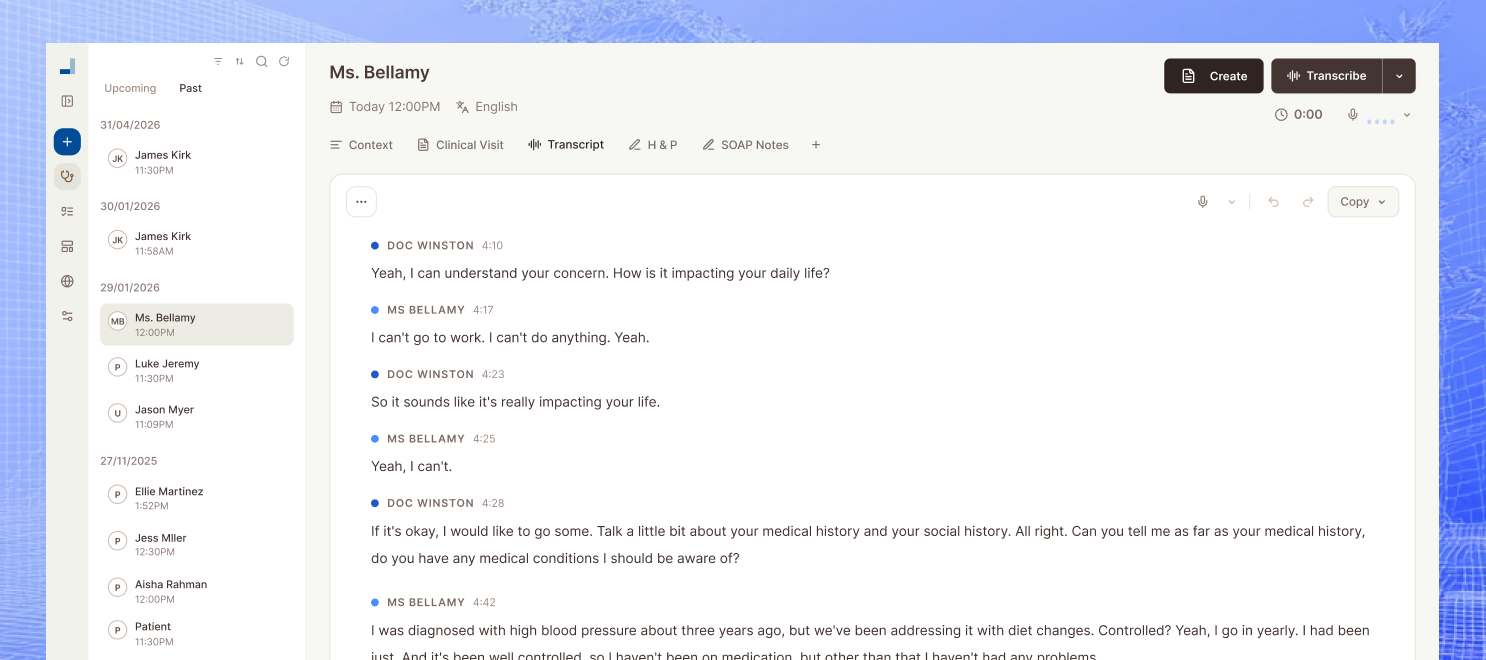
An AI medical scribe acts as an assistive layer that captures the nuances of a patient encounter in real-time. It is important to remember that these tools are designed to support, not replace, the clinician. While the AI handles the heavy lifting of transcription and formatting, the clinician remains the final authority, ensuring all medical information is accurate and clinically sound.
- Reduces the phenomenon of ‘pajama time’ spent on late-night charting.
- Minimizes cognitive load by capturing details as they happen.
- Enhances patient engagement by allowing doctors to maintain eye contact.
- Provides a structured foundation for medico-legal protection.
Note types you can generate beyond SOAP (H&P and more)
While the SOAP note is the industry standard for daily progress, complex cases require more diverse documentation styles. A comprehensive consent documentation template pack must account for various encounter types including History and Physicals (H&P), detailed consult notes, and specific procedure notes. Relying solely on a one-size-fits-all format often leads to gaps in the patient narrative.
Structuring notes correctly is essential for continuity of care and audit readiness. For example, a referral letter requires a different tone and data set than a discharge summary. By utilizing specialized templates, practitioners ensure that follow-up care is seamless and that any subsequent provider has a clear, concise understanding of the patient’s status and the informed consent provided for specific treatments.
- H&P and progress notes for comprehensive patient tracking.
- Detailed consult and procedure notes for specialized interventions.
- Professional referral letters and clear discharge summaries.
- Customizable templates that match specific specialty requirements.
How to implement consent documentation template pack step-by-step in a real clinic
The first step in building your consent documentation template pack is to select a single, high-volume visit type to pilot. Attempting to overhaul every form at once can lead to team frustration. By focusing on a specific procedure or consultation type, you can refine the language and flow before scaling to the rest of the clinic’s operations.
Next, you should customize your templates based on your specific medical specialty. A university clinic might require more granular detail for research purposes, whereas a private GP practice might prioritize speed and brevity. Once the templates are set, begin capturing encounters using your preferred clinical tools, ensuring that the dialogue regarding risks, benefits, and alternatives is clearly articulated during the session.
The review and edit phase is where the most time is saved. Instead of writing from scratch, you are simply verifying the captured data. This streamlined workflow allows you to reuse the high-quality outputs to automatically populate other documents, such as patient education forms or insurance authorizations, without redundant typing.
- Begin with a pilot for one specific encounter type.
- Tailor template language to meet specialty-specific legal needs.
- Review captured data immediately for maximum accuracy.
- Integrate outputs into letters and forms to eliminate double-work.
How to keep note quality high and reduce mistakes
Note quality often suffers when clinicians rely too heavily on automated summaries without a verification process. Common failure points include missing current medications, incorrect lab values, or ‘note bloat’ where irrelevant information masks critical clinical data. Establishing a standard for ‘meaningful brevity’ helps your team produce notes that are both useful and compliant.
A lightweight review habit is the best defense against errors. Setting aside two minutes at the end of each block of patients to scan the generated notes ensures that the problem list is accurate and that the plan aligns with the discussion. Standardizing these expectations across the clinic ensures that every practitioner is producing high-quality documentation.
- Audit notes for ‘bloat’ to keep records concise and readable.
- Verify medication lists and numerical values for every entry.
- Maintain a consistent review window to catch errors early.
- Set team-wide standards for documentation quality and detail.
Privacy, consent, and patient trust (plain English)
Privacy is the cornerstone of the patient-provider relationship. It is vital to recognize that consent requirements vary significantly by region and jurisdiction. Clinicians should always follow their local health authority’s policy regarding the recording and storage of medical data to ensure full compliance with laws like HIPAA or GDPR.
When introducing new documentation technology, a simple explanation often works best. You might say: ‘To ensure I catch every detail of our conversation today, I’m using a clinical tool that helps me draft my notes so I can focus entirely on you instead of computer screen.’ This transparency builds trust and usually results in high patient acceptance rates.
- Confirm local legal requirements for data recording and storage.
- Use transparent, plain-English scripts to explain tools to patients.
- Prioritize secure data handling and limited retention periods.
- Ensure patients know they can opt out of recording at any time.
Rolling it out across a clinic without disruption
A successful rollout requires a gradual approach, typically starting with a two-week pilot involving a few ‘tech-forward’ staff members. This allows you to identify any workflow bottlenecks before a full-scale launch. During this time, the focus should be on template alignment and ensuring the team feels comfortable with the interface.
Tracking specific metrics is essential to prove the value of the new system. Monitor things like the reduction in after-hours charting, time saved per note, and the completeness of the documentation compared to previous manual entries. These data points help justify the transition and encourage buy-in from more skeptical team members.
- Execute a 14-day pilot with a small group of clinicians.
- Measure time saved and improvement in note quality.
- Conduct brief weekly check-ins to align on template usage.
- Scale the rollout once the core workflow is stabilized.
Mcoy AI is an AI medical scribe that records and transcribes patient encounters, then generates multiple clinical note types (H&P, progress notes, consult notes, follow-up notes, procedure notes, discharge summaries, referral letters, and more). It features 200+ customizable templates and an AI chat to create letters, forms, and documents efficiently, ensuring that healthcare providers can focus on patient care rather than administrative tasks.
Conclusion
Building a robust consent documentation template pack is a transformative step for any modern clinic. By moving away from manual, repetitive data entry and toward a structured, assistive workflow, you protect your practice and your time. Start small, focus on quality, and remember that the goal is always better patient care. Utilizing a primary resource like a consent documentation template pack will ensure your clinic remains efficient and compliant in an increasingly digital world.
What a serious review table should cover
| Decision area | Common mistake | Better clinic-ready approach | Metric to watch |
|---|---|---|---|
| Workflow design | Treat build a consent documentation template pack | free guide as a one-off documentation task | Build a repeatable process with clear ownership and review points |
| Team adoption | Assume every clinician will naturally use the same process | Train for consistency and define exception handling early | Active user adoption |
| Quality review | Only check notes when a problem is reported | Audit a sample of notes weekly and review edge cases | Edit rate per note |
| Operational follow-through | Leave admin actions outside the documentation workflow | Use the same encounter data for referrals, letters, and follow-up tasks | Completion rate for next-step tasks |
Related reading
If you are working through build a consent documentation template pack | free guide, it helps to read this alongside Specialty Guides: How to Run a More Efficient Medical Practice in 2026, Specialty Guides: How to Improve Patient Encounters, and Specialty Guides: Clinical Reasoning Efficiency: A Guide to AI Documentation. Those guides cover adjacent workflow, implementation, and evaluation questions so the decision does not sit in isolation.
FAQ
How accurate are AI medical scribes in real clinics?
In modern clinical settings, AI scribes are remarkably accurate at capturing the core medical narrative and technical terminology. However, no AI is infallible, and its performance can be influenced by background noise or multiple speakers. Clinicians find that while it captures 95% of the relevant detail, the final 5% requires their professional oversight to ensure clinical nuances are perfectly reflected.
Do I still need to review every note?
Yes, as a licensed medical professional, you are legally and ethically responsible for the accuracy of your clinical documentation. The AI acts as a highly efficient draftsperson, but you must perform a final review to verify that the assessment and plan accurately reflect your medical judgment. Most clinicians find that this review process takes only a fraction of the time it would take to write a note from scratch.
What note types can an AI scribe generate besides SOAP?
Beyond the standard SOAP format, advanced systems can generate History and Physicals (H&P), procedure notes, consult notes, and follow-up summaries. They can also assist in drafting specialized documents like referral letters or discharge summaries. This flexibility ensures that the documentation fits the specific needs of the patient encounter regardless of the complexity.
Will this work for telehealth and in-person consults?
Yes, most modern solutions are designed to work seamlessly across both telehealth platforms and in-person visits. For telehealth, the system can often capture audio directly from the computer, while in-person consults usually utilize a mobile device or tablet. This ensures a consistent documentation experience regardless of how the patient chooses to receive care.
How do I explain recording/transcription to patients?
The best approach is to be direct and highlight the benefit to the patient. Explain that the tool allows you to focus on the conversation rather than a keyboard, ensuring that their concerns are heard and documented accurately. Most patients appreciate the increased eye contact and personal attention that results from delegating the note-taking to an AI assistant.
How do clinics prevent note bloat?
Clinics can prevent note bloat by using concise templates and setting clear expectations for what information is necessary. By training the AI to focus on ‘meaningful use’ data and relevant clinical findings, you avoid the common pitfall of giant, unreadable blocks of text. Regular audits of note quality help keep the documentation focused and clinically useful.
How long does template setup take?
Initial template setup can take as little as 30 minutes if you are using pre-built industry standards. Customizing these to fit your specific clinic’s workflow or specialized needs may take a few hours of iterative testing. Once established, these templates serve as a permanent foundation that saves hundreds of hours over the course of a year.
What’s the safest way to start if I’m skeptical?
The safest way to start is with a ‘shadow’ pilot phase. Use the tool during your encounters but continue your manual notes for a few days to compare the results side-by-side. This allows you to verify the accuracy and reliability of the system without risking any gaps in your official medical records until you feel fully confident in the new workflow.