Admin Management: How to Use an AI Scribe for Follow-Up Letters: Guide
Learn how to use an AI scribe to automate follow-up letters and clinical notes. Scale your practice and reduce burnout with this step-by-step guide.
What a medical scribe solves in modern practice
The burden of documentation is the leading cause of burnout among clinicians today. Every hour spent with a patient often results in another thirty minutes of after-hours charting. This cognitive load doesn’t just exhaust the provider; it creates a bottleneck in the clinic workflow, leading to delayed referrals and inconsistent patient records. When doctors are rushed, vital details from the encounter often go unrecorded, which can lead to medico-legal anxiety downstream.
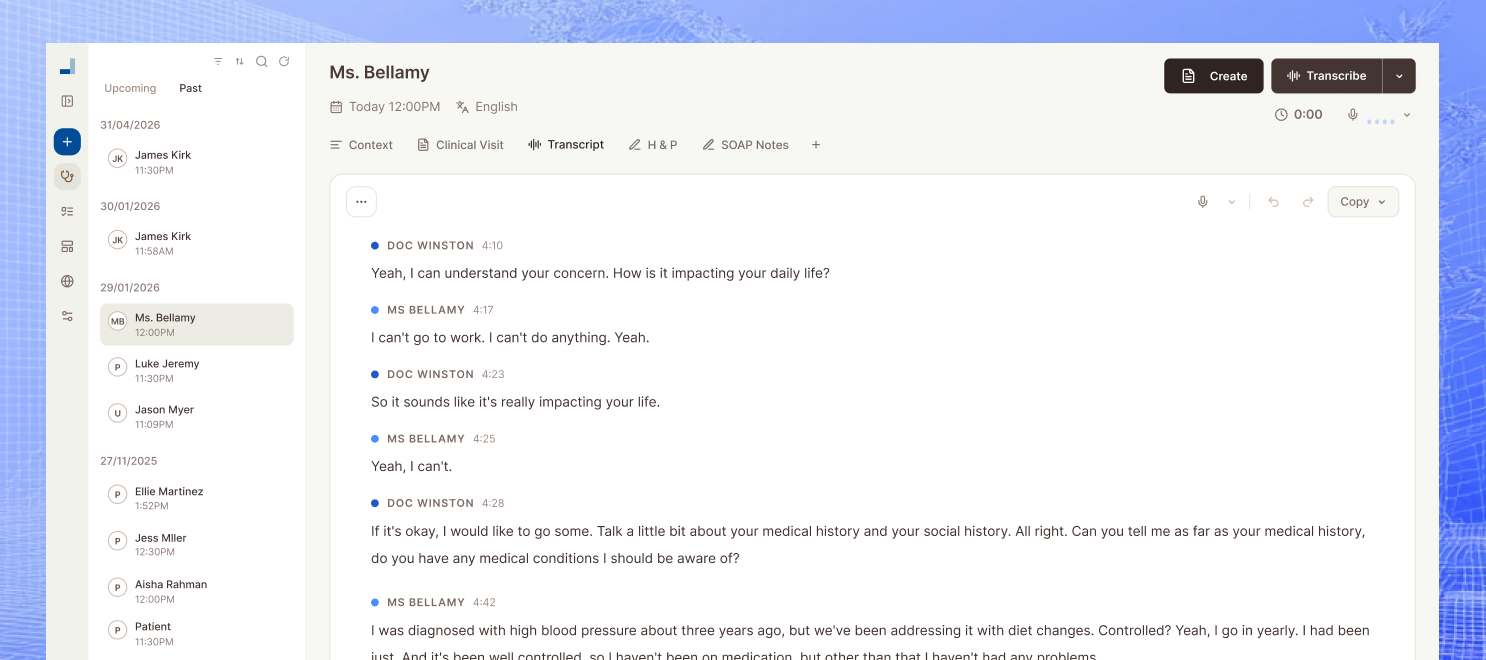
An AI medical scribe serves as a digital assistant that captures the nuances of a conversation in real-time. By automating the transcription and summarization process, it allows the clinician to maintain eye contact and focus entirely on the patient. It is important to note that these tools are assistive; while they handle the heavy lifting of drafting, the clinician remains the ultimate authority, responsible for reviewing and finalizing every document to ensure medical accuracy.
- Reduces the ‘pajama time’ spent on administrative work after clinic hours.
- Captures specific patient nuances that might be forgotten by the end of the day.
- Allows for a more natural, patient-centered communication style during visits.
- Provides a standardized baseline for all clinical documentation across a practice.
Note types you can generate beyond SOAP (H&P and more)
While the SOAP note is the industry standard, modern medicine requires a much broader range of documentation. Comprehensive care involves initial History and Physical (H&P) reports, detailed progress notes for chronic disease management, and specific procedure notes. When a patient moves between levels of care, discharge summaries and consult notes become the primary vehicles for maintaining continuity.
Using an AI scribe to create follow-up letters and referral documents ensures that the transition of care is seamless. Instead of dictating a separate summary for a specialist, the AI can often extract the necessary clinical data from the encounter to draft a professional letter automatically. This structure is vital for audit readiness and ensures that any other provider reading the chart understands the exact clinical reasoning used during the visit.
- Comprehensive H&P and progress notes provide a clear longitudinal record.
- Procedure notes and consult reports ensure specialized care is documented accurately.
- Referral and follow-up letters improve communication between healthcare facilities.
- Standardized formatting helps clinics pass administrative audits with ease.
How to implement AI scribe for follow-up letters step-by-step in a real clinic
To begin implementing this technology, start by selecting one specific visit type, such as routine follow-ups or wellness exams. This allows the team to get comfortable with the interface without the pressure of a complex multi-system complaint. Once you have selected the visit type, you should set up your specific templates. Most clinicians have a ‘voice’ or a way they prefer their follow-up letters to look; configuring these templates early ensures the AI matches your professional style.
During the patient encounter, simply capture the audio through your device. Whether it is an in-person consult or a telehealth session, the AI works in the background to filter out the small talk and focus on the clinical facts. After the session ends, the draft appears almost instantly. You should perform a quick review and edit to ensure the tone is correct and all specific laboratory values are included as intended.
Finally, once the clinical note is finalized, you can reuse that output to generate secondary documents. The same data used for the progress note can be instantly converted into a follow-up letter for the patient or a referral letter for a specialist. This workflow eliminates the need to type the same information multiple times in different formats.
- Start with one simple visit type to build staff confidence and familiarity.
- Pre-configure specialty-specific templates to save time on manual editing.
- Review the AI-generated draft immediately after the encounter while the details are fresh.
- Directly convert clinical notes into letters and forms to maximize efficiency.
How to keep note quality high and reduce mistakes
Error prevention starts with a standardized review habit. Even the most advanced AI can occasionally miss a specific medication dosage or misinterpret a complex family history. Clinicians should implement a ‘glance-over’ protocol, where they verify the problem list and the plan section before signing off. This small investment of time prevents ‘note bloat’—the accumulation of unnecessary data that hides the actual clinical narrative.
Establishing team-wide standards for what a good note looks like is equally important. In a university clinic or group practice, having a consistent documentation style ensures that every provider can easily pick up where another left off. High-quality notes should prioritize brevity and clarity, focusing on what was changed and why, rather than simply listing every system surveyed.
- Always verify medications, dosages, and lab values manually before signing.
- Adopt a ‘brief but thorough’ philosophy to prevent cognitive overload for readers.
- Regularly audit AI outputs as a team to ensure template alignment.
- Use a consistent review checklist to catch common transcription errors.
Privacy, consent, and patient trust (plain English)
Patient privacy is the cornerstone of the modern medical practice. Before using an AI scribe to create follow-up letters, ensure you are following local regulations regarding audio recording and data storage. Generally, obtaining verbal consent is a simple process that builds trust rather than diminishing it. Patients usually appreciate that their doctor is focused on their care rather than a keyboard.
A simple way to explain this to a patient is: ‘I’m using an AI assistant to take notes for us today so I can focus entirely on you. It records our conversation, turns it into a medical note, and then I review and delete the recording. Is that okay with you?’ Most patients respond positively when they realize it leads to better communication and faster follow-up documentation.
- Always adhere to local and regional data privacy laws for medical recordings.
- Keep the consent process simple, transparent, and patient-focused.
- Ensure the partner you choose utilizes high-level encryption and secure storage.
- Inform patients that they remain the focus, while the technology handles the paperwork.
Rolling it out across a clinic without disruption
A successful rollout starts with a two-week pilot program involving one or two champion clinicians. This period allows the IT team to address any connectivity issues and helps the providers find the best location for their recording devices. During this phase, it is helpful to track metrics like the time saved per day and the speed of note completion.
Once the pilot is complete, you can align templates across the entire department. Training sessions should be short and practical, focusing on how to trigger the scribe and how to edit the final output. By standardizing the rollout, the clinic reduces the risk of workflow disruption and ensures that everyone—from the front desk to the billing department—benefits from faster, more accurate documentation.
- Conduct a 14-day pilot to identify potential workflow bottlenecks early.
- Track time-savings and ‘after-hours’ work reduction to measure success.
- Provide brief, hands-on training for all clinical staff members.
- Align templates across specialties to ensure organizational consistency.
Mcoy AI is an AI medical scribe that records and transcribes patient encounters, then generates multiple clinical note types (H&P, progress notes, consult notes, follow-up notes, procedure notes, discharge summaries, referral letters, and more). It features 200+ customizable templates and an AI chat function to help you create specific letters, forms, and documents quickly, ensuring that you spend less time on administration and more time focusing on patient care.
Conclusion
Integrating an AI scribe to create follow-up letters is more than just a convenience; it is a strategic move toward a more sustainable medical practice. By automating the transcription and drafting process, clinicians can significantly reduce their administrative burden while improving the quality and speed of patient communication. Following a structured implementation plan—starting with a pilot, mastering templates, and maintaining a strict review process—will ensure the best results. Start small, focus on quality, and discover how using an AI scribe to create follow-up letters can transform your daily workflow and bring the joy back to practicing medicine.
What a serious review table should cover
| Decision area | Common mistake | Better clinic-ready approach | Metric to watch |
|---|---|---|---|
| Workflow design | Treat how to use an ai scribe for follow-up letters: guide as a one-off documentation task | Build a repeatable process with clear ownership and review points | Time to complete documentation |
| Team adoption | Assume every clinician will naturally use the same process | Train for consistency and define exception handling early | Active user adoption |
| Quality review | Only check notes when a problem is reported | Audit a sample of notes weekly and review edge cases | Edit rate per note |
| Operational follow-through | Leave admin actions outside the documentation workflow | Use the same encounter data for referrals, letters, and follow-up tasks | Completion rate for next-step tasks |
Related reading
If you are working through how to use an ai scribe for follow-up letters: guide, it helps to read this alongside Admin Management: How to Reduce Admin Errors in Clinical Notes, Admin Management: Medication List Template with Examples, and Specialty Guides: Build a Template Pack for Discharge Summaries Efficiently. Those guides cover adjacent workflow, implementation, and evaluation questions so the decision does not sit in isolation.
FAQ
How accurate are AI medical scribes in real clinics?
AI medical scribes currently offer very high accuracy, often capturing over 95% of clinical facts correctly. However, they can occasionally misunderstand specific medical jargon or misattribute a statement if multiple people are speaking at once. This is why the clinician’s role in reviewing and editing the final draft is essential. Over time, the AI learns your specific patterns and vocabulary, which further improves accuracy.
Do I still need to review every note?
Yes, you must review every note generated by an AI scribe before finalizing it in the EHR. While the AI is an incredible drafting tool, the clinician is the only one who can verify the medical intent and accuracy of the information. A quick review usually takes less than sixty seconds and ensures that the note is medicolegally sound. This habit is the best way to prevent errors and maintain high standards of care.
What note types can an AI scribe generate besides SOAP?
Modern AI scribes are capable of generating a wide variety of documents including History and Physicals (H&P), procedure notes, consult letters, and discharge summaries. They can also create specialized referral letters and follow-up instructions for patients. By using customizable templates, you can tailor the output to almost any clinical scenario encountered in your practice. This versatility makes the tool useful across various specialties and clinic types.
Will this work for telehealth and in-person consults?
Yes, most AI scribes are designed to work seamlessly in both settings. For in-person consults, the device typically sits on the desk and captures ambient audio, while for telehealth, it can often integrate with the video platform or record the audio from your computer. The AI’s ability to filter background noise and focus on the conversation makes it effective regardless of the physical environment. This ensures a consistent documentation experience for hybrid practices.
How do I explain recording/transcription to patients?
The best approach is to be brief and transparent. Tell the patient that you are using a digital assistant to help with note-taking so you can pay more attention to them. Most patients appreciate the extra eye contact and the fact that their doctor is not constantly typing during the visit. Reassure them that the transcript is for medical records only and is handled with the highest level of privacy and security.
How do clinics prevent note bloat?
Note bloat is prevented by using clever templates that prioritize relevant clinical changes rather than importing the entire patient history. Clinicians should choose templates that summarize the ‘Assessment and Plan’ clearly while keeping the ‘Subjective’ section concise. By setting these standards at the organizational level, clinics can ensure that their documentation remains readable for other providers. Training staff to edit out redundant information is also a key strategy.
How long does template setup take?
Initial template setup usually takes between thirty minutes to an hour for a set of core visit types. Many AI scribes come with a library of pre-built templates for common specialties that you can easily modify. Once your primary templates are established, you rarely need to change them. The time invested upfront pays for itself within the first few days of use through significantly faster note finalization.
What’s the safest way to start if I’m skeptical?
The safest way to start is by running a pilot with just one or two non-complex patient visits per day. Use the AI to draft the note while still taking your own brief manual notes as a backup. As you see the consistency and quality of the AI’s drafts, you can gradually increase its use to more complex cases. This ‘low-stakes’ start allows you to gain confidence in the technology without any risk to your workflow or patient care quality.