Admin Management: Medication List Template with Examples
Medication list template guide for doctors. Includes simple and detailed formats, real examples, and best practices for safe prescribing and clinical documentation.
A complete, accurate medication list is one of the most powerful tools in clinical care. Whether you’re a general practitioner, specialist, or working in a small private clinic, the medication list forms the foundation of safe prescribing, continuity of care, and clear communication across teams. Yet in daily practice, maintaining an organized and up-to-date list can be surprisingly difficult. Patients forget doses, bring partial information, mix prescription drugs with supplements, or simply cannot recall what they are taking.
This is why having a clear medication list template is essential. It standardizes documentation, reduces errors, and ensures every clinician interacting with the patient sees the same reliable information. This full guide walks through what should be included in a medication list, why it matters, and several practical examples doctors can adopt immediately.
What Is a Medication List?
A medication list is a structured record of every drug, supplement, or therapeutic substance a patient is taking. It includes prescription medications, over-the-counter drugs, vitamins, herbal supplements, and even as-needed or occasionally used medications. The goal is simple: to provide a complete, accurate snapshot of a patient’s pharmacologic profile at any point in time.
A well-maintained medication list helps clinicians identify interactions, prevent duplicate therapies, adjust dosages safely, and understand the patient’s overall treatment picture. For chronic care, multi-doctor visits, or geriatric care, medication lists are essential to preventing miscommunication and medication-related harm.
Why Medication Lists Matter in Clinical Practice
Across primary care, internal medicine, emergency medicine, and specialty clinics, medication lists solve several challenges that doctors face every day. First, they reduce avoidable errors. Many adverse drug events occur not because of incorrect prescribing, but because of incomplete information. When a patient shows up with no idea what they take, with mismatched pill bottles, or with outdated medication histories, mistakes can happen.
Medication lists also serve as a communication link. When a patient sees multiple providers, the list helps ensure consistent care. A cardiologist, endocrinologist, and primary care doctor can all view the same list, confirm accuracy, and update it collaboratively. This prevents situations where one doctor increases a dose that another recently adjusted.
Medication lists also support accurate clinical reasoning. If a patient presents with fatigue, dizziness, or palpitations, an updated list offers immediate clues. Without it, doctors must rely on patient memory or fragmented records.
Finally, medication lists improve compliance and follow-up. Patients often misunderstand instructions or alter dosages based on symptoms. A clear list in plain language gives them a reference they can understand and share with caregivers.
What Should Be Included in a Medication List Template?
Every effective medication list contains specific fields that help clinicians document clearly and consistently. These include:
Medication nameDose and strengthRoute of administrationFrequencyIndication or reason for useStart dateEnd date (if applicable)Prescribing clinicianNotes about adherence, side effects, or patient-specific considerations
Some clinics also include refill information, pharmacy details, or allergen conflicts. While not mandatory, these can help reduce friction in follow-up care.
The key is clarity. A good medication list makes it immediately obvious what the patient is taking, why, how often, and how long they have been on it.
Medication List Template (Simple Format)
Patient Name:Date of Birth:Date Updated:
Current MedicationsMedication Name:Dose/Strength:Route:Frequency:Indication:Start Date:Prescriber:Notes:
As-Needed MedicationsMedication Name:Dose/Strength:Route:Frequency (PRN):Reason for Use:Notes:
Supplements and Over-the-Counter ItemsItem:Dose:Frequency:Purpose:
AllergiesAllergen:Reaction:Severity:
This simple template works well for most general practices and can be used in paper or digital form. It is easy to customize depending on the clinic’s workflow.
Medication List Template (Detailed Clinical Format)
This version is often used in multi-specialty practices or for patients with complex care needs.
Patient Name:MRN:Date Updated:Primary Clinician:
Active MedicationsName:Brand/Generic:Strength:Form:Route:Frequency:Indication (ICD-10 optional):Start Date:End Date (if planned):Prescriber:Monitoring Requirements (labs, vitals):Adverse Effects (past/present):Comments:
Discontinued MedicationsName:Reason for Discontinuation:Date Stopped:Outcome:
Care Coordination NotesSpecialists involved:Pharmacy contacts:Medication-related reminders:
This structured format supports more complex patients, particularly in internal medicine, geriatrics, cardiology, and endocrinology.
Real Examples of Medication Lists
Below are several practical examples showing how a medication list looks in real scenarios.
Example 1: Stable Chronic Condition (Hypertension and Hyperlipidemia)
Patient: Mark S., 59Updated: 04 Jan 2025
Amlodipine 10 mgRoute: OralFrequency: Once dailyIndication: HypertensionStart Date: Mar 2022Prescriber: Dr. PaulNotes: Good tolerance, BP trending stable
Atorvastatin 20 mgRoute: OralFrequency: Once dailyIndication: HyperlipidemiaStart Date: Feb 2021Notes: LDL improved significantly, no myalgia
Vitamin D3 1000 IUFrequency: Once dailyPurpose: Supplement
Example 2: Patient With Polypharmacy (Geriatric Care)
Patient: Elaine R., 78Updated: 12 Feb 2025
Metformin XR 500 mgFrequency: Twice dailyIndication: Type 2 diabetesNotes: A1C stable
Losartan 50 mgFrequency: Once dailyIndication: Hypertension
Aspirin 81 mgFrequency: Once dailyIndication: Secondary prevention
Gabapentin 300 mgFrequency: Three times dailyIndication: Neuropathic pain
Melatonin 3 mgFrequency: PRN at nightReason: Insomnia
OTC Supplements: Calcium, B12
Allergies: Penicillin (rash)
This example shows how even a long list can remain clear with structured formatting.
Example 3: Post-Operative Medication List
Patient: Jasmine L., 34Updated: 08 Nov 2025
Ibuprofen 600 mgFrequency: Every 6 hours PRNIndication: Post-operative pain
Oxycodone 5 mgFrequency: Every 8 hours PRNIndication: Severe painNotes: 20 pills dispensed, no refills
Ondansetron 4 mgFrequency: Every 8 hoursIndication: Nausea
Senna 8.6 mgFrequency: Once dailyIndication: Opioid-induced constipation prevention
This style helps surgeons or outpatient clinics ensure safe postoperative care.
Best Practices for Maintaining Medication Lists
Doctors know the hardest part of medication lists isn’t creating them — it’s keeping them updated. The following best practices help clinics stay accurate and efficient.
Update medication lists at every encounterAsk open-ended questions rather than “Are you still taking…?”Include over-the-counter drugs and supplementsReconcile discrepancies when switching providersUse consistent formatting to reduce errorsAdd indications so future clinicians understand purposeRecord PRN medications clearlyEncourage patients to carry a printed or digital copy
Medication lists are living documents. The most accurate ones are updated regularly and checked against patient statements, pharmacy refill history, and specialist notes.
How Mcoy AI Helps Clinicians Manage Medication Lists Effortlessly
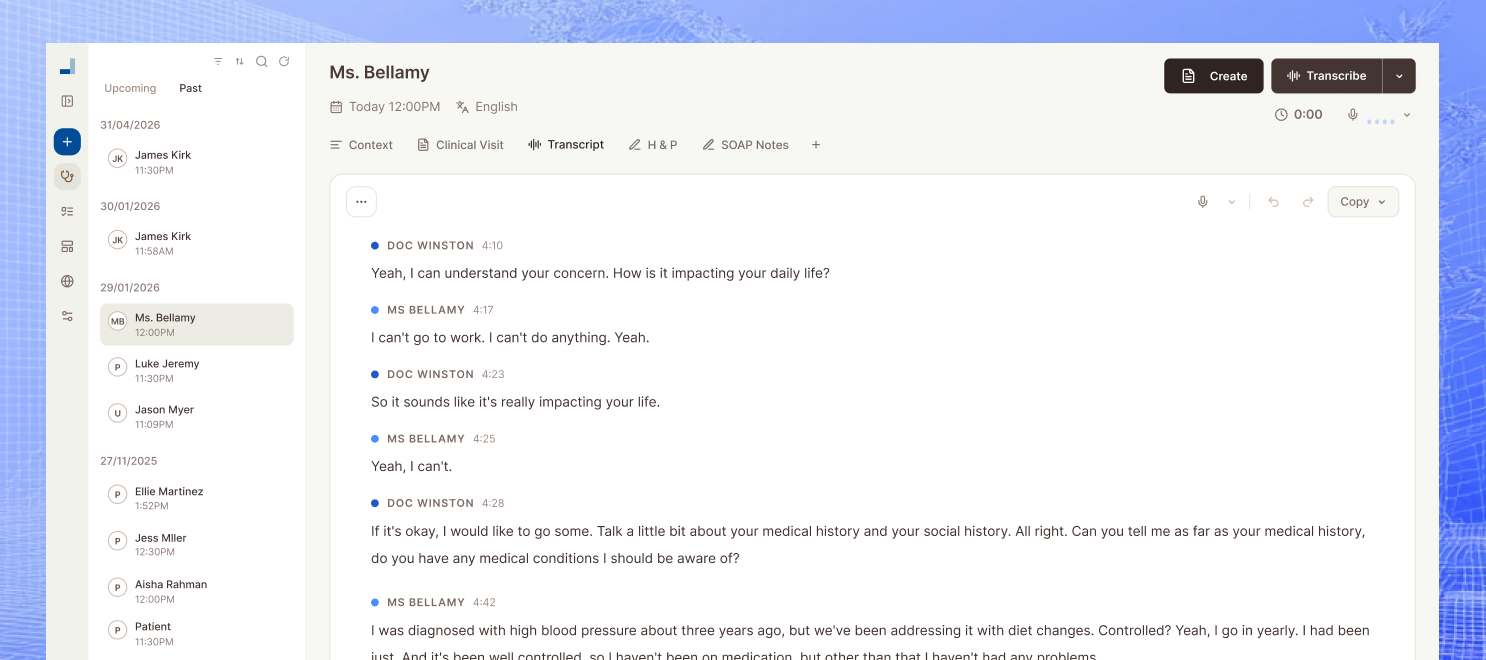
Many clinics struggle to maintain medication lists because manual documentation takes time and often happens after the encounter. Mcoy AI solves this by recording and transcribing the patient visit, automatically extracting medications, dosages, and schedules from the conversation. Doctors can then instantly generate SOAP notes, update medication histories, or create new lists with over 200 customizable templates built for multiple specialties. Mcoy AI can even generate letters, summaries, and forms using built-in ChatGPT tools. This reduces administrative load dramatically and helps clinicians stay focused on patient care rather than data entry.
Tips to Improve Medication Reconciliation
Medication reconciliation is closely related to medication lists. It involves comparing current medications with new prescriptions to avoid duplicate therapies, interactions, or errors. To improve reconciliation:
Review medications at every transition of careConfirm indications for each drugCheck recent lab results when adjusting dosesCommunicate with other clinicians involvedEnsure discontinued medications are actually stoppedEducate patients about changes
Clear, accurate lists make reconciliation safer and faster.
Final Thoughts
Medication lists are a cornerstone of safe medical practice. Whether working in a multidisciplinary clinic, solo GP office, or specialty environment, an accurate medication list prevents harm, strengthens communication, and supports better clinical decision making. Templates bring structure, but consistent habits keep them alive and meaningful.
By adopting standardized templates, updating lists at every encounter, and leveraging modern tools such as AI scribes, clinicians can dramatically reduce medication-related errors and improve continuity of care. In a time when clinicians are busier than ever, simple tools like well-designed medication lists can significantly elevate patient safety and workflow efficiency.
What a serious review table should cover
| Decision area | Common mistake | Better clinic-ready approach | Metric to watch |
|---|---|---|---|
| Workflow design | Treat medication list template with examples as a one-off documentation task | Build a repeatable process with clear ownership and review points | Time to complete documentation |
| Team adoption | Assume every clinician will naturally use the same process | Train for consistency and define exception handling early | Active user adoption |
| Quality review | Only check notes when a problem is reported | Audit a sample of notes weekly and review edge cases | Edit rate per note |
| Operational follow-through | Leave admin actions outside the documentation workflow | Use the same encounter data for referrals, letters, and follow-up tasks | Completion rate for next-step tasks |
Related reading
If you are working through medication list template with examples, it helps to read this alongside Admin Management: How to Reduce Admin Errors in Clinical Notes, Admin Management: How to Improve Handover Notes with an AI Medical Scribe, and Specialty Guides: How to Use an AI Scribe for Telehealth Notes | Full Guide. Those guides cover adjacent workflow, implementation, and evaluation questions so the decision does not sit in isolation.
FAQ
What is a medication list?
A medication list is a structured record of all prescription drugs, over-the-counter medicines, supplements, and PRN medications a patient is taking.
Why are medication lists important?
They prevent medication errors, improve continuity of care, clarify clinical reasoning, and support safe prescribing.
How often should a medication list be updated?
At every patient encounter, especially during transitions of care, hospital discharges, specialist visits, and medication changes.
Should supplements and vitamins be included?
Yes. Supplements may interact with medications and should always be listed.
What format works best?
A structured template with fields for medication name, dose, route, frequency, indication, and notes is most effective for medical settings.