Specialty Guides: How to Use an AI Scribe for Pain Management Notes | Guide
Learn how to optimize pain management notes using an AI scribe. Boost accuracy, save time on clinical documentation, and improve patient care today.
What a medical scribe solves in modern practice
The administrative burden of documenting chronic pain is immense. For pain management specialists, the real cost of manual documentation is measured in cognitive load and hours of ‘pajama time’ spent catching up on charts. Between tracking visual analog scales, medication adjustments, and functional goals, the risk of missed details increases when notes are rushed or delayed.
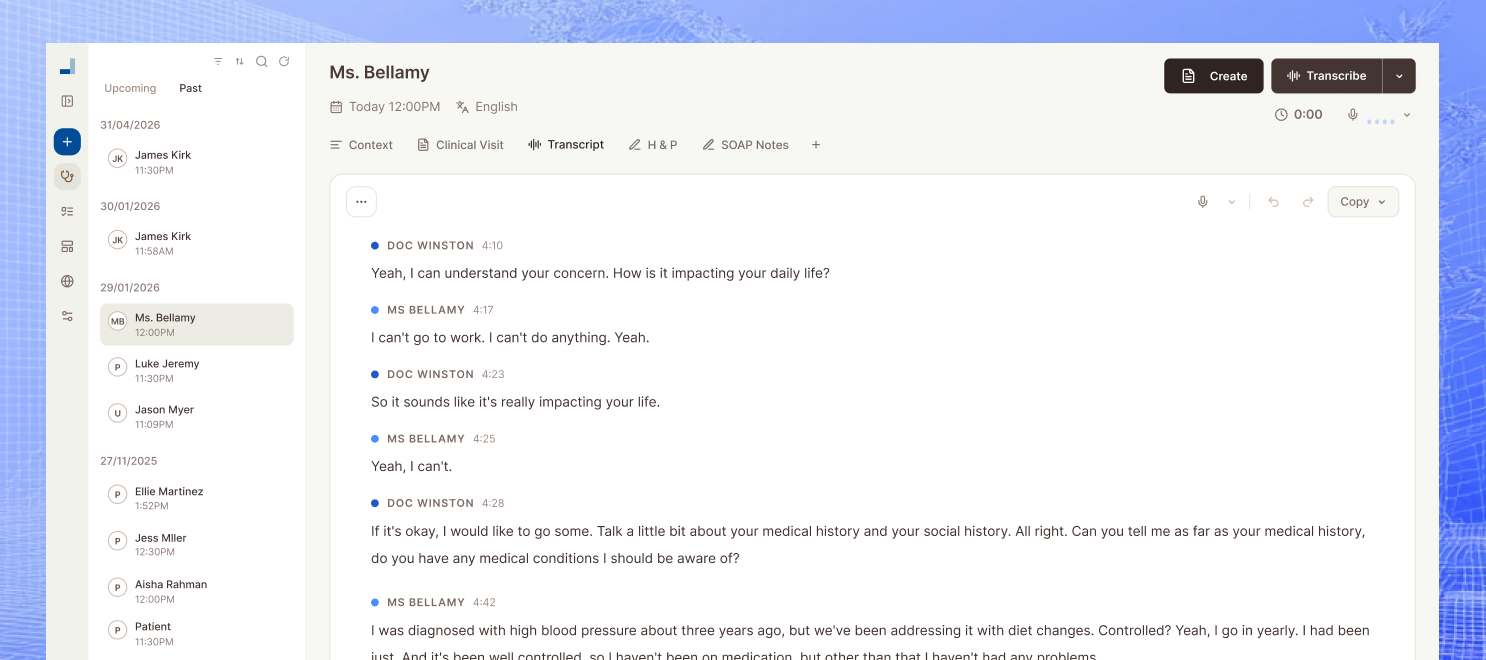
An AI medical scribe acts as a sophisticated assistant that captures the nuance of the patient-provider dialogue in real-time. It transforms a messy conversation about symptoms and relief levels into structured clinical data. However, it is important to remember that these tools are assistive; the clinician remains the final authority and must review all outputs for clinical accuracy before signing off.
- Reduces the cognitive burden of remembering specific pain scores and functional improvements.
- Eliminates hours of manual typing after the clinic day is over.
- Ensures that subtle patient descriptions of pain quality are captured accurately.
- Allows clinicians to maintain direct eye contact and engagement with the patient.
Note types you can generate beyond SOAP (H&P and more)
While the SOAP format is a staple, pain management requires a more diverse range of documentation to satisfy insurance requirements and ensure continuity of care. An H&P (History and Physical) is essential for new patients to establish a baseline for their pain journey. Detailed progress notes are then used to track the efficacy of interventions over time, ranging from physical therapy to nerve blocks.
Beyond the basics, specialists often need specific documents like procedure notes for injections, consult notes for referring physicians, and comprehensive discharge summaries if a patient transitions care. Accurate referral letters are also critical in a multidisciplinary approach where pain specialists coordinate with surgeons, physical therapists, and psychiatrists.
Maintaining a high standard for these varying note types is about more than just compliance; it is about audit readiness. In an era of high scrutiny surrounding pain interventions, having a clearly articulated clinical rationale and a structured follow-up note can protect a practice during a medical-legal review.
- H&P and comprehensive initial evaluations for new chronic pain patients.
- Surgical or interventional procedure notes for spinal injections and blocks.
- Referral letters that clearly communicate the treatment plan to primary care providers.
- Detailed follow-up notes that track functional goals and opioid compliance.
How to implement an AI medical scribe step-by-step in a real clinic
Starting with an AI medical scribe for pain management notes does not require an overnight overhaul of your workflow. The best approach is to start with a single visit type, such as follow-up appointments for stable patients. This allows the clinical team to get comfortable with the recording process without the complexity of a first-time evaluation. Once the software is launched, you can experiment with how the AI captures different pain descriptions.
Before you begin the encounter, ensure you have selected or created templates specific to your specialty. For instance, a template for a lumbar epidural steroid injection will require different data points than a standard medication management visit. Setting these up beforehand allows the AI to categorize the transcribed conversation into the correct sections of your note automatically.
During the patient encounter—whether it is in-person or via a telehealth platform—simply activate the scribe. Focus your attention entirely on the patient while the AI captures the dialogue. After the visit is over, you will receive a draft. A quick review and edit process ensures that the AI correctly interpreted specific anatomical terms or medication dosages, which can then be exported into your EMR.
The final step is leveraging the data for secondary purposes. The outputs generated by the scribe can be repurposed to create formal letters for insurance authorizations or patient education summaries. This reuse of information significantly cuts down on the time spent on repetitive tasks that usually follow a complex pain management consultation.
- Select one visit type and a few pre-built templates to test functionality.
- Capture the encounter naturally using a mobile device or desktop interface.
- Set a consistent habit of reviewing and editing notes immediately after the visit.
- Export the structured data directly into the patient’s permanent electronic record.
How to keep note quality high and reduce mistakes
Quality control is paramount when dealing with sensitive pain management data. Common failure points in documentation often include missing specific medication dosages, misinterpreting the physical exam findings (like a positive straight leg raise), or creating ‘note bloat’ where the AI includes irrelevant conversational filler. To prevent this, clinicians should adopt a lightweight review habit that focuses on the most critical data points first.
Setting team standards for what constitutes a ‘good’ note helps maintain consistency across the practice. This includes deciding how to document pain scores and whether to include the patient’s exact words. By establishing these rules early, the AI can be better directed to omit unnecessary fluff and focus on the clinical evidence required for high-level billing and excellent patient care.
- Always verify medication names and dosages generated by the AI.
- Focus on functional outcomes and patient goals to demonstrate medical necessity.
- Remove conversational filler to prevent note bloat and maintain clarity.
- Use a consistent review process for every note before it enters the EMR.
Privacy, consent, and patient trust (plain English)
Patient privacy is a top priority, especially when discussing sensitive labels such as chronic pain and substance use history. While consent requirements vary by region, it is best practice to always inform the patient that you are using an AI-assisted tool to improve the quality of their medical record. Most patients are receptive to this when they realize it allows the doctor to listen more and type less.
A simple way to explain this to a patient is: ‘To ensure I capture all the details of our talk today accurately, I’m using a secure digital assistant to help me with my notes. It records our conversation, turns it into a private medical note, and then the recording is deleted. This allows me to focus entirely on you instead of the computer screen. Is that okay with you?’
Finally, ensure that the tool you choose adheres to high security and retention standards. Transparency with your patients builds trust and ensures that the technology enhances the therapeutic relationship rather than becoming a barrier. Always follow your local healthcare privacy laws and institutional policies regarding digital recording.
- Inform patients about the use of AI tools at the start of the visit.
- Use a clear, concise script to explain the benefits of the technology.
- Ensure the scribe tool complies with HIPAA or relevant local privacy regulations.
- Confirm that recordings are not stored longer than necessary for transcription.
Rolling it out across a clinic without disruption
Implementing a new tool across a pain management clinic is most successful when done in phases. Start with a two-week pilot involving one or two ‘tech-forward’ clinicians. During this period, track metrics such as time saved per note, the reduction in after-hours charting, and the overall completeness of the documentation compared to previous manual entries.
Once the pilot phase is complete, hold a brief training session to align the rest of the staff on template usage. This ensures that every doctor and nurse practitioner is using similar frameworks for their H&Ps and follow-ups. Providing everyone with the same set of high-quality templates reduces friction and makes the transition to an AI scribe seamless for the entire team.
- Conduct a 14-day pilot with a small group to identify workflow hurdles.
- Track time savings and ‘pajama time’ reduction to prove ROI.
- Standardize specialty-specific templates across the entire clinical team.
- Hold a formal team training session to ensure everyone is comfortable with the tool.
Mcoy AI is an AI medical scribe that records and transcribes patient encounters, then generates multiple clinical note types (H&P, progress notes, consult notes, follow-up notes, procedure notes, discharge summaries, referral letters, and more). It features 200+ customizable templates and an AI chat function to create letters, forms, and other documents instantly, allowing clinicians to focus on patient care instead of paperwork.
Conclusion
Adopting an AI medical scribe for pain management notes is a transformative step for any clinic struggling with the weight of documentation. By automating the capture of patient encounters and leveraging structured templates, you can improve note accuracy while reclaiming hours of your personal time. Whether you are generating complex procedure notes or simple follow-up evaluations, the efficiency gained allows for a higher standard of care and better clinician well-being. Start your pilot today and experience the difference an AI scribe can make in your daily workflow.
What a serious review table should cover
| Decision area | Common mistake | Better clinic-ready approach | Metric to watch |
|---|---|---|---|
| Workflow design | Treat how to use an ai scribe for pain management notes | guide as a one-off documentation task | Build a repeatable process with clear ownership and review points |
| Team adoption | Assume every clinician will naturally use the same process | Train for consistency and define exception handling early | Active user adoption |
| Quality review | Only check notes when a problem is reported | Audit a sample of notes weekly and review edge cases | Edit rate per note |
| Operational follow-through | Leave admin actions outside the documentation workflow | Use the same encounter data for referrals, letters, and follow-up tasks | Completion rate for next-step tasks |
Related reading
If you are working through how to use an ai scribe for pain management notes | guide, it helps to read this alongside Specialty Guides: How to Run a More Efficient Medical Practice in 2026, Specialty Guides: How to Improve Patient Encounters, and Specialty Guides: AI Scribing for High-Volume Campus Clinics: Full Guide. Those guides cover adjacent workflow, implementation, and evaluation questions so the decision does not sit in isolation.
FAQ
How accurate are AI medical scribes in real clinics?
AI medical scribes have become remarkably accurate at capturing clinical terminology and the nuances of medical conversations. However, while the technology is advanced, it can occasionally mishear specific technical terms or brand-name medications. This is why clinicians must always perform a quick review of the output. In most settings, the AI provides a 95-98% accurate draft that only requires minor adjustments before being finalized and added to the patient’s record.
Do I still need to review every note?
Yes, reviewing every note is a mandatory part of the clinical workflow when using any AI tool. The AI acts as your assistant, but you are the medical professional responsible for the accuracy of the record. Because the AI is not a clinician, it may lack the context to understand which information is most critical for medical-legal purposes or billing. A brief 30-60 second review ensures that the note is medically sound and reflects your actual findings and intent.
What note types can an AI scribe generate besides SOAP?
Modern AI scribes are highly versatile and can generate a wide range of documentation beyond the standard SOAP format. Specifically for pain management, you can generate H&Ps (History and Physicals), detailed procedure notes for injections, consult notes for co-management, and even discharge summaries. Most advanced tools also offer referral letters and progress notes that focus specifically on functional gains and medication compliance, which are essential for insurance audits.
Will this work for telehealth and in-person consults?
Yes, AI medical scribes are designed to be flexible and work seamlessly across both telehealth and in-person environments. For telehealth, the software can capture the audio directly from your computer’s audio stream or through a browser extension. For in-person visits, clinicians typically use a mobile app or a dedicated microphone in the exam room to record the dialogue. The AI processes the sound quality from both settings equally well to produce structured documentation.
How do I explain recording/transcription to patients?
The best way to explain the scribe to a patient is by framing it as a tool that helps you focus on their health rather than the computer screen. You can simply state that you are using an AI assistant to help you take better notes during the visit. Most patients appreciate the increased eye contact and attention they receive. Always ensure you follow your practice’s consent protocols, which may involve a verbal confirmation or a signed disclosure form at check-in.
How do clinics prevent note bloat?
Note bloat occurs when the AI includes too much irrelevant information from the patient conversation. To prevent this, use templates that are programmed to be concise and focused on high-value clinical data. You can also instruct the AI (through settings or chat) to omit unnecessary social dialogue and focus strictly on the chief complaint, physical exam findings, and treatment plan. Regular review and template refinement are the most effective ways to keep notes lean and informative.
How long does template setup take?
Initial template setup is surprisingly fast, often taking less than an hour for a standard set of notes. Most AI scribes come with a library of pre-built templates for common visit types like new patient evaluations or follow-up visits. Customizing these for your specific specialty—such as adding sections for pain scales or opioid risk assessments—can be done incrementally as you find your rhythm with the software.
What’s the safest way to start if I’m skeptical?
The safest way to start is with a ‘shadow’ approach for three to five patients. Use your traditional documentation method while also running the AI scribe in the background. After your day ends, compare your manual notes with the AI-generated ones. This allows you to evaluate the quality and accuracy of the scribe without any risk to your current workflow or patient care quality. Once you gain confidence in the tool, you can transition fully to the AI-first approach.