Specialty Guides: AI Scribing for High-Volume Campus Clinics: Full Guide
Learn how to implement AI scribing in high-volume campus clinics. Reduce burnout, improve note accuracy, and save hours on clinical documentation daily.
The Crisis of Documentation in Student Health
Managing a high-volume campus clinic presents a unique set of challenges that can quickly lead to physician burnout. Between back-to-back student appointments, the diversity of cases ranging from acute illness to mental health crises, and the pressure of academic schedules, clinicians often find themselves bogged down by after-hours charting. This administrative burden leads to rushed notes and a constant state of medico-legal anxiety, as practitioners struggle to maintain quality while keeping up with the sheer volume of patients.
This guide provides a comprehensive roadmap for integrating AI scribing into your workflow. We will explore various note formats beyond the standard SOAP method, quality control strategies, and a practical rollout plan tailored for university settings. Whether you are a general practitioner or a specialist in a campus environment, learning to leverage technology for documentation is essential for maintaining both patient care and professional well-being.
What a medical scribe solves in modern practice
The real cost of documentation is measured in more than just minutes; it is measured in cognitive load and clinician fatigue. In a fast-paced campus clinic, delayed notes are often the norm, leading to missed details that could be critical for continuity of care. The time spent staring at a screen instead of the patient erodes the therapeutic alliance and increases the risk of documentation errors.
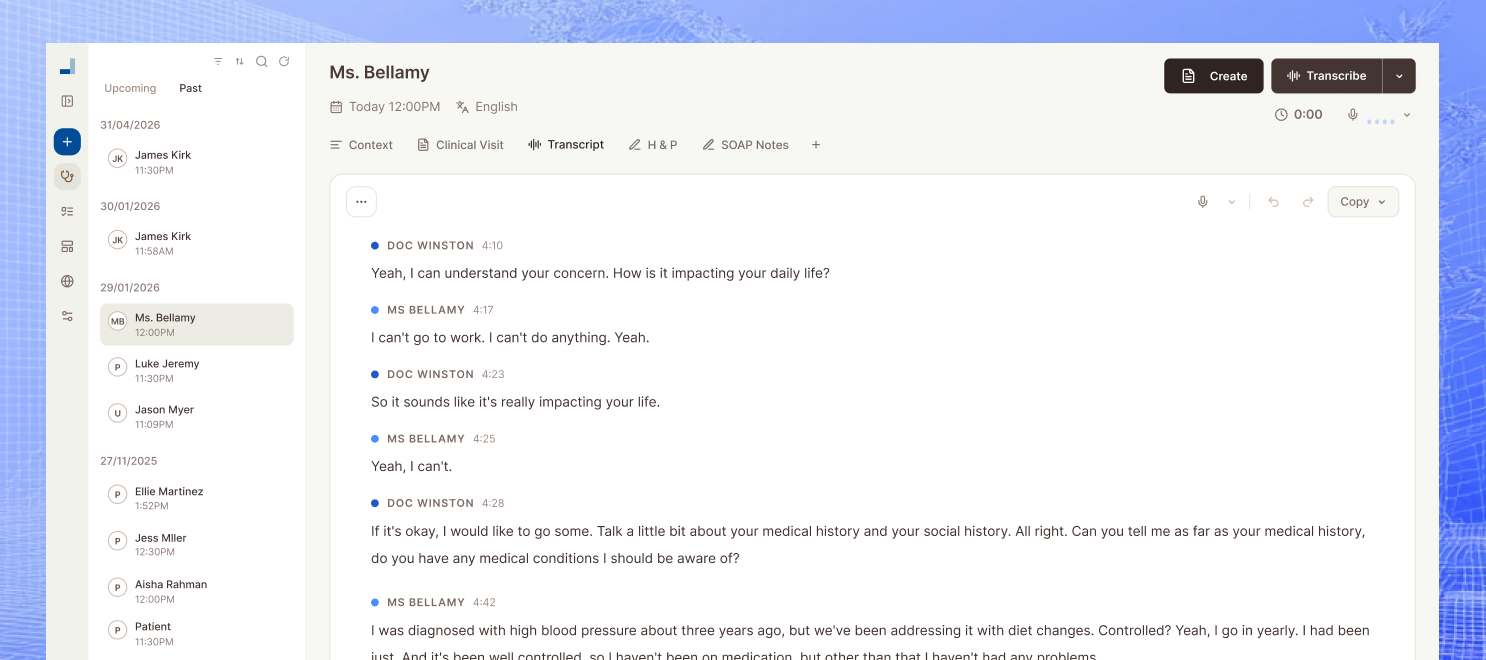
An AI medical scribe acts as an assistive tool to bridge this gap. It captures the nuances of the conversation in real-time, allowing the clinician to remain fully present. It is important to remember that while the AI handles the heavy lifting of transcription and summarization, the clinician remains the ultimate authority, responsible for reviewing and validating every note before it enters the permanent record.
- Reduces the administrative burden and late-night charting sessions.
- Improves clinical focus by removing the need for simultaneous typing.
- Captures granular details that might be forgotten hours after the encounter.
- Enhances the overall patient experience through better eye contact and engagement.
Note types you can generate beyond SOAP (H&P and more)
While the SOAP note is a staple of medical education, high-volume clinics often require a broader variety of documentation styles. History and Physical (H&P) reports are vital for new student intakes, while detailed procedure notes are necessary for minor campus surgeries or specialist treatments. Relying solely on a one-size-fits-all template can lead to inefficient records that don’t serve the specific needs of the patient’s journey.
Specialized notes such as consult reports, follow-up summaries, and referral letters are crucial for coordinating care between campus health and off-campus specialists. Structured documentation ensures that when a student is handed off to another provider, the information is clear, concise, and audit-ready. This level of detail is particularly important in university settings where multiple departments may be involved in a student’s care plan.
- H&P and progress notes capture the full breadth of student wellness.
- Consultation and referral letters streamline communication with outside specialists.
- Discharge summaries provide clear instructions for student recovery.
- Tailored templates ensure compliance with university and state regulations.
How to implement AI Scribing in High-Volume Campus Clinics step-by-step
Starting with AI Scribing in High-Volume Campus Clinics begins by selecting a single, high-frequency visit type to pilot. In a university setting, this might be common respiratory complaints or mental health check-ins. Focusing on one area allows the staff to get comfortable with the interface without the pressure of managing complex specialist cases immediately. Once the initial flow is established, clinicians can begin setting up specific templates categorized by specialty to ensure the AI output matches the intended clinical tone.
The next phase involves moving into the encounter itself, whether it is an in-person visit at the student health center or a telehealth appointment for a student in quarantine. The AI captures the natural dialogue, allowing the provider to conduct the exam without interruption. After the student leaves, the clinician spends a few minutes reviewing the generated draft, making quick edits to ensure precision and clinical accuracy.
The final step in the workflow is the reuse of this high-quality output. Instead of drafting separate referral letters or discharge instructions, the clinician can use the AI-generated summary to prepopulate those documents. This interconnected approach ensures that the documentation loop is closed rapidly, leaving the provider ready for the next student in the high-volume queue.
- Select one common visit type to begin the transition.
- Pre-configure specialty templates to ensure output consistency.
- Capture encounters seamlessly across in-person and digital platforms.
- Review every draft immediately to maintain a zero-backlog documentation habit.
How to keep note quality high and reduce mistakes
Failure points in medical documentation often involve missing medications, incorrect lab values, or ‘note bloat’—the inclusion of irrelevant information that obscures the clinical narrative. In a busy clinic, it’s easy for these errors to slip through. Establishing a lightweight review habit is essential; clinicians should spend sixty seconds scanning for specific data points like dosages and lateralities before finalizing the note.
Creating team-wide documentation standards is another way to maintain quality. When every practitioner in the campus clinic follows the same general structure for problem lists and plans, it becomes easier for the AI to learn and adapt to the clinic’s preferred style. This consistency prevents the creation of fragmented records that are difficult to interpret during future visits.
- Verify all objective data like medication names and dosages manually.
- Audit notes for ‘bloat’ to keep records concise and actionable.
- Standardize templates across the clinic for uniform care continuity.
Privacy, consent, and patient trust
Patient trust is the foundation of any campus health organization. Since privacy regulations vary significantly by region, clinicians must strictly adhere to their local institutional policies regarding data storage and recording. It is always best to be transparent with students about how the technology works and how their data is protected through encryption and strict access controls.
A simple, patient-friendly explanation can go a long way. You might say, ‘I’m using an AI assistant today to record our conversation so I can focus entirely on you rather than my keyboard. It creates a draft of my medical note, which I then review for accuracy. Is that okay with you?’ Most students, being digital natives, are comfortable with this transparency and appreciate the undivided attention.
- Familiarize yourself with university-specific HIPAA or GDPR compliance rules.
- Use a standard verbal consent script for every recorded encounter.
- Ensure the AI solution utilizes high-level encryption for all data points.
Rolling it out across a clinic without disruption
Integrating AI Scribing in High-Volume Campus Clinics works best with a phased two-week pilot plan. During the first week, a small group of ‘super-users’ tests the system and identifies potential workflow bottlenecks. This small-scale start prevents widespread frustration and allows for the fine-tuning of templates before the entire staff is onboarded.
Success should be measured against specific metrics, such as the reduction in after-hours charting time and the speed of note completion. By tracking these data points, clinic owners can demonstrate the tangible value of the tool to university administrators. Training sessions should focus on template alignment to ensure that every clinician is getting the most out of the AI’s capabilities.
- Start with a 14-day pilot involving a few tech-savvy clinicians.
- Monitor time-saved metrics to quantify the return on investment.
- Conduct brief weekly check-ins to align on template best practices.
Streamline Your Documentation with Mcoy AI
Mcoy AI is an AI medical scribe that records and transcribes patient encounters, then generates multiple clinical note types (H&P, progress notes, consult notes, follow-up notes, procedure notes, discharge summaries, referral letters, and more). With 200+ customizable templates and an interactive AI chat, clinicians can easily create letters, forms, and complex documents tailored to their specific workflow. By automating the heavy lifting of administrative tasks, it allows providers to focus on what matters most: delivering high-quality patient care without the burden of manual charting.
Conclusion
The transition to modern documentation doesn’t have to be overwhelming. By following a structured implementation plan, campus health providers can reclaim their time and focus on student wellness. The key is to start small, standardize your templates, and maintain a consistent review process. Implementing AI Scribing in High-Volume Campus Clinics is a transformative step toward a sustainable medical practice. Start your pilot today and see how much time you can save while improving the quality of your clinical notes.
What a serious review table should cover
| Decision area | Common mistake | Better clinic-ready approach | Metric to watch |
|---|---|---|---|
| Workflow design | Treat ai scribing for high-volume campus clinics: full guide as a one-off documentation task | Build a repeatable process with clear ownership and review points | Time to complete documentation |
| Team adoption | Assume every clinician will naturally use the same process | Train for consistency and define exception handling early | Active user adoption |
| Quality review | Only check notes when a problem is reported | Audit a sample of notes weekly and review edge cases | Edit rate per note |
| Operational follow-through | Leave admin actions outside the documentation workflow | Use the same encounter data for referrals, letters, and follow-up tasks | Completion rate for next-step tasks |
Related reading
If you are working through ai scribing for high-volume campus clinics: full guide, it helps to read this alongside Specialty Guides: How to Run a More Efficient Medical Practice in 2026, Specialty Guides: How to Improve Patient Encounters, and Specialty Guides: Build a Telehealth Notes Template Pack | Free Guide. Those guides cover adjacent workflow, implementation, and evaluation questions so the decision does not sit in isolation.
FAQ
How accurate are AI medical scribes in real clinics?
AI medical scribes are highly accurate at capturing the dialogue of an encounter, often reaching 90-95% accuracy in transcription. However, nuances in medical terminology or heavy accents may occasionally require minor corrections. They are designed to assist the clinician, who remains responsible for the final accuracy of the medical record.
Do I still need to review every note?
Yes, reviewing every note is a mandatory clinical and legal requirement. While the AI generates the draft, the clinician must ensure that all diagnoses, medications, and plans reflect the actual encounter. This review typically takes less than a minute but is essential for patient safety and data integrity.
What note types can an AI scribe generate besides SOAP?
Modern AI scribes can generate a wide range of documentation including H&P (History and Physical), consult notes, procedure notes, follow-up summaries, and discharge instructions. Many also offer referral letters and custom forms based on the transcript. This flexibility allows the tool to serve various specialties within a campus health setting.
Will this work for telehealth and in-person consults?
Yes, AI scribing tools are designed to work across multiple modalities. They can capture audio from in-person conversations via a mobile device or integrate with telehealth platforms to transcribe virtual visits. This makes them ideal for modern campus clinics that offer hybrid care models.
How do I explain recording/transcription to patients?
The best approach is transparency. Inform the patient that you are using a digital assistant to help with your medical notes so you can focus on them rather than a screen. Most patients respond positively to the increased eye contact and attention they receive during the visit.
How do clinics prevent note bloat?
Clinics prevent note bloat by selecting or creating concise templates that prioritize relevant clinical data over verbatim transcripts. Training the AI to follow specific formatting rules—such as bulleted lists for plans—helps keep the final output actionable and easy to read.
How long does template setup take?
Basic template setup can take as little as 15 to 30 minutes. Most AI scribing systems come with pre-built clinical templates that can be used immediately, with the option to customize them further as the clinician becomes more familiar with the tool’s output.
What’s the safest way to start if I’m skeptical?
The safest way to start is with a ‘shadow’ pilot. Use the AI scribe during a few non-complex visits while still taking your usual brief notes. Compare the AI’s output with your own to build confidence in its ability to capture key clinical details before moving to a full-time workflow.