Specialty Guides: AI Scribe for Gastroenterology: Master GI Clinical Notes
Discover how an AI medical scribe simplifies gastroenterology documentation. Learn to automate H&Ps, procedure notes, and referral letters effectively.
The Crisis of Documentation in Gastroenterology
Gastroenterologists often find themselves buried under a mountain of clinical documentation. Between back-to-back colonoscopies, complex hepatology consults, and recurring IBD follow-ups, the burden of record-keeping often leads to after-hours charting and clinician burnout. When notes are rushed, there is a legitimate anxiety regarding medico-legal compliance and the potential for missed details in complex patient histories.
This guide provides a comprehensive framework for implementing an AI medical scribe in a gastroenterology setting. Whether you are a solo private practitioner or a director at a busy university clinic, you will learn how to optimize workflows beyond the standard SOAP format, ensure patient privacy, and maintain high-quality clinical standards. We will cover everything from initial setup to rolling out the technology across an entire department.
What a medical scribe solves in modern practice
The primary cost of traditional documentation is not just time; it is the cognitive load. When a specialist is forced to divide their attention between the patient’s physical symptoms and a computer screen, the quality of the encounter can diminish. AI medical scribes bridge this gap by capturing the natural conversation and extracting relevant clinical data, allowing the doctor to focus entirely on the patient.
It is important to remember that an AI scribe acts as an assistive tool rather than a replacement for clinical judgment. The technology excels at summarizing symptoms, family history, and dietary habits, but the clinician remains the final authority. By automating the mechanical task of transcribing and formatting, practitioners can significantly reduce the ‘pajama time’ spent finishing charts at home.
- Eliminates manual data entry during the patient encounter.
- Reduces cognitive load and allows for better eye contact.
- Speeds up the completion of charts from hours to minutes.
- Ensures more comprehensive capture of patient-reported symptoms.
Note types you can generate beyond SOAP (H&P and more)
Gastroenterology requires far more than just standard SOAP notes. A comprehensive GI practice relies on detailed History and Physical (H&P) reports for new referrals, procedure notes for endoscopies and colonoscopies, and specific follow-up notes for chronic conditions like Crohn’s or Ulcerative Colitis. Each of these requires a specific structure to ensure continuity of care and audit readiness.
Using an AI scribe allows for the automated generation of consult notes that are ready to be sent back to primary care physicians immediately. Because the AI can handle various formats, it ensures that discharge summaries for post-procedure patients are accurate and timely. This structured approach not only helps with billing and compliance but also improves the handover quality when a patient moves between different specialists.
- H&Ps and initial consults for complex GI issues.
- Detailed procedure notes for screenings and interventions.
- Progress notes for longitudinal management of chronic disease.
- Professional referral letters and clear discharge summaries.
How to implement AI Scribe for Gastroenterology step-by-step
Starting with an AI scribe does not require a complete overhaul of your clinic operations. Begin by selecting one specific visit type, such as follow-up appointments for GERD or IBS. This allows you to get comfortable with the technology in a lower-stakes environment before moving on to complex initial consults. Configure your specialty-specific templates to ensure the AI looks for GI-relevant physical exam findings and specific medication classes.
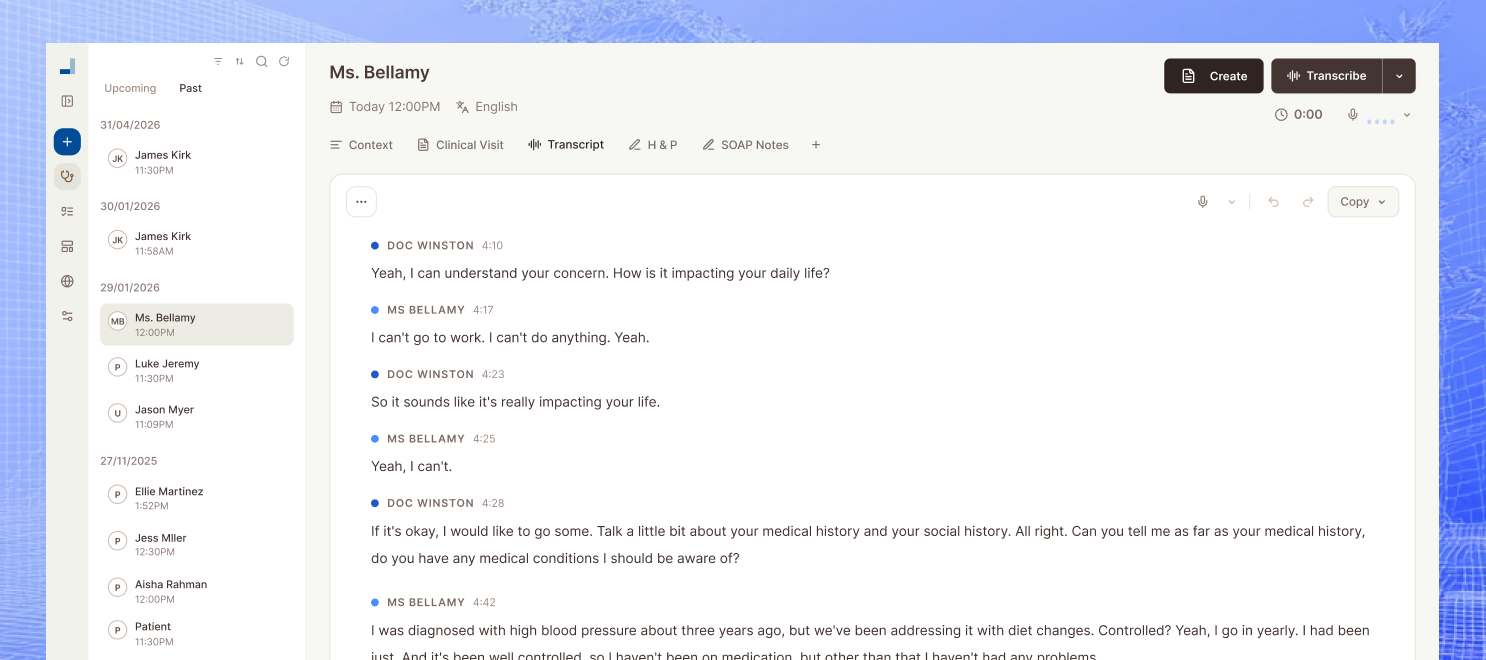
During the encounter, whether it is in-person or via a telehealth platform, simply capture the audio as you speak naturally with the patient. There is no need to change how you communicate; in fact, the more detail you verbalize during the exam, the better the final note will be. Once the session ends, review the generated output immediately while the details are fresh in your mind.
After a quick edit, you can reuse the captured information to generate ancillary documents. For instance, the same encounter data can be used to draft a letter to the referring physician or a dietary instruction sheet for the patient. This multi-output efficiency is where the real time savings occur in a busy GI clinic. Repeat this process for a week, then gradually expand it to all patient types across your schedule.
- Start with one consistent visit type to build a workflow habit.
- Customize GI templates for specific conditions and procedures.
- Capture natural dialogue without tethering yourself to the computer.
- Review, edit, and push notes to your EHR immediately after the visit.
How to keep note quality high and reduce mistakes
Even the most advanced AI can occasionally misinterpret specific medical values or miss nuances in a complex medication list. To maintain high standards, practitioners should establish a lightweight review habit. This involves checking specific high-risk areas such as dosages, anatomical locations (e.g., ascending vs. descending colon), and the exact timing of symptoms.
Setting team standards for how notes should look can also prevent ‘note bloat.’ GI notes should be concise yet comprehensive. By training your AI scribe with your preferred phrasing and checking for consistency, you ensure that the documentation remains a valuable tool for future care rather than a disorganized data dump.
- Verify all medication names and dosages for accuracy.
- Check specific anatomical details in procedure summaries.
- Maintain a consistent review process for every generated note.
- Use specific templates to prevent unnecessary note length.
Privacy, consent, and patient trust
Patient trust is the foundation of the GI consult. When introducing an AI scribe, transparency is key. Most patients are comfortable with the technology when they understand it helps their doctor provide better care. While consent requirements vary by region, it is best practice to always inform the patient that you are using a digital tool to assist with documentation.
A simple script can ease any concerns: ‘I’m using an AI assistant to help me take accurate notes today so I can focus on listening to you rather than typing. Is that okay?’ In addition to verbal consent, ensure your practice follows general security principles regarding data retention and encryption to protect sensitive health information.
- Always ask for verbal consent before starting a recording.
- Explain how the technology benefits the patient’s care.
- Follow local regulations regarding data privacy and storage.
- Use a simple, non-technical script to describe the tool.
Rolling it out across a clinic without disruption
For university clinics or large groups, a phased rollout is superior to a ‘big bang’ approach. Start with a two-week pilot program involving two or three tech-savvy clinicians. During this phase, track key metrics such as the reduction in after-hours charting time and the speed of note completion. Their feedback will be invaluable for refining templates before the full launch.
Training sessions should focus on template alignment so that every doctor in the group produces notes with a consistent ‘voice’ and structure. This uniformity simplifies the billing process and makes it easier for staff to cross-reference patient records during follow-ups or emergencies.
- Run a 14-day pilot with a small group of doctors.
- Measure time saved and improvement in note quality.
- Align templates across the clinic for consistent documentation.
- Provide brief, practical training for all staff members.
Mcoy AI is an AI medical scribe that records and transcribes patient encounters, then generates multiple clinical note types (H&P, progress notes, consult notes, follow-up notes, procedure notes, discharge summaries, referral letters, and more). With over 200+ customizable templates and an AI chat feature to create letters, forms, and documents, it helps clinicians focus more on patient care and less on the administrative burden of the EHR.
Conclusion
Transitioning to a modern documentation workflow is the most effective way to combat the administrative fatigue that plagues gastroenterology. By following a structured implementation plan—starting small, using specific templates, and maintaining a solid review process—you can reclaim your time without sacrificing the quality of your clinical records. Implementing an AI scribe for gastroenterology notes allows you to return to what matters most: providing exceptional patient care and clinical expertise. Start your pilot today and see how much your clinical efficiency can improve.
What a serious review table should cover
| Decision area | Common mistake | Better clinic-ready approach | Metric to watch |
|---|---|---|---|
| Workflow design | Treat ai scribe for gastroenterology: master gi clinical notes as a one-off documentation task | Build a repeatable process with clear ownership and review points | Time to complete documentation |
| Team adoption | Assume every clinician will naturally use the same process | Train for consistency and define exception handling early | Active user adoption |
| Quality review | Only check notes when a problem is reported | Audit a sample of notes weekly and review edge cases | Edit rate per note |
| Operational follow-through | Leave admin actions outside the documentation workflow | Use the same encounter data for referrals, letters, and follow-up tasks | Completion rate for next-step tasks |
Related reading
If you are working through ai scribe for gastroenterology: master gi clinical notes, it helps to read this alongside Specialty Guides: How to Run a More Efficient Medical Practice in 2026, Specialty Guides: How to Improve Patient Encounters, and Specialty Guides: Document WorkCover Visits with AI Scribes: Full Guide. Those guides cover adjacent workflow, implementation, and evaluation questions so the decision does not sit in isolation.
FAQ
How accurate are AI medical scribes in real clinics?
AI medical scribes generally achieve a high level of accuracy, often exceeding 90% in capturing clinical dialogue. However, accuracy depends on the clarity of the audio and the complexity of the medical terminology used. While they are excellent at summarizing, they should be viewed as a highly skilled assistant rather than an autonomous creator of records.
Do I still need to review every note?
Yes, the clinician is legally and professionally responsible for the accuracy of the medical record. A quick review ensures that specific clinical nuances, dosages, and patient instructions are perfectly captured. This review typically takes only a minute or two compared to the ten or fifteen minutes required to type a note from scratch.
What note types can an AI scribe generate besides SOAP?
Modern AI scribes can generate a wide range of documents including History and Physicals (H&Ps), procedure summaries, consultation letters, and discharge summaries. They can also assist with specialized forms like referral letters or patient education summaries. This versatility makes them much more useful than a simple transcription tool.
Will this work for telehealth and in-person consults?
AI scribes are designed to work seamlessly across both environments. For in-person visits, they use the microphone on a smartphone or tablet, while for telehealth, they can integrate with the audio from the video call. The quality of the transcription remains high regardless of the medium as long as the audio is clear.
How do I explain recording/transcription to patients?
Most clinicians find that a transparent, briefly worded explanation works best. Tell the patient that the tool allows you to give them your full attention rather than looking at a computer screen. Frame it as a way to ensure their medical record is as accurate and detailed as possible for their safety.
How do clinics prevent note bloat?
Clinics can prevent note bloat by using concise, specialty-specific templates that prioritize relevant information over exhaustive transcripts. By setting the AI to focus on specific headings and clinical ‘must-haves,’ the resulting notes remain sharp and easy to read for other providers. Regular template updates based on clinician feedback also help maintain brevity.
How long does template setup take?
Initial template setup usually takes less than an hour, especially when starting with pre-built specialty templates. Most AI scribes allow for easy customization where you can add your preferred phrasing or specific exam findings. As you use the tool, you can make ‘on-the-fly’ adjustments that further refine the output over time.
What’s the safest way to start if I’m skeptical?
The safest approach is to start with a ‘shadow’ pilot. Record a few encounters that you were planning to chart manually anyway, and compare the AI-generated note to your own. This allows you to verify the accuracy and see the time-saving potential firsthand without any pressure on your live clinical workflow.