AI & Medicine: How to Use an AI Scribe for Specialist Summaries Guide
Learn how to use an AI medical scribe to streamline specialist summaries, H&Ps, and consult notes. Complete implementation guide for modern clinics.
Introduction
For many clinicians, the workday doesn’t end when the last patient leaves. The burden of after-hours charting has become a primary driver of physician burnout, leading to rushed notes and a constant state of medico-legal anxiety. Whether you are a specialist managing complex referral cases or a GP in a busy university clinic, the struggle to maintain high-quality specialist summaries while staying on schedule is a universal challenge.
This guide provides a comprehensive roadmap for transforming your documentation workflow. We will explore how to move beyond basic SOAP notes to generate sophisticated specialist summaries, H&Ps, and consultation reports that meet the highest clinical standards. You will learn about quality control, maintaining patient privacy, and a phased rollout plan that ensures your clinic staff and patients feel comfortable with the transition to modern documentation tools.
Designed for general practitioners, specialists, and clinic administrators, this guide focuses on the practical application of technology in real-world clinical settings. By the end, you will have a clear strategy for using an AI scribe to reclaim your personal time and ensure that every specialist summary reflects the true quality of the care you provide.
What a medical scribe solves in modern practice
The real cost of documentation extends far beyond the minutes spent typing. It encompasses the heavy cognitive load of trying to remember subtle patient details while simultaneously engaging in a meaningful clinical dialogue. When clinicians are forced to document after hours, the delay can lead to missed nuances, incomplete problem lists, and a general decline in the richness of the medical record.
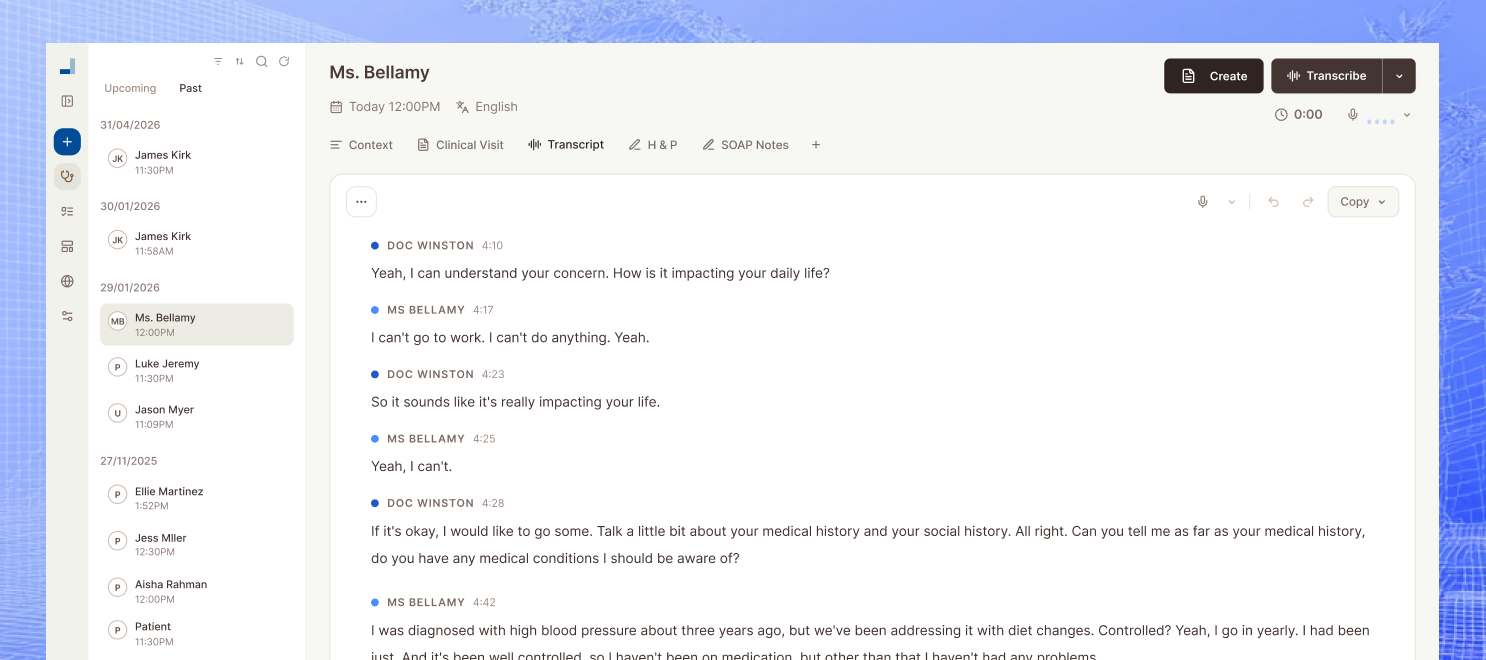
An AI medical scribe serves as an assistive partner in the exam room, capturing the ambient conversation and distilling it into a structured clinical format. It is important to remember that these tools are not autonomous practitioners; they are highly sophisticated drafting assistants. The clinician remains the ultimate authority, responsible for reviewing, editing, and finalizing every note to ensure clinical accuracy and compliance.
- Reduces the ‘pajama time’ spent on documentation after shift ends.
- Allows for better eye contact and engagement during the patient encounter.
- Captures specific clinical details that might be forgotten in a delayed entry.
- Acts as a drafting tool that the clinician must always supervise and sign off on.
Note types you can generate beyond SOAP (H&P and more)
While the SOAP format is a staple in primary care, many clinical encounters require a more nuanced structure. Specialist summaries often demand comprehensive History and Physical (H&P) reports, detailed consultation notes, and complex procedure logs. Relying solely on a one-size-fits-all template often leads to ‘note bloat’ or, conversely, a lack of necessary detail for specialists who need an in-depth understanding of the patient’s history.
Structure is essential for maintaining continuity of care and ensuring audit readiness. When a patient moves from a university clinic to a sub-specialist, the quality of the handover depends entirely on the clarity of the referral letter and the summary of previous findings. Using specialized templates for follow-up notes, discharge summaries, and consult reports ensures that the most relevant information is highlighted for the next provider in the care continuum.
- H&Ps and comprehensive consult notes for new patient evaluations.
- Detailed procedure notes and precise follow-up summaries.
- Professional referral letters and clear discharge instructions.
- Standardized documentation that improves audit trails and handover quality.
How to implement an AI medical scribe step-by-step in a real clinic
Starting with a new technology shouldn’t disrupt your entire practice overnight. Begin by selecting one specific visit type, such as routine follow-ups or initial consultations, to test the workflow. This allows you to calibrate the tool without the pressure of managing your most complex cases immediately. Familiarize yourself with the system’s ability to distinguish between different clinical voices and ambient noise.
Once you are comfortable, set up your templates based on your specific specialty requirements. A cardiologist will need different data points than a dermatologist, so customize the output to reflect the headings you use most frequently. During the encounter, simply let the AI scribe capture the conversation—whether you are meeting in person or via a telehealth platform. You don’t need to change how you speak; focus entirely on the patient.
After the encounter, the AI will generate a draft summary. Spend two minutes reviewing the output and making necessary edits to ensure the clinical reasoning is perfectly captured. Finally, use the generated summary to quickly populate other required documents, such as referral letters or patient instruction forms, effectively doing the work once and using it multiple times.
- Begin with a pilot for one specific visit type to build confidence.
- Customize templates to match the specific needs of your medical specialty.
- Capture the encounter naturally without altering your bedside manner.
- Review, edit, and repurpose the draft for all necessary clinical paperwork.
How to keep note quality high and reduce mistakes
The most common failure points in automated documentation include missing specific dosages, misinterpreting lab values, or creating note bloat by including irrelevant conversational filler. To prevent this, clinicians should adopt a lightweight review habit. Instead of reading every word like a proofreader, scan for key clinical markers: medications, allergies, the assessment, and the final plan.
Establishing team standards for documentation also helps maintain high quality. Decide as a group which sections are mandatory for every specialist summary and which are optional. By aligning on these standards, you ensure that even when an AI drafts the note, the final output remains consistent with the clinic’s professional voice and medical requirements.
- Scan notes specifically for clinical accuracy in medications and dosages.
- Implement a standard review process for every AI-generated draft.
- Define clinic-wide templates to ensure consistency across all providers.
- Avoid note bloat by focusing templates on high-value clinical data.
Privacy, consent, and patient trust (plain English)
Patient trust is the foundation of the clinical relationship. While consent requirements for recording vary significantly by region and local policy, transparency is always the best practice. Most patients are supportive of technologies that allow their doctor to focus on them rather than a computer screen, provided they understand that the data is handled securely and used only for their care.
A simple way to explain this to a patient is: ‘To make sure I give you my full attention today, I am using a tool that securely records our conversation to help me draft your medical notes. It helps me stay accurate and spend less time typing. Is that alright with you?’ This approach frames the technology as a benefit to the patient experience rather than a clerical shortcut.
- Always follow local regulations and institutional policies regarding recording.
- Use a short, transparent script to explain the benefit to the patient.
- Ensure the technology provider adheres to strict security and retention standards.
- Maintain patient trust by prioritizing their privacy throughout the digital workflow.
Rolling it out across a clinic without disruption
A successful rollout starts with a 2-week pilot program involving a small group of ‘super-users’ who can troubleshoot and refine the process. During this time, track key metrics to measure the impact of the tool, such as the number of hours saved per week, the reduction in after-hours charting, and the speed of note completion. These data points are crucial for getting buy-in from the rest of the staff.
Once the pilot is complete, align your templates across the clinic to ensure that every specialist summary follows a similar format. Training should be focused on the review process rather than just the software itself. By showing colleagues how much time they can save while actually improving the richness of their documentation, you ensure a smooth transition with minimal disruption to patient flow.
- Launch a 2-week pilot with a small group to refine the clinical workflow.
- Track time-savings and note completion rates to demonstrate value.
- Provide training focused on the efficient review and editing of drafts.
- Standardize specialty templates to maintain a professional brand identity.
Mcoy AI is an AI medical scribe that records and transcribes patient encounters, then generates multiple clinical note types (H&P, progress notes, consult notes, follow-up notes, procedure notes, discharge summaries, referral letters, and more). With over 200+ customizable templates and an integrated AI chat to create letters, forms, and secondary documents, it allows clinicians to focus on care while the AI handles the complex administrative burden of modern medicine.
Conclusion
Adopting an AI medical scribe is a transformative step for any modern clinic looking to improve efficiency and reduce provider stress. By shifting the burden of drafting specialist summaries to an automated tool, you can reclaim your time and ensure that your medical records are more accurate and comprehensive than ever before. The key to success lies in a structured implementation, clear patient communication, and a commitment to maintaining clinical oversight. Start your pilot today and discover how to use an AI medical scribe to revolutionize your practice’s documentation workflow.
What a serious review table should cover
| Decision area | Common mistake | Better clinic-ready approach | Metric to watch |
|---|---|---|---|
| Workflow design | Treat how to use an ai scribe for specialist summaries guide as a one-off documentation task | Build a repeatable process with clear ownership and review points | Time to complete documentation |
| Team adoption | Assume every clinician will naturally use the same process | Train for consistency and define exception handling early | Active user adoption |
| Quality review | Only check notes when a problem is reported | Audit a sample of notes weekly and review edge cases | Edit rate per note |
| Operational follow-through | Leave admin actions outside the documentation workflow | Use the same encounter data for referrals, letters, and follow-up tasks | Completion rate for next-step tasks |
Related reading
If you are working through how to use an ai scribe for specialist summaries guide, it helps to read this alongside AI & Medicine: How to Simplify Clinical Notes for Busy Doctors, AI & Medicine: How Doctors Can Improve SOAP Notes, and AI & Medicine: Mastering the HPI Capture Process: Efficiency Guide. Those guides cover adjacent workflow, implementation, and evaluation questions so the decision does not sit in isolation.
FAQ
How accurate are AI medical scribes in real clinics?
In most clinical settings, AI scribes are highly accurate at capturing the core of the medical conversation. They excel at identifying symptoms, plans, and patient history mentioned during the encounter. However, accuracy can be affected by heavy background noise or multiple people speaking at once, which is why clinician review is essential. The technology serves as a powerful drafting tool that significantly reduces manual typing while keeping the doctor in control.
Do I still need to review every note?
Yes, reviewing every note is a mandatory part of the clinical workflow. The AI generates a draft based on the conversation, but the clinician remains the legally responsible party for the accuracy of the medical record. Most doctors find that reviewing and editing a pre-written draft takes significantly less time than writing a note from scratch. A quick two-minute review ensures that all clinical nuances and final assessments are perfectly reflected.
What note types can an AI scribe generate besides SOAP?
Beyond standard SOAP notes, an AI scribe can generate complex History and Physical (H&P) reports, consultation summaries, and detailed procedure notes. It can also produce follow-up summaries, discharge instructions, and professional referral letters based on the encounter data. This flexibility allows specialists to maintain high-quality documentation across a wide variety of clinical scenarios. Many systems also offer customizable templates to fit specific sub-specialty needs.
Will this work for telehealth and in-person consults?
Modern AI scribes are designed to be versatile and work effectively in both in-person and telehealth environments. For in-person visits, the system records the ambient room audio, while for telehealth, it can often integrate directly with the video platform or record the computer audio. This ensures a consistent documentation experience regardless of how the patient chooses to receive care. The workflow remains the same: record, review, and finalize.
How do I explain recording/transcription to patients?
The best approach is to be brief and focus on the benefit to the patient. You might say, ‘I’m using a secure digital assistant to help me with my notes so I can focus on our conversation instead of my computer.’ Most patients appreciate the increased eye contact and attention they receive when the doctor is not distracted by typing. Always follow your clinic’s specific policies regarding written or verbal consent for recording.
How do clinics prevent note bloat?
Clinics can prevent note bloat by selecting and customizing templates that prioritize essential clinical information over conversational filler. By setting specific rules for what the AI should include—such as focusing heavily on the ‘Assessment and Plan’—doctors can ensure the notes remain concise and readable. Regularly reviewing the output of the templates during the pilot phase helps in fine-tuning the system to produce high-value summaries without unnecessary length.
How long does template setup take?
Basic template setup is often immediate, as many systems come with pre-configured options for common specialties. Customizing these templates to perfectly match your personal or clinic-wide style typically takes only a few minutes per note type. Once the templates are established, they can be used across the entire practice, ensuring that every specialist summary follows the same professional structure without additional effort.
What’s the safest way to start if I’m skeptical?
The safest way to start is by implementing a small-scale pilot for just one or two hours a week during your least complex clinic sessions. Use the tool for routine follow-ups where the documentation requirements are straightforward. This low-risk environment allows you to see the quality of the drafts and the security of the workflow firsthand. As you gain confidence in the AI scribe’s ability to capture the encounter accurately, you can gradually expand its use to more complex cases.