Specialty Guides: How to Use an AI Scribe for Pediatrics Documentation Guide
Learn how to implement an AI scribe for pediatrics documentation. Reduce charting time, improve note accuracy, and focus on your young patients more effectively.
What a medical scribe solves in modern practice
For pediatricians, the documentation burden isn’t just about the volume of notes; it is about the complexity of capturing developmental milestones, immunization records, and the multi-party dialogue between the clinician, child, and caregiver. After-hours charting often becomes a mandatory ‘second shift,’ leading to pediatrician burnout and a distracted presence during office visits. The pressure to maintain a high-quality medical record for medico-legal protection frequently competes with the need for immediate, high-touch patient care.
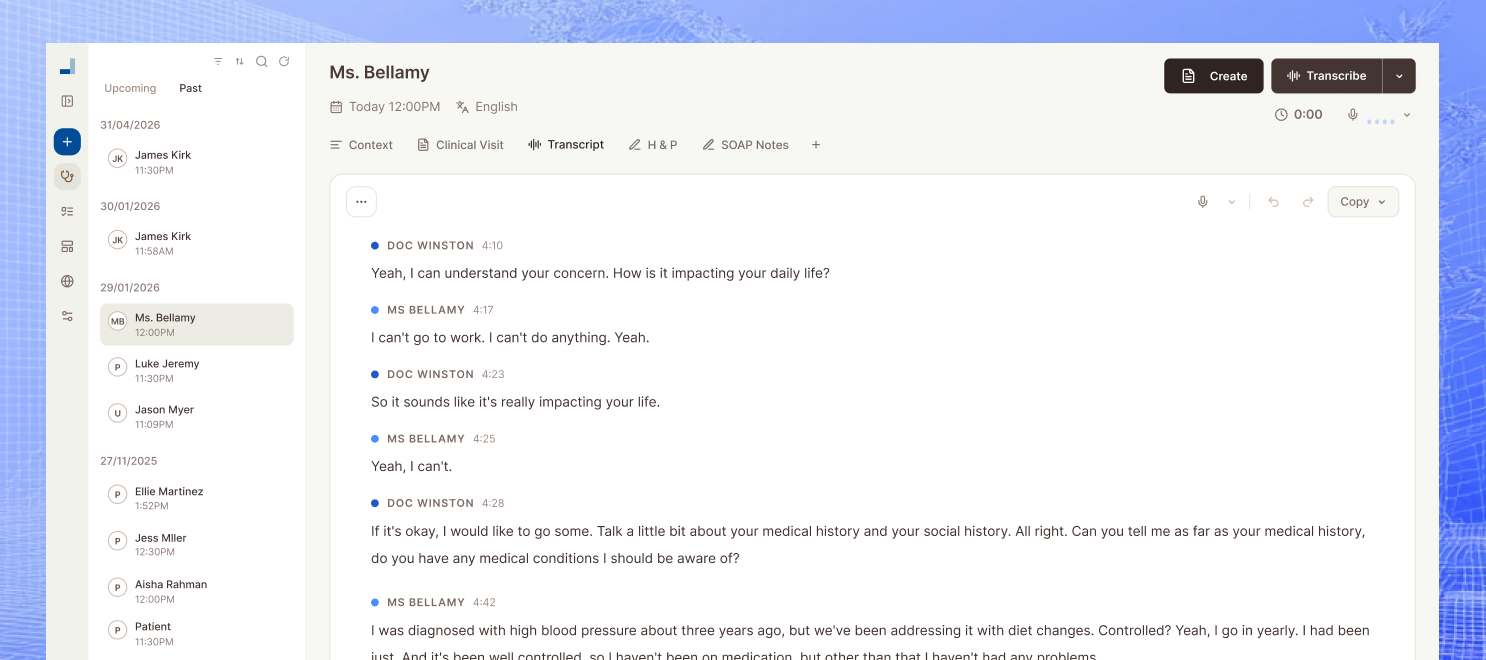
An AI medical scribe serves as an intelligent backend assistant that helps manage this load. It listens to the natural conversation, filtering out the noise to focus on clinical facts. However, it is essential to remember that while the AI handles the bulk of the drafting, it is an assistive tool, not a replacement for the pediatrician. The clinician remains the final authority, ensuring that the nuances of a child’s health and the parental concerns are accurately reflected in the final output.
- Eliminates hours of manual data entry after clinic doors close.
- Allows for eye contact and engagement with children and parents.
- Captures specific developmental details that might be missed in rushed notes.
- Reduces the cognitive load associated with multitasking during a consult.
Note types you can generate beyond SOAP (H&P and more)
Pediatrics is a diverse field that requires much more than a standard SOAP note. Comprehensive documentation often includes the detailed History and Physical (H&P) for new patients, progress notes for chronic disease management, and specialized consult notes for sub-specialties. When managing children with complex needs, having a clear H&P that tracks prenatal history through current growth trajectories is vital for continuity of care.
Furthermore, pediatricians frequently generate procedure notes for minor surgeries or immunizations, as well as discharge summaries when transitioning care. Referral letters are particularly critical in pediatrics, where coordinated care with specialists like pediatric cardiologists or neurologists is common. Each of these documents serves as a vital communication link between the primary care provider and the broader medical community.
Maintaining a high standard of structure across these various document types ensures audit readiness and high-quality handovers. When every letter and progress note follows a consistent, high-standard format, the entire clinic operates more smoothly, and patient safety is significantly enhanced by reducing gaps in information.
- History and Physical (H&P) for detailed new patient intake and initial assessments.
- Referral letters and consult notes for seamless specialist coordination.
- Procedure notes to accurately document immunizations and minor clinic interventions.
- Follow-up notes that track developmental growth and chronic condition milestones.
How to implement an AI scribe for pediatrics documentation step-by-step in a real clinic
Success starts with a focused approach. Begin by selecting one specific visit type to test the workflow—well-child visits are often the best place to start because they follow a predictable rhythm but involve significant data capture. By mastering one visit type first, the clinical staff can adjust to the technology without the stress of managing complex cases immediately.
Once the initial visit type is established, set up templates tailored to pediatric sub-specialties or specific age groups, such as infants, toddlers, or adolescents. These templates ensure the AI knows exactly which milestones or concerns to look for. During the encounter, whether it is in-person or via a telehealth platform, simply let the system capture the natural conversation between the provider and the family.
Immediately after the visit, spend two minutes reviewing and editing the draft. The speed of AI generation allows for real-time adjustments while the details are still fresh in your mind. Finally, leverage the generated outputs to quickly produce mandatory school forms, referral letters, or patient summaries, effectively turning one clinical encounter into multiple useful documents without extra typing.
- Start with well-child visits to build confidence in the transcription accuracy.
- Configure age-specific templates to capture relevant developmental milestones.
- Review drafts immediately post-visit while the conversation is fresh.
- Reuse generated data to auto-fill school forms and specialist referrals.
How to keep note quality high and reduce mistakes
To maintain high-quality documentation, clinicians must watch for common AI failure points, such as misidentifying medication dosages or confusing which parent said what. In pediatrics, accuracy regarding weight-based dosing and growth percentiles is non-negotiable. It is important to develop a habit of quickly scanning the ‘Plan’ and ‘Medications’ sections of every generated note.
Implementing a lightweight review habit is the most effective way to ensure quality. Instead of reading every word, focus on the high-stakes clinical data—vitals, dosages, and specific physical exam findings. Establishing team-wide standards for what a ‘perfect’ note looks like helps everyone in the university or private clinic maintain a consistent level of excellence and medico-legal safety.
- Scan weight-based medication dosages for total accuracy before signing.
- Verify that parental concerns are attributed correctly in the history section.
- Use standardized clinical templates to avoid unnecessary ‘note bloat.’
- Conduct weekly spot-checks to ensure the AI is capturing specific pediatric nuances.
Privacy, consent, and patient trust (plain English)
Patient privacy is paramount, especially when dealing with minors. Consent requirements for recording sessions vary significantly by region and state, so it is crucial to follow your local health board’s specific policy. Generally, transparency is the best approach; families are usually receptive to technology that allows their doctor to pay more attention to their child and less to a computer screen.
A simple way to explain the process is to say: ‘To make sure I’m giving your child my full attention today, I’m using a secure medical assistant tool that listens and writes my notes for me. Is that okay with you?’ This puts the family at ease and positions the technology as a tool for better care rather than a privacy intrusion. Always ensure that the data retention policies of your tool align with pediatric medical record laws.
- Always ask for oral consent and document it within the medical record.
- Explain the benefit clearly: less time on the screen, more time with the patient.
- Choose tools that comply with HIPAA and local data protection regulations.
- Be transparent about how the data is used and when it is deleted.
Rolling it out across a clinic without disruption
A smooth rollout requires a structured 2-week pilot plan. During the first week, let only one or two ‘champion’ pediatricians use the tool to identify any workflow bottlenecks. In the second week, expand to the rest of the clinic once the initial templates have been refined and the staff is comfortable with the voice-capture process.
Track specific metrics to prove the value of the implementation. Monitor ‘pajama time’—the hours spent charting after work—and note the speed of document completion. If clinicians find they are leaving on time and their notes are more complete than before, the ROI is clear. Aligning all templates across the organization ensures that even in a large university clinic, the quality of care remains uniform.
- Select a ‘Technology Champion’ to lead the initial two-week pilot phase.
- Measure the reduction in after-hours charting to quantify time savings.
- Standardize templates across the clinic to ensure uniform documentation quality.
- Provide brief, hands-on training for staff on how to review and edit notes.
Mcoy AI is an AI medical scribe that records and transcribes patient encounters, then generates multiple clinical note types (H&P, progress notes, consult notes, follow-up notes, procedure notes, discharge summaries, referral letters, and more). It features 200+ customizable templates and an AI chat to create letters, forms, and documents, helping pediatricians spend more time with families and less time behind a keyboard.
FAQ
Below are frequently asked questions regarding the use of AI technology in pediatric settings and how it improves the documentation lifecycle.
How accurate are AI medical scribes in real clinics?
In real-world pediatric settings, AI scribes are highly accurate at capturing the core clinical facts of a conversation. While they might occasionally pick up background noise from a crying infant, the primary medical dialogue between the doctor and parent is typically transcribed with high precision. Pediatricians should always perform a quick review to ensure medical nuances are correct.
Do I still need to review every note?
Yes, the clinician is legally responsible for the medical record, so reviewing every note is mandatory. However, the AI does the heavy lifting, turning a 10-minute typing task into a 60-second review and edit. This shift in workflow significantly reduces cognitive fatigue and ensures that notes are finalized much faster than manual entry.
What note types can an AI scribe generate besides SOAP?
AI scribes are capable of generating a wide variety of documentation beyond standard SOAP notes, including comprehensive H&Ps, detailed procedure notes for immunizations, and discharge summaries. They can also create referral letters and school excuse forms by extracting the relevant data from the encounter. This versatility makes them invaluable for the multifaceted nature of pediatric care.
Will this work for telehealth and in-person consults?
Yes, most modern AI scribe systems are designed to work seamlessly with both in-person office visits and telehealth platforms. Whether you are speaking into a mobile device in an exam room or capturing audio through a laptop during a virtual visit, the AI can filter the audio to produce a professional clinical note in either environment.
How do I explain recording/transcription to patients?
The best way to explain it is to focus on the benefit to the patient: better care and more eye contact. Most parents appreciate that their doctor is trying to be more present during the exam. A simple script explaining that the tool is a secure digital assistant for note-taking usually satisfies any concerns families may have about the process.
How do clinics prevent note bloat?
Clinics prevent note bloat by using concise, specialized templates that instruct the AI to only include relevant clinical information. Instead of a ‘transcript’ of the entire conversation, the AI focuses on pertinent positives, negatives, and the final assessment and plan. This keeps the medical record professional, readable, and focused on the necessary data.
How long does template setup take?
Setting up basic templates usually takes less than an hour, especially when using pre-built pediatric layouts. Customizing them for specific sub-specialties or unique clinic workflows might take a bit more time initially, but this investment pays off immediately by ensuring the AI captures exactly what the clinician needs without manual tweaking later.
What’s the safest way to start if I’m skeptical?
The safest way to start is to use the AI scribe for a few ‘easy’ visits, such as routine sports physicals or follow-up checks for minor illnesses. This allows you to see the quality of the output without the pressure of a complex medical case. Once you see the time savings and accuracy firsthand, you can gradually expand its use to all patient encounters.
Conclusion
Implementing a structured workflow for pediatrics documentation doesn’t have to be a daunting task. By moving toward a digital-first approach that captures the natural conversation between the doctor and the family, clinics can reclaim hours of lost time and improve the quality of their medical records. Whether you are generating a complex H&P or a quick school referral, the right tools allow you to focus on what matters most: the health of the child. Embracing an AI scribe for pediatrics documentation is the most effective way to eliminate burnout and return the joy of practice to the modern clinician. Start your pilot today and experience a more focused, efficient clinic environment.
What a serious review table should cover
| Decision area | Common mistake | Better clinic-ready approach | Metric to watch |
|---|---|---|---|
| Workflow design | Treat how to use an ai scribe for pediatrics documentation guide as a one-off documentation task | Build a repeatable process with clear ownership and review points | Time to complete documentation |
| Team adoption | Assume every clinician will naturally use the same process | Train for consistency and define exception handling early | Active user adoption |
| Quality review | Only check notes when a problem is reported | Audit a sample of notes weekly and review edge cases | Edit rate per note |
| Operational follow-through | Leave admin actions outside the documentation workflow | Use the same encounter data for referrals, letters, and follow-up tasks | Completion rate for next-step tasks |
Related reading
If you are working through how to use an ai scribe for pediatrics documentation guide, it helps to read this alongside Specialty Guides: How to Run a More Efficient Medical Practice in 2026, Specialty Guides: How to Improve Patient Encounters, and Specialty Guides: Document Medication Reviews with AI Scribe: Full Guide. Those guides cover adjacent workflow, implementation, and evaluation questions so the decision does not sit in isolation.
FAQ
How accurate are AI medical scribes in real clinics?
AI scribes are remarkably accurate at capturing clinical dialogue, though clinicians must still verify details like dosages. In pediatrics, they excel at distilling complex parent-doctor-child conversations into professional medical notes.
Do I still need to review every note?
Yes, the pediatrician remains the clinical authority. However, reviewing a pre-drafted note takes a fraction of the time compared to typing one from scratch, reducing the total documentation time by up to 80%.
What note types can an AI scribe generate besides SOAP?
AI scribes can generate History and Physicals (H&P), procedure notes, referral letters, discharge summaries, and progress notes. This variety is essential for meeting the diverse documentation needs of a pediatric practice.
Will this work for telehealth and in-person consults?
Most AI scribes are platform-agnostic, meaning they can record audio from an in-person exam room or capture the audio stream from a telehealth video call. Both methods result in the same high-quality clinical notes.
How do I explain recording/transcription to patients?
Frame it as a way to provide better, more attentive care. Let parents know that by using a secure digital assistant, you can focus entirely on their child rather than looking at a computer monitor for the whole visit.
How do clinics prevent note bloat?
By using specific, concise templates, clinics can train the AI to exclude social chatter and only focus on relevant clinical facts. This ensures the final note is brief, medically accurate, and easy for other providers to read.
How long does template setup take?
Initial setup for standard pediatric templates usually takes about 30 to 60 minutes. Once configured, these templates automate the format for all future notes, requiring no additional setup for daily operations.
What’s the safest way to start if I’m skeptical?
The best way to start is with a ‘low-risk’ pilot, using the tool for well-child visits or routine follow-ups. Once you are comfortable with the transcription quality and security, you can roll it out for more complex consultations.