Specialty Guides: How to Use an AI Scribe for Endocrinology Notes | Guide
Learn how to streamline endocrinology documentation. Save hours on complex metabolic notes and diabetic follow-ups using an AI medical scribe.
The Documentation Burden in Modern Endocrinology
Endocrinologists often find themselves buried under mountains of data. Between tracking A1c levels, thyroid panels, and complex medication titrations, the documentation requirements for a single patient encounter can be overwhelming. Many clinicians spend hours after their last patient has left just finishing charts, leading to significant burnout and a feeling that they are data entry clerks rather than specialists.
Whether you are managing a busy private practice or a university-level clinic, the pressure to produce detailed, medically accurate, and audit-proof notes is constant. This guide will teach you how to integrate AI transcription into your workflow, explore note formats that go far beyond the basic SOAP note, and ensure high-quality outputs while maintaining patient privacy. We aim to help GPs, specialists, and telehealth providers reclaim their time and focus on specialized patient care.
What a medical scribe solves in modern practice
The real cost of traditional documentation is not just time; it is the cognitive load required to recall specific patient nuances while staring at a screen. Delayed notes lead to missed details, especially in endocrinology where subtle symptoms like changes in fatigue levels or fine-tuning insulin ratios are critical to the treatment plan. When a clinician is rushed, the quality of the note suffers, which can lead to medico-legal anxiety and decreased continuity of care.
An AI medical scribe acts as an assistive partner. It listens to the conversation and captures the clinical narrative, allowing the endocrinologist to maintain eye contact with the patient. It is important to remember that these tools are assistive; the clinician remains the ultimate authority and is responsible for the accuracy of every document. The AI handles the heavy lifting of transcription and formatting, but the doctor provides the final clinical sign-off.
- Reduces administrative burnout by automating note drafting.
- Enhances the patient-physician relationship through better engagement.
- Captures granular metabolic details that might be forgotten hours later.
- Decreases the time spent on after-hours charting and medical admin.
Note types you can generate beyond SOAP (H&P and more)
While the SOAP note is a standard, endocrinology often requires more nuanced documentation. A new patient evaluation requires a comprehensive History and Physical (H&P), while a surgical case for a thyroidectomy might require detailed procedure notes. Using a system that only offers a basic SOAP template is limiting for a specialist who needs to track longitudinal data and coordinate care with primary physicians and surgeons.
Consult notes and referral letters are especially vital in endocrine health. When you receive a complex case of PCOS or adrenal insufficiency, your response to the referring provider needs to be clear, professional, and thorough. Discharge summaries and follow-up notes ensure that every member of the care team is aware of the current hormone replacement doses and upcoming lab schedules. Proper structure in these documents is not just for billing; it ensures audit readiness and high-standard continuity of care.
- H&P and Progress Notes for routine metabolic monitoring.
- Consult Notes and Referral Letters for seamless inter-specialty care.
- Procedure Notes for biopsies or specialized diagnostic tests.
- Follow-up Notes tailored to chronic condition management.
How to implement AI scribe for endocrinology notes step-by-step
To begin implementing an AI scribe for endocrinology notes, start by selecting one specific visit type to pilot. Type 2 Diabetes follow-ups are often the best place to start because they are frequent and follow a predictable clinical rhythm. By focusing on one visit type, you can learn how the AI captures your specific phrasing and how it handles mentions of lab values and medication dosages.
Next, set up your templates by specialty. Endocrinology requires specific fields—like recent A1c, thyroid function tests, or CGMS data summaries. Customize your software to ensure these headers are prioritized in your output. Once your templates are ready, simply begin capturing the encounter whether it is an in-person physical exam or a telehealth hormone consultation. The AI will listen in the background, allowing you to discuss the nuances of the patient’s lifestyle and symptoms naturally.
After the session, review and edit the generated draft quickly. Because the AI provide a high-quality draft within seconds, you are usually just checking for accuracy in medication units or specific dates. Finally, reuse these outputs for other administrative tasks. A well-written progress note can be instantly converted into a referral letter or a summary for the patient’s primary care physician, maximizing the utility of a single recording session.
- Start with a single visit type like diabetes follow-ups to master the tool.
- Customize templates to include endocrine-specific lab and medication fields.
- Capture encounters naturally in both in-person and virtual settings.
- Review drafts immediately and convert them into letters or patient summaries.
How to keep note quality high and reduce mistakes
Quality control is essential when using AI in a clinical setting. Common failure points often involve missing specific medication units (e.g., mcg vs. mg) or including “note bloat”—irrelevant information that makes the chart hard to read. To prevent this, clinicians should adopt a lightweight review habit. Spending sixty seconds checking the AI’s summary against the patient’s actual statements ensures that the final record is impeccable.
Establishing team standards for documentation also helps. If everyone in the clinic uses the same template structure, it becomes easier for nurses and staff to find relevant information quickly. Regular audits of a few notes per month can ensure the transition to AI remains accurate and meets all regulatory requirements for the endocrine specialty.
- Check medication dosages and units for total accuracy.
- Acknowledge and edit any repetitive content to prevent note bloat.
- Standardize templates across the clinic for cross-team consistency.
- Perform periodic reviews to maintain high clinical documentation standards.
Privacy, consent, and patient trust
Maintaining patient trust is the foundation of any doctor-patient relationship. Consent requirements for recording and transcription vary significantly by region and local policy, so it is vital to stay informed of your specific legal obligations. Generally, patients are receptive to the technology when they realize it leads to better care and more face-to-face time with their doctor.
Try using a simple explanation script: “To ensure I am capturing every detail of our visit accurately without being stuck behind a computer screen, I’m using a secure AI assistant to help me with my notes today. It focuses on our medical conversation so I can focus on you. Is that okay?” This transparency builds rapport and eases any concerns about data privacy. General security principles like data encryption and limited retention periods should also be part of your clinic’s selection criteria for any digital tool.
- Verify local consent laws for digital medical recordings.
- Use a transparent script to explain the benefits of AI to the patient.
- Ensure the tool follows strict data security and encryption standards.
- Focus on the benefit of improved eye contact and attentive care.
Rolling it out across a clinic without disruption
A successful rollout involves a structured 2-week pilot plan. During the first week, let a few early adopters—doctors who are tech-savvy—test the system. They can identify the best endocrine-specific templates and iron out any workflow kinks. In the second week, they can act as mentors for the rest of the staff, sharing their discovered shortcuts and best practices.
Track metrics to measure the impact of the tool. Key indicators include time saved on charting, the reduction in after-hours work (the “pajama time”), and the completeness of the lab reviews within the notes. Aligning the whole team on these goals ensures that the transition feels like a shared win rather than an extra burden. With proper training, the AI can become an invisible part of the clinical workflow within days.
- Implement a 2-week pilot with early-adopter physicians.
- Measure time savings and the reduction of after-hours documentation.
- Hold brief training sessions to align on template usage.
- Gather feedback to continuously refine the documentation process.
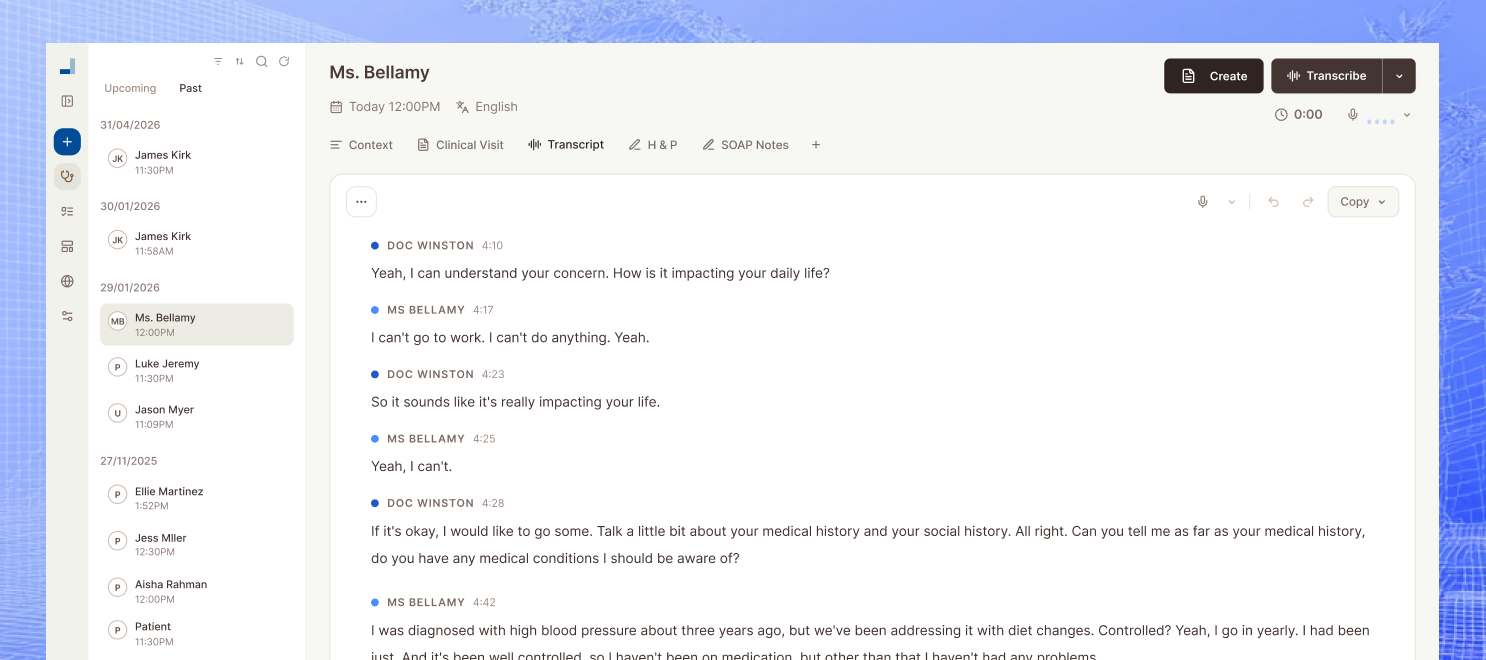
Mcoy AI is an AI medical scribe that records and transcribes patient encounters, then generates multiple clinical note types (H&P, progress notes, consult notes, follow-up notes, procedure notes, discharge summaries, referral letters, and more). With over 200+ customizable templates and an integrated AI chat to create letters, forms, and specialized medical documents, it allows clinicians to focus on care rather than clerical tasks.
Conclusion
Transitioning to a modern documentation workflow doesn’t have to be daunting. By following a structured implementation plan, endocrinologists can significantly reduce their administrative load while improving the quality of patient care. The key is to start small, focus on quality control, and maintain open communication with patients about the technology being used.
Learning how to use an AI scribe for endocrinology notes is a transformative step for any clinic owner or practitioner looking to reclaim their evening hours and reduce burnout. With a pilot program in place, you can witness the immediate benefits of more accurate, comprehensive charts and a more engaged patient experience. Start your pilot today and see how technology can support your clinical expertise.
What a serious review table should cover
| Decision area | Common mistake | Better clinic-ready approach | Metric to watch |
|---|---|---|---|
| Workflow design | Treat how to use an ai scribe for endocrinology notes | guide as a one-off documentation task | Build a repeatable process with clear ownership and review points |
| Team adoption | Assume every clinician will naturally use the same process | Train for consistency and define exception handling early | Active user adoption |
| Quality review | Only check notes when a problem is reported | Audit a sample of notes weekly and review edge cases | Edit rate per note |
| Operational follow-through | Leave admin actions outside the documentation workflow | Use the same encounter data for referrals, letters, and follow-up tasks | Completion rate for next-step tasks |
Related reading
If you are working through how to use an ai scribe for endocrinology notes | guide, it helps to read this alongside Specialty Guides: How to Run a More Efficient Medical Practice in 2026, Specialty Guides: How to Improve Patient Encounters, and Specialty Guides: How to Use AI Scribes for Teaching Clinics & Supervision. Those guides cover adjacent workflow, implementation, and evaluation questions so the decision does not sit in isolation.
FAQ
How accurate are AI medical scribes in real clinics?
AI scribes are highly accurate in capturing the dialogue between a doctor and a patient, often picking up details that might be glossed over in manual note-taking. However, they are not perfect and are designed as assistive tools. Clinicians find they typically capture 95% or more of the relevant clinical information correctly. It is always necessary for the endocrinologist to review the medication dosages and specific metabolic values for total accuracy before signing the note.
Do I still need to review every note?
Yes, reviewing every note is a mandatory clinical practice for both legal and safety reasons. While the AI does the heavy lifting of drafting and formatting, the clinician is the one responsible for the medical accuracy of the record. The review process is usually very fast, taking about one minute per note, because you are simply verifying facts rather than original writing. This review ensures that the final document accurately reflects your clinical judgment and the patient’s status.
What note types can an AI scribe generate besides SOAP?
Modern AI scribes are capable of generating a vast array of document types beyond the standard SOAP format. This includes comprehensive History and Physicals (H&P), detailed procedure notes, consult letters for referring physicians, and discharge summaries. For endocrinologists, this is particularly useful for creating specialized metabolic follow-ups or thyroid ultrasound reports. The flexibility allows the documentation to match the specific needs of the clinical encounter.
Will this work for telehealth and in-person consults?
Yes, AI medical scribes are designed to be versatile across different types of patient visits. For in-person consults, the scribe can record through a smartphone, tablet, or computer microphone. For telehealth, most systems can capture the audio directly from the virtual meeting platform. This ensures that regardless of how you see your patients, your documentation remains consistent and comprehensive across your entire practice.
How do I explain recording/transcription to patients?
The best approach is to be brief and focus on the benefit to the patient. You can explain that using a secure AI assistant allows you to spend more time listening to them and less time typing on a computer. Most patients appreciate the extra eye contact and attention they receive when the doctor isn’t distracted by clerical work. Always ensure you are following your clinic’s specific protocol for obtaining and documenting patient consent.
How do clinics prevent note bloat?
Note bloat occurs when irrelevant narrative or repetitive information fills up the electronic health record. To prevent this, use AI tools that allow for template customization so only necessary headers are produced. Clinicians should also get into the habit of quickly deleting non-essential introductory phrases or redundant history during their quick review. Choosing a scribe that focuses on “clinical conciseness” helps keep the final output meaningful and easy for other providers to read.
How long does template setup take?
Setting up basic templates usually takes less than an hour, especially if the tool includes pre-built options for endocrinology. Most clinicians find they like to tweak their templates over the first week as they see how the AI handles their specific patient types. Once these initial adjustments are made, the system runs automatically with very little maintenance. The time invested upfront is quickly paid back by the hours saved during the very first week of use.
What’s the safest way to start if I’m skeptical?
The safest way to start is with a limited pilot program using a few non-complex cases, such as routine follow-ups. Use the AI scribe alongside your traditional method for a couple of days to compare the results and gain confidence in its ability to capture details. This “double-running” period allows you to verify accuracy without any risk to your clinical workflow. Once you see the time savings and quality of the drafts, you can gradually expand its use to more complex consults.