AI & Medicine: How to Use AI Medical Scribe Notes Effectively | Mcoy Blog
Learn how to implement an AI medical scribe in your clinic. Master note types like H&P and progress notes while maintaining your clinical voice and privacy.
What a medical scribe solves in modern practice
The burden of documentation is the leading cause of clinician burnout today. Between back-to-back appointments, doctors often find themselves spending hours after clinics close just to catch up on their charts. This ‘pajama time’ is a hidden cost that consumes mental energy and reduces the quality of life for even the most dedicated practitioners.
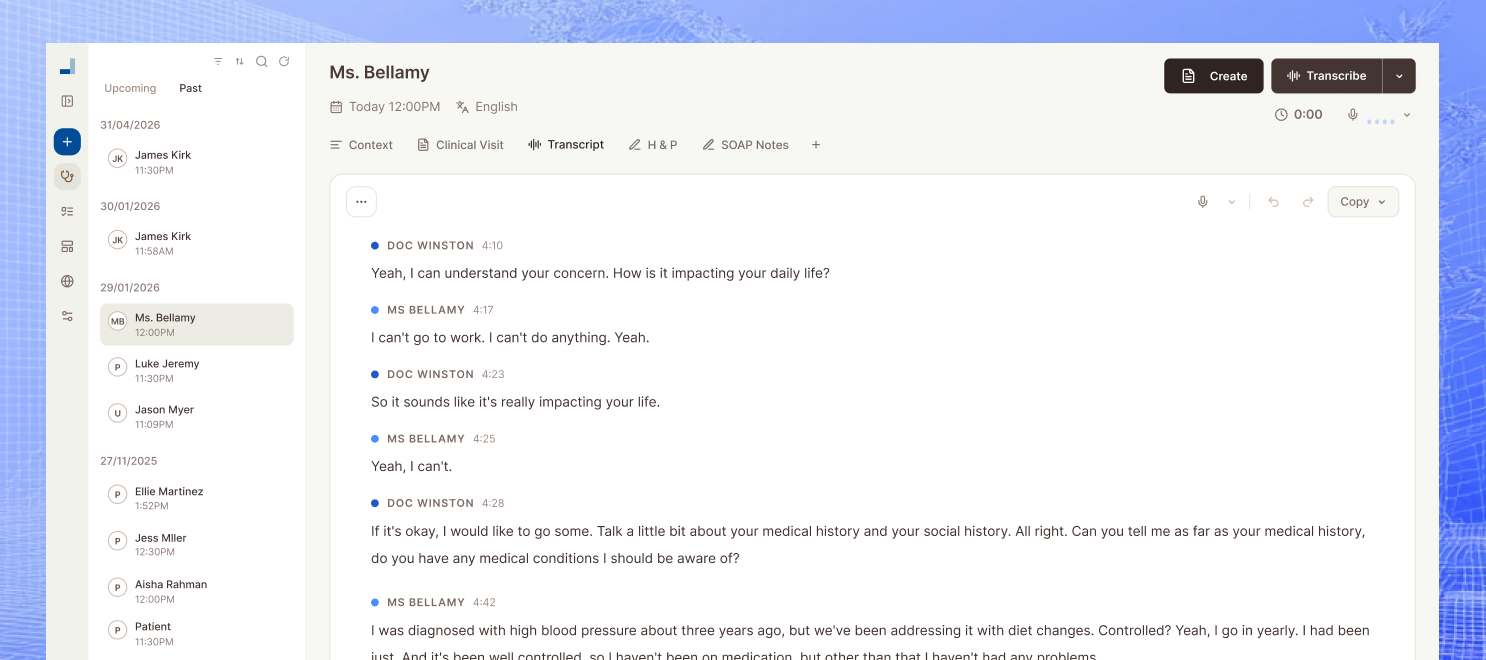
An AI medical scribe serves as a digital assistant that captures the nuance of a patient conversation in real-time. By automating the transcription and initial drafting of notes, clinicians can return their focus to the patient rather than a screen. However, it is essential to remember that these tools are assistive; the clinician remains the ultimate authority and is responsible for the accuracy and final sign-off of every entry.
- Eliminates after-hours charting by generating drafts instantly.
- Reduces cognitive load by capturing details you might forget.
- Improves clinician-patient eye contact during the encounter.
- Provides a consistent structure for every patient visit.
Note types you can generate beyond SOAP (H&P and more)
While the SOAP format is a staple in many clinics, complex medical care often requires more diverse documentation. Comprehensive History and Physical (H&P) notes are vital for new admissions, while detailed procedure notes are required for surgical or minor office-based interventions. Relying solely on one format can lead to gaps in the medical record that complicate future care or billing.
Consult notes and referral letters are equally critical, as they bridge the gap between specialists and primary care providers. A high-quality AI system transitions seamlessly between these formats, ensuring that the specific requirements of a discharge summary or a follow-up note are met with precision. This flexibility supports continuity of care and ensures the practice is always audit-ready.
- H&P and Progress Notes for inpatient and outpatient tracking.
- Specialized Consult and Procedure notes for surgical precision.
- Discharge Summaries and Referral Letters for seamless transitions.
- Customizable follow-up notes tailored to chronic disease management.
How to implement AI medical scribe step-by-step in a real clinic
Starting with an AI medical scribe doesn’t require a total overhaul of your workflow. The most successful implementations begin with a single visit type, such as standard follow-ups, to help the team get comfortable with the recording process. As the rhythm is established, you can gradually expand to more complex new-patient intakes or specialized consultations.
Before you hit record, take a moment to select or set up templates specific to your specialty. Whether you are in cardiology, pediatrics, or a university clinic, having the right framework ensures the AI pulls the relevant data. During the encounter, simply keep the device nearby to capture the conversation naturally, whether it is an in-person visit or a telehealth session.
Once the encounter ends, review the generated draft immediately. Most clinicians find that editing a high-quality draft takes only seconds compared to writing from scratch. Finally, these outputs can be repurposed to quickly generate referral letters or patient instruction forms, maximizing the utility of a single recorded session.
- Pilot the technology with one specific visit type first.
- Configure specialty-specific templates before the first patient.
- Review and edit drafts immediately for maximum accuracy.
- Reuse generated data for letters, forms, and patient summaries.
How to keep note quality high and reduce mistakes
One of the biggest concerns with automated documentation is ‘note bloat’—the inclusion of irrelevant or repetitive information. It is also possible for AI to miss specific medication dosages if they weren’t clearly articulated during the visit. Establishing a robust review habit is the most effective way to ensure that your clinical voice remains accurate and professional.
Developing a standardized ‘human-in-the-loop’ check ensures that high-stakes information, such as problem lists and drug allergies, are double-checked. Team standards should be set so that every practitioner in the clinic uses the same level of scrutiny. This keeps the medical record lean, structured, and legally sound.
- Develop a 30-second review habit for every generated note.
- Standardize how team members verify medications and dosages.
- Audit notes periodically to prevent unnecessary note bloat.
- Ensure the final assessment reflects your specific clinical judgment.
Privacy, consent, and patient trust (plain English)
Patient privacy is the cornerstone of the therapeutic relationship. When introducing an AI medical scribe, it is important to follow your local and regional regulations regarding recording and data retention. While rules vary, transparency usually leads to higher patient trust and better cooperation during the visit.
You can explain the process to a patient by saying: ‘To ensure I can focus entirely on you today, I’m using a secure AI assistant to help me with my notes. It records our conversation and turns it into a medical draft so I don’t have to type while we talk. Is that okay with you?’ Most patients appreciate the extra attention they receive when the doctor isn’t staring at a computer.
- Always obtain verbal or written consent based on local policy.
- Use simple, transparent language to explain the recording process.
- Ensure the AI solution adheres to high security and encryption standards.
- Maintain clear protocols for data retention and patient privacy.
Rolling it out across a clinic without disruption
A structured rollout is key to preventing staff frustration. A two-week pilot plan allows a small group of clinicians to iron out any technical hurdles before the entire clinic adopts the system. During this phase, it is helpful to track metrics like time saved per day and the reduction in after-hours charting to demonstrate the value to the whole team.
Alignment on templates is the final step in a successful rollout. When every practitioner uses similar templates for their respective departments, it makes peer review and administrative audits much smoother. This collective approach ensures that the technology scales effectively without interrupting the clinic’s daily operations.
- Appoint a ‘super-user’ to lead a two-week pilot program.
- Track time-saving metrics to measure the return on investment.
- Align templates across the clinic for unified documentation.
- Provide brief, practical training sessions for all staff members.
Mcoy AI is an AI medical scribe that records and transcribes patient encounters, then generates multiple clinical note types (H&P, progress notes, consult notes, follow-up notes, procedure notes, discharge summaries, referral letters, and more). It offers 200+ customizable templates and includes an AI chat to create letters, forms, and documents from your encounter data, making clinical documentation faster and more accurate for busy practitioners.
The Move Toward Effortless Documentation
Moving your practice toward modern clinical documentation is a journey toward better work-life balance. By mastering the AI medical scribe workflow, clinicians can reclaim their evenings and provide more focused care to their patients. The transition requires a small shift in habits, but the rewards are seen in every saved minute and every accurate note. Start your pilot today and see how easy it is to keep your clinical voice while losing the administrative headache.
What a serious review table should cover
| Decision area | Common mistake | Better clinic-ready approach | Metric to watch |
|---|---|---|---|
| Workflow design | Treat how to use ai medical scribe notes effectively | mcoy blog as a one-off documentation task | Build a repeatable process with clear ownership and review points |
| Team adoption | Assume every clinician will naturally use the same process | Train for consistency and define exception handling early | Active user adoption |
| Quality review | Only check notes when a problem is reported | Audit a sample of notes weekly and review edge cases | Edit rate per note |
| Operational follow-through | Leave admin actions outside the documentation workflow | Use the same encounter data for referrals, letters, and follow-up tasks | Completion rate for next-step tasks |
Related reading
If you are working through how to use ai medical scribe notes effectively | mcoy blog, it helps to read this alongside AI & Medicine: How to Simplify Clinical Notes for Busy Doctors, AI & Medicine: How Doctors Can Improve SOAP Notes, and Practice Operations: How to Use AI Scribing Without Integration [Full Guide]. Those guides cover adjacent workflow, implementation, and evaluation questions so the decision does not sit in isolation.
FAQ
How accurate are AI medical scribes in real clinics?
In a real-world clinic setting, AI medical scribes are highly accurate at capturing the core details of a conversation. They excel at identifying the subjective and objective portions of a visit, though they occasionally require minor corrections for complex medical terminology or brand-name medications. Most clinicians find the drafts are 90-95% ready for sign-off immediately after the encounter.
Do I still need to review every note?
Yes, the clinician is always the person of record and must review every note for accuracy. While the AI does the heavy lifting, your clinical judgment is required to ensure that the final assessment and plan are correct. This review process usually takes less than a minute but is vital for medical-legal safety and patient care quality.
What note types can an AI scribe generate besides SOAP?
Beyond the standard SOAP format, a sophisticated AI scribe can generate History and Physicals (H&P), detailed procedure notes, consult letters, and discharge summaries. It can also produce follow-up notes and referral letters by extracting the relevant data from the patient encounter. This versatility makes it useful for both primary care and specialized surgical fields.
Will this work for telehealth and in-person consults?
AI scribes are designed to be flexible and work across various settings, including in-person exam rooms and telehealth platforms. For telehealth, the system can capture the audio directly from your computer or a secondary device, ensuring the documentation remains consistent regardless of how the patient is seen. The quality of the transcription depends on a clear audio connection.
How do I explain recording/transcription to patients?
The best approach is to be brief and honest, emphasizing that the technology allows you to focus more on the patient. Simply tell them that you are using a secure tool to help with note-taking so you don’t have to type during their visit. Most patients are very supportive of this because it means they have your undivided attention during the consultation.
How do clinics prevent note bloat?
Note bloat is prevented by using concise templates that instruct the AI to only include relevant clinical information. Clinicians should also set clear expectations during the encounter, stating summaries out loud to help the AI capture the most important points. Routine audits and template adjustments can help keep notes lean and focused on the necessary data.
How long does template setup take?
Setting up your initial templates usually takes about 10 to 15 minutes, especially if you are starting with pre-built specialty templates. Once your preferences are saved, the AI applies them to every encounter automatically. You can always tweak your templates over time as you identify specific ways you want your clinical voice to be represented in the drafts.
What’s the safest way to start if I’m skeptical?
The safest way to start is to run a small pilot with one or two patients per day who you have a long-standing relationship with. This allows you to test the output quality and the recording process without the pressure of a full clinic schedule. Once you see the time saved and the quality of the notes, you can gradually increase usage across your entire patient load.