Specialty Guides: Mastering the AI Medical Scribe for University Clinics
Learn how to implement an AI medical scribe in university clinics to save hours on charting, improve note accuracy, and reduce clinician burnout.
What an AI medical scribe solves in modern practice
University clinics often function as high-pressure hubs where the volume of patients meets the complexity of teaching and research. For clinicians, this translates to a massive administrative burden that frequently extends into after-hours charting. The ‘pajama time’ spent finishing notes is not just a nuisance; it is a primary driver of burnout and cognitive fatigue that can compromise the quality of patient education and clinical care.
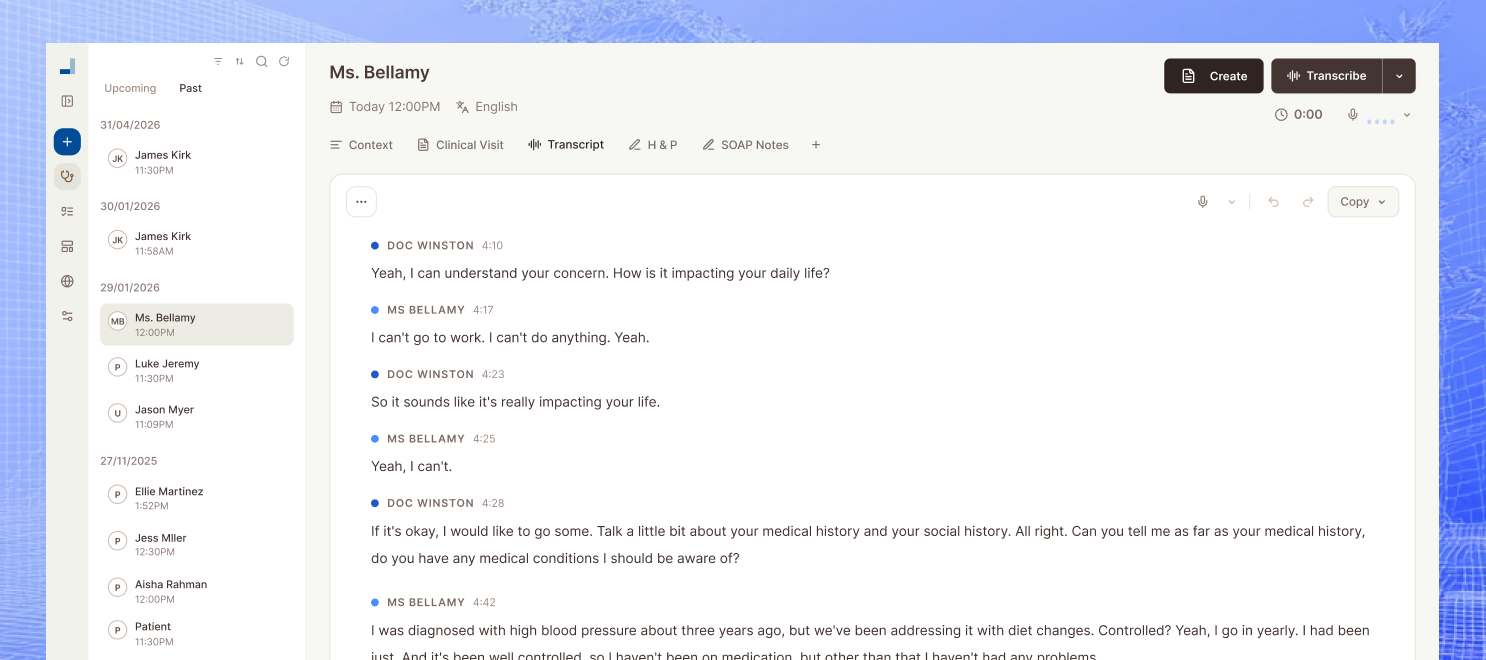
An AI medical scribe serves as a powerful assistive tool designed to capture the nuance of a patient encounter in real-time. By utilizing ambient listening technology, the scribe filters through the natural conversation between a provider and a patient, extracting relevant clinical data without the provider needing to stay tethered to a keyboard. It is a shift from manual data entry to high-level clinical oversight, allowing the doctor to focus entirely on the person sitting across from them.
While the technology is advanced, it is important to remember that it is assistive rather than autonomous. The clinician remains the final authority on the medical record, ensuring that every synthesized note reflects the clinical reality of the visit. This collaboration between human expertise and machine efficiency is the key to reclaiming hours of lost time every week.
- Reduces documentation time by automating the drafting process during the encounter.
- Decreases cognitive load by allowing clinicians to focus on patients rather than typing.
- Fosters better patient-provider relationships through consistent eye contact.
- Improves note completion rates, helping clinics stay current with billing and audits.
Note types you can generate beyond SOAP (H&P and more)
While the SOAP note is the industry standard for daily progress, university clinics often require more specialized documentation. From complex intake assessments to detailed surgical summaries, the administrative needs of a teaching hospital are diverse. Relying solely on a generic template leads to ‘note bloat’ or missing critical details that are necessary for specialty referrals and insurance justifications. Using an AI medical scribe allows for the seamless generation of various clinical formats tailored to the specific encounter.
History and Physical (H&P) notes are essential for new admissions or comprehensive annual visits, requiring a depth of detail that goes beyond a standard follow-up. Similarly, consult notes need to articulate the reasoning behind a specialist’s recommendations clearly. By choosing the right format, clinicians ensure that the documentation serves its primary purpose: providing a clear, high-quality roadmap for the patient’s care journey and ensuring a smooth handover between different departments in a university setting.
The importance of structure cannot be overstated when it comes to audit readiness and medico-legal protection. A well-organized procedure note or a concise discharge summary provides clarity that unstructured text lacks. When these documents are generated consistently, the entire clinical team benefits from a predictable information flow, which is vital for resident training and collaborative care models.
- H&P and Progress Notes: Capture comprehensive history and daily updates with ease.
- Consult and Referral Letters: Automatically draft communications for specialized care.
- Procedure Notes: Document technical details of minor or major interventions quickly.
- Discharge Summaries: Synthesize complex hospital stays into actionable transition plans.
How to implement an AI medical scribe step-by-step in a real clinic
Starting with an AI medical scribe does not require a complete overhaul of your existing workflow on day one. A successful rollout begins by selecting a single visit type, such as routine follow-ups or standard physicals, to help the clinical staff get comfortable with the ambient recording process. This limited scope allows providers to learn how the AI interprets their natural speech patterns without the pressure of a full, complex schedule.
Once the initial phase is comfortable, the next step involves setting up specialty-specific templates. In a university clinic, you might have diverse needs ranging from sports medicine to student mental health. Mapping these needs to the AI’s capabilities ensures that the output matches the required clinical language and structural requirements of your electronic health record (EHR) system.
During the encounter, the clinician simply activates the recording. Whether the visit is in-person or conducted via telehealth, the scribe listens in the background. After the patient leaves, the clinician reviews the generated draft, making any necessary edits or additions. This review process typically takes a fraction of the time required to write a note from scratch. Finally, the outputs can be repurposed into referral letters or patient instruction forms with minimal extra effort.
- Pilot phase: Start with one clinician or one specific type of patient visit.
- Template Mapping: Align AI outputs with your existing EHR and specialty needs.
- Real-time Capture: Use ambient listening during the consult to build the draft.
- Review and Finalize: Perform a quick verification of the note for clinical accuracy.
How to keep note quality high and reduce mistakes
One of the risks of automated documentation is the potential for ‘note bloat’—the inclusion of unnecessary information that makes a record difficult to read. To prevent this, clinicians should establish a lightweight review habit. This involves scanning the generated note immediately after the encounter while the details are still fresh in the mind. Checking for specific values, such as medication dosages or lab results, prevents clerical errors from entering the permanent record.
Standardization within the team is also vital. In a university clinic where multiple residents and attending physicians may view the same file, having a common standard for what constitutes a ‘high-quality note’ ensures consistency. By setting clear expectations for how the AI output should be edited, clinics can maintain a gold standard of documentation that satisfies both legal requirements and clinical utility.
- Immediate Review: Verify key clinical facts immediately after the session.
- Address Note Bloat: Delete redundant summaries to keep the record concise.
- Team Standards: Create a shared understanding of documentation quality among staff.
- Validation: Cross-check high-risk data like prescriptions and diagnostic codes.
Privacy, consent, and patient trust (plain English)
Maintaining patient trust is the foundation of any successful clinical practice. When introducing an AI medical scribe, transparency is key. Most patients are receptive to the technology when they understand it allows their doctor to listen more effectively. Clinicians should follow local and regional regulations regarding recording consent and ensure that the practice policy is clearly displayed or communicated during check-in.
A simple way to explain the process is to say: ‘I’m using a digital clinical assistant today to help me capture our notes so I can focus entirely on you instead of my computer. It transcribes our conversation into a medical summary for your chart.’ This straightforward explanation usually alleviates any concerns regarding privacy. Behind the scenes, ensuring the service uses enterprise-grade security and adheres to data retention policies is essential for protecting sensitive information.
- Transparent Communication: Use a simple script to explain the tool’s benefit.
- Regulatory Compliance: Always follow local laws regarding patient consent.
- Data Security: Ensure the platform uses encryption and follows strict privacy standards.
- Trust Building: Highlight that the tool improves eye contact and patient focus.
Rolling it out across a clinic without disruption
For a university clinic, a phased rollout is much more effective than a ‘big bang’ approach. A two-week pilot program involving a small group of tech-forward clinicians allows for the identification of any workflow bottlenecks before the tool is introduced to the larger department. During this time, it’s important to track metrics such as the reduction in after-hours charting and the time taken to close notes.
Training sessions should be brief and focused on practical application rather than technical minutiae. Alignment on templates across the department ensures that even when different providers see the same patient, the documentation remains uniform. By focusing on the tangible benefit of ‘getting time back,’ clinic leadership can ensure high adoption rates and a smooth transition to a more efficient future.
- Two-Week Pilot: Test the workflow with a small group before full adoption.
- Track Metrics: Monitor time saved and clinician satisfaction scores.
- Template Alignment: Standardize outputs across different specialties.
- Ongoing Support: Provide a forum for clinicians to share tips and best practices.
Mcoy AI is an AI medical scribe that records and transcribes patient encounters, then generates multiple clinical note types including H&P, progress notes, consult notes, follow-up notes, procedure notes, discharge summaries, referral letters, and more. With over 200+ customizable templates and an interactive AI chat to create bespoke letters, forms, and documents, it streamlines the administrative side of medicine so providers can focus on care.
Frequently Asked Questions
The following questions cover the most common inquiries regarding the implementation of AI technology in a clinical environment.
How accurate are AI medical scribes in real clinics?
AI medical scribes are remarkably accurate at capturing the clinical essence of a conversation. They use advanced natural language processing to distinguish between small talk and medical data. However, like any assistive tool, they require a final human review to ensure that specific nuances and medical judgments are perfectly reflected in the final document.
Do I still need to review every note?
Yes, the clinician is always the person of record and must review every note for accuracy. The goal of an AI medical scribe is not to replace the doctor’s judgment but to remove the manual labor of drafting. Reviewing a pre-written, structured note is significantly faster than writing one from a blank screen, saving hours of effort each day.
What note types can an AI scribe generate besides SOAP?
Modern AI scribes are highly versatile and can generate a wide range of documents. These include History and Physical (H&P) reports, consult notes, follow-up summaries, procedure notes, and discharge summaries. Many also offer the ability to draft referral letters and patient education materials based on the content of the encounter.
Will this work for telehealth and in-person consults?
Most AI scribes are designed to be environment-agnostic. They work by capturing audio, which can be done through a smartphone or tablet in an exam room, or by capturing the audio output during a virtual telehealth session. This flexibility makes them ideal for modern clinics that offer a hybrid of care delivery models.
How do I explain recording/transcription to patients?
The best approach is complete transparency. Inform the patient that you are using a tool to help you be more present during the visit. Most patients appreciate the extra attention they receive when the doctor isn’t typing. A simple script explaining that the tool helps with note-taking is usually all that is required for clinical acceptance.
How do clinics prevent note bloat?
Note bloat is prevented by using smart templates that prioritize relevant information over a verbatim transcript. By selecting the correct template for the visit type, the AI knows which data is critical and which can be omitted. Clinicians can further refine this by providing feedback to the AI or adjusting their template settings.
How long does template setup take?
Initial setup can take as little as a few minutes if using pre-built library templates. Customizing these to fit the specific needs of a university clinic might take an hour or two of adjustment. Once set, these templates work automatically for every future encounter, providing a massive return on the initial time investment.
What’s the safest way to start if I’m skeptical?
The safest way to start is with a ‘shadow’ pilot. Use the AI scribe during a few non-complex visits and compare the output to your manual notes. This allows you to verify the accuracy and see the time-saving potential firsthand without any risk to your primary workflow. You will likely find that the AI captures details you might have missed.
Conclusion
Implementing an AI medical scribe in a university clinic is a transformative step toward reducing burnout and improving clinical documentation. By shifting the burden of drafting from the clinician to an intelligent assistant, practices can ensure that notes are more comprehensive, consistent, and completed on time. Whether you are generating a complex H&P or a simple follow-up, the key is to start small, use structured templates, and maintain a consistent review process. Reclaiming your time starts with the decision to modernize your workflow. Using an AI medical scribe is the most effective way to protect your professional well-being while enhancing the quality of care provided to your students and patients.
What a serious review table should cover
| Decision area | Common mistake | Better clinic-ready approach | Metric to watch |
|---|---|---|---|
| Workflow design | Treat mastering the ai medical scribe for university clinics as a one-off documentation task | Build a repeatable process with clear ownership and review points | Time to complete documentation |
| Team adoption | Assume every clinician will naturally use the same process | Train for consistency and define exception handling early | Active user adoption |
| Quality review | Only check notes when a problem is reported | Audit a sample of notes weekly and review edge cases | Edit rate per note |
| Operational follow-through | Leave admin actions outside the documentation workflow | Use the same encounter data for referrals, letters, and follow-up tasks | Completion rate for next-step tasks |
Related reading
If you are working through mastering the ai medical scribe for university clinics, it helps to read this alongside Specialty Guides: How to Run a More Efficient Medical Practice in 2026, Specialty Guides: How to Improve Patient Encounters, and AI & Medicine: How to Use an AI Scribe for Specialist Summaries Guide. Those guides cover adjacent workflow, implementation, and evaluation questions so the decision does not sit in isolation.
FAQ
How accurate are AI medical scribes in real clinics?
AI medical scribes are highly accurate in capturing clinical data from natural conversations, but they are assistive tools meant to provide a draft. Clinicians should always review the output to ensure nuances and specific medical decisions are correctly documented. Accuracy levels have reached a point where they significantly reduce the time spent on manual entry.
Do I still need to review every note?
Yes, medical professionals are legally responsible for the documentation in a patient’s chart. While the AI does the heavy lifting of transcribing and formatting, a quick review is necessary to verify facts and clinical accuracy. This process is still up to 80% faster than writing a note from scratch.
What note types can an AI scribe generate besides SOAP?
Beyond standard SOAP notes, an AI scribe can generate H&Ps, consult notes, procedure notes, discharge summaries, and referral letters. This versatility is essential for university clinics that manage various specialties and complex patient cases. Using different templates ensures the right structure for every unique encounter.
Will this work for telehealth and in-person consults?
Yes, AI scribes are designed to work across multiple platforms, whether recording through a mobile app in an exam room or capturing audio during a remote telehealth session. The technology focuses on the audio quality and linguistic context, making it adaptable to any consultation environment.
How do I explain recording/transcription to patients?
Be direct and person-centered. Explain to the patient that the technology allows you to focus on the conversation rather than a screen. Most patients respond positively when they realize it leads to better care and more face-to-face interaction with their doctor.
How do clinics prevent note bloat?
Clinics prevent note bloat by using structured templates that tell the AI exactly which information is necessary for the record. Instead of including every word spoken, the AI summarizes the encounter based on clinical relevance. Regular template audits help keep notes concise and professional.
How long does template setup take?
Setting up standard templates usually takes less than an hour. Many platforms offer pre-configured templates for various specialties that can be used immediately. Customizing these to match a specific university clinic’s workflow is a one-time task that provides long-term time savings.
What’s the safest way to start if I’m skeptical?
The best way to start is with a pilot program on non-critical follow-up visits. This allows you to evaluate the quality of the notes and the ease of the interface without pressure. Once you see the time saved and the accuracy of the drafts, you can gradually expand its use to more complex cases.