Compare & Choose: Train Clinicians to Use AI Medical Scribes | Best Guide
Learn how to train clinicians to use an AI medical scribe effectively. Boost efficiency, reduce burnout, and master clinical note automation in your clinic.
The Hidden Burden of Clinical Documentation
For many doctors and private practitioners, the end of the patient day doesn’t mean the end of work. Instead, it signals the beginning of ‘pajama time’—hours spent hunched over a keyboard completing after-hours charting. This documentation burden is a primary driver of burnout, leading to rushed notes, clerical errors, and a persistent sense of medico-legal anxiety. When clinicians feel like data entry clerks rather than healers, the quality of care and the patient-provider relationship inevitably suffer.
This guide provides a comprehensive roadmap for training clinicians to use an AI medical scribe to reclaim their time and mental clarity. We will explore how to transition from traditional SOAP notes to more diverse clinical formats, maintain high-quality standards, and manage patient privacy concerns. Whether you are managing a small private practice or a large university clinic, this rollout plan ensures your team masters the tools necessary for modern, efficient documentation.
What a medical scribe solves in modern practice
The real cost of manual documentation is measured in more than just minutes; it is measured in cognitive load. When a clinician is distracted by a screen, they may miss subtle non-verbal cues or fail to document specific diagnostic nuances. An AI medical scribe acts as an assistive companion that captures the nuance of a conversation in real-time. It allows the provider to focus entirely on the patient, knowing that the structural heavy lifting of the clinical note is being handled in the background.
It is important to clarify that an AI scribe is an assistive tool, not a replacement for clinical judgment. The clinician remains the ultimate authority and is responsible for the accuracy of every note. By automating the objective capture of data, the AI reduces the friction of the writing process, ensuring that notes are completed immediately following an encounter rather than days later when details have faded from memory.
- Eliminates the ‘pajama time’ spent on late-night charting and administrative tasks.
- Reduces cognitive load by allowing clinicians to focus on patient interaction instead of typing.
- Improves note accuracy by capturing details in real-time during the encounter.
- Enhances patient satisfaction by removing the screen barrier between doctor and patient.
Note types you can generate beyond SOAP (H&P and more)
While the SOAP note is a staple of medical training, modern practice requires a much broader array of documentation styles. High-quality care relies on specific formats tailored to the encounter type, such as History and Physical (H&P) reports, progress notes, and complex consult notes. Using a rigid format for every patient can lead to information clutter, making it difficult for other providers to find pertinent data during handovers or audits.
Effective training should emphasize that AI tools can adapt to various clinical needs, including follow-up notes, procedure notes, and even discharge summaries. When these notes are structured correctly, they ensure continuity of care and improve the clinic’s readiness for insurance audits. Having a library of diverse note types ensures that a specialist’s referral letter is just as polished and concise as a GP’s wellness checkup notes.
- Supports a wide range of formats including H&P, consult notes, and procedure reports.
- Ensures readiness for audits and compliance through structured and consistent documentation.
- Improves referral quality and professional communication with polished letters.
- Standardizes clinical handovers, ensuring no vital patient data is lost in transition.
How to implement train clinicians to use an AI medical scribe step-by-step
The transition to AI-assisted charting should be gradual to avoid overwhelming the staff. Start by selecting one specific visit type, such as routine follow-ups or wellness exams, to serve as the testing ground. This allows clinicians to get comfortable with the interface without the pressure of a high-acuity case. Once the basic workflow is understood, the clinic can begin setting up specific templates categorized by specialty, ensuring the AI ‘listens’ for the most relevant data points.
During the encounter, the clinician simply activates the tool for an in-person or telehealth visit. The focus should remain on the patient, speaking naturally as they normally would. After the visit, the clinician performs a quick review and edit of the generated draft. This step is crucial for quality control. Finally, the outputs can be easily recycled into other necessary documents, such as patient summaries or specialist referral forms, maximizing the utility of a single recording.
- Begin with a pilot program focusing on one simple visit type to build confidence.
- Organize and select templates based on the specific needs of each medical specialty.
- Capture encounters naturally in both telehealth and in-person environments.
- Establish a quick ‘Review and Edit’ habit to ensure final note precision and safety.
How to keep note quality high and reduce mistakes
Precision is the cornerstone of clinical documentation. Common failure points in manual or poorly managed AI notes include missing medications, incorrect dosage values, or ‘note bloat’—the inclusion of irrelevant information that obscures the clinical narrative. To combat this, clinicians should be trained to use specific verbal cues during the exam, such as clearly stating a physical exam finding or a specific medication change, which helps the AI categorize the information correctly.
Developing a lightweight review habit is essential. Every team member should follow a standard checklist: verify the patient’s problem list, confirm medications, and ensure the plan of care reflects the conversation. By establishing these team standards early on, the clinic ensures that the speed of AI documentation never comes at the expense of patient safety or data integrity.
- Use verbal clarity during exams to help the AI accurately capture specific clinical data.
- Implement a standard five-point check for all AI-generated notes before signing.
- Train staff to identify and trim ‘note bloat’ to keep records concise and readable.
- Standardize templates across the clinic to maintain data consistency for all providers.
Privacy, consent, and patient trust (plain English)
Patient privacy is non-negotiable, and transparency is the best way to maintain trust. While consent requirements vary by region, honesty is a universal standard. Clinicians should be trained to follow local laws and institutional policies regarding recording and data retention. Most patients are receptive to the technology when they understand it helps their doctor focus more on them and less on a computer screen.
A simple, patient-friendly explanation might sound like this: ‘To ensure I capture every detail of our talk today, I’m using an AI assistant to help me with my notes. It lets me focus on you rather than typing. Is that okay with you?’ Most patients appreciate the transparency. From a security standpoint, the practice should ensure that any tool used adheres to high-level encryption and data protection protocols.
- Always secure verbal or written consent based on your specific regional legal requirements.
- Explain the technology to patients as a way to enhance their care and your focus.
- Maintain clear internal policies regarding the storage and deletion of audio data.
- Regularly update your privacy notice to reflect the use of AI assistive technologies.
Rolling it out across a clinic without disruption
A successful rollout requires a structured timeline, typically beginning with a two-week pilot involving a small group of ‘super-users.’ These early adopters can troubleshoot common issues and provide peer-to-peer training for the rest of the staff. During this phase, it is vital to track metrics such as time saved per note, the reduction in after-hours charting, and the overall completeness of the clinical records.
Training sessions should be brief and practical, focusing on template alignment rather than technical jargon. Ensure that every clinician knows how to switch between different note types and how to use AI-assisted tools for non-clinical tasks like drafting referral letters. By the end of the pilot, the efficiency gains should be visible enough to encourage total team buy-in, making the AI scribe an indispensable part of the daily workflow.
- Launch with a 14-day pilot program to gather feedback and refine documentation workflows.
- Track time-savings and note completion rates to prove the return on investment.
- Ensure all templates are aligned with the specific workflows of different clinic departments.
- Provide ongoing peer support to help skeptical staff members transition comfortably.
Introducing Mcoy AI
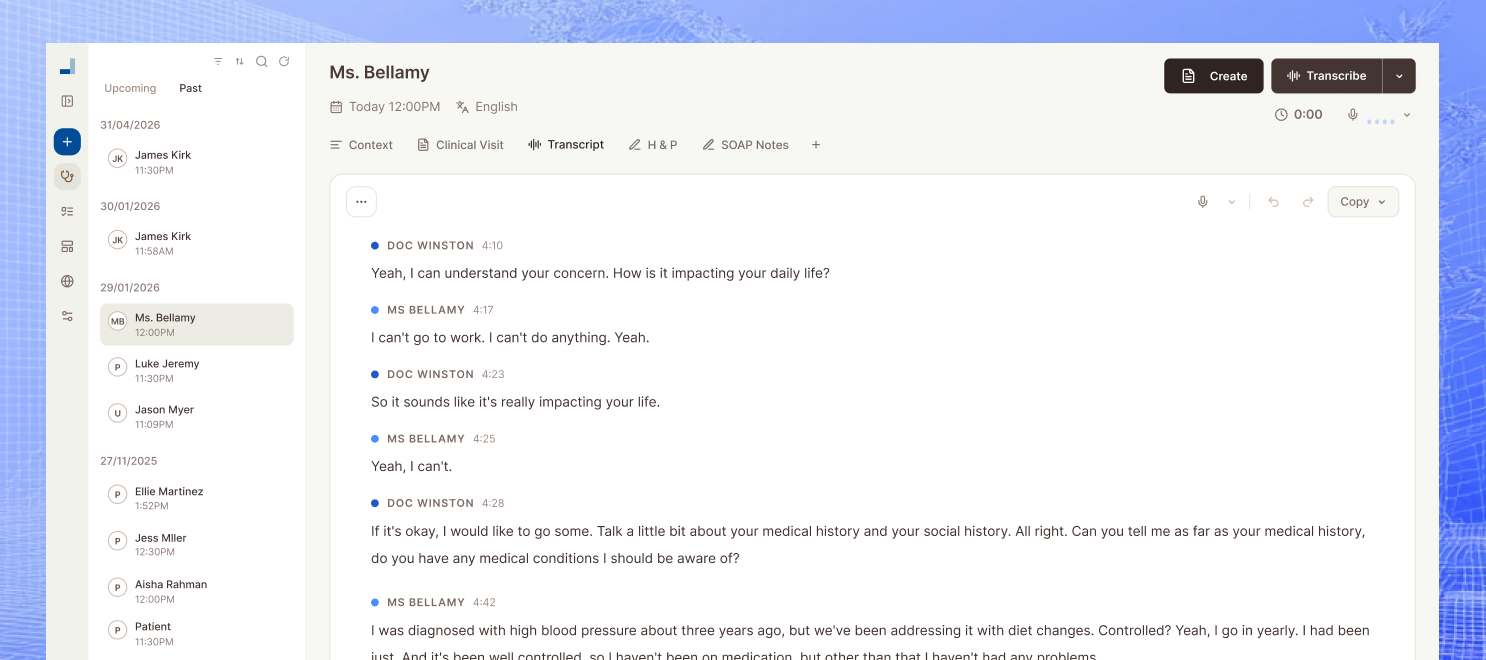
Mcoy AI is an AI medical scribe that records and transcribes patient encounters, then generates multiple clinical note types (H&P, progress notes, consult notes, follow-up notes, procedure notes, discharge summaries, referral letters, and more). It offers 200+ customizable templates and an AI chat feature to help clinicians create letters, forms, and other essential documents effortlessly. By streamlining the administrative side of medicine, it allows providers to focus on what matters most: patient care.
Frequently Asked Questions
Transitioning to new technology often brings up valid questions from staff and management. Below are the most common inquiries regarding the integration of AI scribes into daily practice.
How accurate are AI medical scribes in real clinics?
AI medical scribes are remarkably accurate at capturing the dialogue between a provider and a patient. They are designed to filter out ‘small talk’ and concentrate on the clinical facts, medications, and assessments discussed. However, while the technology is highly advanced, it is an assistive tool that requires clinician oversight to ensure that nuances or specific medical jargon are captured exactly as intended.
Do I still need to review every note?
Yes, reviewing every note is a fundamental requirement of clinical practice. The AI provides a robust and detailed draft, which saves significant time, but the final responsibility for the medical record lies with the clinician. A quick 60-second review is usually enough to verify the plan and the assessment before finalizing the document in the EHR.
What note types can an AI scribe generate besides SOAP?
Modern AI scribes go far beyond the standard SOAP format. They can generate comprehensive History and Physical (H&P) reports, progress notes for ongoing care, detailed procedure notes, and even discharge summaries. Additionally, they can be used to draft referral letters and patient education summaries based on the encounter data.
Will this work for telehealth and in-person consults?
Yes, AI scribes are designed to be versatile and work effectively in both face-to-face and virtual settings. In telehealth, the AI can capture the audio directly from the computer, while in person, a smartphone or tablet can serve as the recording device. The quality of the transcription remains high as long as the audio is clear.
How do I explain recording/transcription to patients?
The best approach is absolute transparency. Tell the patient that you are using a tool to help you be more present during the visit so you don’t have to type. Most patients are very supportive when they realize the technology allows for better eye contact and a more focused conversation with their doctor.
How do clinics prevent note bloat?
Note bloat is prevented by using specialized templates that prompt the AI to extract only the most relevant clinical information. Clinicians can also control the output by focusing the conversation on pertinent findings. Training staff to use ‘concise’ mode settings within the AI can further help keep the documentation focused and readable.
How long does template setup take?
Setting up basic templates usually takes just a few minutes, as many AI scribes come with pre-built clinical libraries. Customizing those templates to fit the specific needs of a specialty clinic might take an hour or two of initial configuration. Once set up, these templates automate the documentation process for all future encounters.
What’s the safest way to start if I’m skeptical?
The safest way to start is with a ‘shadow’ pilot. Use the AI scribe during a few non-complex visits while still taking your usual brief notes. Compare the AI-generated note to your own to see the level of detail and accuracy. This low-risk approach allows you to build trust in the tool at your own pace.
Conclusion
Implementing an AI medical scribe is one of the most effective ways to combat clinician burnout and improve practice efficiency. By following a structured rollout plan—starting small, using diverse templates, and maintaining a strict review process—clinics can transform their documentation from a chore into a seamless background process. When you train clinicians to use an AI medical scribe, you aren’t just giving them a new tool; you are giving them their time back. Start your pilot today and experience the shift toward a more patient-centered practice.
What a serious review table should cover
| Decision area | Common mistake | Better clinic-ready approach | Metric to watch |
|---|---|---|---|
| Workflow design | Treat train clinicians to use ai medical scribes | best guide as a one-off documentation task | Build a repeatable process with clear ownership and review points |
| Team adoption | Assume every clinician will naturally use the same process | Train for consistency and define exception handling early | Active user adoption |
| Quality review | Only check notes when a problem is reported | Audit a sample of notes weekly and review edge cases | Edit rate per note |
| Operational follow-through | Leave admin actions outside the documentation workflow | Use the same encounter data for referrals, letters, and follow-up tasks | Completion rate for next-step tasks |
Related reading
If you are working through train clinicians to use ai medical scribes | best guide, it helps to read this alongside Compare & Choose: Best Tools Doctors Use to Save Time on Clinical Notes, Compare & Choose: Medical Scribing Services: Are They Worth It?, and Specialty Guides: Best Way to Use AI Scribe for Psychology Session Notes. Those guides cover adjacent workflow, implementation, and evaluation questions so the decision does not sit in isolation.
FAQ
How accurate are AI medical scribes in real clinics?
AI medical scribes are highly accurate in capturing clinical dialogue, significantly reducing manual typing. However, they are assistive tools, meaning the clinician must still perform a final review to ensure all nuances and medical facts are perfectly recorded.
Do I still need to review every note?
Yes, clinicians are legally and professionally responsible for their medical records. While the AI generates a near-complete draft, a brief review is essential to verify accuracy before the note is signed and integrated into the patient’s history.
What note types can an AI scribe generate besides SOAP?
AI scribes are capable of generating a wide variety of documents, including H&P reports, consult notes, procedure notes, and discharge summaries. They can even assist in drafting referral letters and patient instructions based on the encounter.
Will this work for telehealth and in-person consults?
Absolutely. These tools are designed to work across various clinical settings, capturing audio from mobile devices for in-person visits or directly from computer audio for telehealth sessions, ensuring consistent documentation quality regardless of the platform.
How do I explain recording/transcription to patients?
Use a simple, transparent explanation focusing on patient care. Tell them that the tool allows you to focus 100% on them rather than a screen, ensuring a more accurate and attentive visit. Most patients respond very positively to this transparency.
How do clinics prevent note bloat?
Clinics can prevent note bloat by utilizing customizable templates that prioritize relevant clinical data. Training clinicians to speak clearly about assessments and plans helps the AI filter out irrelevant conversation, keeping the final record concise.
How long does template setup take?
Initial setup is often instantaneous with pre-configured templates. Fine-tuning a template to a specific specialty or personal preference usually takes less than five minutes, providing long-term time savings for every subsequent patient visit.
What’s the safest way to start if I’m skeptical?
Start with a small pilot of one or two patients per day on simple follow-up visits. This allows you to witness the accuracy firsthand and adjust your workflow without the pressure of a full patient load, building confidence gradually.