Compare & Choose: How to Test AI Scribe Tools Side-by-Side: 2024 Guide
Learn how to test AI scribe tools side-by-side. Our guide covers workflow integration, note accuracy, and step-by-step pilot planning for busy clinics.
The Hidden Cost of Documentation Burnout
For many clinicians, the workday doesn’t end when the last patient leaves. Instead, it transitions into hours of ‘pajama time’ spent staring at an EHR screen, catching up on notes that were rushed during the day. This after-hours charting is a primary driver of burnout, leading to mental fatigue and a higher risk of medico-legal errors. When clinicians are rushed, the nuance of a patient’s story can be lost, replaced by templated phrases that don’t truly capture the encounter.
This guide provides a comprehensive framework on how to test AI scribe tools side-by-side to find the best fit for your workflow. We will explore moving beyond basic SOAP notes, ensuring clinical quality control, and maintaining patient privacy. Whether you are a solo GP, a specialist in a high-volume practice, or managing a university clinic, a structured evaluation will help you reclaim your time without sacrificing note integrity.
What a medical scribe solves in modern practice
The real cost of manual documentation is measured in cognitive load. Every minute spent thinking about coding requirements is a minute taken away from active listening and diagnostic reasoning. While traditional human scribes are an option, they are often expensive and difficult to scale. AI scribes serve as an assistive layer, capturing the natural dialogue of a visit and structuring it into a readable format instantly. It is important to remember that these tools are assistive; the clinician remains the ultimate authority and responsible party for the final signature.
By automating the heavy lifting of transcription and formatting, these tools allow doctors to return to ‘eye-contact medicine.’ This shift reduces the pressure of delayed notes, which often lead to missed details or billing inaccuracies. When you learn how to test AI scribe tools side-by-side, you are essentially evaluating which platform best understands your unique clinical voice and specialty-specific requirements.
- AI scribes significantly reduce the cognitive burden of multitasking during patient encounters.
- They serve as a draft-generation tool, leaving the final clinical judgment to the provider.
- Automation helps prevent the ‘documentation backlog’ that leads to weekend work.
- Modern tools help capture specific patient nuances that are often lost in standard templates.
Note types you can generate beyond SOAP (H&P and more)
Many practitioners assume AI is only capable of producing standard SOAP notes, but the utility goes much further. A robust clinical documentation strategy requires various formats depending on the context of the visit. For example, a new patient intake requires a detailed History and Physical (H&P), while a surgical case needs a concise Procedure Note. If you are a specialist, your Consult Notes need to be detailed enough for the referring physician to act on immediately.
Structure matters for more than just aesthetics; it ensures continuity of care and audit readiness. When a patient is moved from a clinic to a hospital, or from one specialist to another, the quality of the handover depends on the clarity of the Discharge Summary or Referral Letter. Evaluating how an AI handles these diverse formats is a critical part of the testing process. High-quality outputs ensure that the medical record is a useful clinical tool rather than just a billing requirement.
- Identify if the tool supports H&P, Consult Notes, and Follow-up documentation.
- Evaluate the quality of specialized outputs like Procedure Notes and Discharge Summaries.
- Ensure the structure meets legal and billing requirements for audit readiness.
- Check for the ability to generate professional Referral Letters from the encounter data.
How to implement how to test AI scribe tools side-by-side step-by-step
To begin a side-by-side comparison, start by selecting one specific visit type to use as your benchmark. Using a complex initial consult for one tool and a simple refill for another will skew your perspective. By focusing on a consistent visit type, you can accurately judge how each AI interprets identical clinical data. This helps you notice differences in nuance, medical logic, and formatting efficiency.
Next, you should set up specialty-specific templates within each platform. Most advanced tools allow you to customize how the AI prioritizes certain information, such as physical exam findings or social history. Once the templates are ready, begin capturing encounters across a range of environments, including both in-person exams and telehealth sessions. This tests the AI’s ability to filter out background noise or handle the audio quality of a video call.
After the encounter, the speed of review becomes the primary metric. You should aim to edit and finalize the note within sixty seconds. If a tool requires extensive manual rewriting, it isn’t saving you enough time. Finally, test the versatility of the output. Try using the generated data to create ancillary documents like school excuses or patient instructions. This multi-use approach ensures you are getting the most value out of a single recording sessions.
- Choose a consistent encounter type to facilitate a fair comparison between tools.
- Configure templates to match your specialty’s specific documentation style.
- Test the audio capture across both physical exam rooms and digital telehealth platforms.
- Measure the time spent on post-capture edits to determine true efficiency.
How to keep note quality high and reduce mistakes
Common failure points in automated documentation include missing medications, incorrect lab values, or ‘note bloat’—the inclusion of irrelevant dialogue. To prevent these, clinicians should establish a lightweight review habit. Instead of reading every word, scan for critical ‘anchor points’ like dosages, lateralities (left vs. right), and specific dates. A quick verification of the problem list ensures the AI hasn’t hallucinated previous conditions into the current assessment.
Setting team standards is also vital, especially in larger clinics or university settings. Consistency in how physical exams or ROS sections are documented makes it easier for other clinicians to read the charts. High-quality documentation isn’t just about length; it’s about accuracy. By training yourself to call out specific findings clearly during the exam, you provide the AI with better data to work with, resulting in a superior final note.
- Scan for ‘anchor points’ like dosages and dates to ensure technical accuracy.
- Verify that current medication changes are captured exactly as discussed.
- Establish clinic-wide standards for physical exam and ROS formatting.
- Speak key findings clearly during the visit to improve AI transcription accuracy.
Privacy, consent, and patient trust
Patient privacy is non-negotiable, and consent protocols vary significantly by jurisdiction. It is essential to follow your local healthcare regulations and institutional policies before you begin testing. Most patients are accepting of AI documentation once they understand it allows their doctor to focus on them rather than a screen. Transparency is the key to maintaining the therapeutic relationship while introducing new technology.
A simple script can ease any tension. You might say: ‘I’m using a secure clinical assistant today to help me capture our conversation so I can focus entirely on you instead of typing. It transcribes our talk into your medical note and then deletes the recording for security. Is that okay with you?’ Most patients appreciate the extra attention and are happy to provide verbal consent. From a security standpoint, ensure the tools you test adhere to industry-standard encryption and data retention principles.
- Always secure verbal or written consent based on your local regulatory requirements.
- Explain the benefits of AI to the patient, focusing on improved focus and care quality.
- Verify the security credentials and data de-identification processes of the tool.
- Avoid using tools that retain audio recordings longer than necessary for processing.
Rolling it out across a clinic without disruption
A successful rollout starts with a two-week pilot involving one or two ‘champion’ clinicians. During this phase, you shouldn’t worry about total clinic integration; focus instead on the user experience and time-savings metrics. Track how many minutes are saved per day and whether the clinicians feel less stressed after their shifts. If the pilot is successful, you can then align the AI templates with your existing EHR workflows.
Training should be hands-on but brief. Most modern AI tools are intuitive enough that a thirty-minute orientation is sufficient for tech-savvy staff. Aligning templates across the team ensures that when a patient sees multiple providers, the documentation remains consistent. By rolling out the technology in phases, you can troubleshoot any technical hurdles—like Wi-Fi dead zones or microphone issues—before they impact the entire practice.
- Start with a 14-day pilot using a small group of doctors to gather initial feedback.
- Monitor metrics like time-to-completion for notes and reduction in after-hours work.
- Hold a brief training session to align everyone on template usage and core features.
- Address infrastructure needs like microphone quality and internet stability early on.
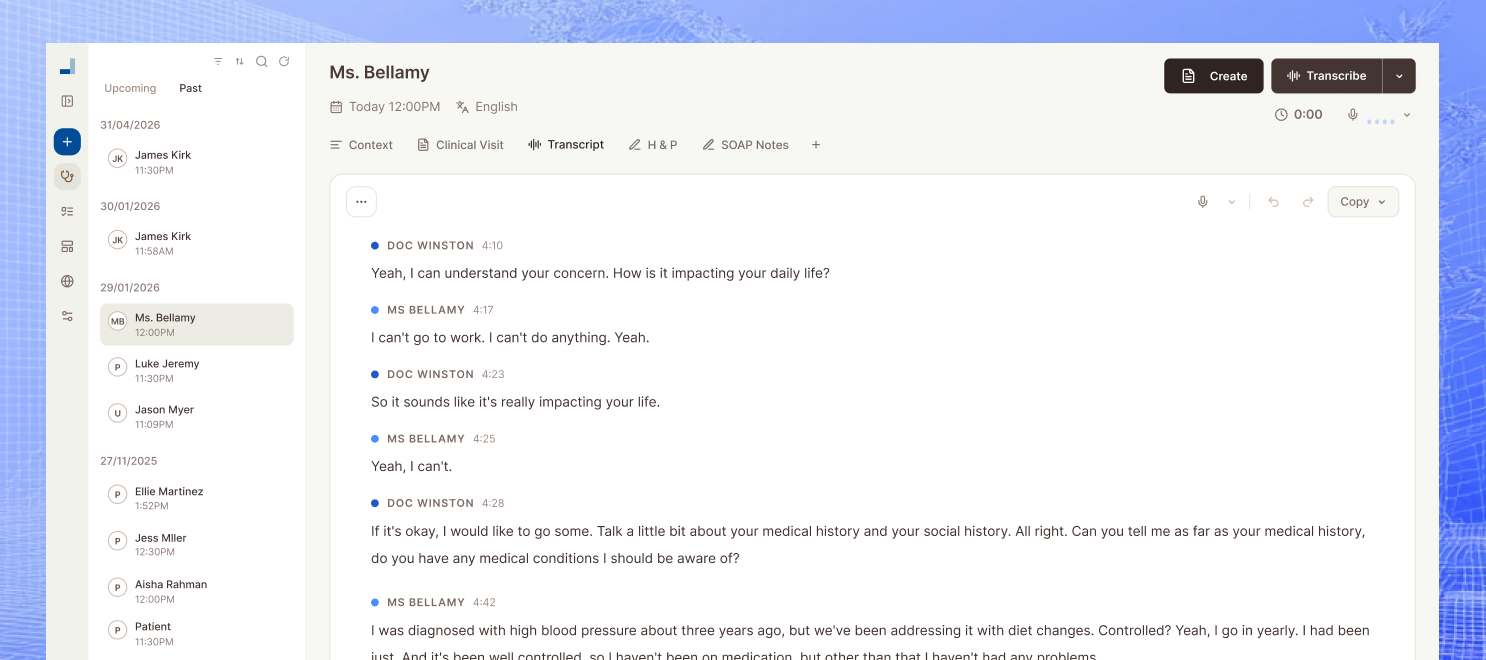
Mcoy AI is an AI medical scribe that records and transcribes patient encounters, then generates multiple clinical note types (H&P, progress notes, consult notes, follow-up notes, procedure notes, discharge summaries, referral letters, and more). With over 200+ customizable templates and an interactive AI chat, clinicians can quickly create custom letters, forms, and complex medical documents. It is designed to fit seamlessly into the busy clinician’s workflow, providing a helpful assistant that reduces administrative labor while improving the quality of patient records.
FAQ
Testing new technology is a big step for any practice. Here are some of the most common questions we hear from clinicians evaluating these tools.
How accurate are AI medical scribes in real clinics?
In most clinical settings, AI scribes are highly accurate at capturing the core dialogue and clinical intent. They excel at clinical reasoning and summarization but may occasionally require minor corrections on specific drug names or niche terminology. Most users find that they capture significantly more detail than manual note-taking would allow. Regular updates to the underlying models continue to improve accuracy across different accents and specialties.
Do I still need to review every note?
Yes, as the licensed provider, you are legally responsible for the accuracy of the medical record. While the AI does the heavy lifting, a brief review is essential to ensure that the logic follows your clinical intent and that no critical values were misheard. Most clinicians find that a 30 to 60-second review is sufficient to confirm accuracy before signing off. This tiny time investment is much smaller than the time required to write a note from scratch.
What note types can an AI scribe generate besides SOAP?
Beyond the standard Subjective, Objective, Assessment, and Plan format, advanced AI scribes can generate a wide array of documents. This includes History and Physicals, detailed Consult Notes, Procedure Notes for surgical interventions, and comprehensive Discharge Summaries. Many also offer the ability to draft Referral Letters to other specialists based on the content of the encounter. This variety ensures that the tool is useful across all phases of patient care.
Will this work for telehealth and in-person consults?
Yes, most AI scribe tools are designed to work across multiple platforms. For in-person visits, they typically use a smartphone or tablet microphone to capture the conversation. For telehealth, they can integrate with your computer’s audio or the video conferencing software itself. The ability to switch between these modes is a key feature to look for during your side-by-side testing process.
How do I explain recording/transcription to patients?
The best approach is transparency and focusing on the benefits to the patient. Explain that the tool allows you to look at them instead of a computer screen and ensures that their medical record is as accurate as possible. Most patients are very comfortable with the technology when they realize it leads to a more personalized and focused visit. Always ensure you are following your clinic’s specific consent policies.
How do clinics prevent note bloat?
To prevent notes from becoming too long or filled with irrelevant information, clinicians should use concise templates. You can instruct the AI to only ignore small talk and focus strictly on clinical findings. Reviewing your templates regularly and adjusting the ‘verbosity’ settings of your AI tool can help keep the notes succinct and professional. Choosing a tool with high-quality summarization capabilities is key.
How long does template setup take?
Initial template setup usually takes between 15 and 30 minutes. Most tools come with pre-built libraries for common specialties like Family Medicine, Pediatrics, or Orthopedics. You can then tweak these to match your personal preferences over the first few days of use. Once your templates are dialed in, they apply automatically to future visits, requiring no further manual setup.
What’s the safest way to start if I’m skeptical?
The safest way to start is with a ‘shadow’ pilot. Use the AI tool alongside your traditional documentation method for 5 or 10 patients without relying on it for your official record. This allows you to compare the AI’s output to your own notes in a low-stakes environment. Once you see the accuracy and time-savings firsthand, you can comfortably transition to using the AI as your primary drafting tool.
Conclusion
Mastering how to test AI scribe tools side-by-side is the most effective way to protect your practice from the burden of clinical documentation. By systematically evaluating how these tools handle various note types—from H&P to complex referral letters—you can ensure your chosen solution truly integrates with your workflow. The goal is not just to save time, but to improve the quality of your care and the balance of your professional life. Start your pilot today and experience the difference that modern technology can make in your daily routine.
What a serious review table should cover
| Decision area | Common mistake | Better clinic-ready approach | Metric to watch |
|---|---|---|---|
| Workflow design | Treat how to test ai scribe tools side-by-side: 2024 guide as a one-off documentation task | Build a repeatable process with clear ownership and review points | Time to complete documentation |
| Team adoption | Assume every clinician will naturally use the same process | Train for consistency and define exception handling early | Active user adoption |
| Quality review | Only check notes when a problem is reported | Audit a sample of notes weekly and review edge cases | Edit rate per note |
| Operational follow-through | Leave admin actions outside the documentation workflow | Use the same encounter data for referrals, letters, and follow-up tasks | Completion rate for next-step tasks |
Related reading
If you are working through how to test ai scribe tools side-by-side: 2024 guide, it helps to read this alongside Compare & Choose: Best Tools Doctors Use to Save Time on Clinical Notes, Compare & Choose: Medical Scribing Services: Are They Worth It?, and Physician Wellbeing: Build a No After-Hours Notes Clinic System | Full Guide. Those guides cover adjacent workflow, implementation, and evaluation questions so the decision does not sit in isolation.
FAQ
How accurate are AI medical scribes?
They are highly accurate for clinical summaries but require a final provider review for dosages and specifics. Most users report a 90%+ accuracy rate for encounter captures.
Do patients mind being recorded?
Most patients are comfortable with it when explained that it allows the doctor to focus on care rather than typing. Always follow local consent laws.
What if the AI makes a mistake?
The clinician is the final authority. You can easily edit the generated draft before saving it to your EHR. AI is an assistant, not a replacement for clinical judgment.