Physician Wellbeing: Build a No After-Hours Notes Clinic System | Full Guide
Eliminate after-hours charting with a structured clinic system. Learn to master efficient clinical documentation and regain your personal time today.
The Hidden Burden of Clinical Documentation
For many doctors and private practitioners, the workday doesn’t end when the last patient leaves. The weight of unfinished charts, often referred to as ‘pajama time,’ has become a leading cause of physician burnout. This after-hours charting creates a cycle of exhaustion that leads to rushed notes during the day and a loss of personal life in the evening. Whether you are running a busy university clinic or a solo private practice, the anxiety of a growing pile of incomplete records is a constant mental drain.
This guide provides a comprehensive roadmap for building a clinical documentation system that functions in real-time. We will explore how to optimize your workflow, utilize advanced note formats beyond the standard SOAP note, and implement quality control measures that ensure medico-legal safety without sacrificial hours. By the end of this guide, GPs, specialists, and telehealth providers will have a clear blueprint to reclaim their evenings through a structured approach to clinical documentation.
What a medical scribe solves in modern practice
The true cost of traditional documentation is not just time; it is cognitive load. When a clinician is forced to juggle active listening, diagnostic reasoning, and manual typing, the quality of both the patient interaction and the medical record suffers. Delayed notes often lack the nuanced details of the encounter, leading to potential gaps in the patient history and increased medico-legal risk. Modern practices are moving away from manual entry to reduce the administrative friction that plagues the healthcare industry.
An AI medical scribe serves as a digital assistant that bridges the gap between the patient conversation and the electronic health record. It is important to remember that these tools are assistive; while they handle the heavy lifting of transcription and formatting, the clinician remains the final authority and responsible party for the accuracy of the note. By offloading the mechanical task of writing, providers can focus entirely on the person sitting across from them.
- Significantly reduces cognitive fatigue by eliminating simultaneous typing and talking.
- Improves note accuracy by capturing details in real-time rather than from memory later.
- Decreases the ‘time to sign,’ allowing notes to be finalized immediately after the visit.
- Enhances patient satisfaction as clinicians can maintain eye contact and engagement.
Note types you can generate beyond SOAP (H&P and more)
While the SOAP (Subjective, Objective, Assessment, Plan) format is a staple in outpatient care, modern medicine often requires more specialized structures. Consistent use of diverse clinical documentation types ensures better continuity of care and smoother handovers between multidisciplinary teams. For instance, a comprehensive History and Physical (H&P) is essential for new admissions, while concise progress notes serve daily inpatient needs.
Using specialized templates for consult notes, follow-up visits, and procedure notes ensures that the most relevant data is highlighted for each specific scenario. Discharge summaries and referral letters are often the most time-consuming to draft from scratch, yet they are the most critical for external communication. Having a system that can pivot between these formats instantly ensures audit readiness and professional consistency across the entire clinic.
- H&P and Consult Notes for comprehensive initial evaluations and specialty advice.
- Procedure Notes and Discharge Summaries for accurate transition and intervention records.
- Referral Letters that summarize complex histories into actionable information for colleagues.
- Customized follow-up templates that track specific chronic disease metrics over time.
How to implement clinical documentation step-by-step in a real clinic
Transitioning to a high-efficiency system starts with a narrow focus. Choose one specific visit type, such as routine follow-ups or wellness exams, to pilot the new workflow. This allows the team to troubleshoot the recording process without the pressure of a full schedule of complex cases. Ensure that your physical room setup or your telehealth software is optimized for clear audio capture to minimize errors in the initial transcript.
Set up your templates by specialty before you begin the day. A pediatrician’s needs differ greatly from an orthopedic surgeon’s; having pre-configured fields for developmental milestones or range-of-motion tests saves significant time during the review phase. During the encounter, speak your clinical reasoning aloud—this not only helps the scribe capture your thought process but also involves the patient in their own care plan.
Once the encounter ends, immediately review the generated output. This review should take no more than a minute or two while the conversation is fresh in your mind. Correct any minor errors and push the documentation to your EHR. Finally, leverage the captured data to generate secondary documents like work excuses or referral letters immediately, rather than batching these tasks for the end of the day. This ‘one-touch’ philosophy is the secret to a ‘no after-hours notes’ clinic.
- Start with one visit type to build confidence and refine the digital workflow.
- Pre-configure specialty-specific templates to ensure high-quality, relevant data capture.
- Adopt a ‘one-touch’ review habit to finalize notes immediately following the encounter.
- Reuse clinical data instantly to generate letters and forms, reducing redundant entry.
How to keep note quality high and reduce mistakes
A fast note is only valuable if it is accurate. Common failure points in clinic documentation include missing or incorrect medication dosages, inaccurate lab values, and ‘note bloat’—the inclusion of irrelevant template text that obscures the actual clinical narrative. To combat this, clinicians should adopt a lightweight review habit where they scan the assessment and plan for specific ‘hard’ data points before signing off.
Establishing team standards for documentation also helps maintain quality across a multi-provider clinic. Discussing common errors during monthly staff meetings ensures that everyone is calibrated on what constitutes a ‘good’ note. By focusing on brevity and high-yield information, you can reduce the length of your notes while actually increasing their clinical utility for other providers.
- Focus the final review on ‘hard’ data like dosages, dates, and laterality.
- Avoid note bloat by stripping out redundant template text that doesn’t add value.
- Establish clinic-wide documentation standards to ensure consistency across providers.
Privacy, consent, and patient trust
Privacy is the foundation of the patient-provider relationship. While AI tools are becoming common, patients deserve transparency about how their data is handled. Consent requirements vary significantly by region, so it is essential to follow your local healthcare regulations and hospital policies. Most patients are supportive of documentation tools when they realize it leads to better face-to-face engagement with their doctor.
A simple script can ease any patient anxiety: ‘To ensure I give you my full attention today, I use a digital assistant to help me with my notes. It records our conversation and turns it into a medical summary so I don’t have to type while we talk. Is that alright with you?’ This approach frames the tool as a benefit to the patient experience. Beyond verbal consent, ensure your technical setup adheres to security principles like data encryption and appropriate retention policies.
- Always follow local jurisdiction and institutional policies regarding patient consent.
- Use a patient-centric script to explain how the tool improves their care experience.
- Ensure the technology provider meets high standards for data encryption and security.
Rolling it out across a clinic without disruption
A successful rollout requires a phased approach rather than a ‘big bang’ implementation. A 2-week pilot with one or two ‘technology champions’ allows the clinic to identify potential bottlenecks in the Wi-Fi or EHR integration. Tracking metrics such as ‘minutes spent charting after 5 PM’ or ‘time to note completion’ provides the data needed to justify the shift to the rest of the staff.
Training should focus not just on the software, but on the workflow changes required to thrive. This includes teaching staff how to prep the patient for the recording and how to align templates across the practice. When everyone understands how specific clinical documentation habits contribute to leaving work on time, adoption becomes much smoother across the board.
- Execute a 2-week pilot with a small group to troubleshoot workflow bottlenecks.
- Measure time saved and note completion rates to demonstrate the value to the team.
- Standardize templates across the clinic to streamline peer reviews and handovers.
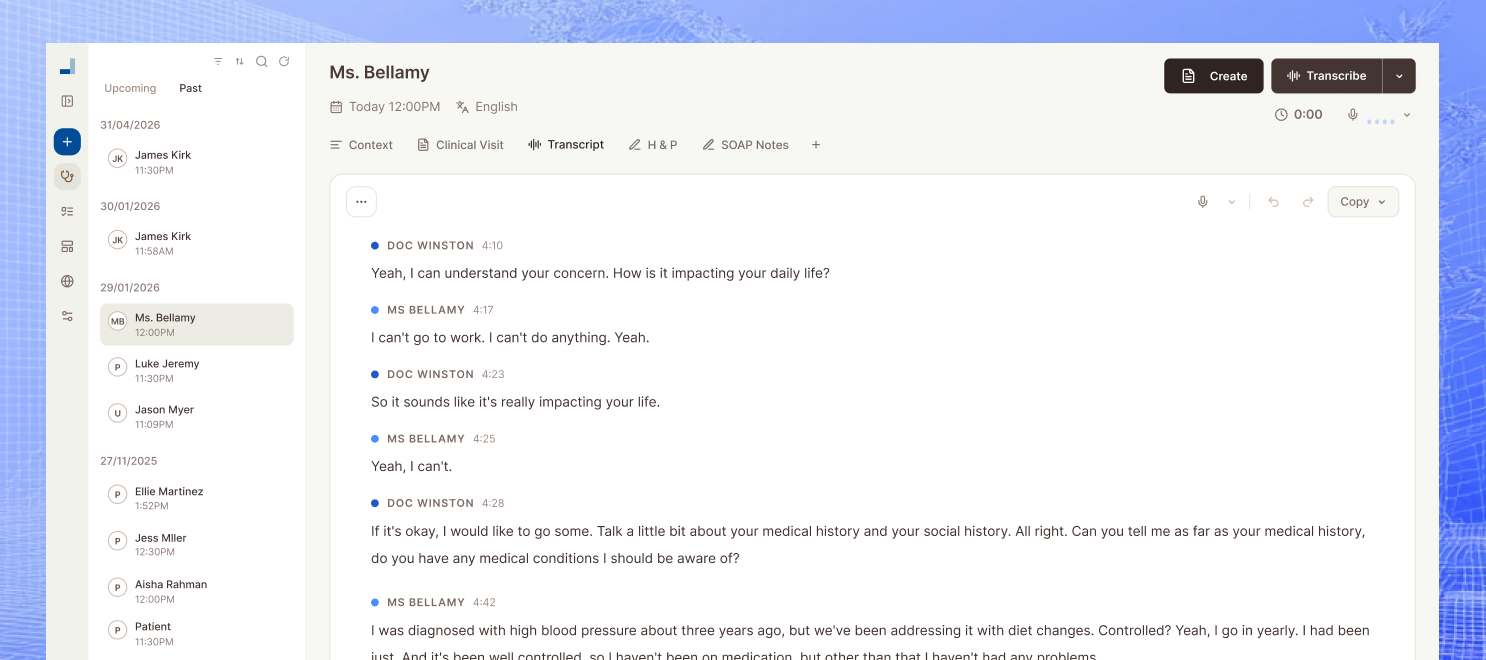
Mcoy AI is an AI medical scribe that records and transcribes patient encounters, then generates multiple clinical note types including H&P, progress notes, consult notes, follow-up notes, procedure notes, discharge summaries, referral letters, and more. With over 200 customizable templates and an AI chat feature to create specific letters, forms, and documents, it allows clinicians to focus on patient interaction rather than the keyboard.
The Path Forward for Your Clinic
Building a clinic system that eliminates after-hours notes is not about working faster; it’s about working smarter. By integrating assistive technology and refining your clinical documentation process, you can ensure that your records are complete, compliant, and—most importantly—finished by the time you head home. The transition requires a commitment to a new workflow, but the reward is a sustainable medical career and a better quality of life. Start your pilot today and see how a structured approach to documentation can transform your practice.
What a serious review table should cover
| Decision area | Common mistake | Better clinic-ready approach | Metric to watch |
|---|---|---|---|
| Workflow design | Treat build a no after-hours notes clinic system | full guide as a one-off documentation task | Build a repeatable process with clear ownership and review points |
| Team adoption | Assume every clinician will naturally use the same process | Train for consistency and define exception handling early | Active user adoption |
| Quality review | Only check notes when a problem is reported | Audit a sample of notes weekly and review edge cases | Edit rate per note |
| Operational follow-through | Leave admin actions outside the documentation workflow | Use the same encounter data for referrals, letters, and follow-up tasks | Completion rate for next-step tasks |
Related reading
If you are working through build a no after-hours notes clinic system | full guide, it helps to read this alongside Physician Wellbeing: Why Documentation Is the Biggest Time Drain for Doctors, Physician Wellbeing: How Doctors Can Reduce Paperwork Without Compromising Care, and Specialty Guides: Build a Clinic-Wide Documentation System | Mcoy AI Guide. Those guides cover adjacent workflow, implementation, and evaluation questions so the decision does not sit in isolation.
FAQ
How accurate are AI medical scribes in real clinics?
AI medical scribes have reached impressive levels of accuracy, particularly in understanding complex medical terminology and diverse accents. However, they are most effective when the clinician speaks clearly and ‘thinks out loud’ during the exam. While the transcription is usually 95% or higher in accuracy, the output should always be treated as a draft that requires final clinical validation.
Do I still need to review every note?
Yes, the clinician is legally and ethically responsible for every note that bears their signature. While the AI does the heavy lifting of drafting the content, a quick review is necessary to ensure that dosages, specific instructions, and diagnostic conclusions are 100% correct. This review usually takes about 60-90 seconds if done immediately after the encounter.
What note types can an AI scribe generate besides SOAP?
Beyond the standard SOAP note, advanced scribes can generate History and Physicals (H&P), detailed procedure notes, consult letters, and discharge summaries. They can also be used to draft referral letters and patient education summaries. Because the AI understands the context of the conversation, it can reformat the same information into multiple document types instantly.
Will this work for telehealth and in-person consults?
Yes, most modern clinical documentation tools are designed to work across both environments. For in-person visits, a smartphone or tablet is typically used to capture the audio. For telehealth, the system can often integrate directly with the video platform or capture the audio from the computer’s output, ensuring consistent documentation regardless of where the patient is located.
How do I explain recording/transcription to patients?
The best approach is transparency and focusing on the benefit to the patient. Most providers find success by saying, ‘I’m using this tool so I can look at you instead of my computer screen while we talk.’ When patients realize the doctor is more present and engaged, they are almost always supportive of the technology.
How do clinics prevent note bloat?
Clinics prevent note bloat by using concise templates and training the AI to focus on high-yield clinical information. It is important to avoid ‘auto-populating’ massive amounts of historical data that isn’t relevant to the current visit. Periodically reviewing note lengths and focusing on the ‘Assessment and Plan’ helps keep records useful and brief.
How long does template setup take?
Basic template setup can take as little as 15–30 minutes if you are using pre-built specialty templates as a starting point. Customizing them to your specific ‘voice’ or clinic requirements might take a few hours of trial and error over the first week. Once established, these templates act as a permanent force multiplier for your efficiency.
What’s the safest way to start if I’m skeptical?
The safest way to start is with a ‘shadow’ pilot. Use the tool during a few sessions but continue your normal documentation process as a backup. Once you see that the generated clinical documentation is consistently meeting your standards and saving you time, you can gradually phase out the manual drafting and move to a review-and-sign workflow.