Practice Operations: How to Set Up an AI Medical Scribe in Your Clinic [Guide]
Learn how to implement an AI medical scribe in your clinic. Reduce charting time, improve note accuracy, and restore work-life balance with our expert guide.
Introduction
For many clinicians, the workday doesn’t end when the last patient leaves. Instead, it transitions into hours of grueling documentation, often referred to as ‘pajama time.’ This after-hours charting is a primary driver of physician burnout, leading to rushed notes, clerical errors, and a constant sense of medico-legal anxiety. Whether you are running a busy private practice or managing a high-volume university clinic, the burden of administrative tasks often outweighs the time spent on actual patient care.
This guide serves as a practical roadmap for integrating an AI medical scribe into your daily workflow. We will explore how these tools go far beyond basic SOAP notes, covering specialized formats like H&P, consult notes, and referral letters. You will learn how to maintain high quality control, manage patient privacy with confidence, and execute a seamless rollout plan that minimizes disruption to your staff and patients.
Specialists, GPs, and telehealth providers alike can benefit from a more structured approach to digital documentation. By the end of this guide, you will have a clear strategy to reclaim your time while ensuring your clinical records remain robust, accurate, and fully compliant with modern healthcare standards.
What a medical scribe solves in modern practice
The real cost of traditional documentation is not just measured in minutes; it is measured in cognitive load. When a doctor has to memorize details while simultaneously engaging with a patient, the quality of both the interaction and the subsequent note can suffer. Delayed notes often lead to missed details, as our brains naturally filter out nuances over time. An AI medical scribe acts as a digital assistant that captures these details in real-time, allowing the clinician to focus entirely on the person sitting across from them.
It is important to understand the role of AI in the clinical setting: it is assistive, not autonomous. An AI scribe listens, transcribes, and structures data based on the conversation, but the clinician remains the ultimate authority. The technology eliminates the blank-page syndrome, providing a high-quality draft that reflects the actual nuances of the patient encounter rather than just a generic template. This reduces the friction of starting a note and ensures that the record is completed immediately after the visit.
- Reduces cognitive load by capturing real-time conversation details.
- Eliminates after-hours charting by generating instant drafts.
- Allows for improved eye contact and patient engagement.
- Serves as an assistive tool where the clinician retains final review.
Note types you can generate beyond SOAP (H&P and more)
While the SOAP format is a staple of clinical practice, many encounters require something more specialized. For instance, a new patient intake demands a comprehensive History and Physical (H&P), while an established patient in a surgical suite needs a detailed procedure note. Reliance on a single format often leads to poor data structure and difficulty for other providers in the care continuum to find the information they need quickly.
Modern AI solutions can now generate a wide variety of documentation types, including progress notes, consult notes, follow-up summaries, and even complex discharge summaries. This flexibility ensures that the documentation matches the clinical intent of the visit. High-quality structure is vital for audit readiness and seamless handovers, especially in university clinics where multiple residents and fellows may be involved in a single patient’s journey.
Furthermore, the ability to rapidly generate referral letters based on a consult can save a practitioner hours of weekly admin time. When the AI understands the context of the visit, it can pull relevant findings directly into a letter format, ensuring the receiving specialist has exactly what they need without the GP having to re-type existing data. This creates a cohesive ecosystem of care that benefits the patient and the healthcare provider.
- H&P, progress notes, and consult notes are standard outputs.
- Specialized procedure notes and discharge summaries improve audit readiness.
- Referral letters can be automated using existing encounter data.
- Consistent formatting ensures better continuity of care across teams.
How to implement an AI medical scribe step-by-step in a real clinic
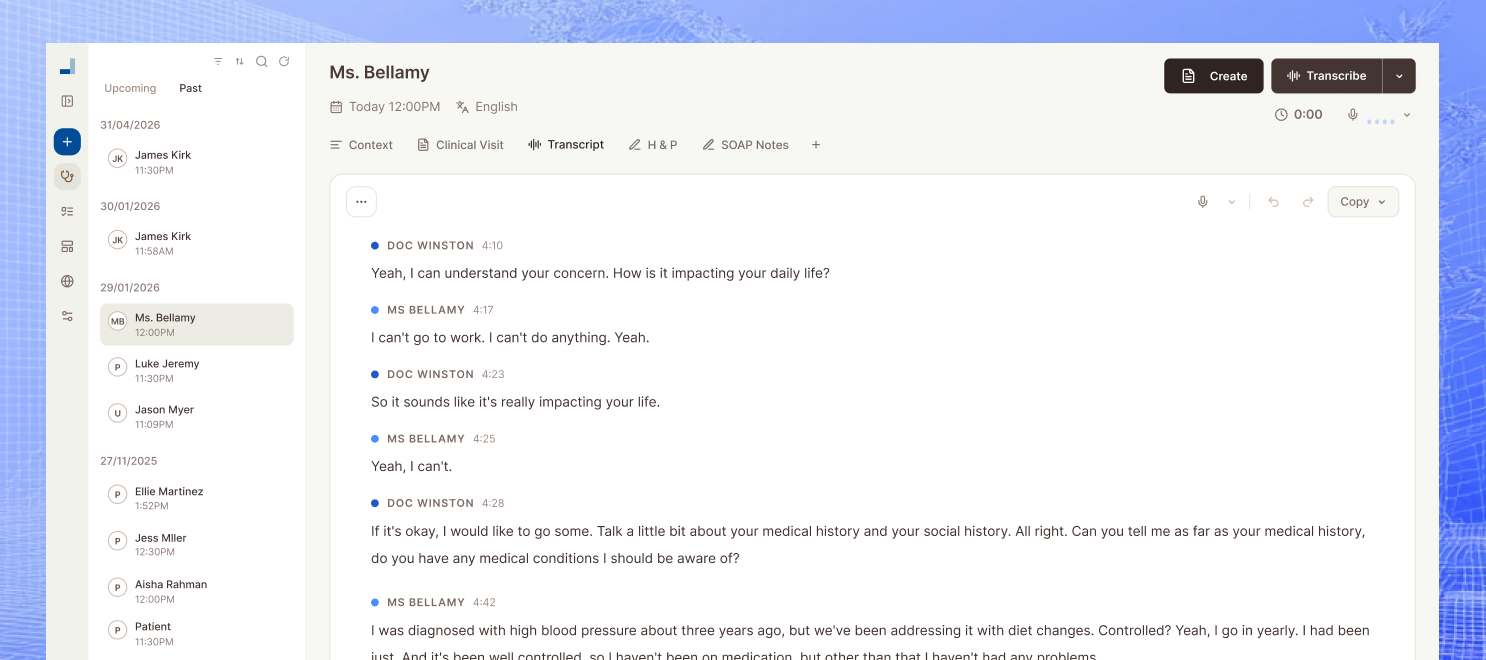
Starting with an AI medical scribe shouldn’t involve a total overhaul of your operations on day one. Begin by selecting a single visit type, such as routine follow-ups or simple wellness checks, to test the workflow. This allows you to get comfortable with the technology in a low-stakes environment. Ensure your clinic has the right hardware ready—usually just a smartphone or a tablet with a reliable microphone is enough to get started.
Once you are comfortable, set up your templates by specialty. Most clinics find success by pre-selecting the note formats they use most often, whether it’s a cardiology-specific consult or a standard pediatric wellness visit. During the encounter, simply let the AI capture the dialogue. You don’t need to change how you speak; the most effective AI tools are designed to filter out ‘small talk’ and focus on the pertinent clinical data naturally shared during the visit.
Reviewing and editing is the most critical step in the narrative flow. Once the AI generates the draft, take 60 seconds to scan for accuracy, adjust any specific clinical interpretations, and finalize the note. Finally, utilize the output for more than just the EMR. Many clinics use the AI-generated summaries to populate patient portals or to quickly draft forms and letters, maximizing the value of every recorded word.
- Start with one visit type to build confidence and refine the process.
- Align templates with your specific specialty needs before going full-scale.
- Record naturally without changing your clinical communication style.
- Review, edit, and repurpose outputs for letters and patient summaries.
How to keep note quality high and reduce mistakes
AI is powerful, but it is not infallible. Typical failure points in automated documentation include the accidental omission of specific dosages if they were mumbled, or ‘note bloat’ where the AI includes too much irrelevant environmental noise. To mitigate these risks, clinicians should adopt a lightweight review habit. This involves checking the ‘Problem List’ and ‘Plan’ sections specifically, as these carry the most weight for patient safety and billing accuracy.
Establishing team standards is also helpful. In a group practice, having a shared understanding of what a ‘good’ note looks like ensures that even when using AI, the documentation remains consistent between different providers. Using a ‘Review, Edit, Sign’ protocol ensures that the clinician’s signature truly represents their clinical judgment and that any errors in the AI’s transcription are corrected before the note becomes a legal record.
- Verify high-stakes data like medications, dosages, and specific test values.
- Trim irrelevant data to avoid note bloat and maintain clarity.
- Implement a standard ‘Review, Edit, Sign’ protocol across the practice.
- Calibrate templates regularly to ensure they meet clinical requirements.
Privacy, consent, and patient trust (plain English)
Patient privacy is the cornerstone of the clinical relationship. When introducing an AI medical scribe, transparency is your best tool. Most patients are comfortable with technology if they understand that it is being used to help the doctor focus more on them and less on the computer screen. You should always follow your local and regional policies regarding recording and data retention, ensuring your chosen tool is compliant with standards like HIPAA or GDPR.
A simple way to explain this to a patient is: ‘I’m using a digital clinical assistant today to record our conversation. This allows me to focus entirely on you instead of typing on my computer. It helps me create a more accurate record of our visit. Is that okay with you?’ Most patients find this comforting and appreciate the undivided attention they receive during the consultation.
- Always obtain verbal or written consent based on local regulations.
- Explain the technology as a tool for better clinical focus and care.
- Ensure the solution meets high-level security and data encryption standards.
- Maintain clear policies on how long recordings and transcripts are stored.
Rolling it out across a clinic without disruption
A successful rollout follows a ‘crawl, walk, run’ methodology. Start with a two-week pilot program involving one or two ‘tech-forward’ clinicians. During this period, track specific metrics such as time saved on charting, the reduction in after-hours work, and the completeness of the clinical notes. This data will be vital when justifying the transition to the rest of the staff and the administration.
Training should focus heavily on template alignment. When every clinician knows how to quickly select their preferred note type, the friction of adoption disappears. By the end of the pilot, you can use the success stories from the early adopters to encourage the rest of the clinic. This peer-led approach is often much more effective than a top-down mandate from management.
- Conduct a 2-week pilot with small groups before a full-clinic launch.
- Track time-saving metrics to prove the value to the whole team.
- Focus training on template selection and the quick-edit workflow.
- Align templates across the clinic to ensure uniform documentation quality.
Mcoy AI is an AI medical scribe that records and transcribes patient encounters, then generates multiple clinical note types including H&P, progress notes, consult notes, follow-up notes, procedure notes, discharge summaries, referral letters, and more. With over 200 customizable templates and an interactive AI chat, clinicians can easily create letters, forms, and documents based on the captured encounter. It is designed to work in the background, allowing providers to focus on the patient while the AI handles the heavy lifting of medical documentation.
Conclusion
Transitioning to an automated workflow is the most effective way to eliminate the documentation burden that plagues modern medicine. By following a structured implementation plan—from selecting the right templates to establishing a review protocol—your clinic can significantly improve efficiency. Using an AI medical scribe allows you to reclaim your personal time while actually improving the quality and depth of your clinical records. Start your pilot today and see how easy it is to set up an AI medical scribe in your clinic for a better, more sustainable practice.
What a serious review table should cover
| Decision area | Common mistake | Better clinic-ready approach | Metric to watch |
|---|---|---|---|
| Workflow design | Treat how to set up an ai medical scribe in your clinic [guide] as a one-off documentation task | Build a repeatable process with clear ownership and review points | Time to complete documentation |
| Team adoption | Assume every clinician will naturally use the same process | Train for consistency and define exception handling early | Active user adoption |
| Quality review | Only check notes when a problem is reported | Audit a sample of notes weekly and review edge cases | Edit rate per note |
| Operational follow-through | Leave admin actions outside the documentation workflow | Use the same encounter data for referrals, letters, and follow-up tasks | Completion rate for next-step tasks |
Related reading
If you are working through how to set up an ai medical scribe in your clinic [guide], it helps to read this alongside Practice Operations: How Clinics Can Streamline Daily Operations, Practice Operations: How Clinics Can Improve Workflow Without Changing Their EHR, and Admin Management: Referral Letters From AI Scribe Notes: A Clinician’s Guide. Those guides cover adjacent workflow, implementation, and evaluation questions so the decision does not sit in isolation.
FAQ
How accurate are AI medical scribes in real clinics?
AI medical scribes are highly accurate in capturing clinical dialogue, often reaching over 95% accuracy in transcription. However, the quality of the final note depends on the clarity of the conversation and the clinician’s specific prompts. It is excellent at capturing nuances that might be forgotten, but it should always be viewed as a high-quality draft generator rather than a final product.
Do I still need to review every note?
Yes, the clinician is legally and professionally responsible for the accuracy of the medical record. While the AI does the heavy lifting, a brief review is essential to ensure that medications, dosages, and clinical plans are recorded exactly as intended. This review usually takes less than a minute but is a crucial step for patient safety and billing compliance.
What note types can an AI scribe generate besides SOAP?
Modern AI scribes are incredibly versatile and can generate specialized formats such as H&P (History and Physical), consult notes, procedure notes, and discharge summaries. They can also create referral letters or insurance authorization drafts. This flexibility ensures that the documentation is fit for the specific purpose of the patient encounter.
Will this work for telehealth and in-person consults?
Yes, AI medical scribes are designed to work seamlessly in both environments. For in-person visits, the device usually records via a smartphone or tablet in the room. For telehealth, the AI can often be integrated directly into the video platform or record the audio output of the computer, providing the same level of detail regardless of how the patient is seen.
How do I explain recording/transcription to patients?
The best approach is complete transparency. Tell the patient that you are using a digital assistant to record the visit so that you can look at them and listen better instead of typing. Most patients are very supportive when they realize it means they have your full attention. Always ensure you follow your specific clinic’s consent forms and local privacy laws.
How do clinics prevent note bloat?
Note bloat is prevented by using smart templates that tell the AI exactly what information is relevant to include. Clinicians can also use ‘shorthand’ commands or specific styles to ensure the AI focuses only on clinical facts rather than every word of small talk. Regularly refining your templates helps keep notes concise and focused on high-value data.
How long does template setup take?
Initial setup for basic templates can take as little as 15 to 30 minutes. Most AI scribes come with a library of pre-built templates for various specialties that you can use immediately. Customizing these to your specific preferences usually happens gradually over the first few days of use as you refine how you want your notes to look.
What’s the safest way to start if I’m skeptical?
The safest way to start is with a ‘shadow’ pilot. Record a few sessions but continue to take your notes the old way. At the end of the day, compare your manual notes with the AI-generated ones. Most skeptical clinicians find that the AI actually captured more relevant detail than they did, which provides the confidence needed to switch over fully.