AI & Medicine: Reduce AI Clinical Note Errors: A Guide for Clinicians
Learn how to reduce errors in AI-generated clinical notes. Improve documentation accuracy, quality control, and clinical workflows for your medical practice.
Ensuring Accuracy in the Age of AI Documentation
For many clinicians, the move toward automated documentation is driven by a desire to escape the ‘pajama time’ spent on after-hours charting. However, while AI can significantly reduce burnout and the anxiety of rushed notes, it introduces a new concern: ensuring the clinical record remains accurate and medico-legally sound. Whether you are a GP in a busy private practice or a specialist in a university clinic, maintaining high-quality documentation is non-negotiable for patient safety and billing compliance.
This guide provides a comprehensive framework for clinicians looking to optimize their workflow using AI scribes. We will explore various note formats beyond the standard SOAP note, establish quality control protocols, and discuss how to roll out these tools without compromising privacy or patient trust. By the end of this article, you will have a clear blueprint for implementing a system that reduces errors in AI-generated clinical notes while maximizing efficiency.
What a medical scribe solves in modern practice
The real cost of documentation isn’t just measured in minutes; it is measured in cognitive load and physician fatigue. When a doctor is forced to split their attention between a patient and a screen, subtle diagnostic clues can be missed. Traditional manual entry often leads to delayed notes, where details are forgotten or conflated between patients, resulting in clinical records that are incomplete or vague.
An AI medical scribe serves as an assistive layer, capturing the nuance of the conversation in real-time. It is important to remember that these tools are not autonomous practitioners; the clinician remains the ultimate authority and is responsible for the final output. The AI handles the heavy lifting of structure and transcription, allowing the provider to focus entirely on the human element of care.
- Eliminates the ‘double-work’ of taking shorthand notes then typing them later.
- Reduces cognitive fatigue by allowing natural patient-doctor interaction.
- Shortens the time between the encounter and the finalized note.
- Provides a structured draft that prevents important negatives from being omitted.
Note types you can generate beyond SOAP (H&P and more)
While many providers associate AI scribing strictly with SOAP notes, the technology has evolved to handle a wide array of clinical documentation needs. History and Physical (H&P) notes, consult notes, and complex discharge summaries require different structural logic. For example, a procedure note must include specific technical steps and findings, whereas a referral letter needs to synthesize clinical history into a persuasive, concise narrative for a colleague.
Using the correct structure is vital for continuity of care and audit readiness. When notes are standardized across a practice, it becomes much easier for other team members—such as nurses, residents, or billing specialists—to find the information they need. High-quality documentation also protects the practice during peer reviews or legal inquiries by providing a vivid, accurate account of the clinical decision-making process.
- Supports H&P, progress notes, and specialized consult summaries.
- Generates referral letters and discharge summaries automatically from the encounter.
- Ensures consistency across follow-up notes and procedure documentation.
- Improves handover quality between multi-disciplinary clinical teams.
How to implement reduce errors in AI-generated clinical notes step-by-step
To successfully reduce errors in AI-generated clinical notes, start by documenting just one specific visit type—such as standard follow-ups or medication reviews—to get a feel for the AI’s logic. Begin by selecting a few templates tailored to your specialty to ensure the AI knows which data points to prioritize. During the encounter, whether it is in-person or via telehealth, ensure the device is positioned to capture both the patient’s voice and your verbal summaries of physical findings.
Once the audio is processed, make it a habit to perform a ‘one-minute review’ immediately while the details are fresh in your mind. Check for specific dosages, lateralities (left vs. right), and any specific patient names mentioned incorrectly. This rapid review cycle is the most effective way to prevent errors from entering the permanent record.
After the note is polished, you can leverage the data for secondary outputs. Use the finalized encounter text to generate insurance authorization forms or referral letters without re-typing information. This integrated flow ensures that the same accurate data flows through every document associated with that patient visit.
- Start with low-complexity visits to calibrate the AI settings.
- Specialty-specific templates help the AI focus on relevant clinical markers.
- Verbalizing physical exam findings during the consult improves note detail.
- Immediate review prevents small errors from becoming lasting medical record issues.
How to keep note quality high and reduce mistakes
Despite the sophistication of modern AI, certain failure points remain common, such as the ‘hallucination’ of medication dosages or the inclusion of irrelevant ‘note bloat.’ Often, if a patient mentions a family member’s medication, a less-optimized AI might accidentally list it under the patient’s own active medications. Clinicians must be particularly vigilant about numerical values, lab results, and problem lists to ensure they reflect the current encounter accurately.
Developing a lightweight review habit is the best defense against documentation errors. Leading practices often establish internal standards, such as a checklist for the ‘Final Five’—five key areas (Medications, Allergies, Plan, Diagnosis, and Laterality) that must be verified before the clinician hits sign. By treating the AI output as a high-quality draft rather than a finished product, you maintain the standard of care required for safe practice.
- Verify all numerical values, including dosages and lab results.
- Check for ‘laterality’ errors (ensuring left/right are correct).
- Remove redundant or repetitive information to prevent note bloat.
- Standardize a final review checklist for all providers in the clinic.
Privacy, consent, and patient trust
Patient trust is built on transparency, and documenting with AI is no different. Consent requirements vary significantly by region and medical board, so it is essential to follow your local healthcare privacy laws. Most patients are receptive to the technology when they understand it allows their doctor to look them in the eye rather than at a keyboard.
A simple script can bridge the gap: ‘I’m using an AI assistant today to help me capture our conversation so I can focus entirely on you instead of typing. It records our talk, turns it into a medical note, and then the recording is deleted. Are you okay with that?’ This approach respects the patient’s autonomy while highlighting the benefit to their care.
- Always follow local jurisdiction rules regarding audio recording and data storage.
- Be transparent with patients about how their data is used and stored.
- Ensure the AI vendor meets high-level security standards (like HIPAA or GDPR).
- Include a standard consent disclosure in your clinic’s intake paperwork.
Rolling it out across a clinic without disruption
For clinic owners and university directors, a phased rollout is safer than a ‘big bang’ implementation. Start with a two-week pilot involving one or two ‘tech-champion’ doctors who can provide feedback on template performance. During this period, track metrics such as the average time spent on notes and the reduction in after-hours charting to quantify the return on investment.
Once the pilot is successful, align the templates across the department to ensure a unified documentation style. Training sessions should focus not just on the software, but on how to verbally structure a consult to get the best out of the AI. As the team becomes more proficient, you will see a significant improvement in both note completeness and staff morale.
- Use a 14-day pilot to identify specialty-specific workflow hurdles.
- Monitor ‘pajama time’ reduction as a primary metric of success.
- Align templates across the clinic for standardized reporting and audits.
- Provide brief training on ‘verbalizing’ findings for better AI capture.
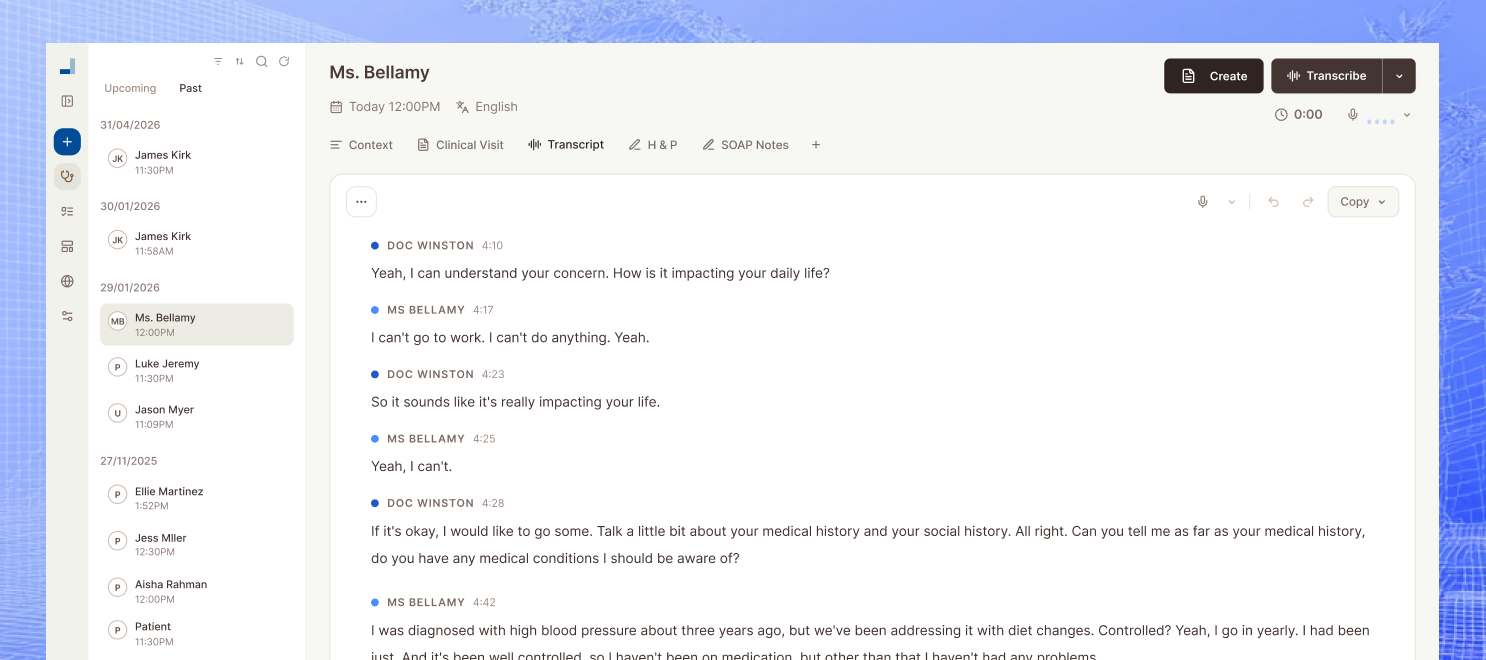
Mcoy AI is an AI medical scribe that records and transcribes patient encounters, then generates multiple clinical note types (H&P, progress notes, consult notes, follow-up notes, procedure notes, discharge summaries, referral letters, and more). With over 200+ customizable templates and an interactive AI chat, clinicians can effortlessly create letters, forms, and complex documents based on the captured encounter. This streamlined approach ensures high-quality documentation while significantly reducing the administrative burden on healthcare providers.
Conclusion
Reducing errors in your documentation process requires a blend of advanced technology and human oversight. By understanding the common pitfalls of automated systems and implementing a structured review process, you can enjoy the efficiency of modern tools without sacrificing clinical integrity. The goal is a workflow where the technology supports the medicine, not the other way around. If you are ready to reclaim your time, start your pilot today and follow these steps to reduce errors in AI-generated clinical notes while improving the overall health of your practice.
What a serious review table should cover
| Decision area | Common mistake | Better clinic-ready approach | Metric to watch |
|---|---|---|---|
| Workflow design | Treat reduce ai clinical note errors: a guide for clinicians as a one-off documentation task | Build a repeatable process with clear ownership and review points | Time to complete documentation |
| Team adoption | Assume every clinician will naturally use the same process | Train for consistency and define exception handling early | Active user adoption |
| Quality review | Only check notes when a problem is reported | Audit a sample of notes weekly and review edge cases | Edit rate per note |
| Operational follow-through | Leave admin actions outside the documentation workflow | Use the same encounter data for referrals, letters, and follow-up tasks | Completion rate for next-step tasks |
Related reading
If you are working through reduce ai clinical note errors: a guide for clinicians, it helps to read this alongside AI & Medicine: How to Simplify Clinical Notes for Busy Doctors, AI & Medicine: How Doctors Can Improve SOAP Notes, and Specialty Guides: AI Scribe for Mental Health: Better Notes in Less Time. Those guides cover adjacent workflow, implementation, and evaluation questions so the decision does not sit in isolation.
FAQ
How accurate are AI medical scribes in real clinics?
In most clinical settings, AI scribes are remarkably accurate at capturing the narrative flow of a patient encounter, often exceeding the detail found in manual notes. However, accuracy can vary based on background noise, accents, and the complexity of the medical terminology used. While they capture 90-99% of the conversation correctly, they are assistive tools meant to provide a draft for the clinician to finalize.
Do I still need to review every note?
Yes, medical and legal responsibility for the clinical record always rests with the licensed provider. You should never sign off on an AI-generated note without a quick review to ensure that diagnoses, medications, and plans are captured accurately. Most clinicians find that a 30 to 60-second review is sufficient to catch any minor discrepancies before the note is finalized.
What note types can an AI scribe generate besides SOAP?
Modern AI scribes are highly versatile and can generate a wide range of documents including History and Physicals (H&P), procedure notes, consult summaries, and discharge papers. Many can also transform the encounter transcript into referral letters or patient education summaries. This flexibility allows the tool to serve various specialties beyond general primary care.
Will this work for telehealth and in-person consults?
Most AI scribing solutions are designed to work seamlessly across both environments. For in-person visits, the software typically runs on a smartphone or tablet in the room. For telehealth, it can record the audio directly from the computer system, ensuring the documentation is captured regardless of where the patient is located.
How do I explain recording/transcription to patients?
Transparency is the best policy; simply explain that you are using a digital assistant to help you record the details of the visit so you can focus more on the patient and less on the computer. Most patients are very supportive when they realize the doctor will be more present and attentive. Always ensure you have the patient’s verbal or written consent as per your local regulations.
How do clinics prevent note bloat?
Note bloat occurs when the AI includes too much conversational ‘filler’ or repetitive summaries. Clinics can prevent this by selecting concise templates and training the AI specifically on which sections are mandatory versus optional. Additionally, brief editing during the review phase helps keep the final output focused only on clinically relevant information.
How long does template setup take?
Setting up basic templates usually takes just a few minutes, as most systems come with pre-built options for common specialties. Customizing those templates to fit a specific doctor’s unique style or a clinic’s specific workflow might take an hour or two of initial testing. Once established, these templates can be used across the entire practice for consistency.
What’s the safest way to start if I’m skeptical?
The safest approach is to run a small-scale pilot with non-complex cases, such as routine follow-ups or wellness checks. Use the AI alongside your current documentation method for a few days to compare the results. This allows you to verify the accuracy and build trust in the workflow before fully transitioning your more complex patient encounters to the AI system.