Specialty Guides: Prevent AI Copy-Forward Errors | Guide for Clinic Owners
Learn how to eliminate copy-forward errors and charting bloat using an AI medical scribe. Improve clinic workflow and documentation quality today.
The Hidden Burden of Clinical Documentation
For many clinicians, the end of the patient day marks the beginning of a second shift. After-hours charting has become a leading cause of burnout among doctors, private practitioners, and those managing busy university clinics. The pressure to complete detailed notes often leads to ‘note bloat’ or the risky habit of copy-pasting from previous visits, which can create significant medico-legal anxiety and inaccuracies in the patient record.
This guide provides a comprehensive roadmap for implementing an AI medical scribe to solve these workflow bottlenecks. We will explore how to move beyond basic note formats, establish rigorous quality control, and integrate smart automation into your daily practice without compromising patient privacy or care quality. Whether you are a GP, a specialist, or managing a high-volume telehealth service, understanding these strategies is the first step toward reclaiming your time.
What a medical scribe solves in modern practice
The real cost of traditional documentation isn’t just time; it is the cognitive load required to recall specific details hours after an encounter has ended. When clinicians are rushed, they often miss subtle nuances or delay notes, which compromises the continuity of care. This delay creates a backlog that weighs on the mind, leading to fatigue and diminished presence during the next patient interaction.
An AI medical scribe serves as an assistive partner that captures the clinical conversation in real-time. It is important to remember that these tools are not replacements for clinical judgment; the clinician remains the final authority and must review all outputs. By automating the heavy lifting of transcription and structural formatting, the scribe allows doctors to focus entirely on the patient rather than a computer screen.
- Reduces administrative burnout and after-hours documentation time.
- Captures granular details that might be forgotten during manual entry.
- Maintains high-quality records even during back-to-back consultations.
- Provides a consistent structure across the entire clinical team.
- Allows for improved eye contact and engagement with patients.
Note types you can generate beyond SOAP (H&P and more)
While the SOAP format is a staple in medicine, it isn’t always the most efficient or appropriate structure for every clinical scenario. Complex cases often require a detailed History and Physical (H&P), while surgical settings demand precise procedure notes. Using a single format for all encounters is often what leads to the very copy-forward problems many clinics struggle to avoid.
Effective documentation requires versatility. Consult notes need to communicate findings clearly to referring physicians, while discharge summaries must be concise yet comprehensive for follow-up care. By utilizing specialized templates for progress notes, referral letters, and follow-up visits, clinics ensure that the information recorded is pertinent to the specific stage of the patient’s journey.
Proper structure is vital for audit readiness and medico-legal protection. When notes are generated based on the specific intent of the visit, the likelihood of ‘note bloat’—where irrelevant data from previous visits clutter the record—is significantly reduced. This high-standard documentation also improves handovers between specialists, ensuring no critical information is lost in transition.
- H&P and progress notes specifically tailored to specialty needs.
- Accurate consult and referral letters generated from session data.
- Clear procedure notes and discharge summaries for surgical workflows.
- Improved audit readiness through structured, relevant data entry.
- Enhanced continuity of care across different healthcare providers.
How to implement AI medical scribe step-by-step in a real clinic
Transitioning to an AI-driven workflow should be a gradual, deliberate process to ensure staff buy-in and clinical accuracy. Begin by selecting a single visit type to pilot the technology, such as routine follow-ups or standard physicals. This allows the team to get comfortable with the interface and the recording process without the pressure of complex, multi-system cases.
Next, it is crucial to set up templates that align with your specific specialty. Whether you are in a university clinic or a private specialist practice, the AI should be tuned to the nuances of your field. During the encounter, focus on capturing the natural conversation, ensuring that both in-person and telehealth sessions are recorded with high-fidelity audio to ensure the AI has the best possible data to work with.
Once the session ends, the clinician should move immediately to a quick review and edit phase. Modern AI tools generate drafts almost instantly, allowing for rapid corrections while the details are still fresh. This immediate feedback loop is the best way to prevent copy-forward issues, as each note is built from the ground up based on the current encounter’s specific verbal data.
Finally, the output should be leveraged for more than just the medical record. The data captured can be reused to populate referral forms, school letters, or patient instructions. This multi-purpose use of a single recording significantly multiplies the time-saving benefits across the entire administrative spectrum of the clinic.
- Start small with one visit type to build team confidence.
- Customize specialty templates to match clinical requirements.
- Capture audio clearly for both physical and virtual consultations.
- Review draft notes immediately to ensure 100% accuracy.
- Repurpose generated data for letters, forms, and patient documents.
How to keep note quality high and reduce mistakes
Maintaining high-quality notes requires a proactive approach to common AI failure points. Issues such as missing medications, incorrect lab values, or an outdated problem list can occur if the AI lacks context or if the clinician fails to verify specific data points. Note bloat is another risk, where the AI might include every word spoken rather than filtering for clinical relevance.
Successful clinics implement a lightweight review habit. Instead of reading every word like a proofreader, clinicians should scan for ‘high-stakes’ areas: dosages, lateralities (left vs. right), and the final assessment and plan. Setting team-wide standards for what constitutes a ‘complete’ note helps maintain a baseline of quality that is consistent regardless of which provider is seeing the patient.
- Scan for clinical accuracy in dosages and lateralities first.
- Ensure the assessment and plan reflect the actual clinical decision.
- Use structured templates to filter out irrelevant conversational filler.
- Establish clear internal standards for note completion and review.
- Audit a small sample of notes weekly to ensure ongoing precision.
Privacy, consent, and patient trust (plain English)
Patient privacy is the foundation of the clinical relationship. While AI tools are designed to be secure, consent requirements vary significantly by region and local jurisdiction. It is essential to follow your local healthcare privacy laws and clinic policies. Generally, patients are receptive to the technology when they understand it allows their doctor to focus on them rather than a screen.
A simple, transparent explanation goes a long way. You might say: ‘I use a secure AI assistant to help me capture our conversation so I can focus on you instead of typing. It creates a draft of my medical note, which I then review and finalize. Is that alright with you?’ This approach centers the benefit on the patient experience and builds trust through transparency.
- Always adhere to local privacy regulations and professional guidelines.
- Use a clear, benefit-oriented script to obtain patient consent.
- Explain that the AI is an assistant and the doctor remains in control.
- Ensure data retention policies align with medical record standards.
- Maintain transparency about how patient data is processed and stored.
Rolling it out across a clinic without disruption
A successful rollout requires a structured pilot phase, usually lasting about two weeks. During this time, a small group of ‘super-users’ can identify potential hurdles and refine templates. This prevents the frustration that can occur when an entire clinic tries to learn a new system simultaneously, ensuring that workflows remain smooth for both staff and patients.
Tracking metrics is key to proving the ROI of the transition. Monitor specific data points such as the reduction in after-hours charting time, the speed of note completion, and the overall completeness of the records. If clinicians are saving two hours a day, that is a powerful motivator for the rest of the staff to adopt the new system and align their templates with the clinic’s standards.
- Launch a 14-day pilot with a small group of eager clinicians.
- Measure time saved and note turnaround speed during the trial.
- Standardize templates across the clinic for consistent documentation.
- Provide brief, hands-on training sessions for all staff members.
- Regularly solicit feedback to refine the AI integration process.
Introducing Mcoy AI
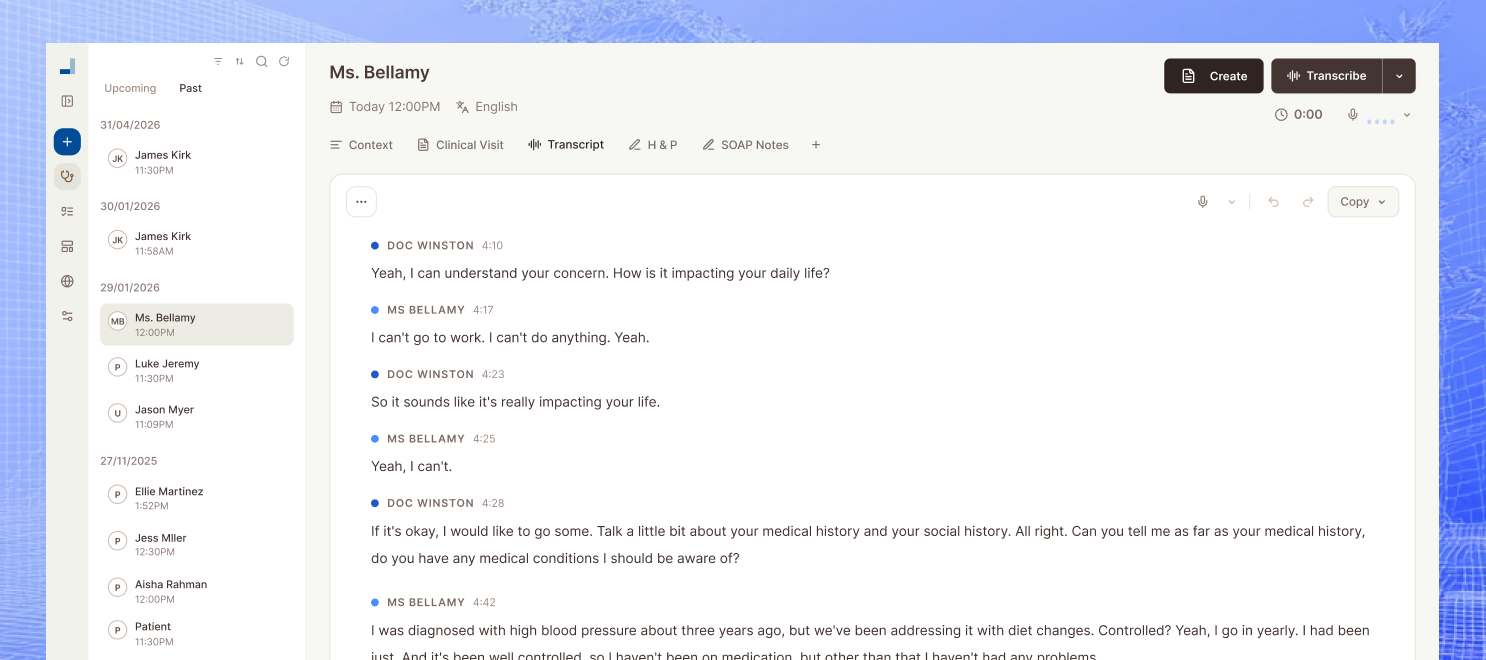
Mcoy AI is an AI medical scribe that records and transcribes patient encounters, then generates multiple clinical note types (H&P, progress notes, consult notes, follow-up notes, procedure notes, discharge summaries, referral letters, and more). With over 200+ customizable templates and an interactive AI chat, clinicians can effortlessly create letters, forms, and complex documents based on the session audio. This tool is designed to integrate seamlessly into your workflow, helping you maintain the highest standards of documentation while significantly reducing the time spent on manual administrative tasks.
How accurate are AI medical scribes in real clinics?
AI medical scribes are highly accurate in capturing the clinical narrative, often picking up details that a tired clinician might miss. However, they are not perfect and can occasionally misinterpret medical jargon or specific values if the audio is unclear. Their accuracy is best viewed as a high-quality draft that requires a final professional sign-off.
Do I still need to review every note?
Yes, the clinician is legally and ethically responsible for the accuracy of the medical record. While the AI does the heavy lifting, you must review and finalize every note to ensure it accurately reflects your clinical judgment and the patient’s condition. This review usually takes a fraction of the time it would take to write the note from scratch.
What note types can an AI scribe generate besides SOAP?
Modern AI scribes are incredibly versatile and can generate H&P reports, consult notes, procedure descriptions, and discharge summaries. They can also assist in drafting referral letters and patient education summaries based on the conversation held during the visit. This variety helps prevent the limitations of a one-size-fits-all SOAP note.
Will this work for telehealth and in-person consults?
Most AI scribing solutions are designed to work across various platforms, including mobile devices for in-person visits and desktop integrations for telehealth. As long as the audio of the conversation can be captured clearly, the AI can process the encounter and generate a structured note regardless of the setting.
How do I explain recording/transcription to patients?
The most effective way is to be direct and highlight the benefit to them. Explain that the tool allows you to listen more closely and provide better care because you aren’t distracted by typing. Most patients appreciate the extra attention and are comfortable with the technology once they understand its purpose.
How do clinics prevent note bloat?
Clinics can prevent note bloat by using specific, concise templates and directing the AI to focus on ‘clinically significant’ information. Establishing internal protocols on what information is necessary for the record helps the AI—and the clinician—filter out conversational filler that doesn’t add medical value.
How long does template setup take?
Basic template setup usually takes just a few minutes, but fine-tuning them to your specific clinical style might take a few days of use. Most systems come with pre-built templates for various specialties, so you can start immediately and refine them as you become more familiar with the system’s output.
What’s the safest way to start if I’m skeptical?
The safest approach is to start with a ‘shadow’ pilot. Record a few sessions but continue writing your notes as usual for a day or two. Compare your manual notes with the AI-generated ones to see the quality for yourself. This low-risk comparison builds confidence before you fully commit to the new workflow.
Conclusion
Preventing copy-forward errors and reducing documentation fatigue is possible with a structured approach to AI integration. By moving beyond basic SOAP notes and implementing specialized templates, clinicians can ensure their records are both accurate and concise. Implementing an AI medical scribe allows providers to focus on the human element of medicine while maintaining high-quality clinical documentation. By following the rollout strategies discussed, your clinic can reclaim hours of administrative time every week. Establish your pilot program today and see how an AI medical scribe can transform your practice.
What a serious review table should cover
| Decision area | Common mistake | Better clinic-ready approach | Metric to watch |
|---|---|---|---|
| Workflow design | Treat prevent ai copy-forward errors | guide for clinic owners as a one-off documentation task | Build a repeatable process with clear ownership and review points |
| Team adoption | Assume every clinician will naturally use the same process | Train for consistency and define exception handling early | Active user adoption |
| Quality review | Only check notes when a problem is reported | Audit a sample of notes weekly and review edge cases | Edit rate per note |
| Operational follow-through | Leave admin actions outside the documentation workflow | Use the same encounter data for referrals, letters, and follow-up tasks | Completion rate for next-step tasks |
Related reading
If you are working through prevent ai copy-forward errors | guide for clinic owners, it helps to read this alongside Specialty Guides: How to Run a More Efficient Medical Practice in 2026, Specialty Guides: How to Improve Patient Encounters, and Specialty Guides: How to Use an AI Scribe for Pain Management Notes | Guide. Those guides cover adjacent workflow, implementation, and evaluation questions so the decision does not sit in isolation.
FAQ
How accurate are AI medical scribes in real clinics?
AI medical scribes are highly accurate in capturing the clinical narrative, often picking up details that a tired clinician might miss. However, they are not perfect and can occasionally misinterpret medical jargon or specific values if the audio is unclear. Their accuracy is best viewed as a high-quality draft that requires a final professional sign-off.
Do I still need to review every note?
Yes, the clinician is legally and ethically responsible for the accuracy of the medical record. While the AI does the heavy lifting, you must review and finalize every note to ensure it accurately reflects your clinical judgment and the patient’s condition. This review usually takes a fraction of the time it would take to write the note from scratch.
What note types can an AI scribe generate besides SOAP?
Modern AI scribes are incredibly versatile and can generate H&P reports, consult notes, procedure descriptions, and discharge summaries. They can also assist in drafting referral letters and patient education summaries based on the conversation held during the visit. This variety helps prevent the limitations of a one-size-fits-all SOAP note.
Will this work for telehealth and in-person consults?
Most AI scribing solutions are designed to work across various platforms, including mobile devices for in-person visits and desktop integrations for telehealth. As long as the audio of the conversation can be captured clearly, the AI can process the encounter and generate a structured note regardless of the setting.
How do I explain recording/transcription to patients?
The most effective way is to be direct and highlight the benefit to them. Explain that the tool allows you to listen more closely and provide better care because you aren’t distracted by typing. Most patients appreciate the extra attention and are comfortable with the technology once they understand its purpose.
How do clinics prevent note bloat?
Clinics can prevent note bloat by using specific, concise templates and directing the AI to focus on ‘clinically significant’ information. Establishing internal protocols on what information is necessary for the record helps the AI—and the clinician—filter out conversational filler that doesn’t add medical value.
How long does template setup take?
Basic template setup usually takes just a few minutes, but fine-tuning them to your specific clinical style might take a few days of use. Most systems come with pre-built templates for various specialties, so you can start immediately and refine them as you become more familiar with the system’s output.
What’s the safest way to start if I’m skeptical?
The safest approach is to start with a ‘shadow’ pilot. Record a few sessions but continue writing your notes as usual for a day or two. Compare your manual notes with the AI-generated ones to see the quality for yourself. This low-risk comparison builds confidence before you fully commit to the new workflow.