AI & Medicine: Keep Notes Short but Defensible With AI | Full Guide
Learn how to use an AI medical scribe to write concise, defensible clinical notes. Improve workflow, reduce burnout, and ensure medical-legal compliance.
What a medical scribe solves in modern practice
The modern clinician is often buried under an avalanche of documentation. After-hours charting has become the norm, leading to significant burnout and a sense of ‘pajama time’ being stolen by the EHR. When notes are rushed, they lack the specific details required for medical-legal safety, yet when they are too long, they become bloated and difficult for other providers to navigate. This inconsistency creates anxiety for practitioners who want to provide high-quality care while protecting themselves legally.
This guide will teach you how to implement a workflow that balances brevity with defensibility. We will explore note formats beyond the standard SOAP note, quality control measures, and a step-by-step rollout plan for private practices and university clinics. Whether you are a general practitioner, a specialist, or managing a telehealth volume, mastering the use of an AI medical scribe is the key to reclaiming your schedule without sacrificing clinical integrity.
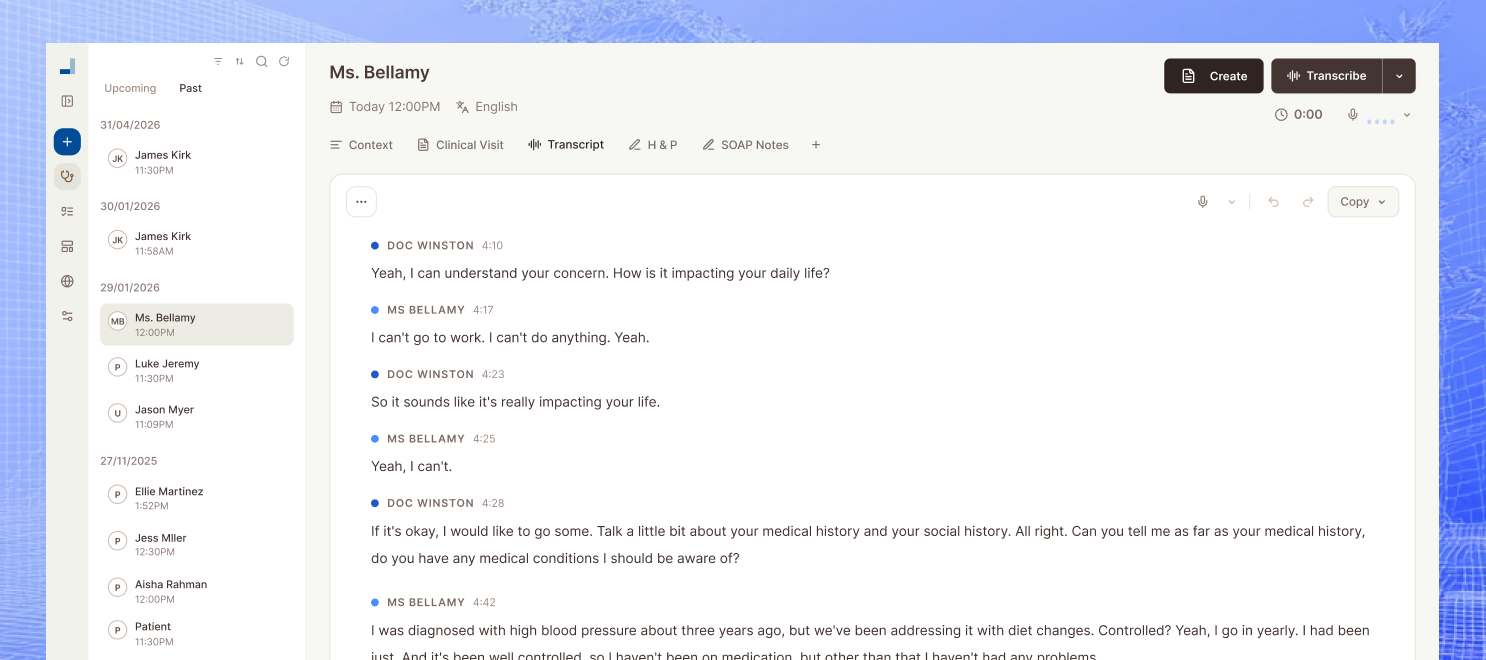
An AI medical scribe acts as an intelligent assistant that captures the nuance of a patient encounter in real-time. It doesn’t just transcribe; it synthesizes the conversation into structured data. It is important to remember that these tools are assistive—the clinician remains the final authority and must review all outputs for accuracy. By offloading the mechanical task of writing, you reduce the cognitive load that leads to diagnostic errors and fatigue.
- Reduces the time spent on after-hours documentation and ‘pajama time.’
- Captures specific clinical nuances that are often forgotten in delayed charting.
- Allows clinicians to focus entirely on the patient rather than a computer screen.
- Functions as a sophisticated assistant while leaving the final clinical judgment to the provider.
Note types you can generate beyond SOAP (H&P and more)
While the SOAP note is a healthcare staple, it isn’t always the most efficient or appropriate format for every encounter. Advanced documentation workflows require diverse outputs like History and Physicals (H&P), detailed procedure notes, and comprehensive discharge summaries. Using the right format for the right visit type ensures that the most critical information is highlighted, making the note more useful for the next provider in the care continuum.
Structure matters significantly for audit readiness and continuity of care. A consult note needs to clearly articulate the specialist’s reasoning, whereas a follow-up note should bridge the gap between previous interventions and current progress. Poorly structured notes lead to gaps in the patient story, which can become a liability during a peer review or legal inquiry. AI-driven systems allow you to pivot between these formats instantly, ensuring the documentation matches the clinical intent of the visit.
By leveraging diverse templates, clinics can maintain a high standard of handover quality. Referral letters, for instance, can be generated directly from the encounter data, ensuring the receiving physician has all the necessary context without the primary doctor having to rewrite the same information. This consistency across different document types strengthens the overall medical record and improves communication within the healthcare ecosystem.
- H&P and Consult notes provide deeper context for new or complex patients.
- Procedure notes and Discharge summaries ensure specific technical details are recorded accurately.
- Standardized structures improve audit readiness and reduce the risk of insurance clawbacks.
- Referral letters generated from encounter data save time and reduce administrative errors.
How to implement AI medical scribe step-by-step in a real clinic
To successfully integrate an AI medical scribe into your daily routine, start small to build confidence. Choose one specific visit type, such as routine follow-ups or standard wellness exams, to pilot the technology. This allows you to learn how the AI interprets your natural speaking style and patient interactions without the pressure of a complex multi-system complaint. Once you are comfortable with the output for these simpler visits, you can gradually expand to more complex consultations.
Before you begin the encounter, ensure your specialty-specific templates are configured. Most systems allow you to define what sections are mandatory and how you want the information presented. During the visit, simply focus on the patient. Whether it is an in-person exam or a telehealth call, the technology works in the background to capture the dialogue. You don’t need to change how you talk; in fact, being more descriptive during the physical exam can actually help the AI generate a more detailed objective section.
Immediately after the encounter ends, review the generated draft. This is the most efficient time to make edits while the patient’s details are fresh in your mind. Check for any specific measurements, medication dosages, or unique patient preferences that need to be exact. Once the note is reviewed, it takes only a click to finalize it. This rapid turnaround prevents the ‘snowball effect’ of unfinished charts that typically plagues clinics by the end of a busy afternoon.
Finally, utilize the outputs for secondary tasks. If the patient needs a referral or a work excuse, use the encounter data to generate these documents instantly. This holistic approach means the AI is not just a note-taker, but a productivity engine for the entire administrative side of the patient visit. By following this narrative flow, you turn a single encounter into a suite of necessary medical and administrative records with minimal extra effort.
- Start with one visit type to master the workflow without feeling overwhelmed.
- Set up specialty-specific templates to ensure the output matches your preferred style.
- Review notes immediately after the visit to ensure 100% accuracy and defensibility.
- Repurpose the AI-generated data into referral letters and forms to maximize efficiency.
How to keep note quality high and reduce mistakes
High-quality documentation is not about length; it is about precision. Common failure points in traditional charting include missing medication lists, incorrect lab values, and ‘note bloat’—the habit of carrying forward large chunks of irrelevant text from previous visits. AI can help mitigate these issues by focusing on the current encounter’s specifics, but clinicians must still watch for ‘hallucinations’ or misinterpretations of medical jargon that can occur in any automated system.
To maintain high standards, establish a lightweight review habit. Spend sixty seconds scanning the ‘Assessment and Plan’ and ‘Objective’ sections for any discrepancies. Team standards are also vital; if every practitioner in the clinic uses the same template logic, the quality of the shared records remains consistent. This collective discipline makes the entire practice more resilient against audits and ensures that the patient’s medical story remains clear and concise.
- Avoid ‘note bloat’ by focusing only on relevant, current encounter information.
- Implement a one-minute review rule to verify dosages and key clinical findings.
- Establish clinic-wide template standards for consistent documentation across the team.
- Focus on the Assessment and Plan as the core of a defensible clinical record.
Privacy, consent, and patient trust (plain English)
Patient trust is the foundation of the clinical relationship. When introducing an AI medical scribe, it is important to follow local regional policies regarding recording and data storage. While specific regulations vary, the core principle is transparency. Patients are generally very receptive to the technology when they realize it allows their doctor to look at them instead of a screen. However, you should never record without following your institution’s established consent protocols.
Explain the process to the patient in simple terms. A script can be as easy as saying: ‘To help me stay focused on you and keep my records accurate, I use a secure AI assistant that listens to our conversation and writes my medical note. Is that okay with you?’ Most patients appreciate the tech-forward approach and the fact that their doctor is ‘all ears’ during their time of need. Securely managing this data means ensuring it is encrypted and handled according to healthcare-grade privacy standards.
- Always follow local regulations and your clinic’s specific consent policies.
- Use a simple, transparent script to explain the benefits of AI to patients.
- Explain that the technology allows for better eye contact and more focused care.
- Ensure the solution you choose adheres to high-level security and data retention principles.
Rolling it out across a clinic without disruption
A successful rollout requires a structured approach rather than an overnight switch. A two-week pilot plan is usually sufficient. During week one, have a ‘champion’ provider use the tool to identify any workflow bottlenecks. During week two, expand to a larger group. This phased approach allows you to troubleshoot issues like Wi-Fi dead zones or template adjustments before the entire clinic is reliant on the new system.
Track specific metrics to measure success. Look at the reduction in ‘after-hours’ chart completion and the time saved per patient. You might also find that note completeness scores improve during internal audits. Training should focus not just on the software itself, but on how to verbally conduct the exam so the AI captures the best possible data. When the whole team is aligned on how to use the scribe, the transformation from a burdened practice to an efficient one is remarkably fast.
- Use a 2-week pilot with a ‘champion’ clinician to test the workflow first.
- Monitor metrics like time saved and reduction in after-hours charting.
- Align templates across the clinic to ensure a uniform standard of care.
- Coach providers on how to ‘think out loud’ during exams to aid AI capture.
Mcoy AI is an AI medical scribe that records and transcribes patient encounters, then generates multiple clinical note types (H&P, progress notes, consult notes, follow-up notes, procedure notes, discharge summaries, referral letters, and more). It features 200+ customizable templates and an AI chat function to help you create letters, forms, and other essential documents quickly. By automating the documentation process, Mcoy AI allows clinicians to return their focus to the patient while maintaining a high standard of clinical record-keeping.
FAQ
Implementing new technology always brings questions. Here are some of the most common inquiries regarding the use of AI scribes in clinical practice.
How accurate are AI medical scribes in real clinics?
AI medical scribes are remarkably accurate at capturing the flow of medical conversations and translating them into clinical terms. They are designed to understand medical terminology and various accents, but they are not infallible. Accuracy depends significantly on the clarity of the conversation and the specific templates used. Clinicians should always view the output as a high-quality draft that requires a final expert sign-off.
Do I still need to review every note?
Yes, reviewing every note is a fundamental requirement for medical-legal defensibility and patient safety. The AI acts as your assistant, but the clinician remains the person responsible for the medical record. A quick review ensures that specific clinical details like dosages or physical findings are 100% correct. Most doctors find that this review takes less than a minute, which is still a massive time reduction compared to writing from scratch.
What note types can an AI scribe generate besides SOAP?
Modern AI scribes are capable of generating a wide variety of documentation beyond standard SOAP notes. This includes History and Physicals (H&P), complex consultation notes, procedure summaries, and discharge instructions. Some systems can even help draft referral letters or insurance pre-authorizations based on the encounter data. This flexibility allows the technology to support specialists and surgeons, not just primary care providers.
Will this work for telehealth and in-person consults?
Most AI scribe solutions are designed to work seamlessly in both environments. For in-person consults, the device (like a smartphone or tablet) sits on the desk and captures the audio. For telehealth, the system can often capture the audio directly from the computer or through a mobile device used alongside the call. The AI is generally effective at filtering out background noise to focus on the clinician-patient interaction.
How do I explain recording/transcription to patients?
The best approach is complete transparency coupled with a benefit for the patient. You can explain that using an AI medical scribe allows you to spend more time listening to them and less time typing on a computer. Most patients are comfortable with this, especially when they see the doctor making better eye contact. It is often helpful to mention that the recording is used only to generate the note and is handled with strict privacy controls.
How do clinics prevent note bloat?
AI helps prevent note bloat by focusing specifically on what was discussed during the current encounter rather than automatically pulling in every piece of historical data. By using concise templates, clinics can ensure the final note is ‘short but defensible.’ Setting clinic-wide standards on what sections are necessary for different visit types also helps keep the records clean and easy for other providers to read.
How long does template setup take?
Initial template setup can take as little as 10 to 15 minutes if you are using pre-built specialty templates. Fine-tuning those templates to match your specific ‘voice’ or clinic requirements might take a few sessions. Most clinicians find that after the first five to ten patients, they have adjusted their templates to a point where they rarely need to make significant structural changes to the AI’s output.
What’s the safest way to start if I’m skeptical?
The safest way to start is with a small pilot on a non-complicated patient day. Choose a handful of standard follow-up visits and use the AI scribe alongside your traditional method if necessary. This low-stakes environment allows you to compare the AI’s output with your own notes. Once you see the accuracy and the time saved, you can gradually phase out the manual charting for more visit types.
Conclusion
Transitional clinical workflows often lead to a choice between concise notes and legally defensible ones. However, by leveraging an AI medical scribe, you can achieve both. By capturing the encounter in real-time and utilizing diverse templates, you ensure your records are accurate, thorough, and ready for any audit. This shift not only protects your practice but significantly improves your quality of life by eliminating the burden of manual documentation.
As you move forward, remember to start with a pilot, prioritize patient consent, and maintain a rigorous review habit. Embracing an AI medical scribe is about more than just technology; it is about returning to the heart of medicine—the patient. Start your journey toward more efficient documentation today and see how easy it is to keep your records short but defensible.
What a serious review table should cover
| Decision area | Common mistake | Better clinic-ready approach | Metric to watch |
|---|---|---|---|
| Workflow design | Treat keep notes short but defensible with ai | full guide as a one-off documentation task | Build a repeatable process with clear ownership and review points |
| Team adoption | Assume every clinician will naturally use the same process | Train for consistency and define exception handling early | Active user adoption |
| Quality review | Only check notes when a problem is reported | Audit a sample of notes weekly and review edge cases | Edit rate per note |
| Operational follow-through | Leave admin actions outside the documentation workflow | Use the same encounter data for referrals, letters, and follow-up tasks | Completion rate for next-step tasks |
Related reading
If you are working through keep notes short but defensible with ai | full guide, it helps to read this alongside AI & Medicine: How to Simplify Clinical Notes for Busy Doctors, AI & Medicine: How Doctors Can Improve SOAP Notes, and Compare & Choose: Train Clinicians to Use AI Medical Scribes | Best Guide. Those guides cover adjacent workflow, implementation, and evaluation questions so the decision does not sit in isolation.
FAQ
How accurate are AI medical scribes in real clinics?
AI medical scribes are remarkably accurate at capturing medical conversations, but clinicians must still review the final output for accuracy.
Do I still need to review every note?
Yes, reviewing every note is essential for medical-legal safety and ensuring patient-specific details like dosages are correct.
What note types can an AI scribe generate besides SOAP?
They can generate H&Ps, consult notes, procedure notes, discharge summaries, and referral letters using various templates.
Will this work for telehealth and in-person consults?
Yes, AI scribes are designed to capture audio from both in-person conversations and telehealth platforms effectively.
How do I explain recording/transcription to patients?
Use a transparent script explaining that it helps you focus more on the patient and less on the computer screen.
How do clinics prevent note bloat?
By using concise templates and focusing the AI only on the details of the current encounter rather than historical data.
How long does template setup take?
Standard setup takes about 15 minutes, with minor refinements occurring over the first week of use.
What’s the safest way to start if I’m skeptical?
Start with a small pilot of simple follow-up visits to see the AI’s accuracy before expanding to complex cases.