Compare & Choose: Best Guide: Keeping AI Notes Aligned with Clinic Standards
Learn how to integrate an AI medical scribe into your clinic while maintaining high clinical documentation standards. Reduce burnout and ensure note accuracy.
What a medical scribe solves in modern practice
The modern healthcare landscape is often defined by the heavy burden of documentation. Clinicians frequently spend more time charting than treating, leading to significant cognitive load, delayed notes, and eventually, profound burnout. When notes are rushed or finished after hours, the risk of missing critical patient details increases, which can impact both patient safety and reimbursement accuracy.
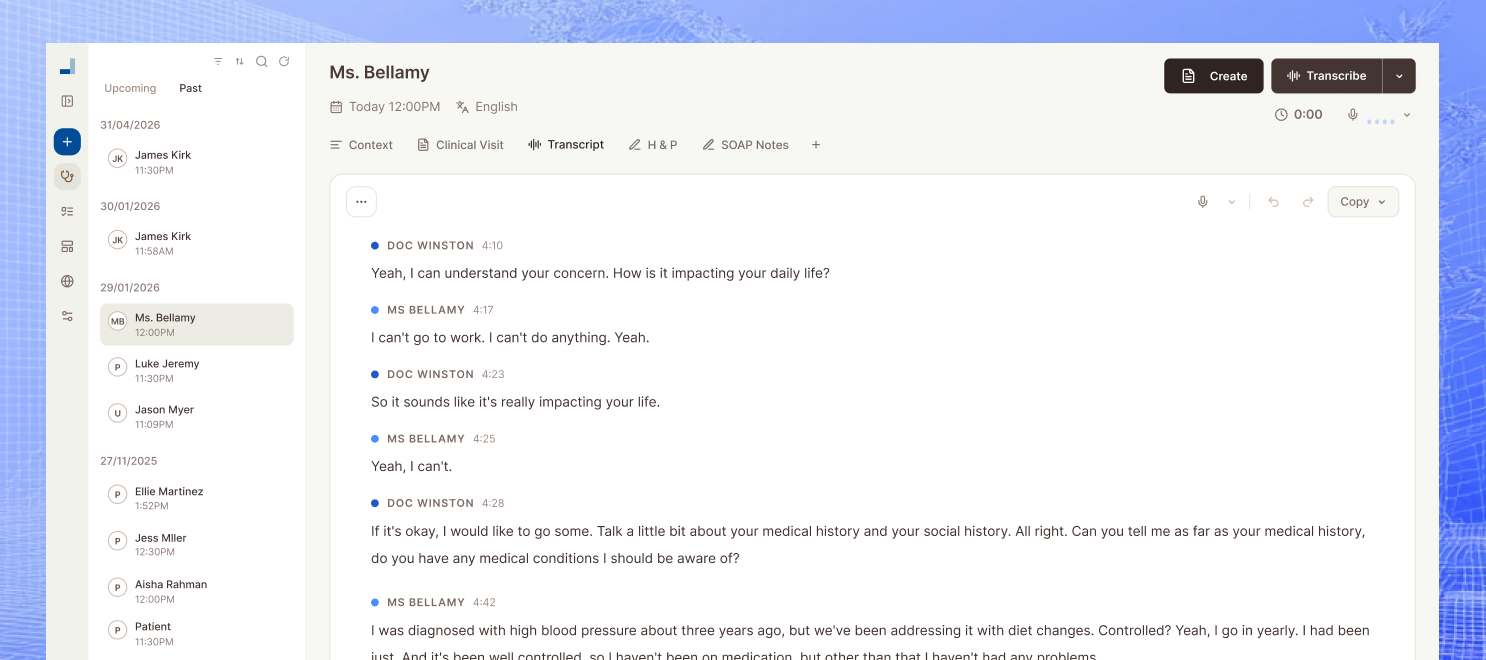
An AI medical scribe serves as an assistive technology designed to bridge this gap. It captures the nuance of the patient-provider conversation in real-time, allowing the doctor to maintain eye contact and focus on the diagnostic process. It is important to remember that these tools are assistive; while they handle the drafting, the clinician remains the final authority and responsible party for the medical record.
- Reduces administrative burnout and after-hours charting time.
- Captures granular details that might be forgotten during manual entry.
- Allows for improved patient engagement through better eye contact.
- Functions as a high-level assistant while the clinician remains the boss.
Note types you can generate beyond SOAP (H&P and more)
While the SOAP note format is a staple in outpatient care, modern clinics require various documentation styles depending on the encounter type. Comprehensive History and Physical (H&P) reports are essential for admissions, while detailed consult notes facilitate communication between specialists and primary care providers. Using a rigid structure for every visit can lead to inefficient records that don’t serve the specific needs of the patient’s care journey.
Advanced documentation includes progress notes for ongoing monitoring, procedure notes for technical interventions, and discharge summaries that ensure safe transitions of care. Referral letters are also high-stakes documents; a well-structured letter ensures the receiving physician has all necessary context without digging through irrelevant data. Standardizing these formats across a clinic ensures audit readiness and high-quality handovers.
- H&P and progress notes for comprehensive and longitudinal care.
- Specialized consult and procedure notes for specific interventions.
- Clear referral letters that improve inter-specialty communication.
- Standardized templates that simplify audits and compliance reviews.
How to implement AI medical scribe technology step-by-step in a real clinic
The first step in a successful rollout is to choose a specific visit type to pilot. Rather than applying the technology to every patient on day one, start with standard follow-ups or routine physicals. This allows the staff to get comfortable with the interface without the pressure of a complex multi-system case. Once comfort is established, you can scale to more intricate encounters.
Next, you should configure your specific templates based on your specialty. A cardiologist and a pediatrician need different data points emphasized. During the encounter, simply activate the capture tool for the in-person or telehealth visit. The AI processes the natural dialogue, filtering out the small talk to focus on the clinical facts. After the session, the draft is presented for your immediate review.
Editing is the final piece of the workflow. Because the AI has done the heavy lifting, the clinician only needs to verify the accuracy of the findings and the plan. This habit of ‘review and sign’ takes seconds compared to the minutes spent typing. Finally, the outputs can be instantly repurposed into referral letters or patient instruction forms, creating a seamless loop of medical information.
- Start small with one visit type to build team confidence.
- Customize templates to match specialty-specific requirements.
- Capture natural conversations effortlessly during the encounter.
- Review, edit, and repurpose drafts for secondary documents immediately.
How to keep note quality high and reduce mistakes
Even with advanced technology, human oversight is vital to prevent common documentation errors. Typical failure points include incorrect medication dosages, transposed lab values, or ‘note bloat’—where the record becomes cluttered with irrelevant information. Ensuring that the AI is accurately capturing the ‘Problem List’ requires a consistent review process that focuses on clinical relevance over volume.
Establishing a lightweight review habit is the most effective way to maintain quality. Spend sixty seconds auditing the generated note against your own memory of the encounter before finalizing. Promoting a culture of peer review or team standards within the clinic can also ensure that every practitioner is using the tool consistently, which makes the entire medical record more cohesive and professional.
- Verify medication names and dosages for clinical accuracy.
- Edit out irrelevant dialogue to prevent unnecessary note bloat.
- Establish a consistent sixty-second review habit for every note.
- Align team standards to ensure record-keeping consistency.
Privacy, consent, and patient trust (plain English)
Patient trust is the foundation of the clinical relationship, and introducing recording technology requires transparency. Consent requirements vary by region and local policy, so it is essential to follow your specific jurisdictional guidelines. Generally, patients are receptive to technology when they understand it helps their doctor focus more on them and less on a computer screen.
A simple way to explain this is to say: ‘I’m using a digital assistant today to take notes for me so I can focus entirely on our conversation. It captures what we discuss and helps me create your medical record more accurately. Is that okay with you?’ Most patients appreciate the transparency and the fact that their doctor is being more attentive.
- Always adhere to local and regional consent regulations.
- Use transparent, plain language when explaining the tool to patients.
- Focus on the benefit of better eye contact and focused care.
- Ensure data security principles are integrated into the clinic’s policy.
Rolling it out across a clinic without disruption
Rolling out new software requires a phased approach to avoid overwhelming the clinical team. A two-week pilot plan is usually sufficient to identify any workflow bottlenecks. During this period, select ‘super-users’ who can troubleshoot minor issues and encourage their colleagues. This peer-to-peer support is often more effective than top-down mandates from administration.
Monitoring metrics is also crucial for gauging success. Track the reduction in ‘pajama time’ (after-hours charting) and the time elapsed between the visit and note completion. When providers see that their notes are more complete and their evenings are free, adoption becomes organic. Regular feedback loops during the pilot will help align templates with the actual needs of the clinicians.
- Execute a two-week pilot with designated super-users for support.
- Track time savings and note completion rates as success metrics.
- Gather regular feedback to refine and align clinical templates.
- Focus on the reduction of after-hours work to drive long-term adoption.
Mcoy AI is an AI medical scribe that records and transcribes patient encounters, then generates multiple clinical note types (H&P, progress notes, consult notes, follow-up notes, procedure notes, discharge summaries, referral letters, and more). It offers 200+ customizable templates and an integrated AI chat to create letters, forms, and documents quickly, ensuring that every piece of documentation meets professional clinic standards while saving the clinician hours of manual effort.
Conclusion
Transitioning to an automated documentation workflow is the most significant step a modern clinic can take to combat burnout. By following a structured implementation plan, focusing on diverse note types like H&P and referral letters, and maintaining a strict review habit, practitioners can ensure their records remain high-quality and compliant. An AI medical scribe is not just a tool for convenience; it is a strategic asset for better patient care. Start your pilot today and discover how easy it is to keep your documentation aligned with the highest professional standards.
What a serious review table should cover
| Decision area | Common mistake | Better clinic-ready approach | Metric to watch |
|---|---|---|---|
| Workflow design | Treat best guide: keeping ai notes aligned with clinic standards as a one-off documentation task | Build a repeatable process with clear ownership and review points | Time to complete documentation |
| Team adoption | Assume every clinician will naturally use the same process | Train for consistency and define exception handling early | Active user adoption |
| Quality review | Only check notes when a problem is reported | Audit a sample of notes weekly and review edge cases | Edit rate per note |
| Operational follow-through | Leave admin actions outside the documentation workflow | Use the same encounter data for referrals, letters, and follow-up tasks | Completion rate for next-step tasks |
Related reading
If you are working through best guide: keeping ai notes aligned with clinic standards, it helps to read this alongside Compare & Choose: Best Tools Doctors Use to Save Time on Clinical Notes, Compare & Choose: Medical Scribing Services: Are They Worth It?, and Physician Wellbeing: How to Reduce Interruptions During Consultations With AI. Those guides cover adjacent workflow, implementation, and evaluation questions so the decision does not sit in isolation.
FAQ
How accurate are AI medical scribes in real clinics?
AI medical scribes currently offer very high levels of accuracy, particularly in capturing the clinical narrative and medical terminology used during a visit. However, the accuracy can be influenced by background noise or multiple people speaking at once. Because the system is assistive, it is highly reliable when paired with a quick clinician review to ensure every detail matches the intended diagnosis and plan.
Do I still need to review every note?
Yes, reviewing every note is a fundamental requirement for both clinical safety and legal compliance. While the AI does the heavy lifting of transcribing and formatting, the clinician is the only one who can verify the medical intent and the accuracy of the physical exam findings. A quick 30-60 second review is usually all that is needed to ensure the note meets your standard of care.
What note types can an AI scribe generate besides SOAP?
Modern AI scribes are capable of generating a vast array of documentation beyond the standard SOAP format. This includes comprehensive History and Physicals (H&P), detailed procedure notes, consult letters for specialists, and discharge summaries for hospital transitions. They can also create referral letters and follow-up notes tailored to the specific needs of different medical specialties.
Will this work for telehealth and in-person consults?
Yes, most AI scribe systems are designed to be flexible across different care delivery models. For in-person visits, the device usually sits on the desk capturing the natural conversation. For telehealth, the system can often integrate with the audio output of the video call. In both scenarios, the goal is to capture the dialogue without interfering with the patient-provider interaction.
How do I explain recording/transcription to patients?
The best approach is to be direct and highlight the benefit to the patient. You might say that you are using a digital tool to capture better notes so that you can focus 100% on them rather than your computer. Most patients are very supportive when they realize it leads to a more attentive and personalized visit.
How do clinics prevent note bloat?
Note bloat is prevented by using smart templates that filter for clinical relevance rather than transcribing every single word of the conversation. By setting specific parameters for what each section (like the HPI or Plan) should contain, the AI focuses on the ‘meat’ of the encounter. Regular template refinement based on clinician feedback also helps keep notes concise and actionable.
How long does template setup take?
Initial template setup is generally very fast. Most clinicians can start with pre-built library templates that match their specialty and make minor adjustments in just a few minutes. As you use the system, you can further refine these templates over time, but you can usually be up and running with a professional-grade format on your very first day.
What’s the safest way to start if I’m skeptical?
The safest way to start is with a ‘shadow’ pilot. Use the AI scribe during a few non-complex follow-up visits while still taking your usual brief notes. Compare the AI-generated note to your manual one at the end of the day. Once you see the quality and the time saved, you can gradually move toward relying on the AI as your primary drafting tool.