Compare & Choose: How to Evaluate AI Medical Scribe Accuracy: 2024 Guide
Learn how to assess AI medical scribe accuracy to reduce charting time and prevent burnout. Evaluate AI documentation quality with our step-by-step guide.
The Hidden Burden of Clinical Documentation
For many clinicians, the workday doesn’t end when the last patient leaves the exam room. Instead, it transitions into hours of tedious data entry, often referred to as ‘pajama time.’ This constant pressure of after-hours charting is a primary driver of burnout, leading to rushed notes and a nagging sense of medico-legal anxiety. When documentation feels like a chore rather than a clinical necessity, the risk of inconsistency and missing details increases significantly.
This guide serves as a strategic roadmap for practitioners looking to reclaim their time without sacrificing quality. We will explore how to evaluate AI medical scribe accuracy, moving beyond basic SOAP notes to complex documentation formats. Whether you are a solo practitioner, part of a busy specialty group, or managing a university clinic, understanding the workflow, privacy implications, and quality control measures is essential for a successful transition to AI-assisted charting.
What a medical scribe solves in modern practice
The real cost of traditional documentation isn’t just measured in minutes; it’s measured in cognitive load. When a doctor has to memorize every detail of a complex encounter while maintaining eye contact and empathy, clinical performance can suffer. Delayed notes lead to ‘memory decay,’ where subtle but vital observations are lost by the time the clinician finally sits down at the computer. An AI medical scribe acts as a cognitive bridge, allowing the doctor to focus entirely on the patient while the system captures the raw data of the conversation.
It is crucial to understand that an AI medical scribe is an assistive tool, not a replacement for medical judgment. The AI handles the heavy lifting of transcription and initial drafting, but the clinician remains the final authority and ‘author of record.’ By automating the conversion of natural conversation into structured data, these tools eliminate the need for shorthand and mental gymnastics during the visit, ensuring that the final output is both comprehensive and clinically relevant.
Key Takeaways on AI Scribe Benefits
- Reduces cognitive load by capturing real-time dialogue.
- Eliminates ‘pajama time’ by providing immediate drafts.
- Enhances patient engagement by removing the screen barrier.
- Maintains high-fidelity records by preventing memory decay.
Note types you can generate beyond SOAP (H&P and more)
While the SOAP note is a staple of clinical practice, modern healthcare requires a much broader spectrum of documentation. A high-quality AI system should be able to handle complex History and Physical (H&P) reports, detailed consult notes, and concise follow-up summaries. Each of these formats serves a specific purpose in the continuum of care, from setting a baseline for a new patient to providing a focused update on a chronic condition. Having the right structure ensures that the next provider—or an auditor—can quickly grasp the clinical narrative.
Specialized documentation like procedure notes, discharge summaries, and referral letters often take the most time because they require synthesizing multiple data points. A procedure note, for example, must follow a rigid sequence of events and safety checks. By using structured AI templates, clinics can ensure that these notes are consistently high-quality and audit-ready. This level of organization is particularly vital for university clinics, where multiple residents and attending physicians must stay aligned on a single patient’s progress.
Essential Documentation Formats
- Detailed H&P for comprehensive new patient intake.
- Structured Procedure Notes for surgical and minor interventions.
- Professional Referral Letters to streamline specialist communication.
- Concise Discharge Summaries to ensure safe patient transitions.
How to implement AI medical scribe accuracy step-by-step in a real clinic
The most effective way to start is by selecting a single, high-volume visit type. For example, a GP might start with standard wellness exams, while a specialist might focus on initial consultations. By narrowing the scope initially, you can observe how the AI interprets specific terminology and patient phrasing without feeling overwhelmed by your entire schedule. This pilot phase allows the staff to get comfortable with the interface and the recording process.
Next, you should configure your templates according to your specialty’s specific needs. Most advanced systems allow you to customize how data is presented, ensuring the output aligns with your existing EHR preferences. Once the encounter begins, whether in-person or via telehealth, simply let the AI capture the dialogue. You don’t need to change how you speak to the patient; the goal is for the AI to adapt to your naturally high AI medical scribe accuracy standards.
After the encounter, the review process is your most important step. Spend 60 seconds reviewing the generated draft for any nuances or specific clinical decisions that may need extra emphasis. Once the note is polished, you can often reuse the core information to generate secondary documents like referral letters or school excuses. This workflow turns a single conversation into a multi-purpose data asset, saving hours of redundant typing across different forms and systems.
Implementation Success Path
- Start with one specific encounter type to build confidence.
- Customize templates to match your specialty’s workflow.
- Capture natural dialogue without robotic dictation.
- Implement a rapid ‘review and sign’ habit for every draft.
How to keep note quality high and reduce mistakes
Even the most advanced AI can encounter failure points if the input is unclear. Common issues include ‘note bloat,’ where the AI includes irrelevant small talk, or missing specific medication dosages that were whispered or mumbled. To keep note quality high, clinicians should adopt a habit of ‘verbal signposting’—briefly stating clinical findings out loud, such as, ‘Your blood pressure today is 120/80,’ which helps the AI anchor the data correctly.
Establishing a team standard for note review is also critical. If you are in a multi-provider clinic, ensure everyone is checking for accuracy in the ‘Assessment and Plan’ section, as this is the most legally sensitive area. A lightweight review habit—checking for wrong values or missing meds—takes far less time than writing a note from scratch and ensures that the final documentation is defensible and accurate for billing purposes.
Quality Control Strategies
- Practice ‘verbal signposting’ for critical data points like vitals.
- Review the ‘Assessment and Plan’ with extra scrutiny.
- Establish clinic-wide standards for template usage.
- Conduct periodic audits of AI-generated notes for accuracy.
Privacy, consent, and patient trust (plain English)
Patient trust is built on transparency. When introducing an AI scribe, use a simple script: ‘To help me focus on you instead of my computer, I use an AI assistant that securely transcribes our conversation into my clinical notes. It doesn’t store your voice recording permanently—it just helps me get the paperwork right.’ Most patients appreciate the extra eye contact and the fact that their doctor is actually listening to them rather than typing.
From a security perspective, it is important to follow your local healthcare privacy regulations regarding data retention and consent. Ensure that your chosen tool uses enterprise-grade encryption and that you have a signed BAA (Business Associate Agreement) in place. By treating the AI scribe as a secure extension of the medical team, you maintain the sanctity of the patient-provider relationship while benefiting from modern efficiency.
Privacy and Trust Essentials
- Use a transparent, friendly script to explain the tool to patients.
- Verify that your AI provider follows local data protection laws.
- Ensure a BAA is in place for HIPAA or GDPR compliance.
- Focus on the benefit of improved eye contact and engagement.
Rolling it out across a clinic without disruption
A phased rollout is the best way to avoid operational friction. We recommend a two-week pilot program involving one or two ‘tech-champion’ providers. During this time, the goal isn’t just to save time but to identify which templates work best for the clinic’s specific patient mix. Tracking metrics like ‘time spent charting per day’ and ‘time until note completion’ will provide the data needed to justify a full-scale rollout.
Training should focus on template alignment and the review process. When the whole team uses the same structured formats, it becomes much easier for nurses and administrative staff to find the information they need for follow-ups or billing. This synchronization reduces internal friction and ensures that the AI scribe becomes a seamless part of the clinic’s ecosystem rather than just another software burden.
Clinic Rollout Checklist
- Identify ‘champion’ providers for a 14-day pilot.
- Track time-savings metrics to measure ROI.
- Standardize templates across the entire clinical team.
- Focus training on the review and editing workflow.
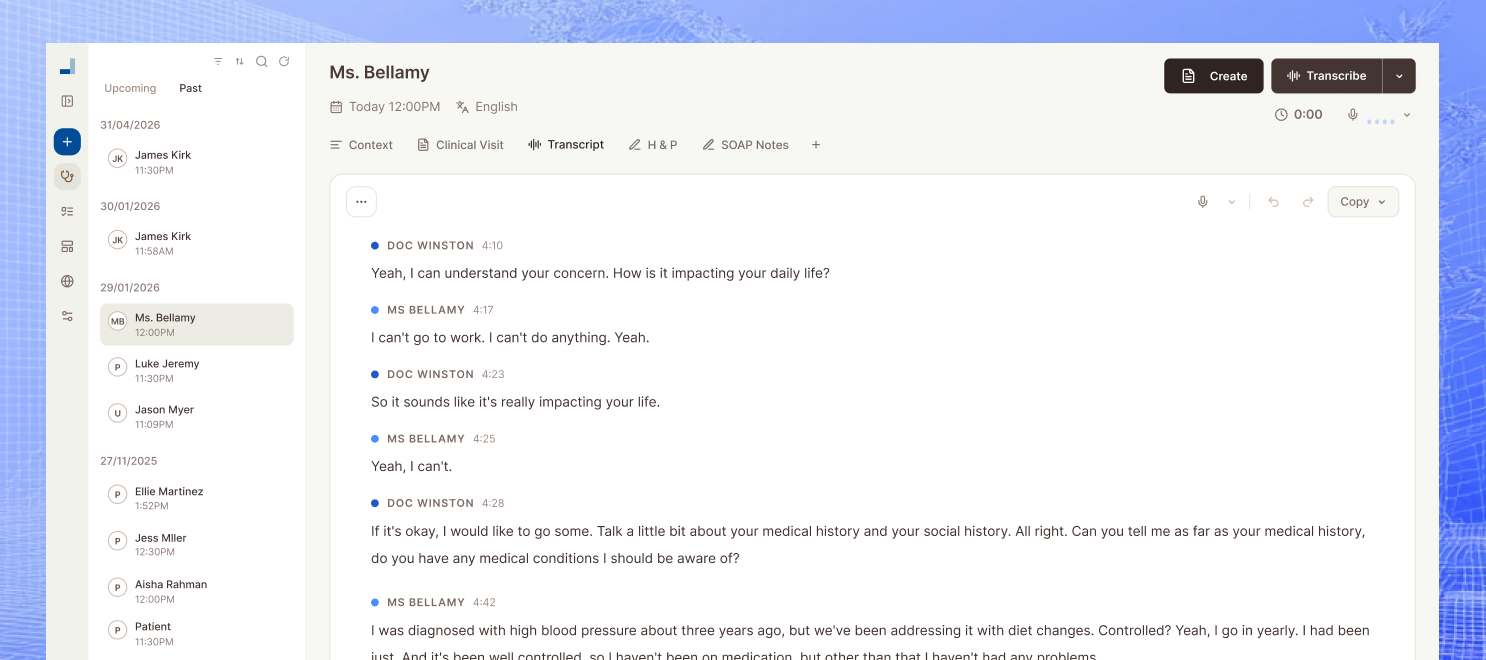
Mcoy AI is an AI medical scribe that records and transcribes patient encounters, then generates multiple clinical note types (H&P, progress notes, consult notes, follow-up notes, procedure notes, discharge summaries, referral letters, and more). With 200+ customizable templates and an AI chat feature to create letters, forms, and other documents, it helps clinicians significantly reduce administrative burden. The system is designed to seamlessly integrate into various workflows, ensuring that documentation is both accurate and efficient.
Conclusion
Improving documentation quality doesn’t have to mean spending more time at your desk. By following a structured implementation plan and focusing on AI medical scribe accuracy, you can transform your clinical workflow. Start with a pilot, refine your templates, and reclaim your personal time while providing better, more focused care to your patients. The future of practice management is here, and it’s time to let AI handle the notes so you can handle the healing.
What a serious review table should cover
| Decision area | Common mistake | Better clinic-ready approach | Metric to watch |
|---|---|---|---|
| Workflow design | Treat how to evaluate ai medical scribe accuracy: 2024 guide as a one-off documentation task | Build a repeatable process with clear ownership and review points | Time to complete documentation |
| Team adoption | Assume every clinician will naturally use the same process | Train for consistency and define exception handling early | Active user adoption |
| Quality review | Only check notes when a problem is reported | Audit a sample of notes weekly and review edge cases | Edit rate per note |
| Operational follow-through | Leave admin actions outside the documentation workflow | Use the same encounter data for referrals, letters, and follow-up tasks | Completion rate for next-step tasks |
Related reading
If you are working through how to evaluate ai medical scribe accuracy: 2024 guide, it helps to read this alongside Compare & Choose: Best Tools Doctors Use to Save Time on Clinical Notes, Compare & Choose: Medical Scribing Services: Are They Worth It?, and AI & Medicine: Standardizing Problem Lists with AI Scribe Notes | Mcoy. Those guides cover adjacent workflow, implementation, and evaluation questions so the decision does not sit in isolation.
FAQ
How accurate are AI medical scribes in real clinics?
AI medical scribes currently achieve very high levels of accuracy, often exceeding 95% for standard clinical dialogue. However, accuracy depends on the audio quality and the clarity of the conversation. In a real-world clinic, the AI acts as a highly efficient drafter that captures the vast majority of relevant data correctly. Clinicians find that while the drafts are excellent, their final review ensures 100% accuracy for the permanent record.
Do I still need to review every note?
Yes, reviewing every note is a professional and legal requirement for clinicians. The AI serves as an assistant, but the physician is the ultimate authority on the medical content. Fortunately, reviewing and editing a pre-generated note usually takes less than a minute. This is significantly faster than typing or dictating the entire note from memory after the visit.
What note types can an AI scribe generate besides SOAP?
Modern AI scribes are capable of generating a wide variety of documents including History and Physicals (H&P), procedure notes, and consult notes. They can also create discharge summaries and referral letters based on the encounter data. This versatility allows the tool to support complex specialties and comprehensive primary care visits. Specialized templates ensure each note type meets standard clinical requirements.
Will this work for telehealth and in-person consults?
Yes, most AI scribe systems are designed to work seamlessly across both encounter formats. For in-person visits, a smartphone or tablet in the room captures the audio clearly. For telehealth, the system can often capture the audio directly from the computer output. This ensures a consistent documentation experience regardless of how the patient is being seen.
How do I explain recording/transcription to patients?
Practitioners find that a simple, transparent explanation works best. Inform the patient that you are using a secure digital assistant to help you take notes so you can focus on them instead of a computer screen. Most patients are very supportive when they realize it leads to better eye contact and more focused attention. Always follow your local guidelines regarding verbal or written consent.
How do clinics prevent note bloat?
Note bloat is prevented by using smart templates that filter for clinically relevant information. Advanced AI systems are trained to distinguish between medical data and casual social conversation. Clinicians can also control note length by selecting specific ‘concise’ templates. This ensures the final documentation is professional, relevant, and easy for other providers to read.
How long does template setup take?
Initial template setup usually takes only a few minutes when using pre-built specialty libraries. Most clinicians can start with a standard template and then make minor adjustments over their first few days of use. Because the AI is adaptive, it learns your preferences quickly. You don’t need to be a ‘tech person’ to get your templates perfectly aligned with your workflow.
What’s the safest way to start if I’m skeptical?
The safest approach is to run a small pilot with one or two non-complex patients per day. This allows you to compare the AI-generated note against your traditional charting method without any pressure. Once you see the accuracy and the time saved on those few cases, you can gradually expand usage. Choosing a provider that offers a BAA and high encryption ensures your data remains protected from day one.