Specialty Guides: Document ADHD Reviews With an AI Scribe: Complete Guide
Learn how to use an AI scribe for ADHD reviews. Master complex documentation, improve accuracy, and reclaim your time with our comprehensive clinical guide.
The Documentation Burden of ADHD Care
Managing ADHD across the lifespan involves more than just a quick check-in; it requires meticulous tracking of symptoms, medication side effects, and functional outcomes. For many clinicians, particularly those in busy private practices or university clinics, the administrative overhead of documenting these complex reviews often leads to late-night charting or ‘pajama time.’ The anxiety of potentially missing a nuanced side effect or failing to document a titration rationale can contribute significantly to practitioner burnout.
This guide provides a comprehensive roadmap for integrating an AI medical scribe into your ADHD clinical workflow. We will explore how to move beyond basic SOAP notes to capture high-quality History and Physical (H&P) assessments, legal-grade titration logs, and specialized progress notes. Whether you are a psychiatrist, a general practitioner, or a specialist clinic owner, this workflow is designed to ensure quality control and patient privacy while drastically reducing time spent at the keyboard.
What a medical scribe solves in modern practice
The real cost of medical documentation is measured in more than just minutes; it is measured in cognitive load. In a typical ADHD review, the clinician must observe the patient’s affect, listen to the parent or partner’s feedback, and monitor physical vitals, all while struggling to keep up with the note. When documentation is delayed, crucial details about dosage timing or subtle behavioral changes are often lost, leading to notes that feel generic or incomplete.
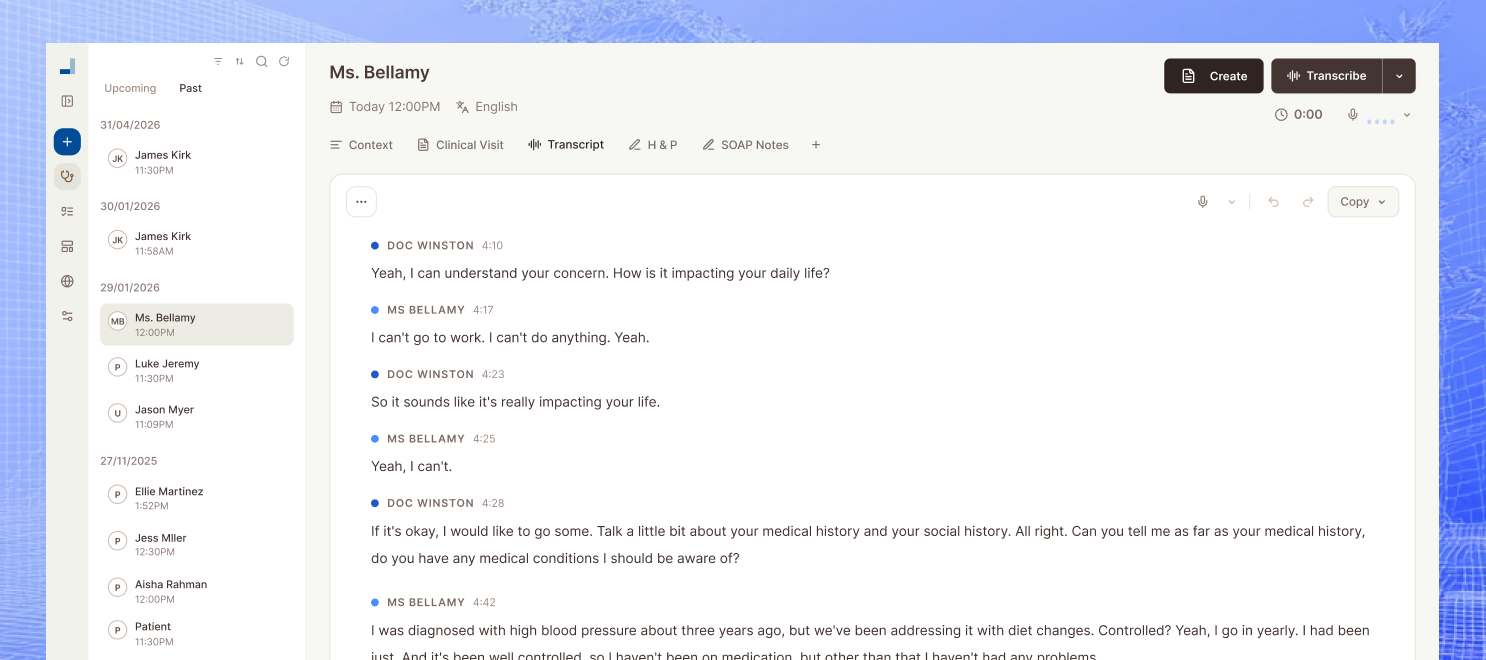
An AI medical scribe acts as a sophisticated assistant that captures the raw dialogue of the encounter in real-time. It is important to remember that these tools are assistive technologies; while they excel at organizing and transcribing clinical data, the clinician remains the final authority and must review and sign off on every note. By offloading the mechanical task of writing, you can maintain eye contact and focus on the patient’s clinical narrative.
- Eliminates the ‘documentation lag’ that leads to memory decay.
- Reduces cognitive switching between listening and typing.
- Captures specific verbatim patient concerns for better context.
- Allows the clinician to focus on the therapeutic alliance.
- Provides a structured draft that only requires final validation.
Note types you can generate beyond SOAP (H&P and more)
While the SOAP format is a standard, ADHD management often requires more specialized documentation. For new patients, a full History and Physical (H&P) is essential to rule out comorbidities and establish a baseline. Follow-up notes need to track specific rating scales (like ADHD-RS or Vanderbilt scores) and medication responses over time. A simple progress note often isn’t enough to capture the nuance of a complex titration or a transition from pediatric to adult care.
Consult notes and referral letters are also critical in a multidisciplinary ADHD care model. Whether you are communicating with a school, a therapist, or a primary care physician, the clarity and structure of your documentation determine the quality of the handover. High-quality documentation ensures audit readiness and provides a clear audit trail for controlled substance management, which is vital for medico-legal protection.
- H&P notes for comprehensive initial diagnostic assessments.
- Detailed titration logs and specialized follow-up progress notes.
- Referral letters for educational support or co-management.
- Discharge summaries for patients transitioning to different care tiers.
- Procedure notes for specific interventions or neuro-feedback sessions.
How to implement an AI scribe for ADHD reviews step-by-step
To begin implementing an AI scribe for ADHD reviews, start by introducing the tool for just one type of visit, such as follow-up medication checks. This allows you to get comfortable with the technology without the pressure of a full initial diagnostic interview. Before the patient enters the room, ensure your AI tool is set to the correct specialty template, such as ‘Psychiatry’ or ‘Pediatrics,’ to ensure the output aligns with your clinical needs.
During the encounter, simply record the conversation as you conduct your usual review of symptoms and medication efficacy. You don’t need to change how you speak; the AI is designed to filter the clinical data from the natural conversation. Once the visit is over, the AI will generate a draft based on the encounter. Take two minutes to review the draft, making sure the specific dosages and frequencies are perfectly accurate.
Once you are satisfied with the note, you can immediately use the AI’s output to generate referral letters for schools or summary reports for the patient’s primary doctor. This secondary use of the transcription data saves massive amounts of time on administrative back-and-forth. Over several weeks, you can expand this process to more complex initial assessments and multi-party consultations involving parents or teachers.
- Start with low-complexity follow-up appointments to build confidence.
- Use specialty-specific templates to guide the AI’s formatting logic.
- Capture the encounter naturally without altering your bedside manner.
- Review outputs immediately after the session while details are fresh.
- Leverage the AI to create school letters and specialist referrals.
How to keep note quality high and reduce mistakes
The most common failure points in ADHD documentation include missing specific medication names, incorrect doses, or ‘note bloat’ where irrelevant details clutter the chart. To prevent this, establish a lightweight review habit: always verify the ‘Plan’ section first to ensure medication changes are accurately reflected. Standardizing your team’s expectations on what constitutes a ‘good’ note ensures consistency across the clinic.
Note bloat can be avoided by selecting templates that prioritize concise summaries over verbatim transcripts. Encourage your staff to use the same naming conventions for problem lists and medication regimes. By maintaining a high standard of review, you ensure that the AI learns from your edits, resulting in increasingly accurate drafts that meet your specific clinical style.
- Verify all medication names and dosages against the verbal record.
- Use concise templates to prevent irrelevant information from entering the EHR.
- Perform a ‘spot check’ of high-risk notes (titrations and new diagnoses).
- Align the whole clinic on documentation standards and template use.
- Avoid raw transcript dumps; prioritize structured clinical summaries.
Privacy, consent, and patient trust
Privacy is the cornerstone of any psychiatric or behavioral health encounter. It is important to understand that consent requirements vary by region, so you should always follow your local medical board’s policies regarding the recording of encounters. Generally, being transparent with patients about how the technology is used to improve their care helps build trust rather than infringing upon it.
When introducing the tool to a patient, use a simple script: ‘I’m using an AI assistant today to help me capture our conversation so I can focus entirely on you instead of my computer. It transcribes our talk into a clinical note, and then the recording is deleted. Are you comfortable with that?’ Most patients appreciate the increased eye contact and focus from their provider.
- Always adhere to local and regional privacy regulations.
- Use a clear, patient-friendly script to explain the AI’s role.
- Ensure the data is encrypted and handled according to HIPAA or local standards.
- Allow patients to opt-out at any time without a change in care quality.
- Focus on how the technology improves the quality of the clinical record.
Rolling it out across a clinic without disruption
Rolling out an AI scribe across a university clinic or private practice requires a phased approach. Start with a two-week pilot program involving one or two ‘tech-forward’ clinicians. This allows you to surface any workflow bottlenecks—like Wi-Fi dead zones or template preferences—before a full-scale launch. During this period, track metrics such as time saved per day and the reduction in after-hours documentation.
Training should focus on template alignment so that every doctor in the clinic generates notes that look and feel consistent. Once the pilot is successful, hold a brief training session for the rest of the staff to share best practices and ‘champion’ the benefits. This collective buy-in is essential for long-term adoption and ensures the technology becomes a seamless part of the clinical day.
- Execute a 14-day pilot with one or two lead clinicians.
- Measure the impact on ‘pajama time’ and note completion rates.
- Standardize clinical templates to ensure output consistency.
- Provide brief, hands-on training for the entire clinical team.
- Regularly review feedback to refine workflow and template settings.
Mcoy AI is an AI medical scribe that records and transcribes patient encounters, then generates multiple clinical note types (H&P, progress notes, consult notes, follow-up notes, procedure notes, discharge summaries, referral letters, and more). It features 200+ customizable templates and an AI chat to create letters, forms, and secondary documents, allowing clinicians to focus on patient care rather than administrative tasks.
Frequently Asked Questions
Many clinicians have questions about how these tools perform in specialized environments like ADHD clinics. Below are the most common inquiries regarding the use and implementation of AI scribing technology.
How accurate are AI medical scribes in real clinics?
AI medical scribes are highly accurate in capturing clinical dialogue, but they are not infallible. They excel at identifying medical terminology and structuring narratives, though they may occasionally struggle with heavy accents or very fast speech. Clinicians should always view the output as a high-quality draft that requires a final professional review to ensure 100% accuracy before it becomes a part of the permanent legal record.
Do I still need to review every note?
Yes, the clinician is legally and ethically responsible for the accuracy of the medical record. While the AI does the ‘heavy lifting’ by organizing and drafting the note, you must review it to ensure that the medication dosages, diagnoses, and plans are correct. Most clinicians find that reviewing a pre-drafted note takes significantly less time than writing one from scratch, often saving several hours per week.
What note types can an AI scribe generate besides SOAP?
An AI scribe is versatile and can generate a variety of documents including History and Physical (H&P) assessments, consultation letters, and discharge summaries. For ADHD care, this is particularly useful for creating detailed titration reports or school accommodation letters. You can use different templates to ensure the AI focuses on the specific data points required for each unique document type.
Will this work for telehealth and in-person consults?
Most modern AI scribes are designed to work seamlessly in both environments. For in-person visits, the device captures the room’s audio, while for telehealth, it can often be integrated directly into the video platform or record the audio output from your computer. This flexibility is essential for ADHD specialists who often offer hybrid care models to accommodate their patients’ schedules.
How do I explain recording/transcription to patients?
The best approach is transparency and focusing on the benefit to the patient. Explain that the tool allows you to stop typing and start listening more closely to their concerns. Most patients with ADHD or their parents appreciate the undivided attention. Using a simple, non-technical explanation helps demystify the technology and maintains the therapeutic alliance while ensuring informed consent is obtained.
How do clinics prevent note bloat?
Note bloat is prevented by using focused, specialty-specific templates that instruct the AI to only extract relevant clinical information. Instead of a ‘dump’ of everything said, the AI filters for symptoms, side effects, and changes in function. Clinicians can also customize how much detail they want in their summaries, ensuring the final note remains a crisp and useful document for future clinical decisions.
How long does template setup take?
Initial setup for standard templates is usually instantaneous, as most tools come with pre-built options for various specialties. Customizing those templates to your specific ‘voice’ or clinic requirements typically takes just a few minutes. Once a template is saved, it can be reused across the entire clinic, ensuring that all ADHD reviews follow a consistent, high-quality structure without extra effort.
What’s the safest way to start if I’m skeptical?
The safest way to start is with a ‘shadow’ pilot. Use the AI scribe during a few sessions but continue to take your usual notes by hand or keyboard. After the session, compare your manual notes with the AI-generated draft. Most skeptics find that the AI captures more detail than they did manually, which builds the necessary confidence to eventually transition to a more efficient, AI-first documentation workflow.
Conclusion
Integrating an AI scribe into your ADHD reviews is more than just a technical upgrade; it is a commitment to better clinical care and professional well-being. By automating the mechanical aspects of documentation, you can provide the focused attention that behavioral health requires while ensuring your records are detailed and compliant. Implementing an AI scribe allows you to move beyond the stress of the ‘empty page’ and back to the heart of medicine. If you are ready to reclaim your schedule, starting an ADHD review with an AI scribe is the most impactful step you can take for your practice today.
What a serious review table should cover
| Decision area | Common mistake | Better clinic-ready approach | Metric to watch |
|---|---|---|---|
| Workflow design | Treat document adhd reviews with an ai scribe: complete guide as a one-off documentation task | Build a repeatable process with clear ownership and review points | Time to complete documentation |
| Team adoption | Assume every clinician will naturally use the same process | Train for consistency and define exception handling early | Active user adoption |
| Quality review | Only check notes when a problem is reported | Audit a sample of notes weekly and review edge cases | Edit rate per note |
| Operational follow-through | Leave admin actions outside the documentation workflow | Use the same encounter data for referrals, letters, and follow-up tasks | Completion rate for next-step tasks |
Related reading
If you are working through document adhd reviews with an ai scribe: complete guide, it helps to read this alongside Specialty Guides: How to Run a More Efficient Medical Practice in 2026, Specialty Guides: How to Improve Patient Encounters, and Admin Management: How to Use AI Scribe for Pathology Requests | Full Guide. Those guides cover adjacent workflow, implementation, and evaluation questions so the decision does not sit in isolation.
FAQ
How accurate are AI medical scribes in real clinics?
AI medical scribes are highly accurate in capturing clinical dialogue, but they are not infallible. They excel at identifying medical terminology and structuring narratives, though they may occasionally struggle with heavy accents or very fast speech. Clinicians should always view the output as a high-quality draft that requires a final professional review to ensure 100% accuracy before it becomes a part of the permanent legal record.
Do I still need to review every note?
Yes, the clinician is legally and ethically responsible for the accuracy of the medical record. While the AI does the ‘heavy lifting’ by organizing and drafting the note, you must review it to ensure that the medication dosages, diagnoses, and plans are correct. Most clinicians find that reviewing a pre-drafted note takes significantly less time than writing one from scratch, often saving several hours per week.
What note types can an AI scribe generate besides SOAP?
An AI scribe is versatile and can generate a variety of documents including History and Physical (H&P) assessments, consultation letters, and discharge summaries. For ADHD care, this is particularly useful for creating detailed titration reports or school accommodation letters. You can use different templates to ensure the AI focuses on the specific data points required for each unique document type.
Will this work for telehealth and in-person consults?
Most modern AI scribes are designed to work seamlessly in both environments. For in-person visits, the device captures the room’s audio, while for telehealth, it can often be integrated directly into the video platform or record the audio output from your computer. This flexibility is essential for ADHD specialists who often offer hybrid care models to accommodate their patients’ schedules.
How do I explain recording/transcription to patients?
The best approach is transparency and focusing on the benefit to the patient. Explain that the tool allows you to stop typing and start listening more closely to their concerns. Most patients with ADHD or their parents appreciate the undivided attention. Using a simple, non-technical explanation helps demystify the technology and maintains the therapeutic alliance while ensuring informed consent is obtained.
How do clinics prevent note bloat?
Note bloat is prevented by using focused, specialty-specific templates that instruct the AI to only extract relevant clinical information. Instead of a ‘dump’ of everything said, the AI filters for symptoms, side effects, and changes in function. Clinicians can also customize how much detail they want in their summaries, ensuring the final note remains a crisp and useful document for future clinical decisions.
How long does template setup take?
Initial setup for standard templates is usually instantaneous, as most tools come with pre-built options for various specialties. Customizing those templates to your specific ‘voice’ or clinic requirements typically takes just a few minutes. Once a template is saved, it can be reused across the entire clinic, ensuring that all ADHD reviews follow a consistent, high-quality structure without extra effort.
What’s the safest way to start if I’m skeptical?
The safest way to start is with a ‘shadow’ pilot. Use the AI scribe during a few sessions but continue to take your usual notes by hand or keyboard. After the session, compare your manual notes with the AI-generated draft. Most skeptics find that the AI captures more detail than they did manually, which builds the necessary confidence to eventually transition to a more efficient, AI-first documentation workflow.