Practice Operations: Free Procedure Note Template Pack & Setup Guide
Learn how to build a procedure note template pack to save time. Streamline your clinical workflow with these free resources and expert documentation tips.
The Documentation Burden in Modern Clinics
For many clinicians, the end of a successful minor surgery or bedside procedure isn’t marked by a sense of accomplishment, but by the looming shadow of paperwork. After-hours charting has become a pervasive epidemic among private practitioners and university clinic staff alike. The anxiety of potentially missing a critical detail in a procedure note can lead to hours of documentation, often long after the patient has left the building.
This guide provides a comprehensive roadmap for building a free procedure note template pack that transforms your workflow. We will explore how to transition from rushed, inconsistent notes to professional, high-quality documentation that satisfies both clinical and medico-legal requirements. Whether you are a general surgeon, a specialist in a high-volume clinic, or a resident managing university health services, mastering these formats will significantly reduce your cognitive load.
What a medical scribe solves in modern practice
The real cost of documentation extends far beyond the time spent typing. It includes the mental fatigue of trying to recall specific anatomical landmarks or instrument types hours after the event. Delayed notes are often less accurate, and the cumulative weight of unfinished charts contributes heavily to physician burnout. When practitioners are rushed, they are more likely to use generic templates that don’t reflect the nuances of the specific encounter.
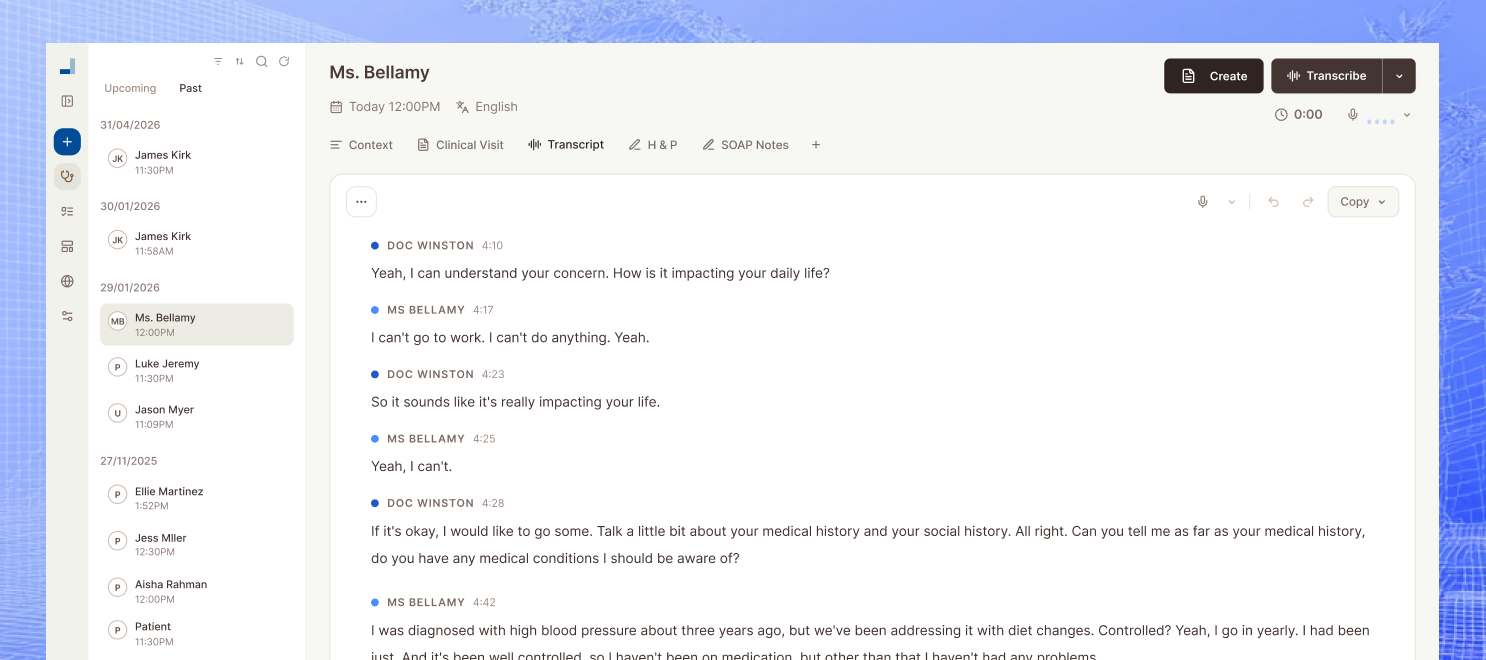
An AI medical scribe serves as an assistive tool to intercept this burden. By capturing the data in real-time or processing a dictation immediately, it ensures that the narrative of the procedure is rich with detail while the facts are still fresh in the clinician’s mind. It is important to remember that these tools are supportive; the clinician remains the ultimate authority and is responsible for the final verification of every entry in the medical record.
- Eliminates the ‘pajama time’ spent on finishing charts at home.
- Reduces cognitive load by capturing details immediately post-procedure.
- Standardizes documentation across multi-provider clinics.
- Ensures clinicians remain the primary editors and validators of care.
Note types you can generate beyond SOAP (H&P and more)
While the SOAP format is the bread and butter of daily rounds, procedures require a more technical and structured approach. A robust procedure note template pack should include specific sections for indications, anesthesia used, complications (or lack thereof), and detailed findings. Relying solely on SOAP for a complex biopsy or a laparoscopic intervention often leaves out the granular data required for audit readiness and continuity of care.
Beyond basic procedures, high-functioning clinics utilize specialized formats such as History and Physicals (H&P), detailed consult notes for new referrals, and comprehensive discharge summaries. Effective documentation is not just about recording what happened; it is about ensuring the next provider in the chain of care has every piece of information they need. This level of structure is essential for handovers and ensures that your practice is always prepared for a quality-of-care audit.
- H&P and Consult notes for comprehensive patient intake.
- Procedure notes that specify instruments, anesthesia, and findings.
- Discharge summaries that clearly outline post-op instructions.
- Referral letters that communicate vital findings to colleagues.
How to implement free procedure note template pack step-by-step in a real clinic
To begin implementing a free procedure note template pack, start small by selecting a single, frequent visit type, such as a localized excision or a diagnostic biopsy. Attempting to overhaul your entire library at once can be overwhelming. By focusing on one procedure, you can refine the language and ensure the template captures the specific terminology your specialty requires.
Next, set up your templates within your documentation system based on your specialty’s unique needs. During the encounter, ensure you are capturing the key verbal cues or visual findings either through dictation or real-time capture. This is the moment where the actual work is recorded, ensuring that no detail regarding the site, size, or technique is lost to memory.
Once the encounter is concluded, a quick review and edit process is vital. Even the best templates require a human touch to ensure the context is perfect. Finally, reuse these outputs to generate follow-up forms or referral letters. If a procedure note is well-documented, the information can be instantly repurposed for patient instruction sheets or letters to the referring GP, saving you from double-entry.
- Start with one common procedure to test the template flow.
- Customize templates with specialty-specific medical terminology.
- Review and edit the draft immediately while the case is fresh.
- Repurpose note data for letters and patient instructions.
How to keep note quality high and reduce mistakes
The most common failure points in clinical documentation are often the smallest details: missing medication dosages, incorrect laterality (left vs. right), or ‘note bloat’ where irrelevant history obscures the actual surgical findings. To prevent these errors, it is essential to establish a team standard for what constitutes a ‘perfect’ note. Consistency across the clinic prevents confusion during follow-up visits.
Developing a lightweight review habit is the most effective safeguard. Instead of waiting until the end of the week, spend sixty seconds reviewing the note immediately after generating it. This small habit prevents errors from compounding and ensures the problem list remains accurate and updated. Standardizing these checks across your team ensures that every practitioner is operating at the same high level of quality.
- Double-check laterality and specific medication dosages.
- Avoid note bloat by removing redundant historical data.
- Implement personal ‘sixty-second’ review habits.
- Standardize documentation language across the entire clinic team.
Privacy, consent, and patient trust (plain English)
Maintaining patient trust is paramount when introducing any documentation technology. Consent requirements vary significantly by region, so it is vital to follow your local healthcare privacy laws and clinic policies. Transparent communication about how notes are generated often alleviates any patient concerns regarding their data privacy.
A simple way to explain the process to a patient is: ‘To ensure I give you my full attention and don’t miss any clinical details, I use a digital assistant to help me draft your procedure note. It focuses on the medical facts and helps me keep your record accurate.’ Most patients appreciate the fact that you are focusing on them rather than a computer screen. Always ensure that the data retention principles of the tools you use align with your local regulatory standards.
- Always follow local regional consent and privacy regulations.
- Use a simple, transparent script to explain documentation tools.
- Focus on the benefit of better accuracy and ‘eye contact’ care.
- Ensure tools meet standard security and data retention principles.
Rolling it out across a clinic without disruption
A successful rollout requires a gradual approach. We recommend a two-week pilot plan where only one or two providers use the new template pack. During this time, you can identify any friction points in the workflow and adjust the templates before a full-scale launch. This limited phase prevents the chaos mentioned in larger system transitions.
During the pilot, track specific metrics such as the reduction in after-hours charting and the time taken from the end of a procedure to the final signature of the note. These data points provide the evidence needed to encourage more skeptical colleagues. Training should be focused on alignment—ensuring everyone uses the same templates to maintain a professional and unified voice for the practice.
- Execute a 2-week pilot with a small group of early adopters.
- Track time saved and the reduction in documentation backlog.
- Align the whole team on specific template standards.
- Refine templates based on pilot feedback before full rollout.
Mcoy AI is an AI medical scribe that records and transcribes patient encounters, then generates multiple clinical note types (H&P, progress notes, consult notes, follow-up notes, procedure notes, discharge summaries, referral letters, and more). With over 200+ customizable templates and an interactive AI chat, clinicians can easily create letters, forms, and documents from their recorded encounters. This allows for a more focused patient experience while the AI handles the complex task of drafting professional, accurate medical documentation.
Frequently Asked Questions about AI Documentation
Adopting new tools for clinical work often brings up practical questions. Here are the most common inquiries from practitioners looking to streamline their notes.
How accurate are AI medical scribes in real clinics?
In real-world settings, AI scribes are remarkably accurate at capturing clinical terminology and the nuances of a patient conversation. They excel at organizing the flow of a procedure into a logical structure, though they are most effective when the clinician clearly verbalizes findings. While the technology handles the heavy lifting, it is the clinician’s review that ensures 100% accuracy for the final record.
Do I still need to review every note?
Yes, reviewing every note is a fundamental requirement for clinical safety and legal responsibility. The AI generates a highly accurate draft based on the encounter, but the physician must verify that all facts, especially dosages and laterality, are correct. This review process usually takes only a fraction of the time it would take to write the note from scratch.
What note types can an AI scribe generate besides SOAP?
Modern AI scribes are capable of generating a wide variety of documentation beyond the SOAP format. This includes comprehensive H&P notes, detailed procedure notes for surgical interventions, consult letters for specialists, and discharge summaries for hospital settings. Many also offer the ability to generate specific referral letters and patient education summaries based on the visit data.
Will this work for telehealth and in-person consults?
Yes, most AI documentation tools are designed to work seamlessly in both environments. For in-person visits, the system captures ambient audio, while for telehealth, it can often integrate with the video platform or record the system audio. The goal is to provide a consistent documentation experience regardless of how the patient is being seen.
How do I explain recording/transcription to patients?
The best approach is transparency and focusing on the quality of care. Explain that the tool allows you to focus 100% on the patient rather than typing on a keyboard. Most patients are supportive when they realize it leads to more eye contact and a more accurate history of their medical journey.
How do clinics prevent note bloat?
Note bloat is prevented by using concise templates and AI models trained to highlight only relevant clinical information. Practitioners can further reduce bloat by setting specific preferences for their templates, ensuring the output focuses on new findings and active management rather than repeating years of stable medical history.
How long does template setup take?
Setting up a basic template pack can take as little as an hour if you are using pre-built industry standards. Customizing them to your specific specialty or personal ‘voice’ might take a few sessions of refinement. The investment in setup time is quickly recouped by the hours saved in daily documentation after the launch.
What’s the safest way to start if I’m skeptical?
The safest way to start is by using the tool for one specific, low-risk visit type or in a ‘shadow’ mode where you dictate a summary of the visit after the patient leaves. This allows you to build confidence in the tool’s accuracy and formatting capabilities without changing your entire workflow on day one.
Moving Toward a More Efficient Practice
Developing a standardized documentation workflow is the most effective way to reclaim your time and improve the quality of your medical records. By utilizing a free procedure note template pack, you can ensure that every minor surgery and consult is recorded with precision and professional clarity. The shift from manual entry to an assistive, template-driven approach is a necessary evolution in modern healthcare.
As you begin this journey, remember that the goal is consistency and reduced stress. Start your pilot today and see how structured documentation can transform your clinic’s daily rhythm. Creating a free procedure note template pack is the first step toward a more sustainable and focused medical practice which puts the patient—not the paperwork—at the center of care.
What a serious review table should cover
| Decision area | Common mistake | Better clinic-ready approach | Metric to watch |
|---|---|---|---|
| Workflow design | Treat free procedure note template pack & setup guide as a one-off documentation task | Build a repeatable process with clear ownership and review points | Time to complete documentation |
| Team adoption | Assume every clinician will naturally use the same process | Train for consistency and define exception handling early | Active user adoption |
| Quality review | Only check notes when a problem is reported | Audit a sample of notes weekly and review edge cases | Edit rate per note |
| Operational follow-through | Leave admin actions outside the documentation workflow | Use the same encounter data for referrals, letters, and follow-up tasks | Completion rate for next-step tasks |
Related reading
If you are working through free procedure note template pack & setup guide, it helps to read this alongside Practice Operations: How Clinics Can Streamline Daily Operations, Practice Operations: How Clinics Can Improve Workflow Without Changing Their EHR, and Specialty Guides: How to Use an AI Medical Scribe for Better Documentation. Those guides cover adjacent workflow, implementation, and evaluation questions so the decision does not sit in isolation.
FAQ
How accurate are AI medical scribes in real clinics?
In real-world settings, AI scribes are remarkably accurate at capturing clinical terminology and the nuances of a patient conversation. They excel at organizing the flow of a procedure into a logical structure, though they are most effective when the clinician clearly verbalizes findings. While the technology handles the heavy lifting, it is the clinician’s review that ensures 100% accuracy for the final record.
Do I still need to review every note?
Yes, reviewing every note is a fundamental requirement for clinical safety and legal responsibility. The AI generates a highly accurate draft based on the encounter, but the physician must verify that all facts, especially dosages and laterality, are correct. This review process usually takes only a fraction of the time it would take to write the note from scratch.
What note types can an AI scribe generate besides SOAP?
Modern AI scribes are capable of generating a wide variety of documentation beyond the SOAP format. This includes comprehensive H&P notes, detailed procedure notes for surgical interventions, consult letters for specialists, and discharge summaries for hospital settings. Many also offer the ability to generate specific referral letters and patient education summaries based on the visit data.
Will this work for telehealth and in-person consults?
Yes, most AI documentation tools are designed to work seamlessly in both environments. For in-person visits, the system captures ambient audio, while for telehealth, it can often integrate with the video platform or record the system audio. The goal is to provide a consistent documentation experience regardless of how the patient is being seen.
How do I explain recording/transcription to patients?
The best approach is transparency and focusing on the quality of care. Explain that the tool allows you to focus 100% on the patient rather than typing on a keyboard. Most patients are supportive when they realize it leads to more eye contact and a more accurate history of their medical journey.
How do clinics prevent note bloat?
Note bloat is prevented by using concise templates and AI models trained to highlight only relevant clinical information. Practitioners can further reduce bloat by setting specific preferences for their templates, ensuring the output focuses on new findings and active management rather than repeating years of stable medical history.
How long does template setup take?
Setting up a basic template pack can take as little as an hour if you are using pre-built industry standards. Customizing them to your specific specialty or personal ‘voice’ might take a few sessions of refinement. The investment in setup time is quickly recouped by the hours saved in daily documentation after the launch.
What’s the safest way to start if I’m skeptical?
The safest way to start is by using the tool for one specific, low-risk visit type or in a ‘shadow’ mode where you dictate a summary of the visit after the patient leaves. This allows you to build confidence in the tool’s accuracy and formatting capabilities without changing your entire workflow on day one.