AI & Medicine: Follow-Up Notes: Creating Consistency With AI Guide
Learn how to use AI to generate consistent follow-up notes, improve clinical workflows, and reduce charting time for private practices and university clinics.
What a medical scribe solves in modern practice
The transition toward digital health records was meant to streamline care, but for many practitioners, it has resulted in a significant increase in administrative burden. The real cost of documentation isn’t just the minutes spent typing; it is the cognitive load of trying to remember specific patient details while moving between rooms and the physical exhaustion of finishing charts long after the clinic doors have closed. This leads to delayed notes, which can compromise the accuracy of a patient’s medical history.
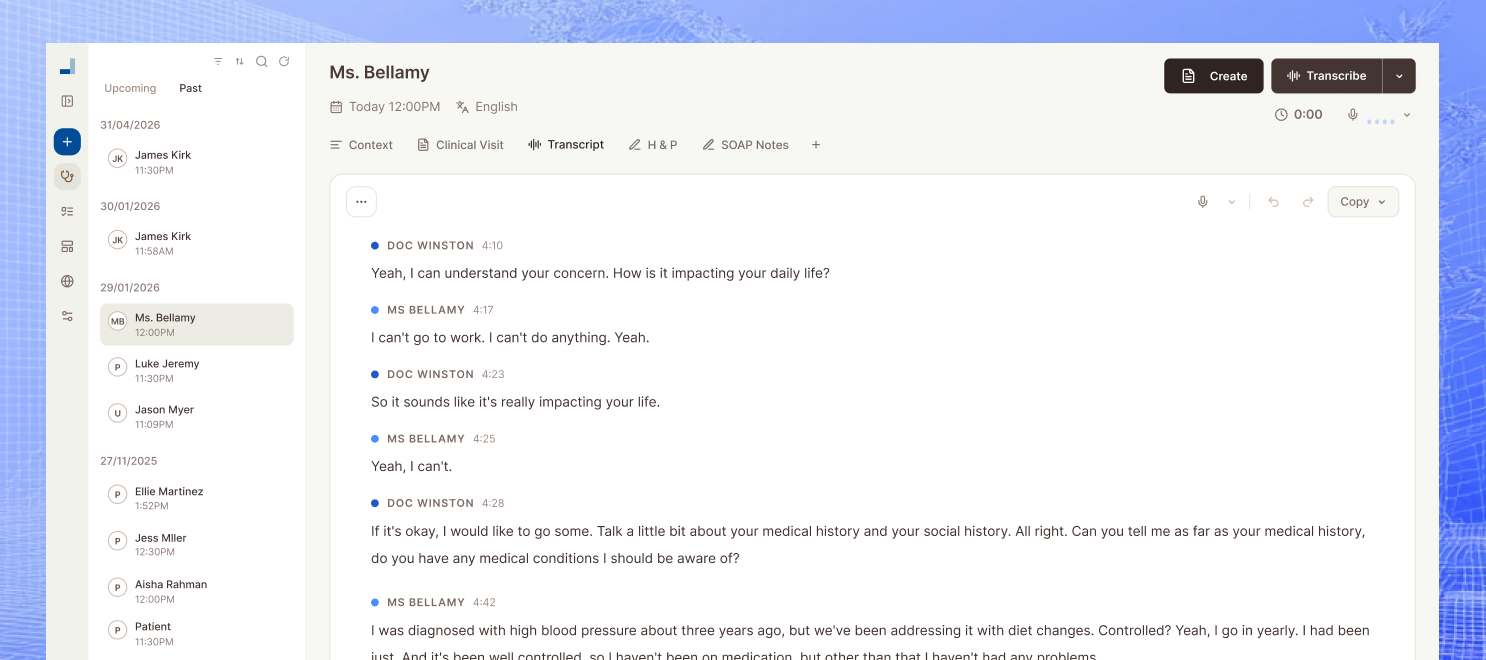
An AI medical scribe acts as an intelligent assistant that captures the nuances of a conversation in real-time. It is important to understand that these tools are assistive—they do not replace the clinician’s judgment. The doctor remains the final authority on the note, but the AI handles the heavy lifting of organization and transcription, allowing the provider to focus entirely on the patient during the visit.
- Reduces the immense cognitive load required for manual note-taking.
- Eliminates after-hours charting by generating drafts instantly.
- Ensures clinical details are captured accurately during the encounter.
- Allows clinicians to maintain better eye contact and engagement with patients.
Note types you can generate beyond SOAP (H&P and more)
While the SOAP format is a staple in medical training, modern practice requires a much broader range of documentation to ensure continuity of care. High-quality follow-up notes are essential because they track the progression of a chronic condition or the recovery from a procedure. Without a structured approach, these notes can become fragmented, making it difficult for other providers to understand the clinical trajectory during a handover.
Beyond standard progress notes, AI can help generate detailed History and Physical (H&P) reports, consult notes for specialists, and complex procedure notes. For university clinics where academic rigor is high, having the ability to generate clear discharge summaries and formal referral letters ensures that the high standard of care is reflected in the paperwork. Consistency across these formats is what makes a clinic audit-ready and legally sound.
Structure also dictates how easily a note can be reviewed in the future. By using AI to maintain a consistent format for every encounter—whether it is a simple follow-up or a complex new patient consult—practitioners build a more reliable medical record. This level of detail is particularly helpful when dealing with insurance claims or complex multi-disciplinary care plans.
- H&P and progress notes capture the longitudinal story of the patient.
- Procedure notes and consult notes ensure surgical and specialty accuracy.
- Referral letters and discharge summaries facilitate seamless care transitions.
- Standardized formatting improves audit readiness and medico-legal security.
How to implement follow-up notes step-by-step in a real clinic
Implementing follow-up notes assisted by AI doesn’t require a total overhaul of your existing workflow. The most successful clinics start small by selecting one visit type, such as routine follow-ups, to test the technology. This allows the staff to become comfortable with the interface without the pressure of managing complex new patient intakes immediately.
Once a visit type is chosen, you should set up templates tailored to your specific specialty. Most AI tools allow for customization, so whether you are in dermatology, cardiology, or general practice, the output will mirror your preferred clinical language. During the encounter, simply activate the capture tool for either in-person or telehealth consultations, letting the AI listen to the natural flow of conversation.
After the patient leaves, you spend a few minutes reviewing the generated draft. This review phase is crucial for ensuring that specific measurements, medication dosages, and plan nuances are exact. Once the note is polished, you can then reuse the output to quickly generate follow-up forms or referral letters, maximizing the value of the recorded encounter.
- Start with one specific visit type to build team confidence.
- Customize templates to match your specialty and personal style.
- Review and edit the AI-generated draft immediately after the visit.
- Leverage note data to automate secondary documents like letters.
How to keep note quality high and reduce mistakes
Accuracy in clinical documentation is non-negotiable, and while AI is powerful, it is not infallible. Typical failure points in automated notes often include missing a specific medication name that was whispered or misinterpreting a complex numeric value. To prevent these errors, clinicians should adopt a lightweight review habit, scanning the ‘Assessment and Plan’ sections with particular care.
Establishing team-wide standards for what a ‘gold-standard’ note looks like helps maintain quality across the board. This is especially important in university clinics where multiple residents or fellows may be using the same system. By setting clear expectations for review, you ensure that ‘note bloat’—the inclusion of unnecessary or repetitive information—is kept to a minimum.
- Perform a quick review of the Plan section for pharmacological accuracy.
- Establish clear documentation standards for all clinic staff.
- Avoid note bloat by focusing the AI on relevant clinical updates.
- Ensure the problem list is updated and reflects the current visit.
Privacy, consent, and patient trust (plain English)
Privacy is the cornerstone of the patient-provider relationship, and introducing recording technology requires transparency. Consent basics vary by region, so it is vital to follow your local policies and professional guidelines. However, most patients are receptive to the technology when they realize it means their doctor will be looking at them instead of a computer screen.
A simple way to explain this to a patient is: ‘I’m using a secure AI assistant to help me take accurate notes so I can focus entirely on our conversation today. It records our talk and turns it into a medical note, which I will then review for accuracy. Is that okay with you?’ This approach frames the technology as a benefit to the patient’s care experience.
- Always obtain verbal or written consent based on local regulations.
- Explain the technology as a tool to improve face-to-face engagement.
- Ensure the AI platform adheres to high-level security and retention standards.
- Maintain a clear policy on how recorded data is processed and stored.
Rolling it out across a clinic without disruption
A successful rollout starts with a pilot program, usually spanning two weeks, involving one or two ‘champion’ providers who are tech-savvy. During this phase, you can identify any friction points in the clinic’s physical layout or internet connectivity. Tracking metrics like the reduction in after-hours charting time and the speed of note completion provides the data needed to justify a full-scale implementation.
Training should focus on template alignment so that every doctor’s output looks consistent with the clinic’s brand. When everyone uses the same foundational templates, it becomes much easier for administrative staff to pull information for billing or follow-up scheduling. A phased approach ensures that patient care remains the priority while the staff adapts to the new system.
- Conduct a 2-week pilot with a small group of clinicians.
- Track time saved and the reduction in documentation backlog.
- Align templates across the clinic for consistent documentation.
- Provide brief training sessions to address common user questions.
Mcoy AI: Your Clinical Documentation Partner
Mcoy AI is an AI medical scribe that records and transcribes patient encounters, then generates multiple clinical note types including H&P, progress notes, consult notes, follow-up notes, procedure notes, discharge summaries, referral letters, and more. With over 200 customizable templates and an interactive AI chat, clinicians can effortlessly create custom letters, forms, and secondary documents tailored to their specific needs. By automating the administrative side of medicine, it allows you to rediscover the joy of practice without the weight of manual charting.
Conclusion
The transition to AI-assisted documentation is more than just a technological upgrade; it is a way to reclaim your time and improve the quality of patient care. By following a structured implementation plan, focusing on high-quality templates, and maintaining a human-in-the-loop review process, you can create highly accurate and consistent follow-up notes with AI. This workflow not only reduces burnout but ensures that your clinical records are comprehensive and professional. Start your pilot today and experience how a streamlined documentation process can transform your private practice or university clinic.
What a serious review table should cover
| Decision area | Common mistake | Better clinic-ready approach | Metric to watch |
|---|---|---|---|
| Workflow design | Treat follow-up notes: creating consistency with ai guide as a one-off documentation task | Build a repeatable process with clear ownership and review points | Time to complete documentation |
| Team adoption | Assume every clinician will naturally use the same process | Train for consistency and define exception handling early | Active user adoption |
| Quality review | Only check notes when a problem is reported | Audit a sample of notes weekly and review edge cases | Edit rate per note |
| Operational follow-through | Leave admin actions outside the documentation workflow | Use the same encounter data for referrals, letters, and follow-up tasks | Completion rate for next-step tasks |
Related reading
If you are working through follow-up notes: creating consistency with ai guide, it helps to read this alongside AI & Medicine: How to Simplify Clinical Notes for Busy Doctors, AI & Medicine: How Doctors Can Improve SOAP Notes, and AI & Medicine: Build a Simple Copy-Insert Workflow: Full Guide for Clinics. Those guides cover adjacent workflow, implementation, and evaluation questions so the decision does not sit in isolation.
FAQ
How accurate are AI medical scribes in real clinics?
AI medical scribes are remarkably accurate at capturing the context and details of a clinical conversation, often catching nuances that a tired clinician might miss. However, they can occasionally struggle with very heavy accents or niche medical jargon if not properly configured. Modern systems are designed to reach over 98% accuracy in clinical context, but they are always intended to be an assistant to the doctor rather than a standalone replacement.
Do I still need to review every note?
Yes, as the licensed professional, the legal responsibility for the accuracy of a medical record rests with the clinician. The AI provides a highly sophisticated draft that covers the majority of the encounter, but a quick human review is essential to ensure that dosages, specific side effects, and final plans are exactly as intended. Most practitioners find that this review takes only a minute or two compared to ten or twenty minutes of manual typing.
What note types can an AI scribe generate besides SOAP?
While SOAP is the most common, AI scribes are capable of generating vast arrays of documentation, including History and Physical (H&P) reports, comprehensive consult notes, and follow-up notes. They can also produce procedure notes, discharge summaries, and professional referral letters. By using various templates, the AI can reorganize the same encounter data into different formats depending on the administrative or clinical need.
Will this work for telehealth and in-person consults?
Yes, most modern AI scribe systems are designed to be platform-agnostic, meaning they work equally well during in-person visits using a mobile device or during telehealth sessions via computer audio. The AI focuses on the audio stream to extract clinical data, so as long as the conversation is clear, the location of the patient does not affect the quality of the generated note.
How do I explain recording/transcription to patients?
The best approach is to be brief and focus on the benefit to the patient. Tell them that the tool allows you to listen to them more closely instead of staring at a computer screen. Most patients value the increased eye contact and personal attention and are happy to provide consent when they understand the technology is being used to improve their care and the accuracy of their records.
How do clinics prevent note bloat?
Note bloat is prevented by using specialized templates that instruct the AI to focus only on relevant clinical information and updates. By setting parameters on what should be included—such as focusing on the change in status for a follow-up visit—the AI can produce concise, high-signal notes. Regular review of the templates by the clinic’s lead clinicians helps keep the documentation focused and readable.
How long does template setup take?
Initial setup for a standard specialty template usually takes less than ten minutes. Most systems come with pre-built templates that can be used immediately, which you can then tweak over time as you see how the AI interprets your specific style of consultation. For a whole clinic, aligning everyone on a set of core templates can typically be accomplished in a single afternoon training session.
What’s the safest way to start if I’m skeptical?
The safest way to start is by running a small pilot with non-complex follow-up appointments. This allows you to see the output quality without the stress of a high-stakes new patient diagnosis. You can even run the AI in the background while you continue your current note-taking method for a few days to compare the results and see just how much detail the AI is able to capture independently.