Practice Operations: How to Create an AI Scribe Policy for Your Practice Guide
Learn how to build a robust AI scribe policy for your medical practice. Improve documentation workflow, ensure privacy, and reduce clinician burnout effectively.
What a medical scribe solves in modern practice
The modern healthcare landscape is often defined by the silence of clinicians staring at screens rather than patients. The real cost of documentation isn’t just measured in minutes; it is measured in cognitive load, physician burnout, and delayed care. When doctors spend three hours every night finishing charts, they are more susceptible to errors and emotional exhaustion, which ultimately impacts patient safety and the bottom line of the private practitioner.
An AI medical scribe acts as an assistive layer in this environment, capturing the nuance of the patient story without the provider needing to memorize every detail while also performing an exam. It is important to remember that these tools are supportive; while they handle the heavy lift of transcription and formatting, the clinician remains the final authority and must review all outputs for clinical accuracy.
- Reduces the ‘pajama time’ spent on administrative tasks after hours.
- Minimizes cognitive load by allowing clinicians to focus on the patient interaction.
- Ensures more detailed and accurate note-taking by capturing data in real-time.
- Accelerates the billing cycle through faster note completion.
Note types you can generate beyond SOAP (H&P and more)
Many practitioners wrongly assume that AI tools are limited to the standard SOAP format. In reality, a sophisticated documentation strategy involves diverse note types tailored to specific clinical scenarios. Whether it is a comprehensive History and Physical (H&P) for a new admission or a concise progress note for a routine check-up, the structured data captured during the visit can be repurposed into multiple formats with ease. This versatility is essential for maintaining high-quality continuity of care across different specialties.
For university clinics or multi-specialty groups, the ability to generate consult notes, procedure notes, and even discharge summaries from the same encounter data is a game-changer. Consistency in these documents ensures that every member of the care team is aligned and that the facility is always audit-ready. High-quality documentation also streamlines the referral process, providing the receiving specialist with a clear, readable summary of previous findings and logic.
- H&Ps and progress notes for standard inpatient and outpatient tracking.
- Specialized consult and referral letters to improve inter-provider communication.
- Detailed procedure notes and discharge summaries for surgical or acute care.
- Customizable templates that match the specific requirements of each medical specialty.
How to implement AI scribe policy step-by-step in a real clinic
Starting with an AI scribe policy requires a structured approach to ensure team buy-in and clinical safety. First, begin by selecting a single visit type or a small subset of patients to test the workflow. This prevents the staff from feeling overwhelmed by a total system overhaul. During this initial phase, clinicians should focus on learning how to guide the conversation to ensure the AI captures the necessary subjective and objective data points.
Next, it is vital to set up your specific templates. Every specialty has different ‘must-haves’ for their documentation; a cardiologist needs different data points than a psychiatrist. By configuring these templates early, the generated notes will require significantly less editing. Once the encounter is captured—whether in-person or via a telehealth platform—the clinician should perform a rapid review of the output to ensure no hallucinations or omissions occurred.
Finally, the workflow should integrate the reuse of these outputs. A well-placed AI scribe policy allows the clinician to turn portions of the note into patient education materials or referral forms instantly. This maximizes the value of the recorded encounter, moving the data from the EMR into the hands of the patient or other healthcare partners without additional typing.
- Phase in implementation by starting with specific, low-complexity visit types.
- Pre-configure specialty-specific templates to reduce post-encounter editing.
- Implement a ‘Review + Edit’ mandate for every AI-generated note before signing.
- Establish a protocol for repurposing note data into secondary documents like letters.
How to keep note quality high and reduce mistakes
One of the biggest risks with any automated system is ‘note bloat’ or the inclusion of irrelevant information that makes the chart difficult to read. Failure points often include missing medications, incorrect lab values, or an inaccurate problem list if the AI misinterprets a casual comment. To mitigate this, practitioners must maintain a high standard of review, checking for specific clinical markers that are critical to the diagnosis and treatment plan.
Developing a lightweight review habit is the best way to maintain quality without sacrificing time. Clinicians should be trained to scan for high-risk sections such as dosages, allergies, and the final assessment. Establishing team-wide standards for what constitutes a ‘complete’ note ensures that even as the technology evolves, the quality of the medical record remains consistent across the entire organization.
- Prioritize the review of high-risk sections like medication lists and dosages.
- Implement peer-review audits during the first month of adoption to align standards.
- Instruct clinicians on how to provide verbal cues during the exam for the AI to capture.
- Regularly update templates to remove redundant fields and combat note bloat.
Privacy, consent, and patient trust (plain English)
Patient trust is the foundation of any successful AI scribe policy. While consent requirements vary by region and jurisdiction, the best practice is to always be transparent about the use of recording technology. Patients are generally very accepting of AI tools when they understand that it allows the doctor to look them in the eye rather than at a keyboard. Following your local medical board’s policy is essential, as this is not legal advice, but general compliance starts with a clear conversation.
A simple script for the clinician might sound like this: ‘I am using an AI assistant to help me take notes today so I can focus entirely on you. It records our conversation to generate a medical summary for your chart. Is that alright with you?’ This approach frames the technology as a benefit to the patient experience. Beyond the exam room, ensure your policy outlines how long recordings are kept and what security measures are in place to protectPHI.
- Always obtain verbal or written consent based on local health authority guidelines.
- Use simple, transparent language to explain the benefits of AI documentation to patients.
- Ensure the AI vendor meets strict security and encryption standards for data at rest.
- Document the patient’s consent status within the electronic medical record.
Rolling it out across a clinic without disruption
A successful rollout is more about change management than technology. Start with a two-week pilot involving a small group of ‘early adopters’ who are tech-savvy and patient. This group can identify workflow bottlenecks and help refine templates before the rest of the clinic begins. During this time, the administration should track key metrics like time saved per note and the reduction in after-hours charting to demonstrate value to the rest of the staff.
Training should be hands-on and focused on the actual interface the doctors will use. It is helpful to align templates across the department so that there is a unified ‘look and feel’ to the clinic’s documentation. Once the pilot is successful, the rollout can expand to different departments with the early adopters serving as internal champions and mentors for their colleagues.
- Launch a 14-day pilot program to iron out technical and workflow issues.
- Measure KPIs such as ‘Time to Close Note’ and clinician satisfaction scores.
- Standardize templates across specialties to ensure organizational consistency.
- Provide live training sessions rather than just written manuals.
Mcoy AI: Advanced Documentation for Your Practice
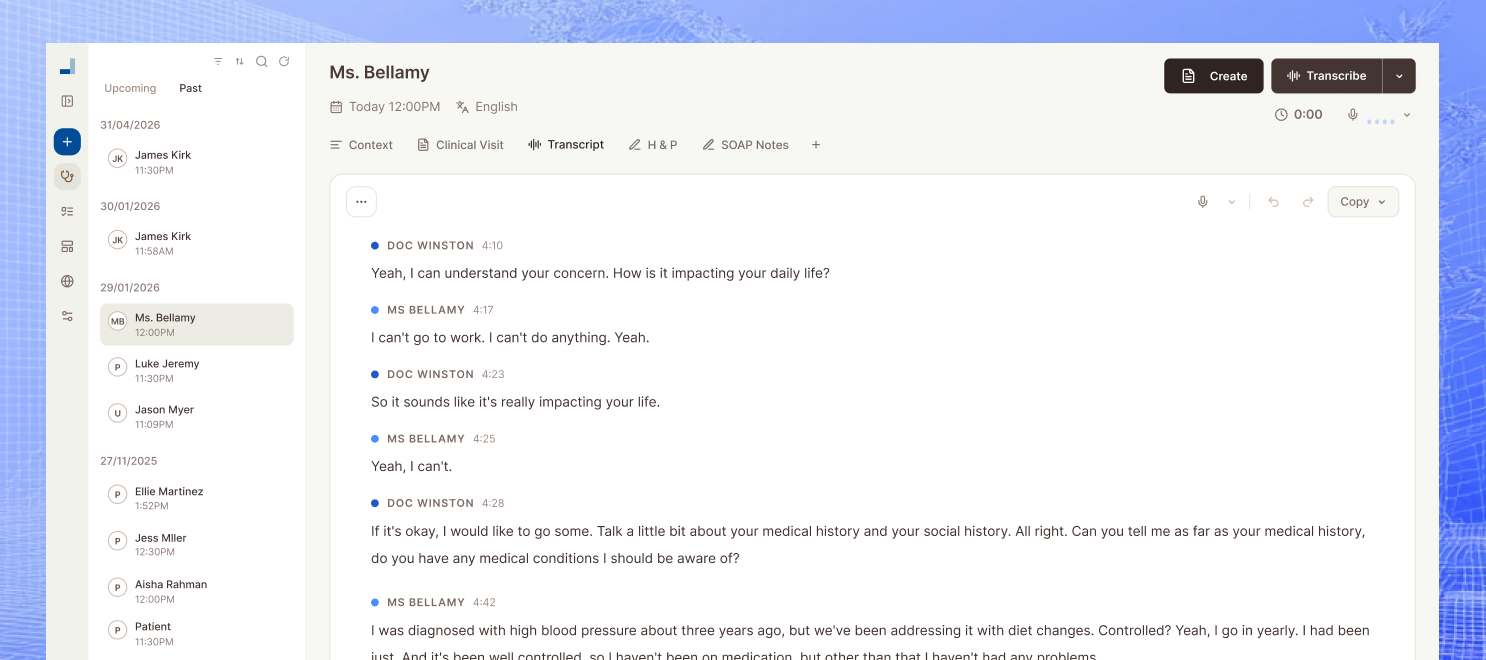
Mcoy AI is an AI medical scribe that records and transcribes patient encounters, then generates multiple clinical note types (H&P, progress notes, consult notes, follow-up notes, procedure notes, discharge summaries, referral letters, and more). With over 200+ customizable templates and an AI chat feature to create letters, forms, and documents, it streamlines the entire administrative side of practice management. This allows clinicians to maintain high-quality records while focusing their primary attention on the patient during every visit.
Conclusion
Creating a structured AI scribe policy is the most effective way to modernize a medical practice without sacrificing clinical integrity. By establishing clear protocols for consent, template usage, and note review, clinicians can reclaim hours of their day and refocus on patient care. Transitioning away from manual data entry and toward an assistive AI model is no longer a luxury—it’s a necessity for sustainable practice in the digital age. Start your pilot today and see how an AI scribe policy can transform your clinical workflow.
SEO description: Learn how to implement an AI scribe policy to reduce burnout, ensure HIPAA compliance, and improve medical note quality in your clinic with this guide.
What a serious review table should cover
| Decision area | Common mistake | Better clinic-ready approach | Metric to watch |
|---|---|---|---|
| Workflow design | Treat how to create an ai scribe policy for your practice guide as a one-off documentation task | Build a repeatable process with clear ownership and review points | Time to complete documentation |
| Team adoption | Assume every clinician will naturally use the same process | Train for consistency and define exception handling early | Active user adoption |
| Quality review | Only check notes when a problem is reported | Audit a sample of notes weekly and review edge cases | Edit rate per note |
| Operational follow-through | Leave admin actions outside the documentation workflow | Use the same encounter data for referrals, letters, and follow-up tasks | Completion rate for next-step tasks |
Related reading
If you are working through how to create an ai scribe policy for your practice guide, it helps to read this alongside Practice Operations: How Clinics Can Streamline Daily Operations, Practice Operations: How Clinics Can Improve Workflow Without Changing Their EHR, and Specialty Guides: How to Use an AI Scribe for Oncology Visit Notes. Those guides cover adjacent workflow, implementation, and evaluation questions so the decision does not sit in isolation.
FAQ
How accurate are AI medical scribes in real clinics?
In real-world clinical settings, AI medical scribes are remarkably accurate, often capturing nuances that manual note-taking might overlook. However, their accuracy depends on the audio quality and the clarity of the clinician’s verbalization during the exam. Most practitioners find that while the transcription is nearly perfect, the summary still requires a quick clinical review. Clinicians remain responsible for ensuring the final note accurately reflects the encounter.
Do I still need to review every note?
Yes, reviewing every note is a fundamental requirement for both clinical safety and legal compliance. AI is an assistive tool, not a substitute for medical judgment. A quick 30-second review is usually sufficient to verify dosages, diagnoses, and the plan for the patient. This final check ensures that no ‘hallucinations’ or misinterpretations have made it into the permanent medical record.
What note types can an AI scribe generate besides SOAP?
Modern AI scribes are capable of generating a wide variety of documentation beyond standard SOAP notes. These include History and Physical (H&P) reports, consult notes, referral letters, and detailed procedure summaries. They can also create follow-up notes and discharge summaries by pulling the most relevant data from the encounter. This versatility makes them useful for both primary care and highly specialized surgical fields.
Will this work for telehealth and in-person consults?
AI scribes are highly adaptable and work seamlessly for both in-person and telehealth consultations. For in-person visits, the system typically uses a smartphone or tablet to capture audio, while telehealth visits can integrate directly with video conferencing software. In both scenarios, the AI filters out background noise to focus on the conversation between the patient and the healthcare provider.
How do I explain recording/transcription to patients?
The best way to explain this to patients is to focus on the benefit to their care. You might say, ‘I’m using a new tool that helps me take notes so I can spend my time looking at you rather than a computer screen.’ Most patients appreciate the extra attention and are comfortable with the technology once they understand it is a secure part of their health record. Always follow your local legal guidelines regarding patient consent recording.
How do clinics prevent note bloat?
Clinics prevent note bloat by using concise, specialty-specific templates that prioritize necessary data over verbatim transcription. By setting parameters for what the AI should focus on—such as only including relevant positives in the Review of Systems—the resulting notes stay crisp and readable. Regular audits of the templates help ensure that the documentation remains focused on clinical value rather than volume.
How long does template setup take?
Setting up your initial templates can take as little as 10 to 15 minutes per specialty if you are using pre-built libraries. Customizing those templates to match your specific clinical style or EHR requirements might take an additional hour of refinement. Most practices find that once the templates are dialed in, they rarely need further adjustment, yielding massive time savings over the long term.
What’s the safest way to start if I’m skeptical?
The safest way to start is by running a small pilot program with just one or two providers on non-complex cases. Use the AI alongside your traditional method for a few days to compare the results and gain confidence in the system’s accuracy. This low-risk approach allows you to see the time-saving benefits firsthand without disrupting the entire clinic’s established workflow or patient volume.