Compare & Choose: Compare AI Scribe Tools for Clinics: 2024 Buyer Guide
Learn how to compare AI scribe tools for your clinic. Evaluate note quality, workflow integration, and templates to reduce clinician burnout effectively.
What a medical scribe solves in modern practice
The modern healthcare landscape is plagued by a hidden tax on clinician well-being: the documentation burden. For every hour spent with a patient, doctors often spend two hours navigating complex EHR systems and typing notes. This cognitive load leads to delayed documentation, increased clinical errors, and physical exhaustion known as ‘pajama time,’ where clinicians finish charts late at night.
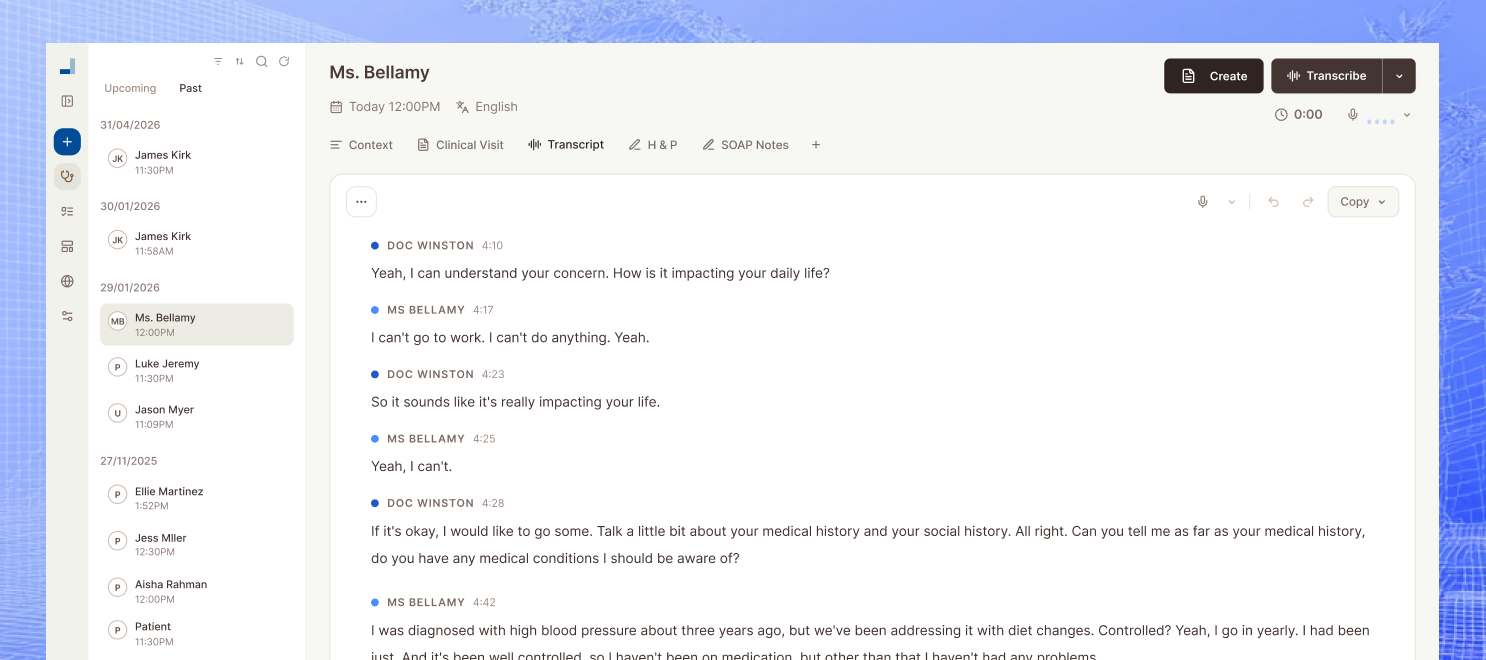
An AI medical scribe serves as a sophisticated digital assistant that listens to patient-clinician conversations and drafts notes in real-time. Crucially, these tools are designed to assist, not replace, the clinician. While the AI handles the heavy lifting of structure and transcription, the practitioner remains the ultimate authority, reviewing and signing off on every entry to ensure medical accuracy.
- Eliminates hours of manual typing and after-hours charting.
- Reduces cognitive fatigue by allowing doctors to focus on the patient.
- Ensures more detailed and accurate patient encounter records.
- Provides a scalable solution for busy university and private clinics.
Note types you can generate beyond SOAP (H&P and more)
While many practitioners are familiar with the standard SOAP format, comprehensive clinical care requires diversity in documentation. Effective AI tools should be capable of producing History and Physical (H&P) reports, which provide a deep dive into a patient’s background and current status, as well as concise progress notes for ongoing hospital care.
Beyond daily notes, specialized encounters require specific formats. Consult notes must communicate findings to referring physicians, while procedure notes need to capture technical details accurately. Discharge summaries and referral letters are also critical for care transitions, ensuring that the next provider in the chain of command has a clear roadmap of the patient’s journey.
Maintaining a high standard for these various formats is not just about compliance; it is about audit readiness and patient safety. When notes are structured correctly, they facilitate better handover quality and ensure that no critical detail, such as a medication change or a subtle physical exam finding, is lost in a wall of unformatted text.
- Generates specialized H&P, consult, and procedure notes effortlessly.
- Improves continuity of care through high-quality referral letters.
- Facilitates faster billing cycles with structured discharge summaries.
- Enhances audit readiness with consistently formatted documentation.
How to implement AI scribe tools step-by-step in a real clinic
Successfully integrating AI scribe tools into a busy clinic starts with a focused approach. Rather than overhauling every department at once, select a single visit type or a pilot group of clinicians to begin the journey. This allows your team to understand the nuances of the software without disrupting the entire patient flow.
Once the initial phase is established, take the time to set up templates specific to your specialty. Whether you are in cardiology, pediatrics, or a university health center, your documentation needs are unique. Tailoring the AI to recognize your specific vocabulary and reporting style will significantly reduce the amount of editing required later.
During the encounter, whether it is an in-person visit or a telehealth session, simply capture the conversation. The AI works in the background, allowing you to maintain eye contact with the patient. After the visit, perform a quick review and edit of the generated draft. This habit ensures quality control while still saving significant time compared to starting from scratch.
The final step in a mature workflow involves reusing these outputs. The data captured by the AI can be instantly repurposed for insurance authorization forms, patient education materials, and specialist referral letters, creating a highly efficient administrative ecosystem.
- Start with one department or visit type to minimize disruption.
- Customize specialty-specific templates for higher initial accuracy.
- Review and edit drafts immediately to maintain a high clinical standard.
- Repurpose encounter data for letters and administrative forms.
How to keep note quality high and reduce mistakes
The biggest risk with automated documentation is ‘note bloat’ or the inclusion of irrelevant information. To keep quality high, clinicians should establish a standard for what their ideal note looks like. This includes clear medication lists, precise problem lists, and distinct plans. AI is powerful, but it requires a human eye to ensure that specific values or dosages are captured with 100% precision.
Developing a lightweight review habit is essential. Instead of reading every word like a proofreader, focus on the ‘high-stakes’ areas: the assessment and plan. Standardizing these review protocols across a clinic ensures that every practitioner is producing notes that meet the facility’s legal and clinical benchmarks.
- Focus reviews on medications, dosages, and the assessment plan.
- Establish clinic-wide standards for note length and detail.
- Use a ‘review-first’ culture to prevent automated errors.
- Monitor for repetitive or ‘bloated’ phrases in the AI output.
Privacy, consent, and patient trust (plain English)
Privacy is the cornerstone of the patient-provider relationship. When introducing AI scribe tools, it is vital to follow local regulations and institutional policies. While laws vary by region, transparency is always the best policy. Patients generally appreciate technology that allows their doctor to listen more and type less, but they deserve to know how their data is handled.
A simple way to explain this to a patient is: ‘I am using a secure digital assistant today to help me capture our conversation. This allows me to focus entirely on you rather than my computer screen. The system is encrypted and follows all privacy protocols.’ This transparency builds trust and usually results in high patient acceptance.
- Always adhere to local and federal healthcare privacy laws.
- Use a simple, transparent script to explain the tool to patients.
- Verify that the tool uses banking-level encryption and secure storage.
- Ensure patients know they can opt-out at any time during the visit.
Rolling it out across a clinic without disruption
A smooth rollout requires a structured 2-week pilot plan. During the first week, focus on technical setup and template alignment. The second week should involve live patient encounters with a focus on ‘time-saved’ metrics. Tracking how much ‘pajama time’ is reduced provides the best evidence for the tool’s return on investment.
Training should be collaborative. Encourage the early adopters to share their ‘pro-tips’ with the rest of the staff. When the team sees that their colleagues are leaving the office on time and producing better notes, the resistance to new technology fast disappears.
- Run a 2-week pilot to iron out technical and workflow kinks.
- Track hours saved to measure the success of the implementation.
- Foster peer-to-peer training to encourage clinic-wide adoption.
- Align templates across the team for consistent documentation quality.
Mcoy AI is an AI medical scribe that records and transcribes patient encounters, then generates multiple clinical note types (H&P, progress notes, consult notes, follow-up notes, procedure notes, discharge summaries, referral letters, and more). With over 200+ customizable templates and an interactive AI chat, clinicians can easily create letters, forms, and complex documents tailored to their specific needs, ensuring that administrative tasks never get in the way of patient care.
Conclusion
Transitioning to an automated documentation workflow is the most effective way to combat modern clinician burnout. By following a structured implementation plan and choosing a tool that supports diverse note types, clinics can reclaim hours of lost time every week. As you begin to compare AI scribe tools, focus on those that offer the flexibility your specific specialty requires. Start your pilot program today and see how much your practice can thrive when the burden of the keyboard is finally lifted.
What a serious review table should cover
| Decision area | Common mistake | Better clinic-ready approach | Metric to watch |
|---|---|---|---|
| Workflow design | Treat compare ai scribe tools for clinics: 2024 buyer guide as a one-off documentation task | Build a repeatable process with clear ownership and review points | Time to complete documentation |
| Team adoption | Assume every clinician will naturally use the same process | Train for consistency and define exception handling early | Active user adoption |
| Quality review | Only check notes when a problem is reported | Audit a sample of notes weekly and review edge cases | Edit rate per note |
| Operational follow-through | Leave admin actions outside the documentation workflow | Use the same encounter data for referrals, letters, and follow-up tasks | Completion rate for next-step tasks |
Related reading
If you are working through compare ai scribe tools for clinics: 2024 buyer guide, it helps to read this alongside Compare & Choose: Best Tools Doctors Use to Save Time on Clinical Notes, Compare & Choose: Medical Scribing Services: Are They Worth It?, and Admin Management: Streamline Clinical Follow-Up Reminders with AI Scribes. Those guides cover adjacent workflow, implementation, and evaluation questions so the decision does not sit in isolation.
FAQ
How accurate are AI medical scribes in real clinics?
AI medical scribes are remarkably accurate in capturing the nuances of clinical dialogue, often reaching over 95% accuracy in draft notes. However, their performance depends on audio quality and the complexity of the encounter. They excel at identifying key medical terms and the intent of the conversation, but they should always be viewed as a drafting tool rather than a final product. Clinicians report that while the drafts are strong, the final 5% of refinement must be done by a human to ensure specific medical nuances are captured correctly.
Do I still need to review every note?
Yes, medical and legal responsibility for the patient record remains entirely with the licensed clinician. While AI can draft the note, the provider must review, edit, and sign it to verify its accuracy. This step is crucial for patient safety and to ensure that the note truly reflects the clinical judgments made during the visit. Most clinicians find that reviewing a pre-drafted note takes only a fraction of the time it takes to type one from scratch.
What note types can an AI scribe generate besides SOAP?
Modern AI tools are highly versatile and go far beyond the standard SOAP format. They can generate detailed History and Physical (H&P) reports, consult notes for specialists, and complex procedure notes. Additionally, they are proficient at creating discharge summaries, progress notes for hospital rounds, and even formal referral letters. This variety ensures that the documentation fits the specific clinical context of the visit.
Will this work for telehealth and in-person consults?
Yes, most leading AI scribe tools are designed to be platform-agnostic, meaning they work equally well for in-person visits and telehealth sessions. For in-person visits, the AI typically uses a smartphone or tablet microphone. For telehealth, it can often integrate directly with the video conferencing software or capture audio through the computer’s internal system, ensuring seamless documentation regardless of the patient’s location.
How do I explain recording/transcription to patients?
The best approach is to be brief and emphasize the benefit to the patient. You might say, ‘To help me focus on our conversation today, I’m using a secure digital scribe to take notes for us.’ Most patients are very supportive when they realize the doctor will be looking at them instead of a computer screen. Always ensure you are following your clinic’s specific consent protocols and local regulations regarding audio recording.
How do clinics prevent note bloat?
Note bloat is prevented by using high-quality templates and setting specific ‘instructions’ for the AI. Effective tools allow you to specify exactly what information should be included and what should be omitted. By training the AI on your preferred style—such as prioritizing concise bullet points over long paragraphs—you can ensure the resulting notes are clean, readable, and highly relevant to the patient’s care.
How long does template setup take?
Initial template setup can take as little as 15 to 30 minutes for basic configurations. However, most clinicians spend a few days fine-tuning their templates as they see how the AI handles different visit types. Once the templates are established, they can be used indefinitely and shared across the clinic, making the initial time investment highly worthwhile for long-term efficiency.
What’s the safest way to start if I’m skeptical?
The safest way to start is with a ‘shadow’ pilot. Use the AI tool during a few routine, low-complexity visits while still taking your normal notes. This allows you to compare the AI’s output with your own documentation style without any pressure. Once you see the accuracy and the time-saving potential, you can gradually transition more complex visits to the AI workflow until you feel confident in its performance.