Admin Management: Streamline Clinical Follow-Up Reminders with AI Scribes
Learn how to use an AI medical scribe to generate precise follow-up reminders and clinical notes. Reduce burnout and improve patient care today.
What a medical scribe solves in modern practice
The modern healthcare environment is plagued by an invisible tax: the documentation burden. Doctors often spend two hours on administrative tasks for every hour of patient care, leading to the dreaded ‘pajama time’ where charting happens late at night. This administrative weight results in cognitive load, leading to delayed notes and the potential for missed clinical details that are vital for long-term patient health.
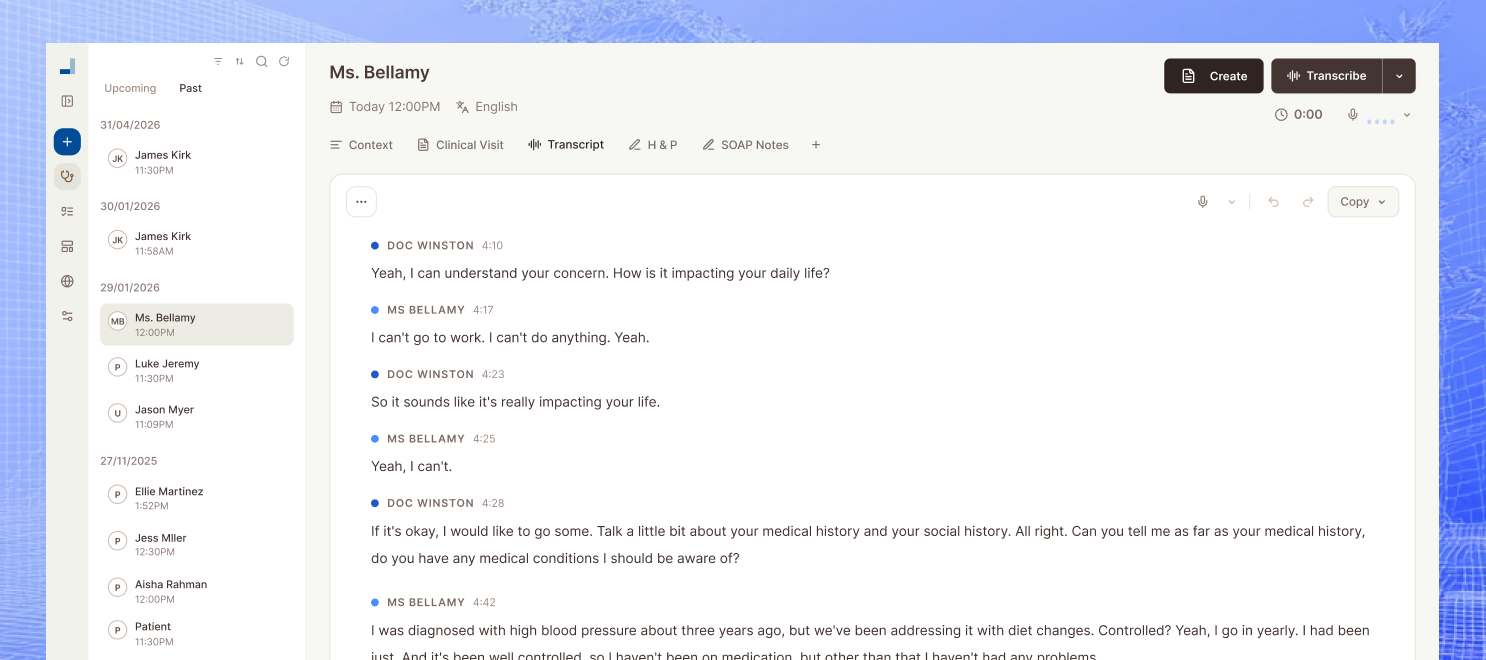
An AI medical scribe acts as a cognitive assistant that bridges the gap between the patient conversation and the electronic health record. By capturing the nuances of the encounter in real-time, it allows the clinician to remain present and focused on the patient. It is important to remember that these tools are assistive; while they handle the heavy lifting of transcription and formatting, the clinician remains the final authority and responsible party for the medical record.
- Eliminates after-hours charting and reduces clinician burnout.
- Captures granular details that might be forgotten during manual entry.
- Allows for more eye contact and engagement during patient consultations.
- Reduces the ‘documentation lag’ that can compromise continuity of care.
Note types you can generate beyond SOAP (H&P and more)
While the SOAP note is the industry standard, it doesn’t always capture the full scope of various clinical encounters. Depending on the specialty and intent, clinicians often need more specialized formats. History and Physical (H&P) notes are essential for new admissions, while detailed procedure notes are required for surgical or minor office interventions to ensure proper billing and clinical tracking.
Beyond these, consult notes and referral letters serve as the primary communication channel between specialists. A follow-up note needs to highlight changes since the last visit, whereas a discharge summary must provide a concise roadmap for the next provider in the care continuum. Having the flexibility to generate these distinct types ensures that the medical record is fit for purpose and compliant with audit standards.
Standardizing these formats across a practice improves the quality of handovers and ensures that any provider reviewing the chart can quickly find the information they need. High-quality documentation is not just about compliance; it is the foundation of patient safety and professional collaboration.
- H&P and Progress Notes for comprehensive inpatient and outpatient tracking.
- Consult Notes and Referral Letters for clear inter-provider communication.
- Procedure Notes and Discharge Summaries for specialized documentation needs.
- Follow-up Notes tailored to capture longitudinal changes in patient health.
How to implement Follow-Up Reminders step-by-step in a real clinic
To successfully integrate Follow-Up Reminders into your daily workflow, start small by selecting a single visit type, such as routine chronic disease management or post-operative check-ups. This allows you to calibrate the AI’s output without overwhelming your staff. Before you begin the encounter, ensure your templates are configured specifically for your specialty, whether that is primary care, cardiology, or mental health.
During the patient encounter, simply let the AI capture the dialogue naturally. There is no need to change how you speak or interact with the patient. Once the visit concludes, the AI will process the audio and generate a draft. You should review and edit this draft immediately while the conversation is still fresh in your mind. This rapid feedback loop ensures the highest accuracy and allows for one-click generation of follow-up tasks.
The real power lies in reusing these outputs. Once the clinical note is finalized, the system can extract specific action items—like scheduling a lab test in three months or reminding the patient to check their blood pressure—and turn them into patient-friendly reminders or referral letters. This turns a static note into an active management plan.
- Start with one consistent visit type to master the initial workflow.
- Customize templates to match the specific nuances of your medical specialty.
- Review drafts immediately post-consult to ensure clinical accuracy.
- Translate clinical notes into actionable follow-up reminders and patient letters.
How to keep note quality high and reduce mistakes
AI is a powerful tool, but it is not infallible. Typical failure points in automated documentation can include missing specific dosages, misinterpreting complex lab values, or ‘note bloat’—where the AI includes irrelevant conversational fluff. To prevent these issues, clinics should adopt a lightweight review habit. It only takes sixty seconds to scan a note for accuracy before it is finalized in the EHR.
Setting team-wide standards for what constitutes a ‘good’ note is also vital. In a university clinic or large practice, having a consistent style ensures that all providers are on the same page. By focusing on a clean problem list and clearly defined plans, you can minimize the risk of errors and ensure that the most critical information stands out.
- Implement a ‘read-before-sign’ protocol to catch minor AI hallucinations.
- Standardize templates to minimize irrelevant data and prevent note bloat.
- Audit a small sample of notes monthly to ensure consistent quality across the team.
- Focus on high-precision areas like medication lists and objective values.
Privacy, consent, and patient trust (plain English)
Patient trust is the bedrock of clinical practice, and introducing recording technology requires transparency. While consent laws vary significantly by region, the best approach is always honesty. Frame the use of the AI scribe as a tool that allows you to provide better care by focusing on the patient rather than the computer screen.
A simple script for the patient could be: ‘To make sure I’m focusing entirely on you and not my keyboard, I use an AI assistant to help me stay organized. It records our conversation to create my clinical notes, and then the recording is handled securely. Is that okay with you?’ Most patients appreciate the extra attention they receive when the doctor isn’t staring at a monitor.
From a security standpoint, ensure your chosen platform follows industry-standard encryption and data retention policies. Clear communication about how data is handled not only satisfies legal requirements but also strengthens the patient-provider relationship.
- Always follow local and regional regulations regarding patient consent and recording.
- Explain the benefit to the patient: ‘More eye contact, less computer time.’
- Ensure the platform uses HIPAA-compliant encryption for all data at rest and in motion.
- Be transparent about who has access to the notes and how long data is stored.
Rolling it out across a clinic without disruption
A successful rollout starts with a pilot phase involving one or two ‘tech-forward’ clinicians. Over a two-week period, track specific metrics such as time saved per day, the reduction in after-hours charting, and the completeness of the notes. This data will be instrumental when demonstrating value to the rest of the partners or university clinic stakeholders.
After the pilot, hold a brief training session to align everyone on templates and documentation standards. Consistency is key to a smooth transition. By phasing the rollout, you can troubleshoot any workflow bottlenecks—like Wi-Fi dead zones or microphone issues—before they affect the entire practice.
- Conduct a 14-day pilot with a small group to gather internal data and feedback.
- Measure ‘time-to-sign’ as a primary metric for efficiency gains.
- Standardize clinical templates across the practice to ensure uniform documentation.
- Provide clear, short training sessions focused on the review-and-edit process.
Mcoy AI is an AI medical scribe that records and transcribes patient encounters, then generates multiple clinical note types (H&P, progress notes, consult notes, follow-up notes, procedure notes, discharge summaries, referral letters, and more). It features 200+ customizable templates and an integrated AI chat to help clinicians create specialized letters, forms, and documents effortlessly. Designed to fit into existing workflows, it helps reduce the administrative burden so providers can focus on patient care.
Conclusion
Optimizing your clinical workflow is no longer just a luxury; it is a necessity for sustainable practice management. By utilizing structured formats and learning how to effectively generate Follow-Up Reminders, you can reclaim your time and improve the quality of patient management. Start by piloting a scribe in your clinic this week, and experience the shift from data entry clerk back to dedicated healer. Proper implementation of Follow-Up Reminders will ensure no patient falls through the cracks.
What a serious review table should cover
| Decision area | Common mistake | Better clinic-ready approach | Metric to watch |
|---|---|---|---|
| Workflow design | Treat streamline clinical follow-up reminders with ai scribes as a one-off documentation task | Build a repeatable process with clear ownership and review points | Time to complete documentation |
| Team adoption | Assume every clinician will naturally use the same process | Train for consistency and define exception handling early | Active user adoption |
| Quality review | Only check notes when a problem is reported | Audit a sample of notes weekly and review edge cases | Edit rate per note |
| Operational follow-through | Leave admin actions outside the documentation workflow | Use the same encounter data for referrals, letters, and follow-up tasks | Completion rate for next-step tasks |
Related reading
If you are working through streamline clinical follow-up reminders with ai scribes, it helps to read this alongside Admin Management: How to Reduce Admin Errors in Clinical Notes, Admin Management: Medication List Template with Examples, and Admin Management: Reduce Clinic Admin Work with AI Scribes | Mcoy Health. Those guides cover adjacent workflow, implementation, and evaluation questions so the decision does not sit in isolation.
FAQ
How accurate are AI medical scribes in real clinics?
AI medical scribes currently reach high levels of accuracy, often capturing nuances that manual typing misses. However, they are sensitive to ambient noise and the clarity of the conversation. Most clinicians find they are 90-95% accurate, requiring only minor edits for specific medical terminology or unique patient names. The technology is designed to assist, not replace, the clinical judgment of the provider.
Do I still need to review every note?
Yes, reviewing every note is a mandatory clinical and legal requirement. The AI acts as a professional draftsperson, but the clinician is ultimately responsible for the accuracy of the medical record. Most doctors find that reviewing an AI-prepared note takes significantly less time than writing one from scratch, often 60 seconds or less. This habit ensures patient safety and maintains high documentation standards.
What note types can an AI scribe generate besides SOAP?
Beyond the standard SOAP format, advanced AI scribes can generate History and Physicals (H&P), detailed progress notes, and specialized consult notes. They are also highly effective at creating procedure notes, discharge summaries, and referral letters. This versatility ensures that every aspect of a patient’s journey is documented in the appropriate format for billing and continuity of care.
Will this work for telehealth and in-person consults?
Most AI scribing solutions are built to be platform-agnostic, meaning they work equally well for in-person visits and telehealth sessions. For telehealth, the AI can often capture audio directly from the computer output, while in-person visits typically use a mobile app or dedicated microphone. The goal is to provide a consistent documentation experience regardless of how the patient is seen.
How do I explain recording/transcription to patients?
Honesty and a focus on patient benefits are the best strategies. Tell patients that the recording allows you to keep your eyes on them rather than a screen. Most patients are very supportive when they realize the technology leads to a more attentive and engaged doctor. Providing a simple verbal explanation and having a written consent form available is standard practice.
How do clinics prevent note bloat?
Note bloat is prevented by using concise, specialized templates that instruct the AI on exactly which information to include. By setting parameters for brevity and focusing on relevant clinical findings, the AI avoids including daily pleasantries or repetitive data. Regularly reviewing and refining your templates will help keep your medical records clean, professional, and audit-ready.
How long does template setup take?
Setting up basic templates usually takes less than thirty minutes. Most systems come with pre-built templates for common specialties that can be used immediately. Customizing these to fit your specific workflow or the unique requirements of a university clinic might take a few additional sessions of minor adjusting as you see how the AI responds to your speaking style.
What’s the safest way to start if I’m skeptical?
The safest way to start is with a ‘shadow’ pilot. Use the AI scribe during a few non-complex follow-up visits while still taking your usual brief notes. Compare the AI’s output to your own notes at the end of the day. This low-risk approach allows you to build trust in the technology’s accuracy and speed without relying on it for critical documentation on day one.