AI & Medicine: Build Procedure Note Templates: Free Guide & Resources
Learn how to build a comprehensive procedure notes template pack to streamline clinic documentation, improve accuracy, and reduce clinician burnout.
What a medical scribe solves in modern practice
The modern clinical environment is increasingly defined by the weight of administrative tasks. For many practitioners, the cost of documentation isn’t just measured in minutes; it is measured in cognitive load and personal well-being. When doctors spend hours after clinic finishing charts, the risk of ‘pajama time’ burnout increases, leading to delayed notes and potentially missed clinical details that are vital for patient outcomes.
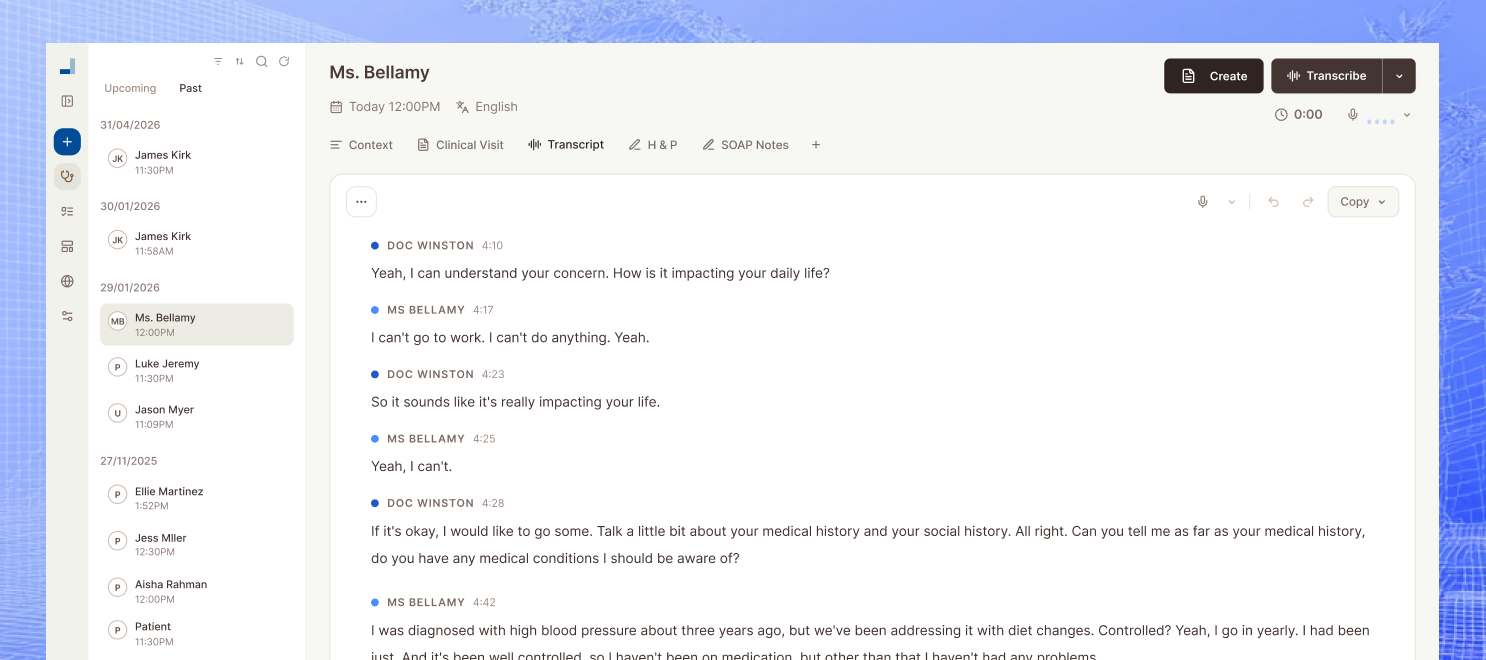
An AI medical scribe acts as an assistive companion that captures the nuances of a patient encounter in real-time. It is important to remember that these tools are intended to support the clinician, not replace their judgment. The scribe handles the heavy lifting of transcription and formatting, while the practitioner remains the ultimate authority, ensuring every detail is accurate and medically sound before it enters the permanent record.
- Significantly reduces the time spent on manual data entry and formatting.
- Minimizes cognitive fatigue by capturing details during the encounter.
- Maintains high-quality documentation even during high-volume clinic days.
- Allows clinicians to focus entirely on the patient rather than a screen.
Note types you can generate beyond SOAP (H&P and more)
While the SOAP format is a staple in general medicine, specialized procedures and complex assessments require more nuanced structures. A robust template pack for procedure notes should include variants for History and Physicals (H&P), detailed procedure notes, and specialty consults. Using the right structure ensures that the narrative flow of the patient’s journey is preserved, which is essential for continuity of care and professional handovers.
Effective documentation extends to discharge summaries and referral letters, which act as the bridge between different levels of care. When a clinic uses standardized formats for these documents, they become more audit-ready and professional. For university clinics and private practices, this consistency is not just about efficiency; it is about protecting the practice from medico-legal risks by ensuring every relevant clinical step is logged accurately.
- H&P and Progress Notes for longitudinal tracking of patient health.
- Specific Procedure Notes detailing techniques, equipment, and outcomes.
- Consultation and Referral letters specialized for inter-provider communication.
- Discharge Summaries that clearly outline post-procedural instructions.
How to implement procedure notes step-by-step in a real clinic
The first step in building your template pack for procedure notes is to identify the most frequent visit types in your practice. Start small by selecting one or two common procedures, such as minor skin surgeries or joint injections, and map out the specific data points required for each. By focusing on a narrow scope initially, you can refine your templates without overwhelming your clinical staff.
Once the core templates are identified, organize them by specialty or body system to make them easy to locate during a busy shift. When you are ready to capture an encounter, whether it is an in-person procedure or a telehealth consultation, initiate the recording as the conversation begins. This ensures that the context of the patient’s consent and the procedural steps are captured naturally as they happen.
After the encounter, the AI-generated draft should be reviewed and edited immediately while the details are still fresh. This rapid review cycle is the key to maintaining a high-velocity workflow. Finally, leverage the outputs to automatically populate other necessary documents, such as referral letters or patient instruction sheets, effectively reusing the data you have already captured to save even more time.
- Start with high-frequency procedures to see the fastest ROI on time saved.
- Categorize templates clearly by specialty to reduce search time for staff.
- Review drafts immediately to ensure total accuracy of procedural details.
- Repurpose the captured data for secondary documents like referral letters.
How to keep note quality high and reduce mistakes
Quality control is the cornerstone of any medical documentation strategy. Typical failure points often include missing medication lists, incorrect numeric values, or the inclusion of irrelevant information—commonly known as ‘note bloat.’ To prevent these issues, clinics should establish a lightweight review habit where the clinician cross-checks the automated summary against their own clinical observations before finalization.
Setting team standards for what constitutes a ‘complete’ note is equally important. This involves agreeing on which specific details must be present for every procedure type. By creating a culture of excellence around documentation, the team ensures that the automated tools are working within a framework of high human accountability, which drastically reduces the margin for error.
- Establish a ‘stop-and-review’ habit for every generated note.
- Define clear minimum data standards for each procedure type.
- Actively audit a small percentage of notes weekly for accuracy.
- Educate staff on identifying and removing redundant ‘note bloat’.
Privacy, consent, and patient trust (plain English)
Trust is the foundation of the patient-provider relationship, and introducing recording technology requires transparency. Consent policies vary by region, so it is vital to follow your local healthcare regulations. However, the best approach is usually a direct conversation where you explain that the technology allows you to listen more closely to the patient instead of typing on a keyboard.
A simple script to use with patients could be: ‘To ensure I capture every detail of our visit today, I use a digital assistant that helps me write my medical notes. It allows me to focus entirely on you rather than my computer. Is it okay if we use it for this session?’ Most patients appreciate the extra attention and are happy to comply when they understand the benefit to their care.
- Always adhere to local and regional healthcare privacy laws.
- Explain the technology as a tool for better patient-centered communication.
- Maintain clear records of patient consent within the medical file.
- Ensure data retention and security align with industry standards.
Rolling it out across a clinic without disruption
A successful rollout starts with a two-week pilot program involving a small group of ‘champion’ clinicians. These early adopters can test the procedure notes templates in real-world scenarios and provide feedback on where adjustments are needed before a clinic-wide launch. Focus on tracking metrics such as time saved per note and the reduction in after-hours charting to demonstrate value to the rest of the team.
Training should be hands-on but brief, focusing on how to align existing workflows with the new tools. By the end of the pilot, you should have a refined set of templates that are specifically tuned to your clinic’s needs. This structured transition minimizes disruption and ensures that by the time every provider is using the system, the kinks have already been ironed out.
- Run a 14-day pilot with a small, tech-savvy group of providers.
- Monitor time-saving metrics and note completeness to gauge success.
- Refine template language based on real-world pilot feedback.
- Host brief training sessions to align the team on best practices.
Mcoy AI is an AI medical scribe that records and transcribes patient encounters, then generates multiple clinical note types including H&P, progress notes, consult notes, follow-up notes, procedure notes, discharge summaries, referral letters, and more. With over 200+ customizable templates and an interactive AI chat, clinicians can easily create letters, forms, and documents tailored to their specific specialty needs, helping to reduce the overall administrative burden.
Conclusion
Building a comprehensive template pack for procedure notes is a transformative step for any modern medical practice. By moving beyond traditional SOAP notes and embracing a structured, AI-assisted workflow, clinicians can recover hours of their week and focus on what truly matters: patient care. Start your transition today by piloting a few key templates and witness how a procedure notes strategy can revitalize your clinic’s efficiency and atmosphere.
What a serious review table should cover
| Decision area | Common mistake | Better clinic-ready approach | Metric to watch |
|---|---|---|---|
| Workflow design | Treat build procedure note templates: free guide & resources as a one-off documentation task | Build a repeatable process with clear ownership and review points | Time to complete documentation |
| Team adoption | Assume every clinician will naturally use the same process | Train for consistency and define exception handling early | Active user adoption |
| Quality review | Only check notes when a problem is reported | Audit a sample of notes weekly and review edge cases | Edit rate per note |
| Operational follow-through | Leave admin actions outside the documentation workflow | Use the same encounter data for referrals, letters, and follow-up tasks | Completion rate for next-step tasks |
Related reading
If you are working through build procedure note templates: free guide & resources, it helps to read this alongside AI & Medicine: How to Simplify Clinical Notes for Busy Doctors, AI & Medicine: How Doctors Can Improve SOAP Notes, and Specialty Guides: How to Reduce Duplicate Documentation Using AI [Full Guide]. Those guides cover adjacent workflow, implementation, and evaluation questions so the decision does not sit in isolation.
FAQ
How accurate are AI medical scribes in real clinics?
AI medical scribes have reached a high level of accuracy, often capturing nuances that manual typing might miss. However, the clinician remains the expert and must always review the outputs. Most practitioners find that the technology captures about 90-95% of the encounter perfectly, requiring only minor edits for specific medical preferences. This level of accuracy is sufficient to save hours of manual transcription time.
Do I still need to review every note?
Yes, reviewing every note is a mandatory clinical and legal responsibility. While the AI does the heavy lifting of drafting the content, the physician must ensure the medical facts are correct. The review process is typically very fast, taking only a minute or two compared to the much longer process of writing a note from scratch. This habit ensures high standards and patient safety.
What note types can an AI scribe generate besides SOAP?
Modern AI scribes are capable of generating a wide variety of documentation beyond standard SOAP notes. This includes detailed History and Physicals (H&P), complex procedure notes, specialist consult notes, and follow-up summaries. They can also create referral letters and discharge instructions, making them a versatile tool for any clinical setting. The flexibility of templates allows for customization across different medical specialties.
Will this work for telehealth and in-person consults?
Yes, AI scribing technology is designed to work seamlessly in both environments. For in-person visits, it captures the natural conversation in the room, while for telehealth, it can record the audio directly from the video call. This versatility makes it an ideal solution for modern hybrid practices. The quality of the transcription remains high regardless of whether the patient is in the room or on a screen.
How do I explain recording/transcription to patients?
The best way to explain it is to focus on the benefit to the patient. You can mention that the tool helps you focus on their health rather than staring at a computer screen. Most patients are very supportive when they realize it leads to a more attentive and personalized consultation. Using a simple, non-technical script makes the introduction feel natural and builds trust.
How do clinics prevent note bloat?
Note bloat is prevented by using concise templates and setting specific AI parameters for what should be included. Clinicians should also practice a brief editing phase to remove any repetitive or irrelevant narrative that the AI might have captured. By focusing on ‘quality over quantity,’ clinics can ensure the medical record remains useful and easy to read. Establishing clear documentation standards for the whole team also helps maintain consistency.
How long does template setup take?
Initial template setup can take as little as a few minutes per procedure if you are using pre-built library options. Customizing these to your specific practice preferences might take an hour or two for a full set. Once the templates are established, they can be used indefinitely, providing a massive return on the initial time investment. Most providers find they can fully optimize their template pack within the first week of use.
What’s the safest way to start if I’m skeptical?
The safest approach is to start with a ‘shadow’ pilot where you use the scribe alongside your regular documentation method for just a few patients. This allows you to compare the AI-generated note with your manual note without any risk to your workflow. Once you gain confidence in the accuracy and efficiency of the drafts, you can gradually transition more of your daily encounters to the automated system. Starting with non-complex, routine visits is also a great way to build comfort.