Specialty Guides: How to Build a Template Pack for GP SOAP Notes | Mcoy
Learn how to build a high-efficiency GP SOAP notes template pack. Save time on clinical documentation and reduce clinician burnout with this guide.
What a medical scribe solves in modern practice
The burden of administrative tasks in general practice has reached a breaking point. For many doctors, the ‘pajama time’ spent finishing charts after hours is longer than the actual clinical day. This heavy cognitive load lead to fatigue, which often results in rushed notes that might miss critical subtle details or delay the billing cycle significantly.
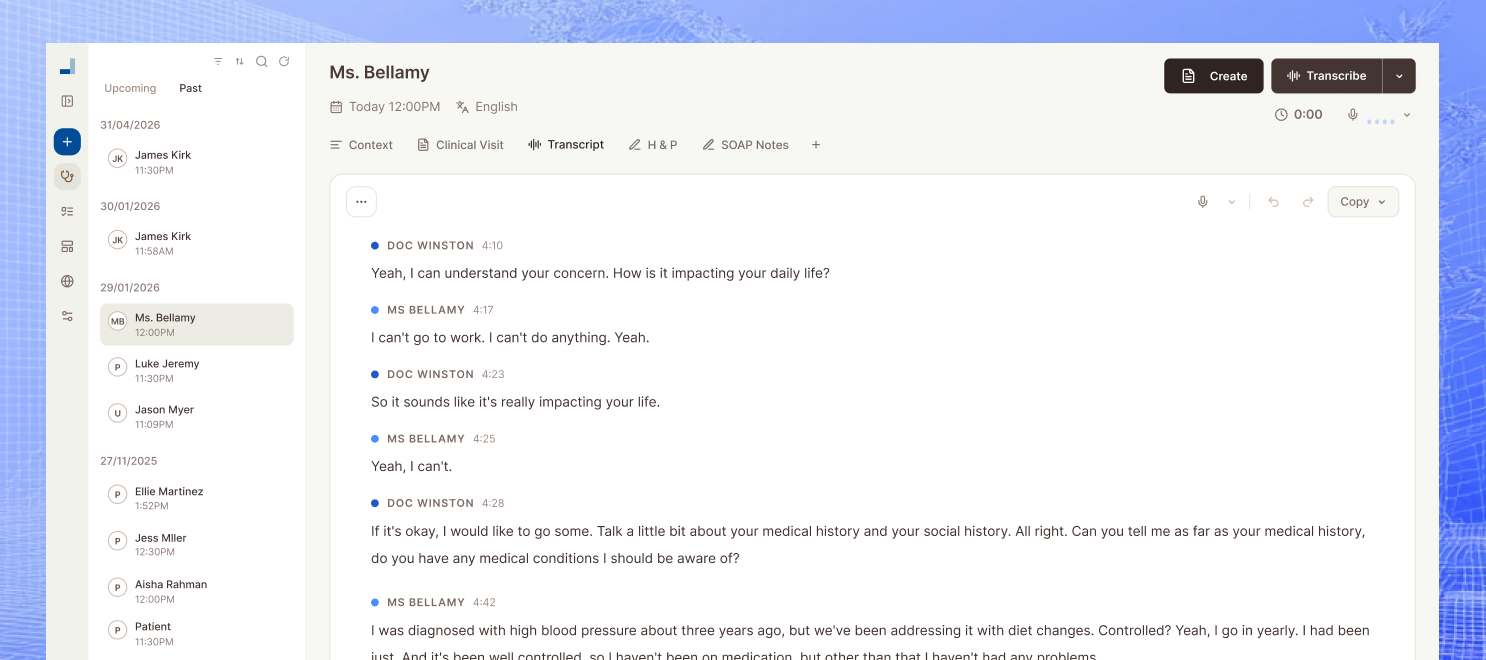
An AI medical scribe serves as a digital assistant that captures the nuance of the patient-clinician conversation in real-time. It is important to remember that these tools are assistive; they process the raw data and organize it into professional formats, but the clinician remains the final authority. By offloading the transcription and initial drafting, practitioners can focus entirely on the person sitting across from them rather than a computer screen.
- Eliminates the ‘pajama time’ charting burden
- Reduces cognitive load and clinician burnout
- Ensures patient encounters are captured in real-time
- Provides a structured draft for clinician review
Note types you can generate beyond SOAP (H&P and more)
While the SOAP format is the bread and butter of general practice, a comprehensive template pack must account for various clinical scenarios. History and Physical (H&P) notes are essential for new patient intakes, while detailed procedure notes are required for minor surgeries or skin biopsies. Standardizing these formats ensures that your clinic maintains audit-readiness and provides clear handovers for any multidisciplinary team members.
Consult notes and referral letters are equally vital. A well-structured consult note helps the specialist understand the clinical reasoning behind a referral, while discharge summaries provide the necessary continuity of care for patients returning from hospital settings. Modern documentation tools allow you to switch between these formats instantly, ensuring that every document meets professional standards without manual re-formatting.
Using a variety of templates also improves the quality of clinical data for chronic disease management. Follow-up notes can be tailored to track specific metrics like HbA1c or blood pressure trends over time. This structured approach makes it easier to review patient progress during longitudinal care, reducing the time spent hunting through old entries for relevant information.
- H&P and progress notes for daily encounters
- Specialized procedure and consult notes
- Professional referral letters and discharge summaries
- Improved continuity of care through structured data
How to implement GP SOAP notes step-by-step in a real clinic
To successfully integrate a new documentation workflow, start by selecting one specific visit type to pilot. Typically, standard follow-up appointments for chronic disease management are the best place to begin because they follow a predictable pattern. By focusing on a single type of encounter first, you can refine your capture process without feeling overwhelmed by the variety of cases seen in a typical GP day.
Next, you should set up your templates tailored to your specific specialty or common presentations. If you frequently see pediatric patients or elderly patients with polypharmacy, ensure your SOAP structure includes those specific prompts. Once your templates are ready, you can begin capturing the encounter. Whether you are conducting an in-person physical exam or a telehealth session, the goal is to let the conversation flow naturally while the system listens in the background.
After the patient leaves, take a moment to review the generated output. This is the stage where you verify the accuracy of the subjective history and ensure the objective findings match your exam. Because the system has already done the heavy lifting of drafting the text, this review should only take a minute or two. Once you are satisfied, you can finalize the note and immediately reuse the data to generate any necessary follow-up documents, such as lab orders or referral letters, ensuring that the entire administrative trail is completed before the next patient walks in.
- Start with one common visit type to build confidence
- Customize SOAP templates for specific patient demographics
- Review and edit drafts immediately after the encounter
- Leverage outputs for instant referral letter generation
How to keep note quality high and reduce mistakes
Even with advanced technology, note quality depends on a consistent review habit. One of the biggest risks in clinical documentation is ‘note bloat’—where repetitive or irrelevant information clutters the record. To combat this, clinicians should focus on ensuring the ‘Assessment and Plan’ sections are concise and clinically actionable. Avoiding the inclusion of every single word of dialogue and instead focusing on clinical relevance is key.
Regularly auditing a small sample of notes within a group practice can help align standards. If multiple doctors are using the same template pack, it’s helpful to meet monthly to discuss what is working and what needs adjustment. This team-wide approach ensures that the documentation is not only accurate but also consistent, which is vital for medicolegal protection and clear communication within the practice.
- Minimize note bloat by focusing on actionable plans
- Establish a consistent 60-second review habit
- Use team audits to align documentation standards
- Ensure accuracy in medications and problem lists
Privacy, consent, and patient trust (plain English)
Patient trust is the foundation of any successful medical practice. When introducing recording or transcription technology, transparency is essential. Patients generally respond well when they understand that the technology allows the doctor to listen to them more closely rather than typing on a keyboard. Always ensure your clinic follows local regulations regarding recording and data storage, as consent requirements can vary significantly by region.
A simple way to explain this to a patient is: ‘To help me focus entirely on our conversation today, I’m using a secure digital assistant to help me with my notes. It simply transcribes our talk so I don’t have to type while we speak. Is that okay with you?’ Most patients appreciate the extra eye contact and the feeling that they are being heard.
- Always obtain verbal or written consent based on local law
- Explain the technology as a tool for better clinical focus
- Maintain strict data security and retention protocols
- Focus on the benefit of improved doctor-patient eye contact
Rolling it out across a clinic without disruption
A successful rollout requires a phased approach rather than an overnight switch. Start with a two-week pilot involving one or two ‘tech-champion’ clinicians. Use this period to identify any friction points in the workflow or specific templates that need more customization. Tracking metrics such as ‘minutes spent charting after 5 PM’ provides tangible evidence of the tool’s value to the rest of the staff.
Once the pilot is complete, provide a structured training session for the entire team. This should focus on how to use the specific GP SOAP notes templates and how to quickly review or edit the AI-generated outputs. By aligning everyone on the same system, the clinic can ensure that every patient record meets the same high standard of quality, regardless of which clinician they see.
- Conduct a two-week pilot with lead clinicians
- Track time-saved metrics to demonstrate ROI
- Align the whole team on template standards
- Phased rollout minimizes operational disruption
Mcoy AI is an AI medical scribe that records and transcribes patient encounters, then generates multiple clinical note types (H&P, progress notes, consult notes, follow-up notes, procedure notes, discharge summaries, referral letters, and more). With over 200+ customizable templates and an interactive AI chat, doctors can effortlessly create letters, forms, and complex documents based on the captured encounter, significantly reducing the administrative burden on the practice.
Frequently Asked Questions
Below are some common questions about implementing modern documentation workflows and templates in a general practice setting.
How accurate are AI medical scribes in real clinics?
AI medical scribes have reached a high level of accuracy, often capturing nuances that manual typing might miss. However, they are designed to be assistive, meaning the clinician should always perform a quick final review. They excel at clinical terminology and structuring conversations into professional formats like GP SOAP notes. In most cases, these tools identify key medical facts with over 95% accuracy before clinician editing.
Do I still need to review every note?
Yes, as the licensed professional, the clinician is legally responsible for the accuracy of the medical record. While the AI does the heavy lifting of drafting the text, a quick review is necessary to ensure the ‘Plan’ section reflects your exact intentions and that no errors occurred during transcription. Most doctors find that this review takes less than 60 seconds per patient encounter. This habit ensures the highest standards of patient safety and medicolegal protection.
What note types can an AI scribe generate besides SOAP?
Beyond standard GP SOAP notes, most advanced systems can generate History and Physical (H&P) summaries, specialized consult notes, and detailed procedure descriptions. They can also create referral letters, work certificates, and discharge summaries by pulling data directly from the encounter. The flexibility of these tools allows them to adapt to almost any clinical scenario you encounter during a busy day. This versatility is what makes them a significant upgrade over traditional dictation.
Will this work for telehealth and in-person consults?
Absolutely. Most modern medical scribe tools are designed to work across various environments, whether you are using a mobile device in a physical exam room or a desktop for a telehealth session. The technology captures audio from either source and processes it with the same level of detail. This makes it an ideal solution for hybrid practices that balance virtual and physical patient visits. The transition between these modes is typically seamless for the clinician.
How do I explain recording/transcription to patients?
The best approach is to be direct and highlight the benefit to the patient. You can mention that the tool helps you give them your full attention instead of looking at the computer screen. Most patients are very supportive when they realize the technology facilitates better eye contact and a more personal connection. Explaining that the data is handled securely according to healthcare privacy laws also helps build confidence. Transparency is the key to maintaining patient trust.
How do clinics prevent note bloat?
Note bloat is prevented by using templates that prioritize conciseness and by training clinicians to review for relevance. Instead of transcribing every ‘um’ and ‘ah,’ the system should focus on clinical findings and medical reasoning. Clinicians should be encouraged to delete redundant information during their final review. Using structured GP SOAP notes templates specifically designed for brevity can also help keep the records clean and professional.
How long does template setup take?
Initial setup for basic templates usually takes less than an hour. Many systems come with pre-built libraries of common GP templates that you can adopt immediately. Fine-tuning these to match your personal style or specific clinic requirements might take a few additional minutes per template. Once set up, these templates are saved and can be used indefinitely, saving you hours of manual work every week. It is a one-time investment for a long-term efficiency gain.
What’s the safest way to start if I’m skeptical?
The safest way to start is by trialing the system with non-complex cases or ‘mock’ encounters. This allows you to see the quality of the output without any impact on real patient care. Once you are comfortable with the workflow, you can move on to real patient visits, starting with simple follow-ups. Gradually increasing the complexity of the cases you document this way will help you build trust in the tool at your own pace. Most clinics find they are fully integrated within just two weeks.
Conclusion
Building a robust documentation workflow doesn’t have to be a daunting task. By moving toward structured GP SOAP notes and utilizing digital assistants, you can reclaim your time and focus on what truly matters: patient care. Start with a small pilot, choose the right templates, and stay consistent with your review process. Implementing these strategies will not only improve your note quality but significantly reduce the daily stress of clinical administration. If you are ready to transform your practice, starting a pilot for your own template pack is the logical next step.
What a serious review table should cover
| Decision area | Common mistake | Better clinic-ready approach | Metric to watch |
|---|---|---|---|
| Workflow design | Treat how to build a template pack for gp soap notes | mcoy as a one-off documentation task | Build a repeatable process with clear ownership and review points |
| Team adoption | Assume every clinician will naturally use the same process | Train for consistency and define exception handling early | Active user adoption |
| Quality review | Only check notes when a problem is reported | Audit a sample of notes weekly and review edge cases | Edit rate per note |
| Operational follow-through | Leave admin actions outside the documentation workflow | Use the same encounter data for referrals, letters, and follow-up tasks | Completion rate for next-step tasks |
Related reading
If you are working through how to build a template pack for gp soap notes | mcoy, it helps to read this alongside Specialty Guides: How to Run a More Efficient Medical Practice in 2026, Specialty Guides: How to Improve Patient Encounters, and AI & Medicine: How to Capture Physical Exam Findings With AI [Full Guide]. Those guides cover adjacent workflow, implementation, and evaluation questions so the decision does not sit in isolation.
FAQ
How accurate are AI medical scribes in real clinics?
AI medical scribes have reached a high level of accuracy, often capturing nuances that manual typing might miss. However, they are designed to be assistive, meaning the clinician should always perform a quick final review. They excel at clinical terminology and structuring conversations into professional formats like GP SOAP notes. In most cases, these tools identify key medical facts with over 95% accuracy before clinician editing.
Do I still need to review every note?
Yes, as the licensed professional, the clinician is legally responsible for the accuracy of the medical record. While the AI does the heavy lifting of drafting the text, a quick review is necessary to ensure the ‘Plan’ section reflects your exact intentions and that no errors occurred during transcription. Most doctors find that this review takes less than 60 seconds per patient encounter. This habit ensures the highest standards of patient safety and medicolegal protection.
What note types can an AI scribe generate besides SOAP?
Beyond standard GP SOAP notes, most advanced systems can generate History and Physical (H&P) summaries, specialized consult notes, and detailed procedure descriptions. They can also create referral letters, work certificates, and discharge summaries by pulling data directly from the encounter. The flexibility of these tools allows them to adapt to almost any clinical scenario you encounter during a busy day. This versatility is what makes them a significant upgrade over traditional dictation.
Will this work for telehealth and in-person consults?
Absolutely. Most modern medical scribe tools are designed to work across various environments, whether you are using a mobile device in a physical exam room or a desktop for a telehealth session. The technology captures audio from either source and processes it with the same level of detail. This makes it an ideal solution for hybrid practices that balance virtual and physical patient visits. The transition between these modes is typically seamless for the clinician.
How do I explain recording/transcription to patients?
The best approach is to be direct and highlight the benefit to the patient. You can mention that the tool helps you give them your full attention instead of looking at the computer screen. Most patients are very supportive when they realize the technology facilitates better eye contact and a more personal connection. Explaining that the data is handled securely according to healthcare privacy laws also helps build confidence. Transparency is the key to maintaining patient trust.
How do clinics prevent note bloat?
Note bloat is prevented by using templates that prioritize conciseness and by training clinicians to review for relevance. Instead of transcribing every ‘um’ and ‘ah,’ the system should focus on clinical findings and medical reasoning. Clinicians should be encouraged to delete redundant information during their final review. Using structured GP SOAP notes templates specifically designed for brevity can also help keep the records clean and professional.
How long does template setup take?
Initial setup for basic templates usually takes less than an hour. Many systems come with pre-built libraries of common GP templates that you can adopt immediately. Fine-tuning these to match your personal style or specific clinic requirements might take a few additional minutes per template. Once set up, these templates are saved and can be used indefinitely, saving you hours of manual work every week. It is a one-time investment for a long-term efficiency gain.
What’s the safest way to start if I’m skeptical?
The safest way to start is by trialing the system with non-complex cases or ‘mock’ encounters. This allows you to see the quality of the output without any impact on real patient care. Once you are comfortable with the workflow, you can move on to real patient visits, starting with simple follow-ups. Gradually increasing the complexity of the cases you document this way will help you build trust in the tool at your own pace. Most clinics find they are fully integrated within just two weeks.