Admin Management: Generate Specialist Letters From Consult Notes | Full Guide
Learn how to streamline clinical workflows by transforming consult notes into professional specialist letters. Reduce burnout and improve care coordination.
The Administrative Weight of Modern Medicine
For many clinicians, the workday doesn’t end when the last patient leaves. The burden of after-hours charting and the high-pressure task of drafting accurate specialist letters often lead to significant burnout. Whether you are a general practitioner or a specialized consultant, the process of translating a complex clinical encounter into a readable, professional referral or summary letter is a major bottleneck that contributes to cognitive fatigue and medico-legal anxiety.
This guide provides a comprehensive roadmap for optimizing your documentation workflow. We will explore how to transition beyond basic SOAP notes into specialized formats, maintain high quality-control standards, and ensure patient privacy. Whether you manage a private practice, a busy telehealth service, or a university clinic, these strategies will help you regain your time and professional focus.
What a medical scribe solves in modern practice
The real cost of medical documentation isn’t just measured in minutes; it is measured in cognitive load and clinical focus. When a doctor is forced to multi-task between active listening and manual data entry, the quality of both the patient connection and the note itself can suffer. Delayed notes often lead to missed details or inaccuracies that surface weeks later during an audit or follow-up visit.
An AI medical scribe acts as an assistive layer, capturing the nuances of the conversation while allowing the clinician to remain fully present. It is important to remember that these tools are assistive; while they handle the heavy lifting of transcription and initial drafting, the clinician remains the final authority and responsible party for the accuracy of the record. This shift allows for more detailed documentation without the manual labor typically required.
- Reduces the phenomenon of “pajama time” spent on charts after hours.
- Enhances the accuracy of patient history by capturing dialogue in real-time.
- Shifts the clinician’s role from a data entry clerk to a medical supervisor.
- Minimizes the risk of “note fatigue” where important details are omitted.
Note types you can generate beyond SOAP (H&P and more)
While the SOAP format is a staple of medical education, modern specialty practice often requires more granular documentation. Comprehensive History and Physical (H&P) notes, detailed consult findings, and intricate procedure notes are essential for high-stakes clinical environments. Each of these formats serves a distinct purpose in the continuity of care and the billing process.
Using diverse note types like progress notes, follow-up notes, and discharge summaries ensures that any provider reviewing the chart in the future—including yourself—can quickly grasp the clinical trajectory. Moreover, structured documentation is the foundation for audit readiness. If a record is organized according to standard clinical frameworks, it is much easier to justify medical necessity for insurance and regulatory bodies.
Referral letters and consult summaries are particularly vital for care coordination. A well-structured consult note can be the primary source for generating a professional letter to a sub-specialist or a return-to-work form for a patient. By diversifying your note formats, you create a more comprehensive digital twin of the patient encounter.
- H&P and Consult Notes for initial evaluations and complex cases.
- Procedure and Follow-Up notes for longitudinal care tracking.
- Discharge summaries that facilitate safe transitions between care settings.
- Referral letters that summarize clinical reasoning for other specialists.
How to implement specialist letter generation step-by-step in a real clinic
Integrating the ability to generate specialist letters from consult notes requires a systematic rollout. Start by selecting one common visit type, such as a standard new patient consultation, to refine your process. This avoids overwhelming your staff with too many changes at once and allows you to test the output quality in a controlled environment.
Next, align your templates with your specialty’s specific needs. A cardiologist will require different data fields than a dermatologist. Once your templates are set, capture the encounter naturally, whether it is an in-person physical exam or a telehealth call. The focus should remain on the conversation, not the screen, letting the technology handle the capture of the narrative.
After the encounter, take two minutes to review the generated output. This is the time to catch any anatomical nuances or specific medication strengths that might need adjustment. Finally, use the refined consult note as the base to generate specialist letters. Modern workflows allow you to reuse that data to create referral letters or insurance forms instantly, eliminating the need to write the same information twice.
- Phase in the technology starting with one high-volume visit type.
- Customize clinical templates to match specific specialty requirements.
- Review the draft immediately after the visit while the case is fresh.
- Export the refined data directly into letter or form formats.
How to keep note quality high and reduce mistakes
Note quality is the cornerstone of clinical safety. Common failure points in documentation often involve missing medications, incorrect lab values, or “note bloat,” where irrelevant information clutters the record. To combat this, adopt a lightweight review habit: skim the generated note for the “problem list” and “plan” sections before finalizing, as these have the highest clinical impact.
Establishing team standards also helps maintain consistency across the practice. If every clinician in a university clinic follows the same structural guidelines, the generated letters will always meet the professional expectations of outside colleagues. Consistency reduces the chance of miscommunication during handovers and ensures that every letter reflects the high standards of the practice.
- Standardize the review process for keys sections like Plan and Meds.
- Encourage a “concise is better” philosophy to prevent note bloat.
- Audit a small sample of notes weekly to ensure template alignment.
- Use structured prompts to ensure specific clinical data is highlighted.
Privacy, consent, and patient trust (plain English)
Maintaining patient trust is paramount when utilizing recording or transcription technology. While specific consent requirements vary by region, honesty is always the best policy. Most patients are supportive of technology that helps their doctor focus more on them and less on a computer screen. Always follow your local regulatory guidelines regarding patient privacy and data retention.
A simple way to explain this to a patient is: “I’m using a clinical assistant to capture our conversation so I can focus on listening to you instead of typing. It helps me create a more accurate record and letter for your specialist. Is that okay with you?” This transparent approach usually addresses any concerns immediately.
- Obtain verbal or written consent based on local health authority rules.
- Explain the benefit to the patient: better focus and more accurate records.
- Ensure the data capture tool adheres to strict security and encryption standards.
- Maintain a clear policy on how long recordings or transcripts are stored.
Rolling it out across a clinic without disruption
Successful implementation across a whole clinic involves a short, focused pilot period. A two-week pilot allows early adopters to identify potential workflow hitches and solve them before a clinic-wide launch. During this time, track metrics such as the reduction in after-hours charting and the time spent drafting specialist letters to measure the return on investment.
Training should focus on template alignment. Ensure every staff member knows how to trigger the specific note types they require and how to use the AI-assisted tools to draft follow-up documents. When the whole team is aligned on how to generate specialist letters from consult notes, the efficiency gains multiply across the entire practice.
- Launch a 14-day pilot with a small group of tech-forward clinicians.
- Measure time saved on documentation and the speed of letter completion.
- Schedule a brief mid-pilot meeting to share best practices among staff.
- Standardize templates so outputs are uniform across the organization.
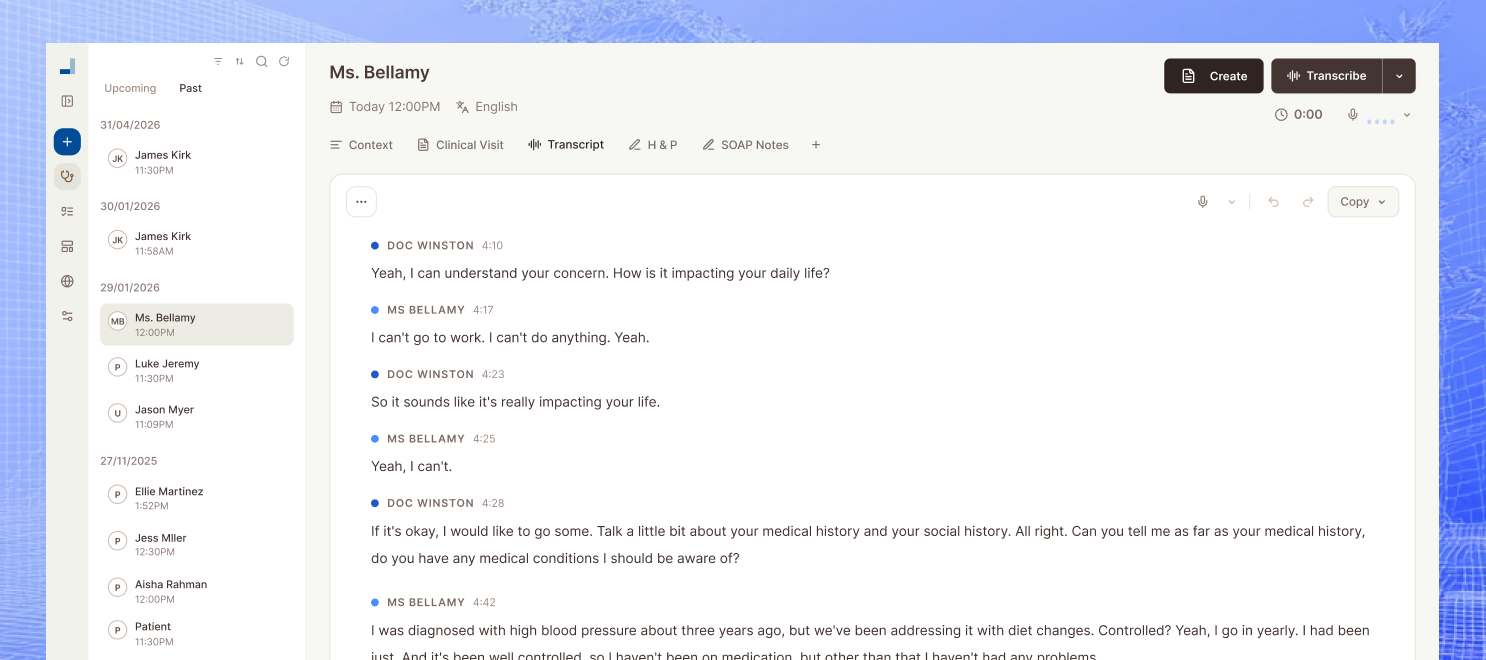
Mcoy AI is an AI medical scribe that records and transcribes patient encounters, then generates multiple clinical note types (H&P, progress notes, consult notes, follow-up notes, procedure notes, discharge summaries, referral letters, and more). With access to 200+ customizable templates and an AI chat feature to create letters, forms, and specific medical documents, it allows clinicians to focus on patient care while the administrative work is handled in the background.
The Future of Clinical Documentation
The transition to automated documentation is no longer just a luxury; it is a necessity for sustainable medical practice. By understanding the workflow required to generate specialist letters from consult notes, you can eliminate hours of manual labor and improve the quality of care coordination. Start small, use the right tools, and watch your practice efficiency transform.
What a serious review table should cover
| Decision area | Common mistake | Better clinic-ready approach | Metric to watch |
|---|---|---|---|
| Workflow design | Treat generate specialist letters from consult notes | full guide as a one-off documentation task | Build a repeatable process with clear ownership and review points |
| Team adoption | Assume every clinician will naturally use the same process | Train for consistency and define exception handling early | Active user adoption |
| Quality review | Only check notes when a problem is reported | Audit a sample of notes weekly and review edge cases | Edit rate per note |
| Operational follow-through | Leave admin actions outside the documentation workflow | Use the same encounter data for referrals, letters, and follow-up tasks | Completion rate for next-step tasks |
Related reading
If you are working through generate specialist letters from consult notes | full guide, it helps to read this alongside Admin Management: How to Reduce Admin Errors in Clinical Notes, Admin Management: Medication List Template with Examples, and Practice Operations: Measure ROI of an AI Medical Scribe: The Complete Guide. Those guides cover adjacent workflow, implementation, and evaluation questions so the decision does not sit in isolation.
FAQ
How accurate are AI medical scribes in real clinics?
AI medical scribes are remarkably accurate in capturing clinical dialogue, often reaching over 95% accuracy in medical terminology. However, they are designed to be assistive tools rather than autonomous replacements. The clinician must always review the output to ensure that the context and specific medical decisions are reflected correctly within the final note.
Do I still need to review every note?
Yes, medical responsibility always rests with the licensed clinician. While the AI generates the draft and organizes the specialist letter, you must perform a final check for accuracy. Most doctors find that reviewing and editing a pre-generated note takes about 60-90 seconds, which is significantly faster than writing a letter from scratch.
What note types can an AI scribe generate besides SOAP?
Modern AI scribes go far beyond the standard SOAP format. They can generate H&P notes, detailed consult summaries, procedure notes, discharge summaries, and referral letters. Because the AI captures the entire conversation, it can reformat that same data into multiple different document types depending on your specific needs for that encounter.
Will this work for telehealth and in-person consults?
Most AI scribing solutions are built to be versatile, functioning equally well during in-person visits using a mobile device and during telehealth sessions via computer audio. As long as the audio quality is clear, the AI can distinguish between the clinician and the patient to create a coherent narrative record regardless of the setting.
How do I explain recording/transcription to patients?
Transparency is usually the most effective approach. Inform the patient that you are using a tool to capture the clinical conversation so you can give them your full attention. Most patients appreciate that they are being listened to and that their doctor isn’t staring at a screen the whole time. A quick, 15-second explanation is usually sufficient for consent.
How do clinics prevent note bloat?
Note bloat is prevented by using high-quality, structured templates that prioritize relevant clinical information over raw transcription. By setting parameters for brevity and focus, you can ensure that generated specialist letters are concise and professional. Clinicians should also be encouraged to edit out repetitive or redundant phrases during the brief review stage.
How long does template setup take?
Initial setup for basic templates is often immediate, as many tools provide a library of pre-built options for different specialties. Customizing those templates to your specific phrasing or practice style typically takes about 10-15 minutes per template. Once set, these templates can be used indefinitely to ensure consistent clinical outputs.
What’s the safest way to start if I’m skeptical?
The safest way to start is with a “shadow pilot.” Use the tool during a few straightforward follow-up visits and compare the AI-generated note to your manual note. This allows you to build trust in the tool’s accuracy without any pressure. Once you see the time saved and the quality of the specialist letters, you can slowly integrate it into more complex consultations.